
The National Museum of the Philippines hosted two important events last July 21—the turnover of Philippine archaeological specimens from the Fowler Museum of the University of California Los Angeles and the launching of the book Indigenous Archaeology in the Philippines: Decolonizing Ifugao History.
These specimens were believed to be brought out of the country in the 1970s by no less than Dr. Robert Fox and Dr. Eric Casino of the Anthropology Division.

The Fowler Museum is now returning these pieces of wood and bone samples to the National Museum of the Philippines after keeping them for several decades at their Archaeological Collections Facility for dating and osteometric analyses.
The returned archaeological specimens include a wood sample from Butuan Boat 2 which was systematically excavated by the National Museum of the Philippines in 1978, and bone samples from Pagayona and Leta-Leta Caves in Palawan which were excavated by Dr. Robert B. Fox in 1964 and 1965 respectively.
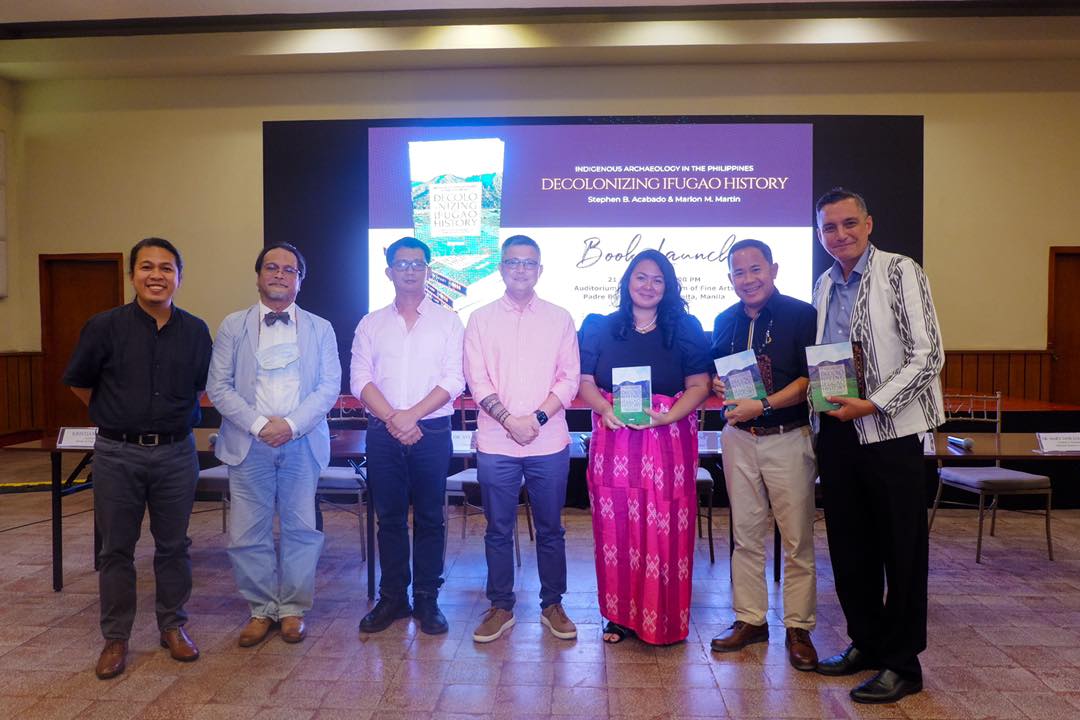
Following the turnover is the book launch of Indigenous Archaeology in the Philippines: Decolonizing Ifugao History by Dr. Stephen Acabado and Mr. Marlon Martin.

This book is based on collaborative research among various stakeholders including the Save the Ifugao Terraces Movement (SITMo), the National Museum of the Philippines, the University of the Philippines, the National Commission on Indigenous Peoples–Ifugao, and University of California Los Angeles.
It highlights how the Ifugao, an indigenous group in northern Philippines, made decisions that benefited them, including formulating strategies by which they took part in the colonial enterprise, exploiting the colonial economic opportunities to strengthen their sociopolitical organization, and co-opting the new economic system.

Held at the NMP Auditorium, National Museum of Fine Arts in Manila, a book signing highlighted the launch, with copies of the book sold.
The event was made possible in partnership with the University of California Los Angeles (UCLA), Save the Ifugao Terraces Movement (SITMo), and the Ateneo de Naga University Press—with the special participation of Savage Minds Arts, Books, Cinema and Kamarin Art Gallery.