
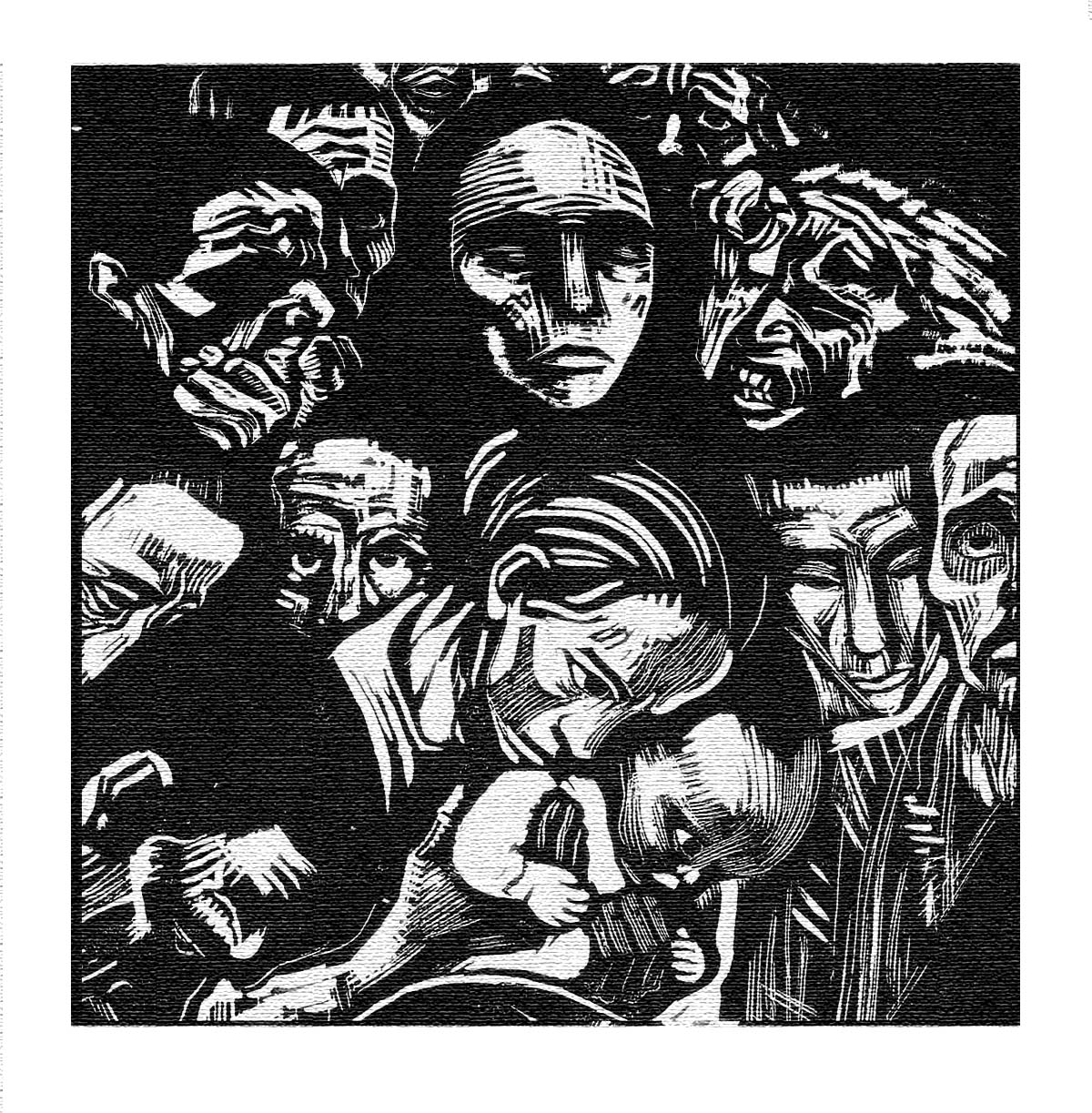
ELEGY
I am trying to catch the best of
Life as lived with my grandchildren
I am trying to comprehend death
When I see humans good as dead
As a sudden explosion transforms
A house of healing
Into grim inferno of the dead and the dying
And wounded children wailing
Desperately looking
For their loved ones.
I am trying to comprehend
Public figures sated with private greed
Unable to connect
With those who have nothing
Offering solutions through empty rhetoric
Often incomprehensible
To the desperately poor
And the hungry
Pray
Let me comprehend
What is deplorable
About this universe
Obsessed with war
Unable to navigate
In a labyrinth
Of peace
As the dead and dying
Lay disemboweled on
The dirt road of hate
And infamy.
Pray
Let me comprehend
The logic behind
Deadly missiles
Turning acres of peace
Into rivers of blood.
Suddenly
I am unable to choose
Between music for the dead
A grim choice
Between Mozart, Verdi or Faure.
This is the time
When the pastoral airs
Of Beethoven
Remain an illusion
Devoutly
To be wished.
Still
I turn to my grandchildren
For relief
And for things
I can’t comprehend
About life and death
THE COLOR OF PARTING
There are images
That refuse to fade
Still you welcome them
In your labyrinth of hurt
Hoping to get
The message of solace
Grandchild
Gives me a gentle hug
After a week of treading
On the sand
In the island of memory
I like the way
She looks at me
As though she knew
The color of pain
In recent years
The color of parting
Is neither red
Nor the invisible white
Of nothingness
In your soul
Grandson
Looks at the grave
Of his parents
Now reduced
To faint memory
Of his early youth
How do you catch
The color of parting
When it happens?
You just let it fade
As you hold on
To shadows of the past
Time to hang on
To the feel of warmth
Of your grandchild’s
Gentle hug
It will not last
But you get to feel
The cold wind
Of parting
In your soul

Pablo A. Tariman, 73, is the author of the book of poetry, Love, Life and Loss – Poems During the Pandemic, published by Music News and Features. Two of his poems are included in the anthology The Best Asian Poetry 2021, published by Kitaab Pubishing in Sinagpore. Hi poem, “The Woman on a Motorcycle” appears in the anthology, 100 Pink Poems para kay Leni. Tariman was born in Baras, Catanduanes, and has six grandchildren.