
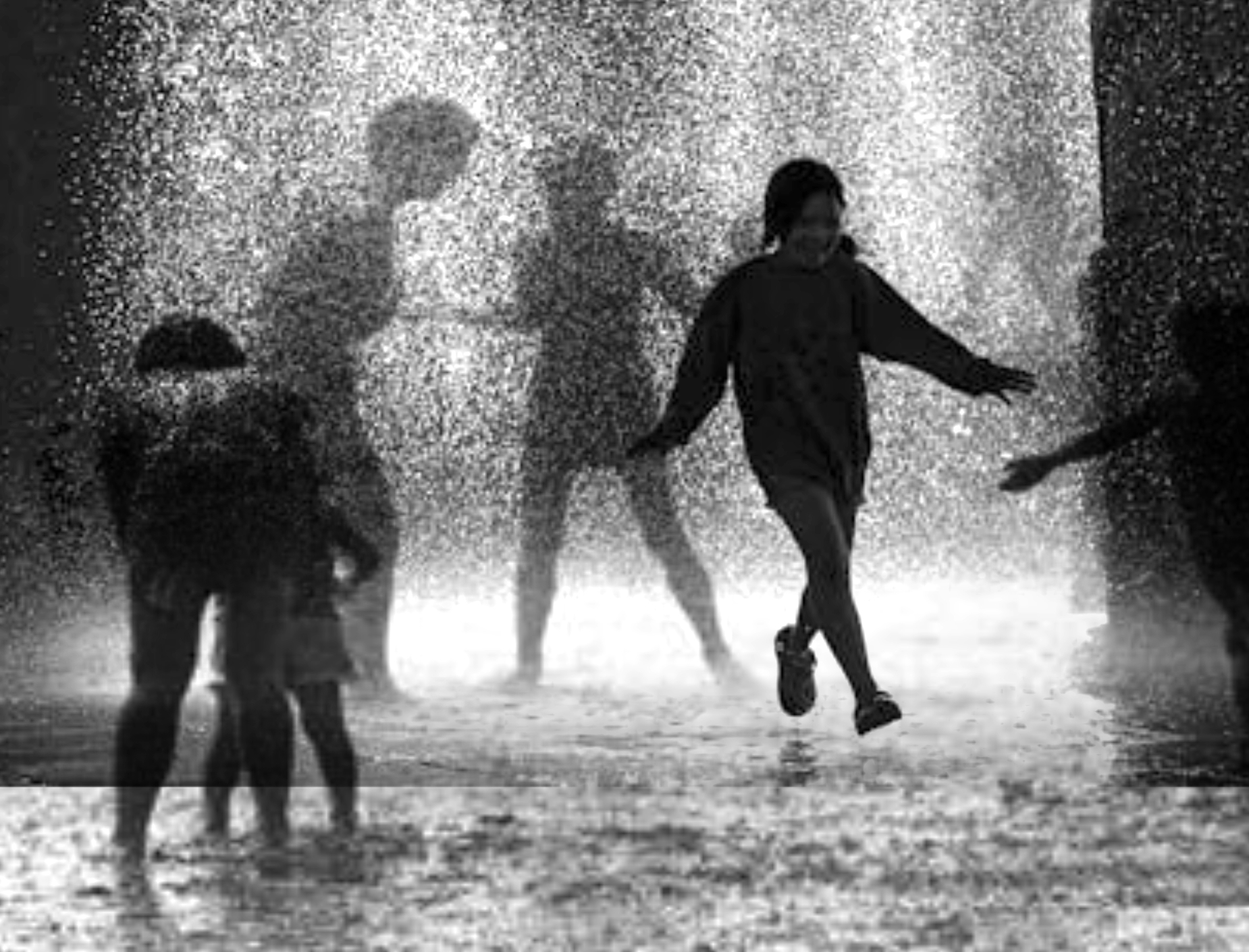

The children of the town had once belonged to the streets. Their laughter rattled off the cracked sidewalks, their games stretched across alleys and fields, and dusk was a sign, not for disconnection, but for one more round of hide-and-seek or patintero, a daring jump over a Chinese garter, or a slipper game that left slippers flying into the air before light poles flicked on. They invented kingdoms out of sticks, chalk, and stones, and no one thought twice about scraped knees or muddy feet.
Now the streets were quiet, and a soft blue glow pulsed from behind windows, where children sat in private galaxies of scrolling feeds and endless battles. Their eyes reflected screens brighter than stars, their voices muted, their bodies still. The sidewalks carried only the rustle of wind and the lonely squeak of Belle’s cracked bicycle tires.
Belle was fifteen and lived more fully inside her phone than outside of it. Her world was stitched together from group chats, trends, and videos that vanished as quickly as they appeared. Online, she was witty, unafraid, and liked. Offline, she was careful not to speak too much in case her real voice betrayed imperfections. Her brother Ace, thirteen, battled strangers across continents night after night. His headset became his crown, his room, his battlefield. His victories echoed in pixels, his defeats erased in seconds. Yet when he pulled the headset off, silence settled on him like dust. And then there was Michael, their nine-year-old neighbor. Michael rode his battered bike with streamers half-torn from the handles. His shoes were scuffed, his knees perpetually bruised. He carried pockets full of chalk and the litanies of his grandmother, who mumbled riddles the way others whispered prayers.
One day, she told Belle,
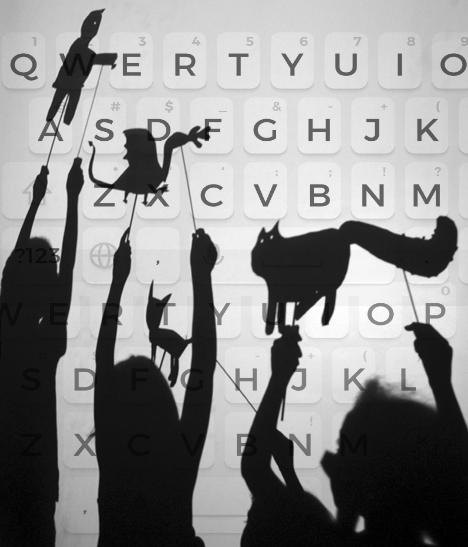
“Life is three keys, child: CTRL, ALT, ESC.”
Belle rolled her eyes. “That’s just a computer shortcut.”
The grandmother smiled, the lines around her eyes folding like paper fans. “No. It is a survival map. Control what you give your hours to or you will discover you’ve traded years for nothing. Alter your path when the one you’re walking on does not feel like your own. Escape not from life, but into it — because the greater prison is not the world, but a screen you cannot put down.”
The storm came suddenly. Dark clouds muscled over the rooftops; thunder roared like the sky had split open. Rain poured down, flooding the streets. Then, in a single blink, the town went dark. The screens shut down. Wi-Fi dissolved into silence. The hum of refrigerators, routers, televisions — all of it vanished.
At first, panic rippled. Fingers tapped at dead glass. Parents muttered about work emails and lost connections. Belle sat on her bed, staring at her black screen, feeling an emptiness expand inside her.
Why does it feel scarier to face myself than to face the entire internet? she thought.
Ace paced, restless, as if unplugged from the only world he understood. But Michael, small and bright as a spark, burst into the rain on his bicycle. Water ran down his cheeks like war paint. He shouted up at the darkened houses, “Come out! The world’s still here!”
Ace growled, pacing. “This is torture.”
Michael’s voice rang out in the rain again: “No, this is freedom.”
Ace barked a laugh. “Freedom? Running around in the dark like idiots?”
Michael’s small face was fierce. “You call yourself free because you can play with strangers. But take away your headset, and what’s left of you?”
At first, no one moved. Then one child, then another, stepped outside. Some ran barefoot into the puddles. Some chased the rain like confetti. Others dragged chalk across the soaked pavement, the colors bleeding into dazzling rivers.
The street filled with voices, sharp and wild, slicing through the hush that had smothered the town.
Belle stood at her doorway, heart thudding. Her hands clutched her dead phone, useless and heavy. She wanted to join, but the thought paralyzed her. Who would she be without a screen? Without filters, edits or likes to prove her worth? Belle stood at her doorway, heart thudding. Her hands clutched her dead phone, useless and heavy. She wanted to join but froze. Ace’s voice cut the silence:
“Don’t. You’ll look stupid.”
Belle flinched. “Maybe looking stupid is better than feeling invisible.”
He had no answer.
Then she remembered the grandmother’s words. CTRL. ALT. ESC.
Belle placed the phone down. For the first time, she stepped outside barefoot into the storm. Ace followed later, reluctant and shivering. He lifted his head to the sky, where the clouds had cracked open, and for the first time in years, he saw stars burn through.
That night was different. The blackout stretched its silence across the hours, and the children filled it with their own noise. They invented games out of shadows, told ghost stories under the weak glow of streetlamps, and turned puddles into oceans for chalk-drawn ships.
For the first time in years, the night belonged to them.
Belle felt her lungs expand with laughter; she didn’t know she’d been holding back. “So this is what it feels like to exist without being seen through glass,” she thought.
But not everyone was laughing.
Some older boys sneered from under a lamppost. “Seriously? Playing like kids? Grow up.”
Ace smirked, joining their side. “Yeah, Belle, do you really think jumping over rubber bands makes you free?”
Her face flushed. “At least I’m out here. You can’t even breathe without a headset on.”
His jaw tightened. “Better a warrior in pixels than nothing in real life.”
Their words clashed harder than the storm. Michael stood between them, his voice trembling but fierce. “You both don’t get it. You live like shadows. Alive online, but here —you’re already dead.”
The chant rose for Ace to climb the acacia tree. Fueled by pride and anger, he scrambled upward. Higher. Higher. Until the branch groaned under his weight. Gasps replaced laughter. For one breathless second, he dangled, a drop yawning beneath. Belle’s scream pierced the night. She wanted to run to save him, but her legs locked. Horror washed over her. “I don’t know what to do when the danger isn’t on a screen.”
Then Michael’s small voice rose steady and sure: “Don’t look down. Look at the stars.”
Ace froze, lifted his gaze, and saw them. The sky was vast and merciless. He felt how small he was, how fragile. For years, he had fought digital battles where death was a reset button. But here, one slip would mean the end. This is what it means to be alive, he realized. No respawns. No pixels. Just breath, gravity, and fear.
He pulled himself up, shaking. His grin was no longer a performance — it was survival, raw and real.
Michael’s grandmother watched from her porch, nodding slowly as if the world were finally remembering itself.
By morning, the storm was gone. The power surged back, appliances blinked alive, Wi-Fi signals pulsed. Screens reawakened with a vengeance, beckoning children back into their glow.
It would have been easy to slip back — to let the night be forgotten, swallowed by the endless scroll. And some did.
But not all.
Belle began leaving her phone on her desk when Michael knocked on the door. She learned the thrill of a patintero sprint, the rhythm of sato sticks clacking, the rush of beating Ace in a slipper game. She relearned how her laugh sounded when it wasn’t typed in capital letters.
Ace, at first hesitant, began sitting outside at night, letting the quiet wrap around him. Sometimes he still played online, but not until dawn. Sometimes he watched the stars instead, tracing constellations as Michael bragged about his marble wins.
Michael remained unchanged, except that now he was less alone.
One evening, Belle sat with the grandmother, her legs dangling from the porch. “I think I understand now,” she said. “CTRL, ALT, ESC.”
The grandmother sipped her coffee, patient.
“CTRL,” Belle said slowly, “means I control what shapes me. Not the scroll. Not the noise. Me.”
The grandmother’s eyes darkened. “Yes. Because if you do not, child, something else will. And it will shape you into someone you do not recognize.”
“ALT,” Belle continued, “means I can alternate my paths. I don’t have to live like everyone else.”
“And ESC?” the grandmother asked softly.
Belle hesitated. “Escape means knowing when to step away — not because I’m weak, but because I’m free.”
The grandmother set down her cup. “Freedom is not doing what you want. Freedom is remembering you have a choice. Most people forget.”
The grandmother leaned closer, her voice low. “Yes. Then you’ve learned the keys. But remember this, too, child: If you forget how to step away, the machine will not forget how to hold you.”
The world did not change. Screens still glowed. Feeds still scrolled. The tide of technology did not retreat, and perhaps it never would.
But the children had changed. They carried in their bones the memory of rain-soaked laughter, of fear and freedom stitched together in one wild night.
And when the blue glow threatened to drown them, they whispered to each other:
CTRL your time. ALT your path. ESC while you still can.
Childhood was not a feed to scroll through or a story to curate. It was blood, and breath, and scraped knees, and stars above a breaking branch.
And if they remembered the keys, they would never be prisoners again. After all, on every keyboard, the command is the same: CTRL to take hold. ALT to change. ESC to be free.