

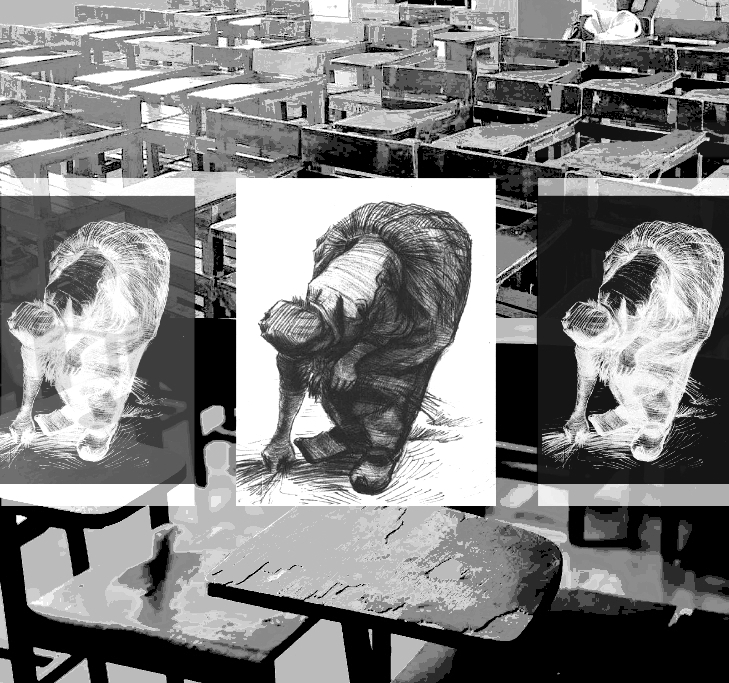

The night still outshone the day when Ms. Angeles, a public school teacher at Sagisag Elementary School, woke up in her bed. The crow of the roosters and the chorus of the crickets were the only noise. In her cabinet hung her uniform and pants on a single hanger, while her shining black shoes waited under her bed.
It was her first day of teaching. Excitement filled her chest, but her first challenge greeted her even before she reached school. The fresh scent of fabric conditioner on her uniform soon disappeared, replaced by the smell of smoke. By the time she reached the highway, she felt as though her clothes had been grilled like steak in the fumes of passing vehicles.
On the jeepney, she held tightly to the metal above. She fought to keep her balance, squeezed into a one-fourth-sized space. “Not on my first day,” she whispered, forcing herself not to slip. Relief washed over her when she finally saw the arch of her school. She ran immediately to the administration building to time in, three bags on her shoulder—so heavy they could pass for half a sack of sinandomeng rice.
The day began with the usual flag ceremony, gathering all the students and teachers on the school ground. The principal’s long speech dragged on, followed by a zumba routine that turned the students’ uniforms into rags soaked with sweat. Irritation filled the air.
But when Ms. Angeles entered her classroom, her morning shifted. “Good morning, Ma’am!” the students chorused with energy. Their voices were music — lifting the burden she had carried since dawn.
She began with introductions, letting the students share stories of their vacation. Some teachers had already started the lessons, but Ms. Angeles knew this was her moment to begin planting roots with her class.
As the day drew to a close, another challenge returned: The ride home. She sighed in frustration, waiting half an hour in front of the school for a jeepney that never seemed to arrive. Her body ached; her patience thinned, she was full of hopelessness.
Then, a voice interrupted her thoughts.
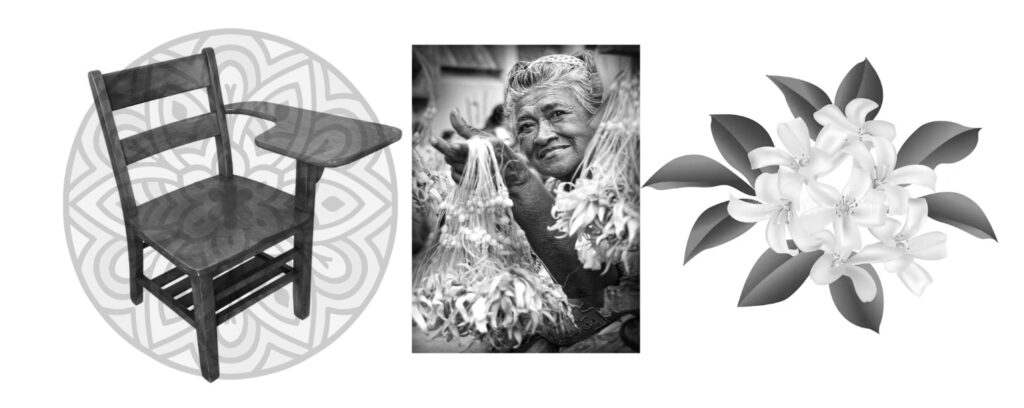
An old woman stood by her side, holding sampaguita garlands. Her face was worn, her eyes tired, yet steady. Looking at her tripled Ms. Angeles’s own exhaustion.
“Magpasensya ka na, iha,” the woman said softly. “Mas mahirap pa ang pinagdaanan ko noong ako’y guro sa paaralang pinagtuturuan mo ngayon. Dahil ang pagiging guro ay hindi lamang pagtuturo ng kaalaman. Ito ay buhay at sakripisyo.”
She placed the garlands back in her basket and walked away without looking back. Her figure slowly disappeared into the dusk.
The words struck Ms. Angeles like a hidden lesson she was never taught in school. For the first time, she understood the weight of the path she had chosen.
The next morning, she went straight to the faculty office and asked about the woman. Mrs. Castro, one of her colleagues explained gently: the old woman was her former teacher and also the principal. Her name was Mrs. Ramos. She had taught for four decades. Yet now, abandoned by her children, she has survived by selling garlands on the roadside. Paperwork had stolen her time as a mother, and sacrifice had cost her more than she could give back.
Ms. Angeles fell silent. A tear slipped from her eye. It was not only for herself, but for all teachers who gave more than they ever received.