


Is the goodness of a man determined by the purity of his intentions or by the deeds he brings into the world? And what, then, of the man who stands idle, neither acting nor choosing? Some claim that those who are caught between the forces of good and evil and refuse to take a stand are the most corrupt of all — an emptiness of will that renders them more wicked than those who openly choose evil. Does inaction itself become a choice, and if so, what does it reveal about the nature of morality?
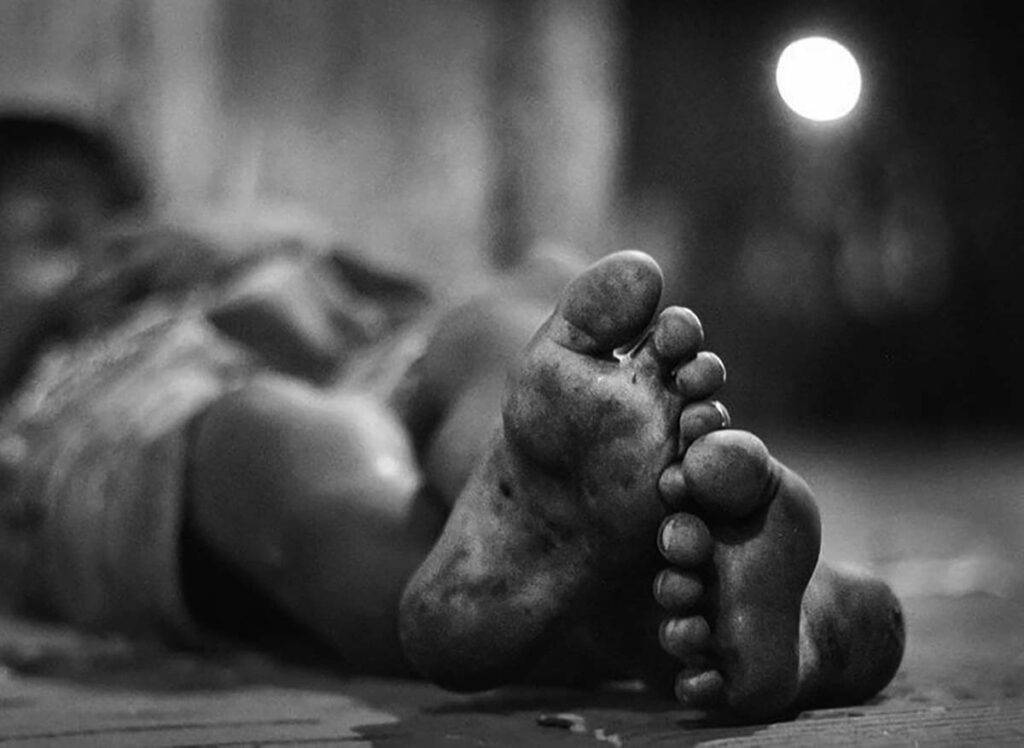
Above the frigid surface of the freshly cemented pavement lay an old man who breathed his last. His name? It does not matter; he was a dead man with or without a beating heart, for his life had long been over. To most, he was just another body, another transient feature in a landscape of anonymous lives, flickering in and out of existence. It’s strange how people can go through their lives, never truly seeing the multitude of stories unfolding in front of them. The terminal, a place defined by its movement, is in itself a symbol of how little we pay attention to the lives that intersect with ours, even briefly.
He resembled the image attached to every other street beggar: an aged man in stained and rugged rags, with dirt all over his face, accompanied with a disgruntled expression. Like a roll of film that stains a hue of sepia with age, so did this man color. Stripped of vibrancy, his very skin a testament to a life full of faded hopes. Perhaps the bitterness in his complexion was a prolonged recoil to the pity that was his life, a bitter acknowledgment that no one had ever truly looked at him beyond the surface. A beggar, to some, was a mere inconvenience—a figure that appeared too often at intersections, at doorways, in parks, always pleading for change.
His body, now cold, rested upon the brittle remnants of old newspapers—once treasures he scoured for in the depths of the forgotten. There he lay, withered and spent, in the corner he had long known as home, beside the busy, silent walls of the terminal—one that echoes in its own loneliness. A place, much like the man, that had been abandoned by connection, left to silently exist in isolation. The terminal was no place for sentiment, no place for lingering feelings. It was designed for the brief, the fleeting, the temporary. People passed through like clocks ticking forward, and the space seemed built on this constant movement.
Although this appears to be the state he was always in, the fact that he now resides without life should make all the difference; yet, for those who pass by, his stillness is but another familiar sight—a presence so constant, it fades into the unnoticed, lost in the currents of their indifference. The ease with which human beings can be overlooked, discarded in the blur of their own lives, is startling. Yet we all do it, in some way or another, don’t we? Every glance of avoidance, every step that takes us away from the less comfortable aspects of life.
And yet, had the world paused just a moment longer, had the faintest whisper of recognition swept through the crowd, there might have been something more. But this did not happen. It never did. Time passed, as it always did, and with it went the fading figure of a man who had lived his last moments unnoticed by all but the silent walls that stood around him. He had become, in a sense, a part of the terminal—something that others walked around, something that was not truly seen.
As his body desperately gasped for air, he gripped so tightly the worn-out teddy bear that his daughter used to love. The fluff spilled out in soft disarray as his fingernails sank into every corner of the object, tearing at it with a restless urgency. The bear had once been a symbol of his daughter’s innocence, a cherished part of her childhood. Yet now, it was merely a relic of what had once been a loving bond, reduced to nothing more than a tattered, insignificant thing.
Suddenly, a melancholic rush of memories flashed through as he blinked his life away in a trickle of tears. As if through a kaleidoscope, he remembered a time in his life that once gleamed with joy, basked in the love and comfort of what used to be his family—and what no longer was. He remembered the tender touch of his wife, the warmth of his daughter’s laughter. The bright colors of his past had dulled over time, faded with each passing year, until all that remained was the faintest shadow of those once-vivid moments. The overwhelming sorrow of what was lost swirled in his chest, but it was not the tears that caught his attention. It was the realization—the sharp, undeniable truth—that his life had led him to this.
Though he would soon be gone, not a soul would grieve his passing, not a single person had even noticed him. Not a single soul, except the memories that would soon be forgotten, and the echoes of his regret, which would disappear into the void. With a final, weary sigh, he clutched the battered teddy bear, its frayed fabric a mirror of his own forgotten tenderness. Deep within, he found a quiet resonance with it—once loved. No one would ever remember his name, no one would speak of his death, and no one would shed a tear. He had simply become part of the background, like the faded street signs and neglected buildings around him. This was not the kind of death one read about in stories. It was the quiet, unnoticed death of a person whose existence had been reduced to little more than a passing glance.
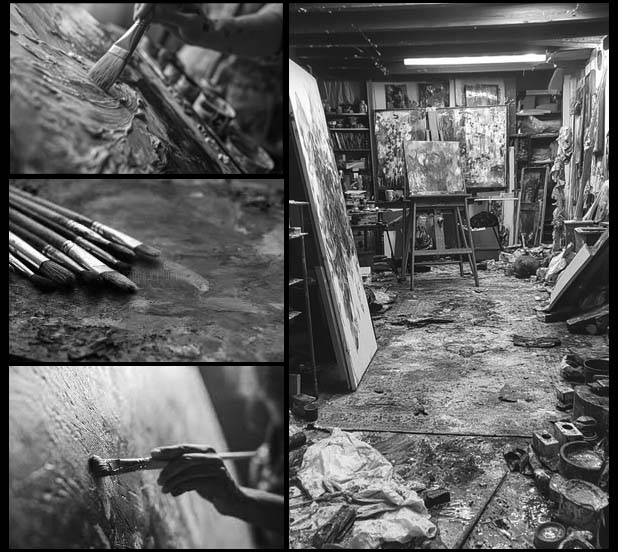
There once lived a starving artist—a man who painted the sky with visions that danced in the depths of his mind’s eye. He sculpted fragments of what others deemed worthless, transforming them into treasures of his own creation. He was a man driven not by ambition but by passion, a passion so fierce it consumed him entirely. His art was his life, and in it, he believed he could find some measure of salvation, some reprieve from the crushing realities of the world that existed outside of his work.
He heard voices, and in their whispers, he believed the gods themselves spoke, guiding his hand to weave masterpieces from the fabric of divine inspiration. A young man, driven by his passion, was as charming as he was enigmatic, and like many, he had his share of admirers — young women who were captivated by the allure of the artist. Among them, there was one he truly loved, and who, in return, loved him with purity untouched by pretense. She was neither rich nor poor—only a woman deeply in love with the starving artist. She saw him not for his work, but for the soul beneath it, and that was all she ever needed to know.
Upon their union, the woman stood by him, supporting his passion until the day they bore a daughter. The arrival of the child, however, brought no ease to the artist’s life. No, instead, it added a burden that the man had never prepared himself for. The world of his art, so consuming and insular, had no room for the cries of a newborn or the needs of a sick child. The world, it seemed, had changed overnight, and the artist, although he loved his family, found himself paralyzed by the demands of both his art and his life.
Not long after, the child fell gravely ill, stricken with a severe case of tuberculosis, a cruel fate not uncommon for children of her age. The days grew longer, and with each passing day, the girl’s health grew more fragile. The man, trapped in the grip of his own obsession, continued to paint. He continued to sculpt, pouring all his energy into his work, hoping that somehow it would yield the resources needed to save his daughter. But as the days wore on, his wife, overcome with dread, pleaded with him to abandon his convictions and find a way to earn the money needed to save their dying daughter. Yet this man, bound by the very convictions that had once driven him to greatness, found himself caught in an agonizing dilemma.
Torn between the sacrifice of his dreams and the life of his child, he wandered aimlessly, lost in his dilemma. In time, he found himself in the corner of a train station, unaware of how he had arrived there or who he had become. His identity, once a proud declaration of the artist’s name, faded like the fleeting brushstrokes of a forgotten canvas. All he could do now was stand at the crossroads of his failure, unable to decide whether to return to his work or to tend to his family. His hands, once so capable of creating beauty, were now frozen in indecision.
The afternoon sky was draped in a somber gray, as soft drizzles of rain fell faintly from above. Boots, soaked and dripping, hurried through the terminal doors, each figure more hurried than the next, swept along in the ceaseless rhythm of daily commuting. They were all tethered to the screens in their palms, lost in the lives they believed to be their own. Each one, consumed by the pulse of their own ego, passed by unaware of the presence and individuality of those around them—nobody seeing, nobody noticing. And so, it went on, as it always did—just another ordinary day at the terminal. The routine was relentless, comforting in its predictability. The hum of the fluorescent lights above, the shuffle of feet on the concrete floor, the brief snippets of conversations that dissolved the moment they were uttered—these things made the terminal what it was: a space suspended in time, a transient holding area where lives merely passed through. In this sea of motion, nothing stood still, yet nothing truly progressed.
It’s fascinating how a place as mundane, as often overlooked, as a train station can bring together so many people—each from different places, each carrying their own wounds, each arriving at different moments in time. And yet, in that one shared space, they converge, bound by the fleeting connection of their journeys, however brief or unnoticed. It was a space that seemed, on the surface, to lack meaning, yet if one looked closely, one might see that it was precisely the lack of meaning that gave it significance.
A man in his late thirties briskly walked through the steps of the terminal, his face a picture of concentration, holding a bag so heavily bulged that his belongings threatened to spill over. Earlier on, when he received the most important phone call of his life, a surge of excitement had filled him. He packed hastily, grabbing whatever he thought necessary, then ventured out to buy a ticket for the next train. His heart raced with anticipation. It was an important day for him; the most important day of his life it would seem, for today, his child was to be born. His wife had been in labor for hours, but the call he received confirmed that the birth was imminent. He had no time to waste; he needed to be there, to witness the arrival of his child, a moment he had waited for with both longing and dread for what felt like eternity.
His thoughts raced ahead of him as he moved through the crowd, thoughts of the little life waiting to be brought into the world. It would be a girl, they knew that much. They had chosen a name, a name that seemed to carry the weight of generations with it. He could already see her in his mind, a small, delicate bundle, her face scrunched up in that first moment of life. He imagined holding her in his arms, watching her tiny fingers curl around his own, feeling the warmth of her small body against his chest.
But as he neared the line for the upcoming train, a small teddy bear tumbled from his overstuffed bag. He bent to retrieve it, and as he straightened, his gaze fell upon the terminal’s familiar figure—the bum he often passed—now collapsed on his side, motionless. The man, despite his best intentions to ignore the beggars and drifters who populated the station, had seen the old man many times. Their interactions were limited to brief, disinterested glances and the occasional exchange of pity or discomfort. The bum’s presence had become part of the terminal’s background noise, just another face in the crowd. He couldn’t say he’d ever taken the time to truly look at him, to wonder about his story, about his life.
But now, the sight of what looked like a lifeless body was unsettling; a chill creeping through him as something felt deeply wrong, with the very air seeming thick with an ominous weight. For a moment, he paused, his hand hovering over the teddy bear, his mind torn between two impulses. Should he check on the man? Should he stop and make sure he wasn’t truly dead? He had been in such a rush when he entered the terminal. The baby, the birth, the future—it all loomed large in his mind, pressing down with urgency. I can’t be late, he thought, today’s the day I’ve waited for. Yet as he took a few steps forward, the doors of the vehicle slid open with a sudden rush, interrupting his thoughts.
In between a flicker of time and a hurried crowd rushing to pass, the man stood still beside the train tracks, his gaze fixed on the lifeless body before him. Lost in thought, he hardly noticed how the world continued moving around him, the sound of boots hitting the concrete floor, the rush of bodies swarming past, the constant hum of the terminal’s machinery. It was as though everything had become background noise to the heavy silence of his own mind. He could not tear his eyes away from the old man’s body.
His mind lingered on the precious, fleeting time he had left before he would be late to witness the birth of his child—a child he and his wife had desperately prayed for over nine long years. The anticipation was so powerful it felt like a physical presence, pushing him forward. But there, in that stillness, the sight of the old man—once alive, now gone—pulled at him in a way he couldn’t quite explain. The strange weight of the moment tugged at his heart, a silent plea to do something, to acknowledge the death before him. But as his thoughts swirled, something in him flickered—What good would it do for me to stop?
He thought, I’ll leave it. Someone else will help. That thought, once fleeting, now lingered like a shadow, refusing to leave. He wasn’t sure if it was guilt or simple exhaustion that made him hesitate. His life had always been a series of choices between duty and desire, and in this moment, duty called him elsewhere. He had a life waiting for him, a future he had been dreaming about for so long. It was just a man, lying there. One of countless others who faded in and out of the station’s daily rhythm, unnoticed, unremembered.
And so, with the quiet murmur of doubt in his chest, the man turned away and boarded the train, his mind fixated on the thought that, while a life within the terminal may have ended, the life he was rushing toward was just beginning. His heart swelled with a sense of purpose, of hope. He convinced himself that his absence, his choice to move on, wasn’t cruel. It was pragmatic. He would be there for his child. He would be the father his daughter needed. That was all that mattered. He told himself someone else would see the old man, someone else would care.
Two days passed. The man returned home with his wife and child, the joy of a new beginning filling the air. The tiny, delicate fingers of his daughter wrapped around his thumb, and for the first time in years, the man allowed himself to believe that his life had a purpose. It was as if the child was a new canvas, and he, the artist, would be able to paint a life filled with love, with meaning. The guilt, the sense of responsibility toward the old man, began to recede — replaced by the overwhelming sense of gratitude and joy that this new chapter had brought him.
A distance from their home was the terminal, where the doors of the vehicle slid open, revealing the same sight that had haunted this man’s thoughts. With much dismay, the old man’s body still lay there, undisturbed, as though time had forgotten him. There he was, abandoned, unnoticed, left to lie in his final repose. The once-bustling terminal now seemed eerily empty, as though the very walls knew that something important had been left unresolved.
The crowd shuffled around the lifeless form, their pace unchanged, their eyes fixed on their own private worlds. It was, as always, just another ordinary day at the terminal. And yet, the man felt as if the ordinary had somehow been tainted. His earlier thoughts echoed through his mind with a new sense of weight: Someone else will help. The words had been so easy to believe at the time, so easy to dismiss his own responsibility. But now, standing here, he could feel the truth behind them—that those few words had cost him something. It had cost him the opportunity to make a difference, to act. He looked at the old man, his face now just another piece of the terminal’s background, his death reduced to a footnote in the long, unremarkable history of a place that was never truly seen. But the man knew. He knew that in his refusal to act, in his choice to look away, he had become complicit in a greater indifference. This was the price of inaction: a kind of silent death of the soul. His voice lingered within him…“Someone else will help.”