

via Graphic Plus — For millions of Filipinos in far-flung barangays and island communities, access to healthcare often means hours of travel, long lines, and high costs. In Geographically Isolated and Disadvantaged Areas (GIDA), this challenge remains one of the country’s most persistent health gaps. To help address this, mWell, the Philippines’ health and wellness mega app by Metro Pacific Health Tech Corporation, continues to work with government and community partners to make quality care easier to reach for all.
Across the country, access to doctors varies widely. Urban centers average one doctor for every 33,000 people, while rural communities may rely on a single doctor for up to 100,000 residents. These gaps show how digital healthcare can connect families to timely care, especially in remote and island communities. Today, more than 3,700 doctors across over 48 specializations are accessible through the mWell ecosystem.
“Families in faraway communities have waited a long time for easier access to care,” said Manuel V. Pangilinan, Chairman of mWell and MPIC. “With our partners, we are building pathways that make healthcare more accessible, affordable and dependable for every Filipino. This is the future we are committed to realizing together so that distance no longer stands between our people and the care they deserve.”
Chaye Cabal-Revilla, President and CEO of mWell and Chief Finance, Risk, and Sustainability Officer of MPIC, said mWell’s mission is shaped by the stories of the people they meet. “When we visit these areas, we see how distance affects every step of a family’s healing journey. That is why inclusion matters. Our goal is to make healthcare steady, connected, and compassionate, no matter where you live.”
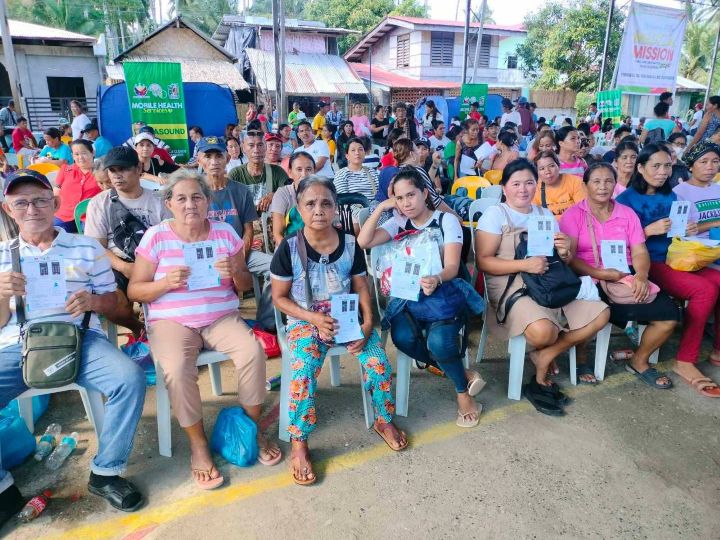
Partnerships also extend beyond consultations. Through Lab For All led by First Lady Liza Araneta Marcos, mWell provides online consultations and deploys Clinic-In-A-Bag units to support nationwide caravans offering free healthcare and laboratory services. The Philippine Coconut Authority likewise partnered with mWell’s sister company KonsultaMD to serve nearly 500 coconut farmers in Digos, Davao through mobile health services that bring care to communities that sustain vital local industries.
Local governments play a crucial role in making digital healthcare part of everyday life. In Palawan, Taytay’s LGU introduced mWell health kiosks, the LGU Health App, and the digital Health ID. Barangay health workers now record consultations digitally and connect residents to doctors through mWell, allowing families to access care without traveling far. Mayor Norbert Salvame Lim shared the impact of the partnership, saying, “Our health workers can serve better, our residents can see doctors faster, and our families finally experience the care they deserve.”
In Taguig City, mWell worked with the Persons with Disabilities Affairs Office to give PWDs easier access to online consultations and e-prescriptions, ensuring that essential care remains within reach for vulnerable groups.
mWell also supports the Metro Pacific Investments Foundation’s Shore It Up program, providing teleconsultations in coastal communities. On Pagasa Island in the West Philippine Sea, 650 residents now have 24/7 access to doctors through mWell OnTheGo Clinic-In-A-Bag, a collaboration with the AFP Officers’ Ladies Club and the Philippine Air Force.
Each effort reflects one shared vision. By combining digital platforms, strong partnerships, and on-the-ground initiatives, mWell helps support continuity of care that complements national goals. These collaborations also contribute to the development of the country’s first integrated digital health network. This includes supporting the integration of mWell services into the eGov PH App, which will allow Filipinos to connect with doctors, access their digital Health ID, and manage essential health records on one trusted government platform.
mWell continues to show that healthcare inclusion is not only an advocacy but a movement shaped by many hands. With every community reached and every health worker supported, distance matters less and care grows stronger.
Local governments, national agencies, and organizations are invited to be part of this shared mission of care. Together, we can help make healthcare inclusion a reality for every Filipino.