

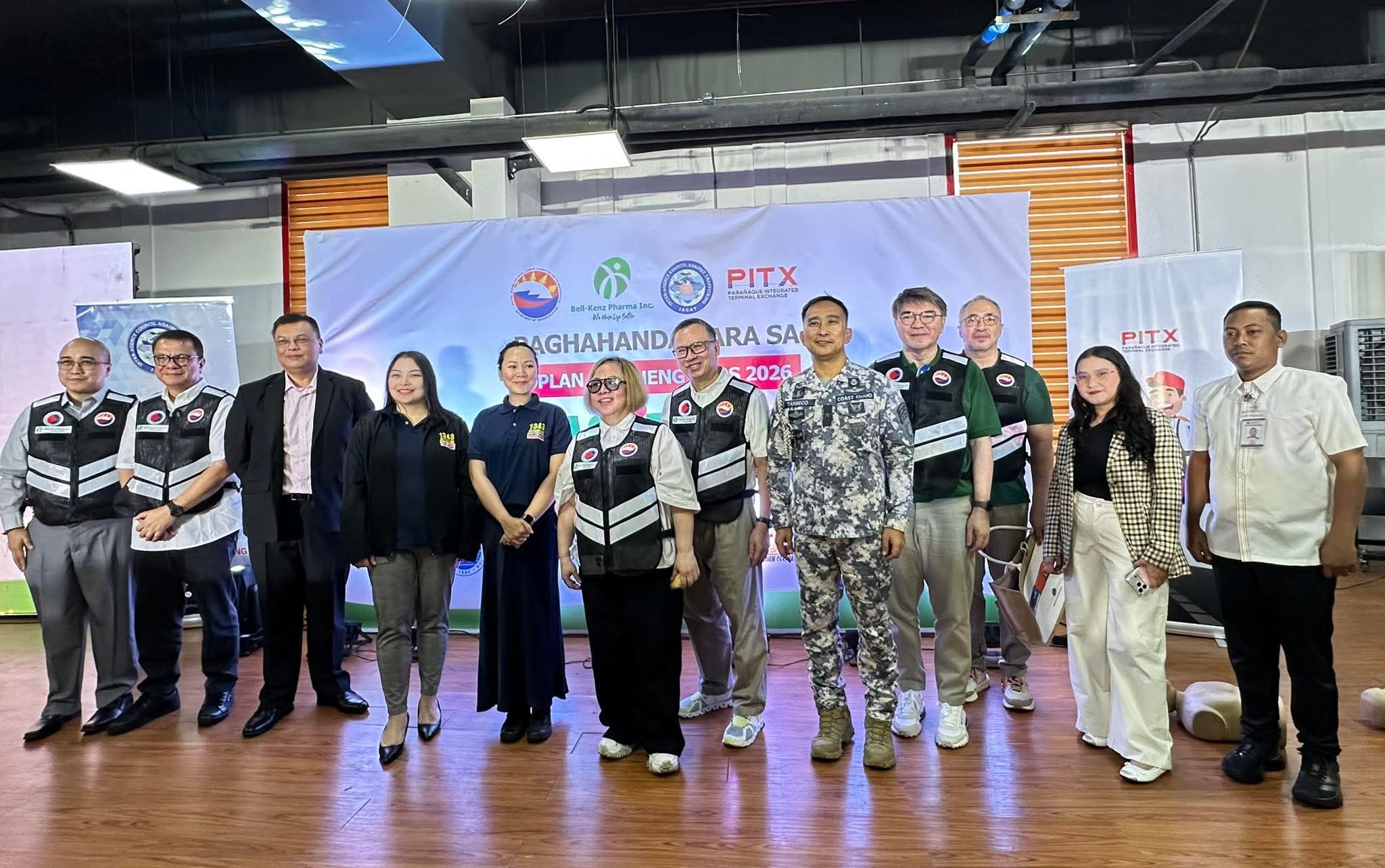
via GRAPHIC PLUS | PARAÑAQUE CITY — A nationwide campaign to train one million Filipinos in Hands-Only CPR reached a key public transport hub as Sagip CPR, the flagship advocacy of Bell-Kenz Pharma, conducted a hands-on cardiopulmonary resuscitation (CPR) session at Offix 3 in the Parañaque Integrated Terminal Exchange (PITX).
Held in partnership with the Department of Transportation – Special Action and Intelligence Committee for Transportation (DOTr-SAICT) and other stakeholders, the initiative gathered bus drivers, conductors, and transport enforcers for practical training in Hands-Only CPR. The expansion into major transport terminals highlights the campaign’s focus on high-traffic areas where immediate medical assistance may not always be accessible.
Sagip CPR seeks to equip ordinary citizens with basic life support skills, particularly in cases of sudden cardiac arrest. According to Patrick Larraga, Head of Corporate Branding & Public Affairs of Bell-Kenz Pharma, the advocacy recognizes the vital role transport frontliners play, given their daily interaction with thousands of commuters.
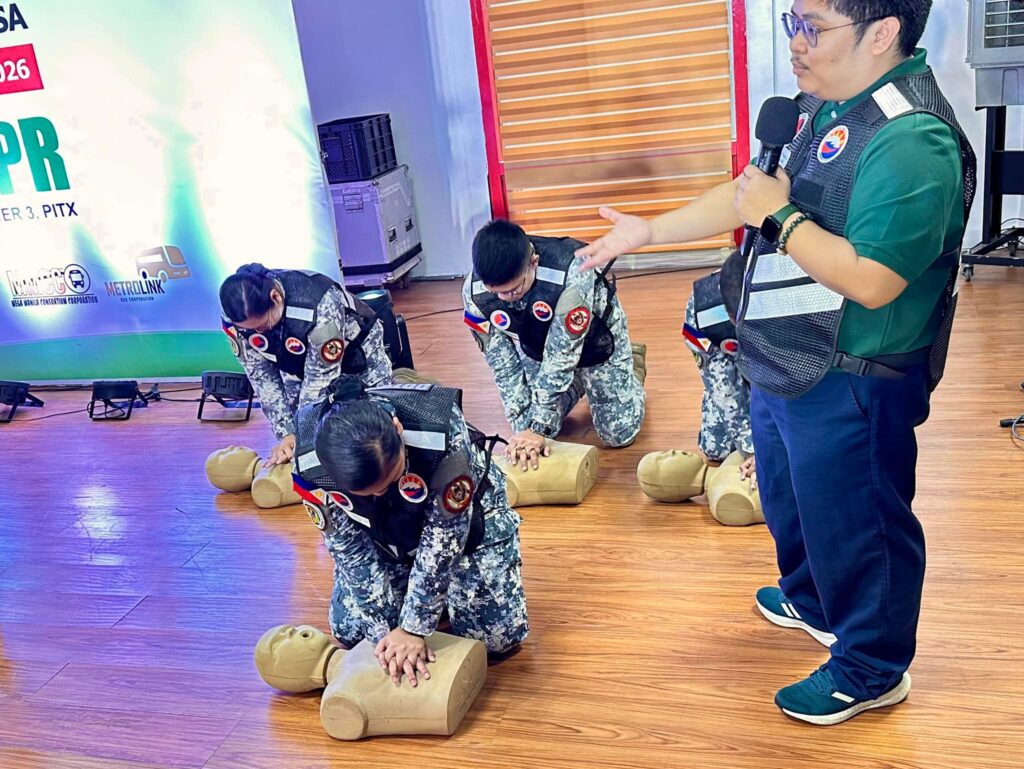
“Our goal is to build a nationwide network of everyday lifesavers,” Larraga said. “By training transport frontliners—especially those deployed along major commuter corridors such as EDSA—we help ensure that life-saving intervention can begin even before professional responders arrive.”
The campaign initially focused on senior high school students to maximize the multiplier effect of youth engagement. To date, more than 18 institutions have participated in nationwide school activations, supporting the legal mandate to integrate CPR training into the K to 12 curriculum. Data indicate that eight out of ten cardiac arrests occur outside hospital settings—often at home—reinforcing the need for widespread public training.
Dr. Luis Raymond T. Go, Medical Director of Bell-Kenz Pharma, said the transport-centered rollout forms part of the company’s broader Kaagapay Project and its GPCPR initiative.
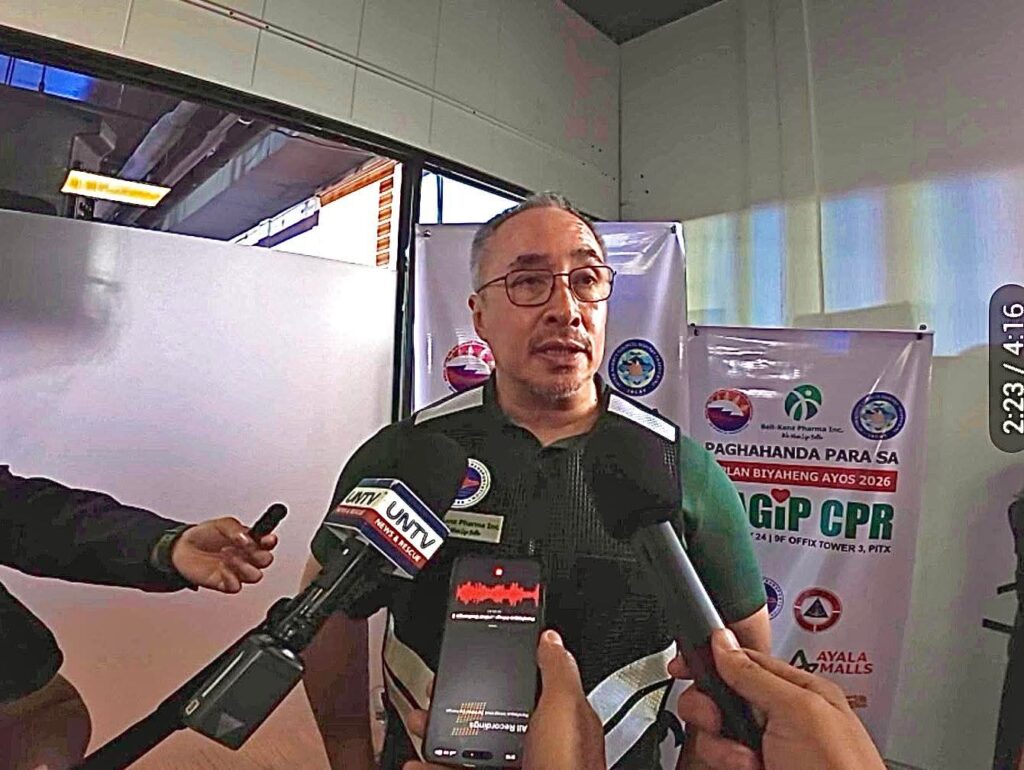

“While we remain committed to providing affordable, high-quality medicines, we also recognize our responsibility to promote public safety,” Dr. Go said. “With more than a million Filipinos passing through transport systems daily, strengthening emergency preparedness among drivers, conductors, and enforcers can significantly improve survival outcomes during cardiac emergencies.”
He noted that only about two in ten Filipinos currently know how to perform CPR. Without immediate intervention, survival rates decline sharply within minutes. When combined with the use of an automated external defibrillator (AED), CPR substantially increases the likelihood of survival.
“With peak travel periods such as Holy Week, when millions are on the move, having trained responders on-site adds a critical layer of protection for commuters,” he added.
Dr. James Cayetano, President of the Bell-Kenz Pharma Foundation, described the initiative as a long-term public health strategy driven by urgency. He emphasized the critical five-minute window before irreversible brain injury can occur during cardiac arrest, underscoring the importance of immediate bystander action.
“Millions pass through transport hubs daily. Training those already on the ground—drivers, conductors, and enforcers—ensures that assistance is available during those first crucial minutes,” Cayetano said.
Beyond transport hubs, the foundation continues to expand its school-based program nationwide, with 8,000 to 9,000 students already trained. Through sustained collaboration with government agencies and private partners, Sagip CPR aims to make Hands-Only CPR a common and accessible life skill among Filipinos.
As the campaign advances toward its one-million target, organizers hope to cultivate a culture of readiness—empowering ordinary citizens to act decisively and save lives when every second counts.


 session at Offix 3 in the Parañaque Integrated Terminal Exchange (PITX).)