

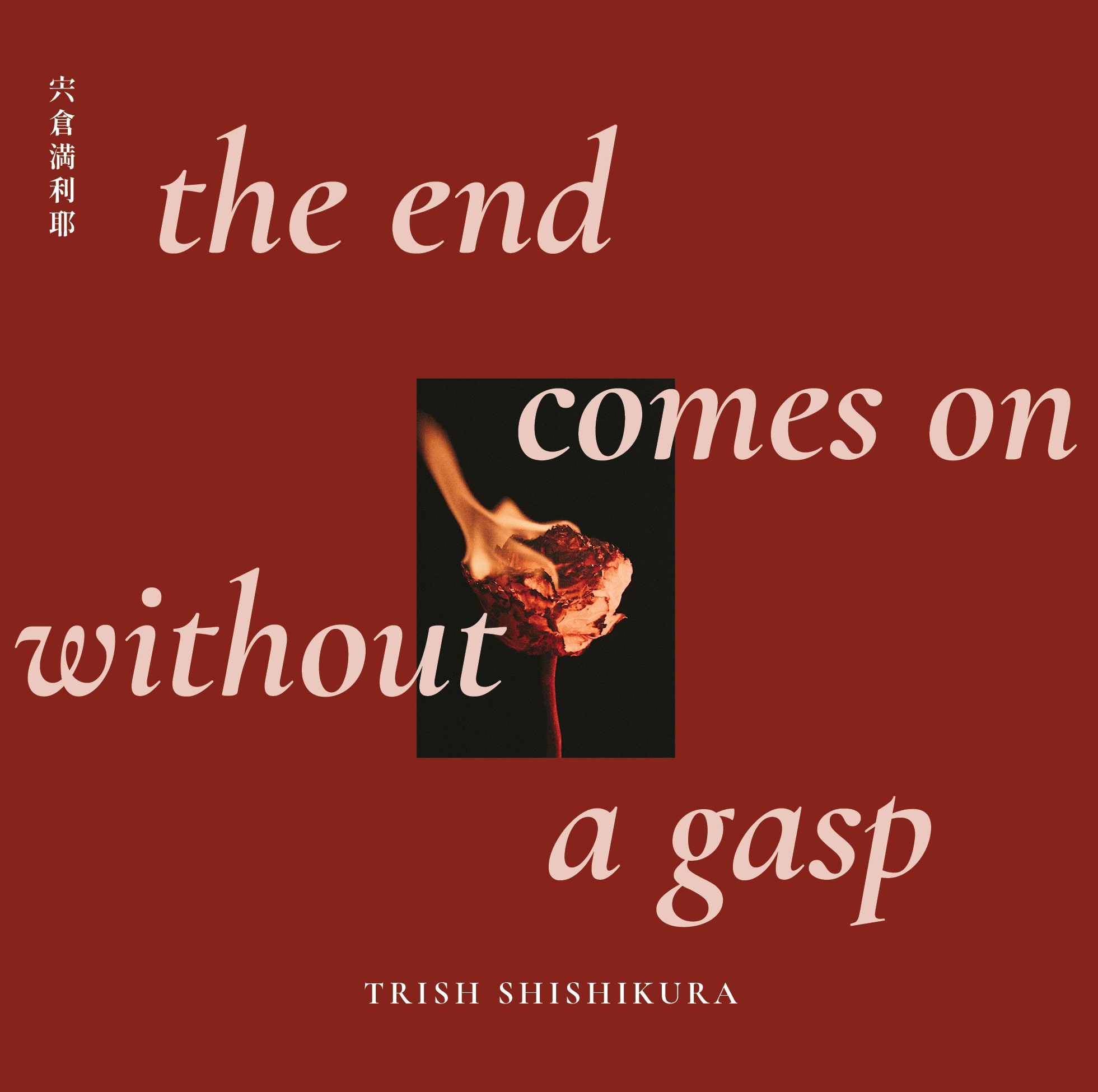
Quezon City, Philippines (February 27, 2026) — Ateneo de Manila University Press, through its poetry imprint Bughaw, announces the publication of the end comes on without a gasp, the debut poetry collection by Trish Shishikura.
Written across a decade, the end comes on without a gasp returns to poetry as a way of bearing grief. It turns loss into language that can be sat with, revisited, and shared.
Moving between the Philippines and Japan, the collection braids domestic life with
displacement and memories of violence, holding familial and paternal grief at a human scale with historical consciousness.
Across lyric and documentary modes, including poems that read like incident reports, interrogations, and admissions, Shishikura confronts violence that can be intimate,
historical, and institutional, with particular attention to women’s histories and what is too often erased. The book does not offer a clean closure. It insists on return as a form of witness to violence and to women’s histories too often erased from the record.
The collection includes poems that have appeared in Tokyo Poetry Journal, LIKHAAN: The Journal of Contemporary Philippine Literature, Mekong Review, Rogue Agent,
Santelmo Magazine, Softblow Poetry Journal, and Silliman Journal, among others.
Shishikura is the First Prize winner for Poetry in English at the 71st Don Carlos Palanca Memorial Awards for Literature (2023) for her manuscript, Translating Wildfires.
EARLY PRAISE
“In Shishikura’s assured and daring debut, the imprudent heart knows its place in the world: to turn a battle scar into a song, one must always risk the wound; to be in love with the world means to know the body is mortal but not to believe it. The reward for so exacting a life can only be beauty.” — Mookie Katigbak-Lacuesta
“This collection of poems is like a multi-panelled paper screen of a world unfolding between two oceans, two archipelagoes, between consent and resistance, peace and violence, love and sorrow… These are not confessional poems but hyperreal worlds that entangle the natural world and urbanities in a third culture experience that is elegiac and redemptive.” — Nerisa Del Carmen Guevara
“The oceanic odyssey of the poems in this first collection of Trish Shishikura spans a decade of searching for the bones of the dead and singing to them through storms… The eight sections offer coordinates of the quests of Shishikura’s personae to retrieve memory marked by the anguish of violence, grief, loss… In the collection’s final poem ‘Sayonara,’ her persona’s infinitives can be read as imperatives of her poetics… ‘To let go. To allow new poems. To arrive. To stay.’” — Marjorie Evasco
ABOUT THE BOOK
In poems that travel from domestic rooms to interrogations, shorelines to cityscapes, the end comes on without a gasp insists on the body’s mortality without surrendering the desire to live more deeply. Through lyric risk, documentary textures, and haunted tenderness, Shishikura builds a world where endings are not clean departures but recurring thresholds crossed in language, in memory, and in the body.
Title: the end comes on without a gasp Author: Trish Shishikura
Publisher: Ateneo de Manila University Press, Bughaw imprint Publication year: 2026
Cover art: Trish Shishikura Cover design: Alex Gozum
ABOUT THE AUTHOR
Trish Shishikura is a Tokyo-born, Luzon-based poet and photographer. She is represented by Artists & Company Manila. Her poems have appeared in Mekong
Review, Rogue Agent, Softblow, Quarterly Literary Review Singapore, Silliman Journal, LIKHAAN, and Tokyo Poetry Journal, among others. the end comes on without a gasp is her debut poetry collection.
AVAILABILITY
the end comes on without a gasp is available through Ateneo de Manila University Press and its distribution channels.
Ateneo de Manila University Press (Bughaw imprint)
Email: unipress@ateneo.edu
Website: unipress.ateneo.edu