The celebration of the Philippines’ arts and culture is a celebration for all, regardless of one’s proclivities, so long as it stands to illuminate the citizen—and the nation—for good.
What does a beauty queen of mixed heritage have anything to do with Philippine arts and culture?
Back in December 2016—two years before she was crowned Miss Universe—then-22-year-old Catriona Gray was asked by Miss World 2015 Mireia Lalaguna: Which qualities do you think it will take for you to wear my crown?
After a quick, nervous breath, the Filipino-Australian maven answered: “To be a Miss World is to carry a burning torch.”
“It is like action carried out by one to illuminate the lives of many,” Gray continued. “And I would dedicate my whole self, my love for the arts, and my voice to trying to uplift, empower, and educate people. And it would be my greatest honor and duty to hold this torch high enough so that all the world could feel and see its light.”
When a country and its citizenry have been acquainted all too well with darkness, the concept of light as a way out rings even more true.
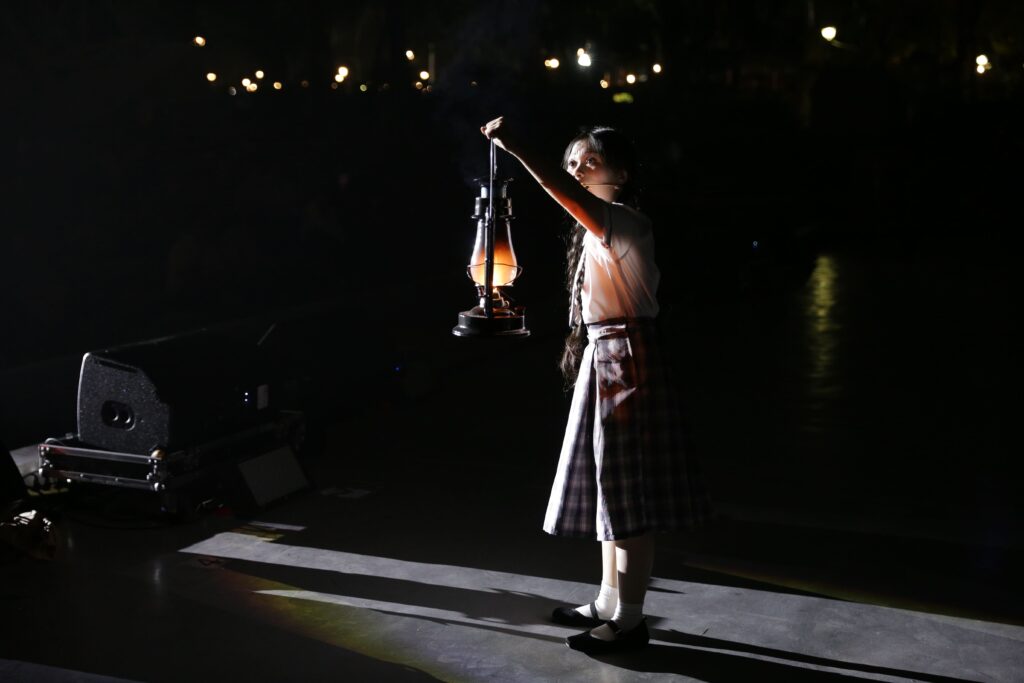
It is also in the concept of “light” where the National Commission for Culture and the Arts (NCCA) finds its perfect symbol. It adopted the lampara [lamp] as the key symbol of this year’s National Arts Month (NAM)—a representation for “light, truth, and courage.”
The commission said this national celebration, held every February, highlights “how artistic expressions reflect shared realities and collective aspirations of the Filipino people.”
NCCA, NAM HISTORIES
During the Martial Law years, Filipinos would find their rights and freedom of expression strongly repressed with the massive censorship that was prevalent in the era.
That freedom which the Filipino people used to enjoy was at the crosshairs, as media outlets and creative expression remained in strict control of the government. Writers and artists critical of the Marcos Sr. regime such as Pete Lacaba, Lino Brocka, Orlando Castillo, Lorena Barros, Bienvenido Lumbera, and Ninotchka Rosca faced oppression and imprisonment under the hands of the military.
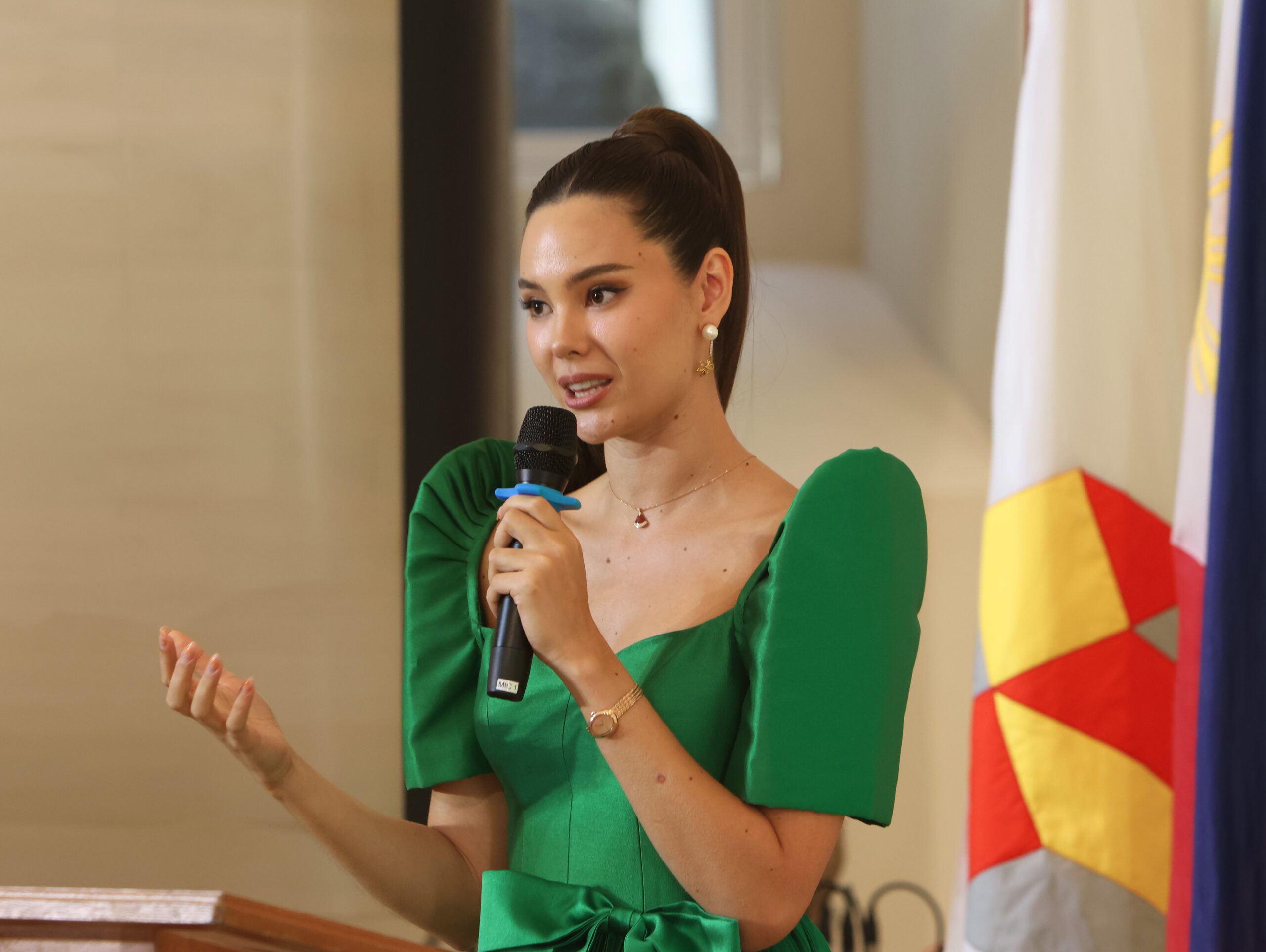
Miss Universe 2016 Catriona Gray joins the NAM initiatives, lending her voice to amplify creativity, heritage, and the enduring relevance of Filipino artistic expression as art ambassador
It will only be years later during former president Corazon Aquino’s time that the transfiguration of the government’s attitude toward Philippine art and culture heritage would find a strong foundation.
As the government began seeing drastic changes in its structure, Aquino would lay down and sign Executive Order 118 and establish the Presidential Commission on Culture and the Arts in 1987, which served as the progenitor for what we now know as the National Commission for Culture and the Arts.
The NCCA itself wouldn’t be formally established until five years later on April 3, 1992, with Republic Act 7356 being enacted into law.
The original iteration of RA 7356 in 1992, or “Law Creating the National Commission for Culture and the Arts,” declared six core principles that served as its foundation: Culture as a Human Right, National Identity, Culture of the People, Culture by the People, Culture for the People, and the Preservation of the Filipino Heritage.
It was also around this time in history that the February of each year was to be declared as the “National Arts Month,” with Aquino signing Proclamation 683 on January 28, 1991.
Since then, February is seen as a festive month to celebrate the richness and diversity of Philippine culture, exercising the principles which formed the core of the NCCA.
Art-related events would usually fall on this month, such as “Art Fair Philippines” and Cultural Center of the Philippines’ “CCP Pasinaya,” with the major centerpiece being NCCA’s National Arts Month program.
The theme for each year’s NAM has changed over the years. But since 2023, the NCCA has used the running concept of harvest with their “Ani ng Sining [Harvest of the Arts]” series, beginning with “Bunga ng Galing (Fruit of Excellence).”
In 2024, art’s role in nation-building was at the center of the theme with “Bayang Malikhain [Creative Nation];” a year later, it was the Filipino creative spirit that took the spotlight with “Diwa at Damdamin [Spirit and Passion].”
NAM celebrates seven art forms: Architecture and Allied Arts, Cinema, Dance, Dramatic Arts, Literary Arts, Music, and Visual Arts.
One could surmise that at the birth of both the NAM and the commission in charge of spearheading it was the idea of rising above a dark spot in Philippine history by championing the cultural spirit of the nation and the Filipino imagination that brought it to life.
2026 N.A.M.
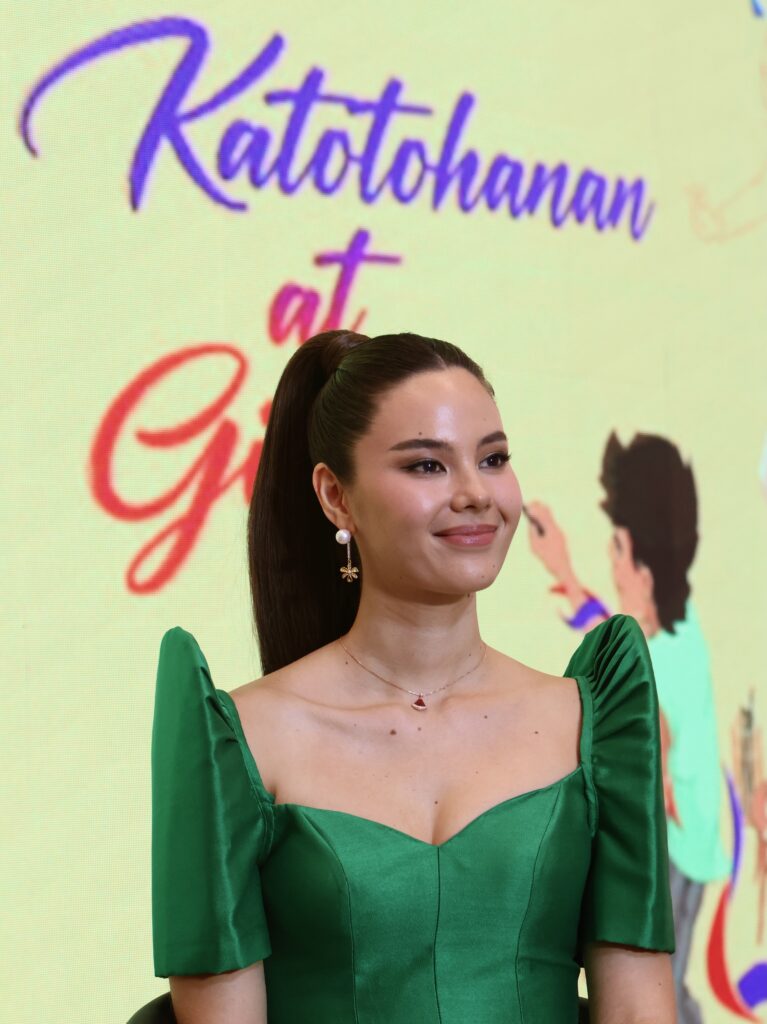
The main theme for this year’s NAM is “Ani ng Sining: Katotohanan at Giting [Harvest of the Arts: Truth and Valor].”
Programs conducted for the 2026 NAM will not be centered in Metro Manila or Luzon. Throughout the month, other parts of the country will also celebrate Philippine culture, with each event tailored to the specific culture of the region.
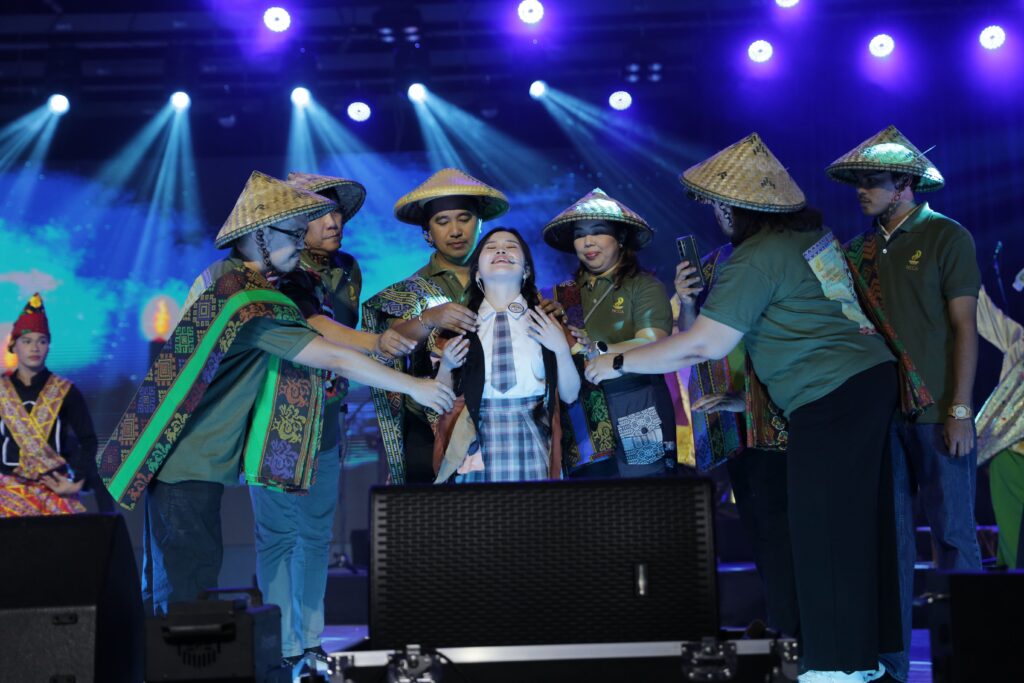
To set things off, the NAM 2026 grand launch on February 1 highlighted the “ceremonial passing of the lampara,” tracing the “journey of Philippine art from its roots and institutions to the people, and ultimately to the next generation of the country,” says the NCCA.
Regional openings followed the grand launch. Biñan, Laguna (for Luzon) and Palo, Leyte (for Visayas) were scheduled to open their regional programs on February 18.
Mindanao has two sites for its NAM celebration: Butuan City began earlier on February 13; while Davao’s regional program was set for February 20.
“Ngayong taon, ang ating mga programa ay madiskarteng ipinamahagi sa ibat ibang rehiyon upang matiyak na ang ani ay makakarating sa bawat sulok ng bansa [This year, our program was strategically distributed to various regions to ensure that the harvest will arrive to every corner of the country],” Commissioner for the Arts Dr. Lordinio A. Vergara said during the 2026 NAM press launch.
In Palo, the focus was on climate justice with the theme “Pag-uswag Han Tawo ngan Kalibungan [Human Progress and the Environment],” meant to emphasize the relationship between environmental sustainability and human development.
Butuan City’s theme “Lawig Mindanaw: Kalinaw ng Kahigayunan [Greater Mindanao: Peace and Access]” highlights the “role of dance, music, and film in promoting inclusion, dialogue, and lasting peace.”
Davao’s theme “Ang Yuta, ang Tawo ug ang Kalinaw [Ang Bayan, ang Tao at ang Kapayapaan],” will also reflect this call for peace and access. The event will feature the region’s “choreographers, visual artists, filmmakers, and Special Program for the Arts teachers and students, culminating in a multimedia performance that reflects Mindanao’s narratives of community,” the NCCA shared.
The inclusion of different cultures into the program and having regional celebrations (even smaller, localized celebrations), as well as a diverse set of artistic events further, augment the richness of the festive month.
“Ang pagdiriwang na ito ay isang patunay na radikal na kolaborasyon. Binabasag natin ang mga pader sa pagitan ng pitong sining [This celebration is a proof of radical collaboration. We’re breaking the walls in between the seven arts],” Dr. Vergara said in his message during the press event.
But it is not a lone undertaking for the NCCA: Various institutions, organizations, and local government units across the country will partake in the event.
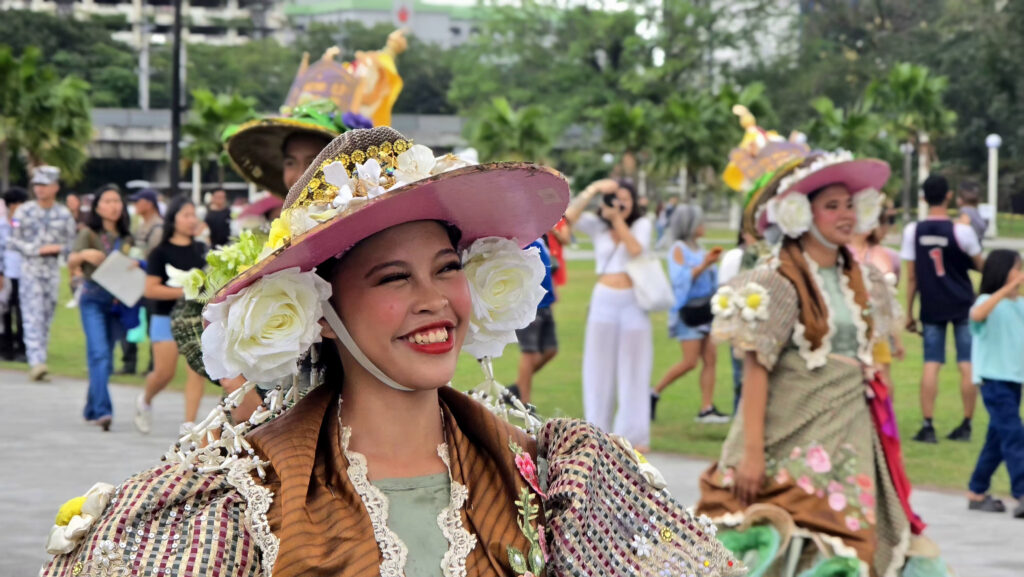
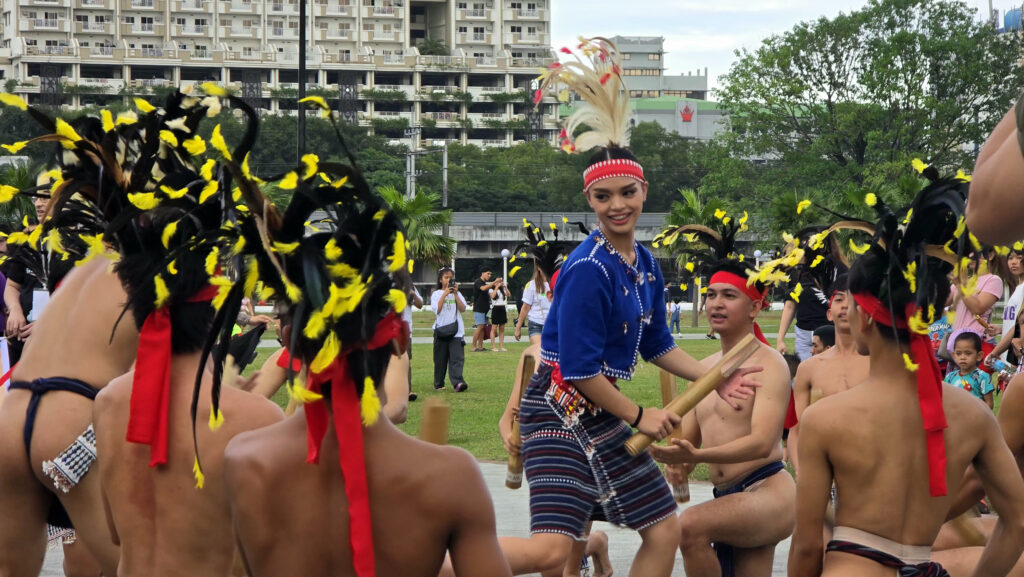
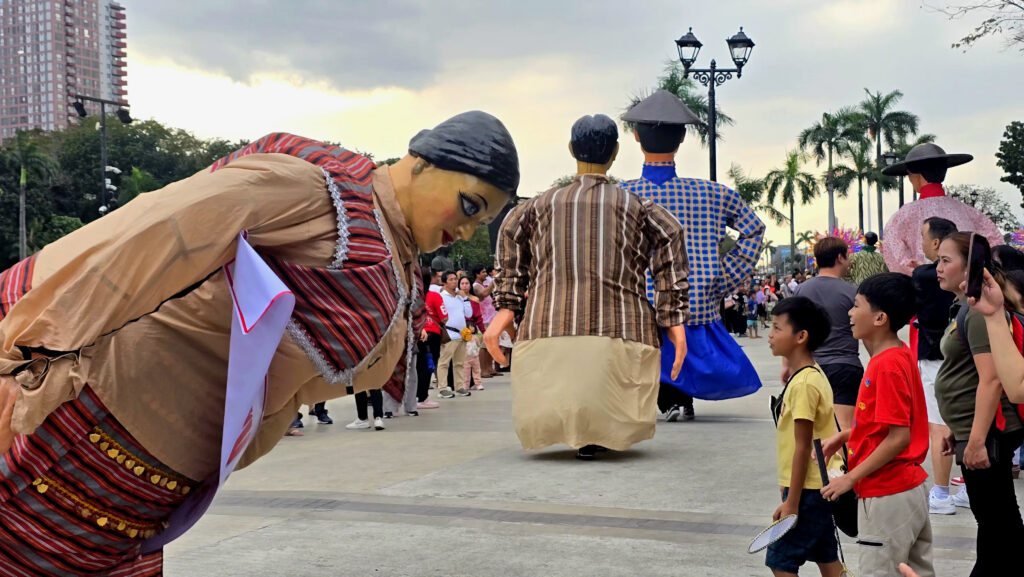
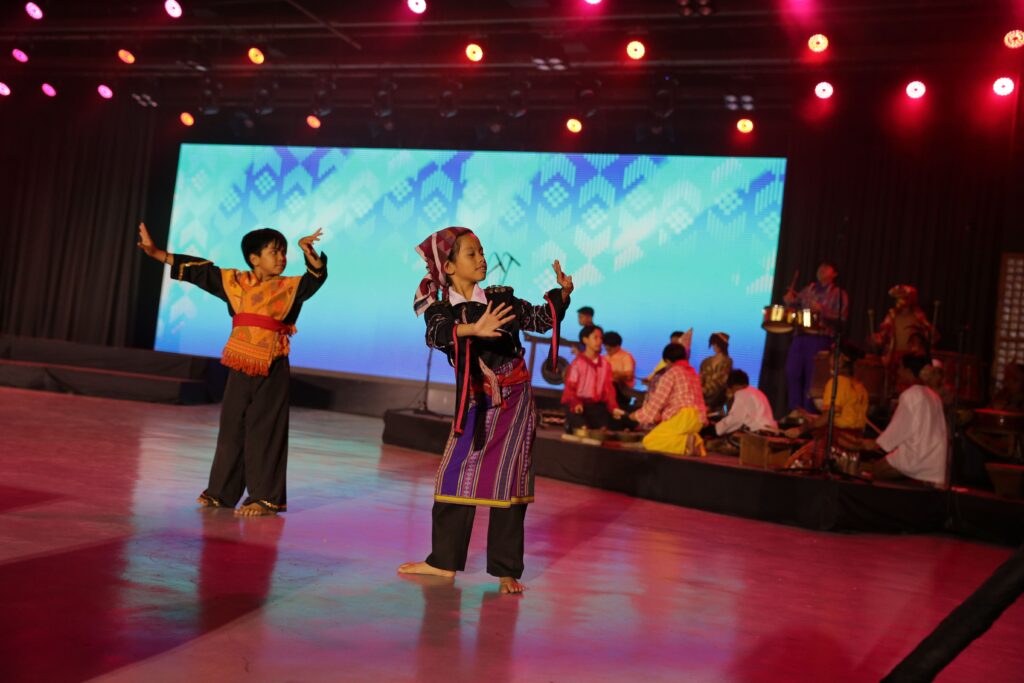
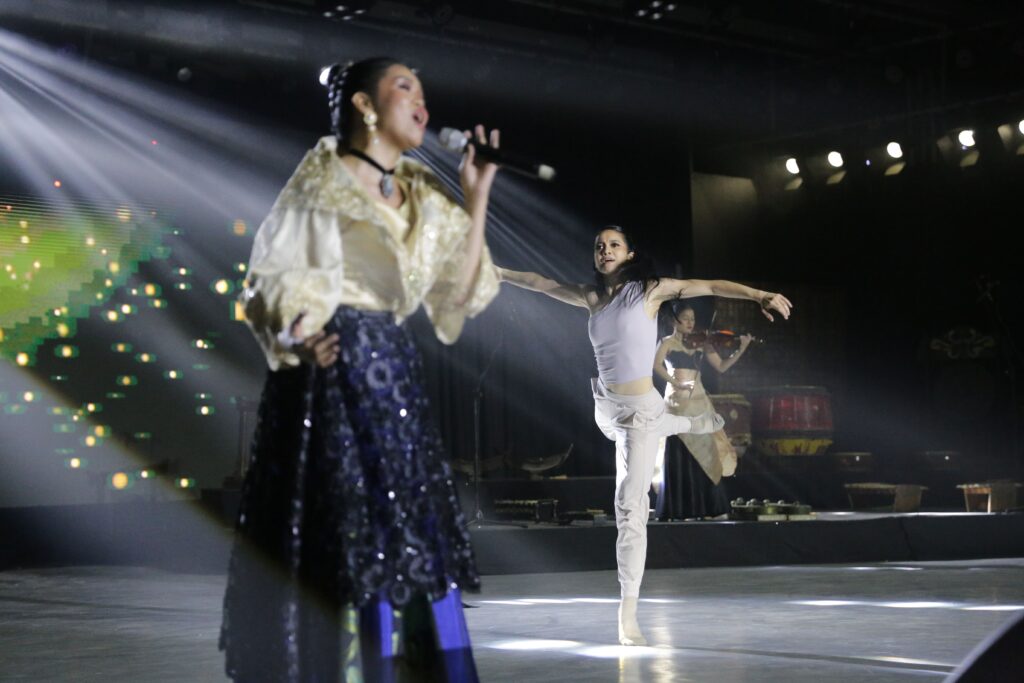
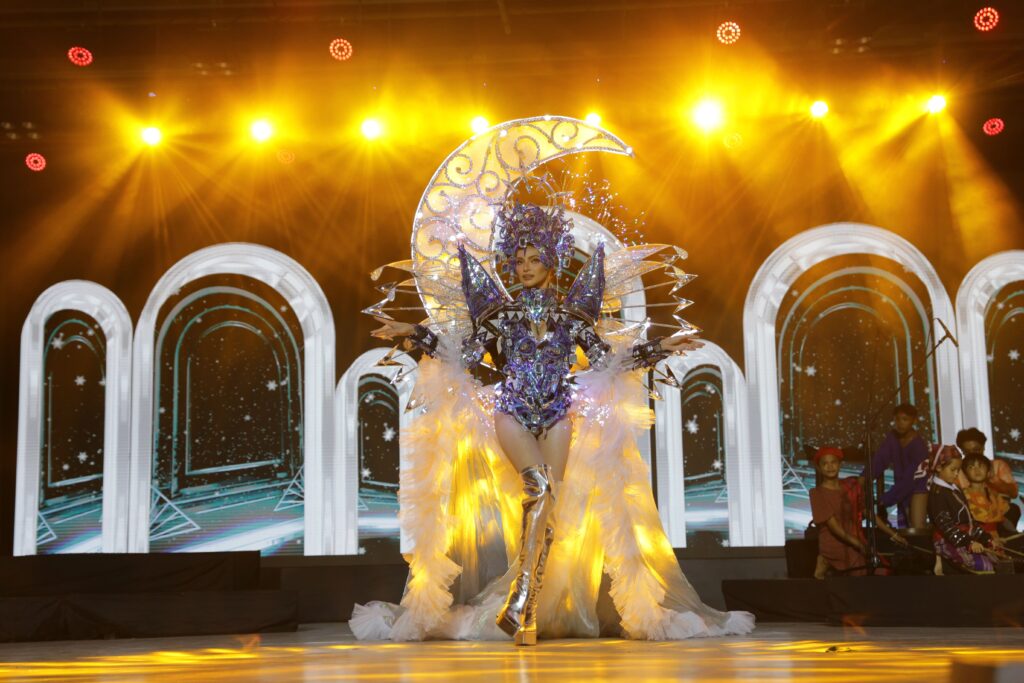
In the grand launch alone, groups such as University of Santo Tomas’ Salinggawi, Guiguiteno Dance Troupe, Echague Tribal performers, UST Singers, and the Philippine Ballet Theater gave a series of performances that encapsulates the soul of the arts month.
At the National Arts Month celebration, artists and institutions reaffirm culture’s role as a living force shaping identity, memory, and national resilience
Supplementing the major activities will be NCCA’s Art FriDates: a weekly event providing a platform “for artists and cultural workers to showcase their creativity through performances and workshops.”
Dr. Vergara concluded: “Sa ani na ito, matatagpuan natin ang katotohanan ng ating pagkakakilanlan, at ang giting na bumuo ng isang bansang pinapahalagahan: ang pagkamalikhain bilang ating pinakamahalagang yaman. [For this harvest, we’ll find the truth about our identity and the courage that created a cherished country—creativity as our most important treasure.]”
The light as a means of illuminating truth and the arts being the courier of that light permeates throughout NCCA’s vision for the program. It is not only with the key symbol of a lamp; rather, it is a lynchpin concept that ties up all the themes of justice, peace, identity, courage, and truth.
If the NCCA wishes for something—and someone—to epitomize this campaign for the 2026 NAM, then perhaps there will only be a few who are more apt and far-reaching than a symbol of light and a former Miss Universe title holder.
ARTS AMBASSADOR
It was only fitting that almost a decade later after her attempt at Miss World 2016, Catriona Gray would continue to carry the role of “Ambassador for the Arts” for the NCCA as a lightbearer.
She was, by no means, a neophyte to these humanitarian efforts.
Prior to her involvement with the commission, Gray has had extensive experiences advocating for worthwhile causes, using her platform for humanitarian purposes, and working with various organizations like the non-profit organization Young Focus Philippines in Tondo, Manila.
She was also the Philippine Red Cross’ ambassador during the Covid-19 health emergency.
Gray is now in her seventh year of collaborating with the NCCA. She first became the commission’s ambassador at the onset of the pandemic in January 2020,.
It might be a question for some as to how someone with mixed heritage is appropriate to advocate the Filipino artistic and cultural heritage—especially when a component of this year’s theme is in illuminating the Filipino identity.
Yet the NCCA’s “advocacy for the promotion and preservation of Philippine arts and culture” still aligned with the former Miss Universe’s own upbringing.
“My love for our arts and culture was not something I was born to due to my mixed heritage,” the beauty queen admitted in 2020. “It was something that was grown, learned and embodied.”
According to the NCCA’s April 2001 amendment to RA 7356, the Filipino national culture should be “non-partisan” and “open to all people and institutions, regardless of creed, affiliation, ideology, ethnic origin, age, gender or class.”
“I sought to take the opportunity to celebrate our national Philippine heritage, art, history, textiles, music and dance to bring forth a new found interest in Philippine arts to the younger generation,” she shared.
“It brings me great pride to continue sharing our unique, Filipino heritage in the arts to my universal platform…It has become my advocacy, aside from advocating for education and HIV/AIDS, to advocate for love of country,” she would later say in an Instagram post after being appointed as ambassador for the arts for the first time.
In a separate interview with the Graphic during the NAM 2026 grand launch concert on February 1, Dr. Vergara said that Gray is only one of many art ambassadors; the others being “Dingdong Dantes, Boy Abunda, Ogie Alcasid [and Ice Seguerra].”
“When Catriona won the Miss Universe, the NCCA leadership then thought of her as an ambassador of the arts,” said the commissioner. “And also, because Catriona is a musician and a singer”
So perhaps it should not matter so much if the ambassador of Philippine art and culture, who has represented the country as a Filipino in perhaps the most prestigious international pageant, is of mixed heritage, when it is the law that asks the people not to seek any further division.
After all, as indicated in the very same amendment, the role of advocating and preserving national heritage is one that all Filipinos should exercise—regardless of one’s ethnic origins.
Gray continues to push through as an ambassador for the NCCA, even as the pandemic struck in full swing. She has appeared in various NCCA programs such as “KULTURA 101 with Catriona and Padayon: The NCCA Hour.”
The former Miss Universe said in 2024 that the arts and culture are elements that she “personally relates to, as to all of my causes.”
Her love for the arts would not wane over the years. In 2025, she said: “I think it’s really poignant to say that the creation process or pursuing creativity is something that feeds the soul, but also inspires others to create—to push what we think is possible.”
Furthermore, “Art inspires, art uplifts.”
In many ways similar to Gray, artists have always been a spokesperson for something or someone dearest to their heart. As such, art has the capacity to move or encourage people to mobilize.
“There is a pivotal moment in your life that you witness a performance or song, or spoken word, [or] a film that really spoke to you,” she said in her 2026 NAM speech. “Maybe it encouraged you in what you’re going through. Maybe as an artist, it made you feel like this kind of art can exist. Or maybe it made you feel something. Sometimes that is enough for us to be encouraged in our pursuit of arts.”
LIGHT THAT NEVER GOES OUT
Though it was a question in 2016 about being Miss World, Gray’s answer perfectly captured the role of the arts in the lives of many individuals.
When asked why light was chosen as a symbol for the arts, Dr. Vergara gave Graphic a clearer answer:
“Primarily because there’s a new leadership. So that light symbolizes the turnover and acceptance of continuing the vision of the NCCA… We thought of having that lamp as a symbol for continuing the program’s project as light, and also for the new generation—na yung liwanag ang nagbibigay ng katotohanan at giting [that it is the light that gives the truth and valor].”
As to why specifically a lamp, he said: “Of course, ‘yan yung ginagamit natin na liwanag na nagbibigay sa bawat tahanan noon, liwanag na ginamit ni Jose Rizal [that’s what we use to give light to homes back then, the light that Jose Rizal used].”
He said that it embodies the “light for the next generation to appreciate art.”
Art is innately multivocal, with as many ways to interpret as there are minds to perceive it. But found in the annals of Philippine history is the fact that art, in some form or fashion, will inevitably play two roles in a country colonized for centuries.
First is in echoing the burgeoning sentiments and discontent of an era, eventually turning into a wake-up call to guide the flock beguiled by the wolves impostering as sheep. Eventually, it helps the Filipino find his identity that is so lost to him, with the thought that only foreigners possess the answer to his own question.
Beyond inspiring and uplifting, art also searches: it aids the audience in finding an answer born from his own humanity.
The arts and the artist, thus, encompass a similar role as to what Gray said it would take to become Miss World: a burning torch, carried by one to illuminate the lives of many. It is a light that could either illuminate the people or, if done with ill intent, blind them.
FUTURE FOR ART, ARTISTS
In the 2001 amendment of RA 7356, it stipulated that national culture should be one that is “equitable, effectively creating and distributing cultural opportunities and correcting the imbalance that has long prejudiced the poor and other marginalized sectors who have the least opportunities for cultural development and educational growth.”
In recent years, there have been efforts to foster and support the creative industry in the Philippines.
When RA 11904, or the “Philippine Creative Industries Development Act” was legislated in 2022, the aim was to bolster the creative industry, mandating the promotion and development of the “Philippine creative industries by protecting and strengthening the rights and capacities of creative firms, artists, artisans, creators, workers, indigenous cultural communities, content providers, and stakeholders in the creative industries as defined in this Act.”
Yet in the Philippines, the ordinary artist devoid of powerful connections or great exposure continues to struggle, having to bench one’s passions to the wee hours of the morning, because the rest of the day is reserved for trying to make a bearable living.
According to a Rappler news report, workers in the arts, entertainment, and recreation sector in 2022 were receiving a measly monthly income of P14,846.
A 2023 BusinessMirror article revealed that the local creative industry in 2022 amounted to P1.6 trillion and generated 6.98 million jobs, according to Undersecretary Rafaelita M. Aldaba of the Department of Trade and Industry’s Competitiveness and Innovation Group.
Albada said that they are seeing a “double-digit growth for creative industries in the next three years.”
If the sector grows in its contribution to the economy, yet the workers and artists are left behind, what kind of progress are we really interested in?
A 2024 national survey funded by the Department of Science and Technology-National Research Council of the Philippines (DOST-NRCP) found that “more than 50% of Filipinos employed in the music industry earn less than P20,000 a month,” despite them having the highest music listening time globally in the same year, referencing the same survey.
Thus, a question remains: What can Filipino artists expect in the coming years?
During the press launch also came the announcement of the NCCA’s newly-appointed heads for the Subcommission on the Arts from 2026 to 2028.
The following will lead the commission for their respective arts: Dr. Cathe Desiree Nadal (Architecture), Dr. Lordinio A. Vergara (Dance), Eric Divinagracia (Dramatic Arts), Dr. Rolando Tolentino (Film), Dr. Alexandra I. Chua (Music), Dr. Edgar Samar (Literary Arts), and Al-Nezzar B. Ali (Visual Arts).
Their main responsibilities, according to the law, will be to “assess the state of the arts, cultural communities and traditional arts, cultural heritage, and cultural dissemination,” as well as propose programs and policies for the benefit of the said sectors.
The officials, chosen to head their respective art fields, will work hand-in-hand with Dr. Vergara as the new commissioner, and Dr. Eric Zerrudo who early in January 2026 was appointed as the new chairperson of the NCCA.
When asked by the Graphic their aspiration on how art will progress under the new NCCA administration, Dr. Vergara laid down that part of their plans is “policy recommendation” and “policy development.”
He hopes that these policies will immensely support the Filipino artist.
“Nakatuon kami kung paano pa mabibigyan ng suporta ang ating mga artists—at mas maramdaman. [We’re focused on how to give support to our artists—and to be felt more],” Dr. Vergara said at the presser.
This support for the artists is vital to the new NCCA administration, by giving the artists more opportunities and more platforms for exposure—one being expanding their 2026 NAM activities to even more places in the Philippines.
Support is crucial, but effective policies can make it more reliable for the coming generations.
Dr. Vergara elaborated on the policy aspect in a recent interview with the Graphic:
“Marami kasing polisiya na kailangang tignan pa, lalo’t higit doon sa support. [There’s a lot of policies that we need to look into beyond the support],” he said.
One of which, he noted, is intellectual property rights to protect the artists and their works from being damaged or stolen.
For instance, in dance, he said that it will pose a difficult situation to the artist without the proper protection of a copyright.
Another is with music: “Sa panahon ngayon [Currently] with A.I., it can easily be stolen. Ito yung mga aspeto na tinitignan namin, at iyon ang kailangang tulong na maibigay natin at polisiya na magawa para maprotektahan sila. [These are the aspects we’re looking into and that is the help that we need to give and policies we need to make to protect them].”
When it comes to artificial intelligence being a threat to the arts, the NCCA is also readying for it by finding ways to protect artists from any potential harm the technology may bring to their craft.
Art becomes both witness and refuge as Filipino creatives assert memory, identity, and hope amid loss, silence, and historical rupture
Despite all these, Dr. Vergara told Graphic what is in store for the Filipino artist.
“Malaki ang future ng Filipino artist. Kailangan lang talaga nila ng mas malaking suporta. Kaya yung direksyon namin talaga [The future of the Filipino artist is wide-open. They just need more support. That’s why our direction] is really to support the seven arts, particularly artists,” the commissioner said.
He continued: “Ang mga Pilipino kasi, talented. Namimina natin ang talento sa Pilipinas—kaya malaki ang hinaharap [The Filipinos are talented. So we have a lot of mine of talent in the Philippines—that’s why there’s a big future.]”
LIGHT STALLS THE DARKNESS
As the world seems to slowly go astray from the concept of humanity and brotherhood (think of the recent pronouncement of the “Doomsday Clock,” which has been moved to 85 seconds to midnight at the start of the year), with a few powerful people seemingly bent on their individualistic ideals, art and culture remind us that we belong to something bigger than and beyond ourselves.
If we want an example closer to home, one only has to turn on the news and see how necessary it is for Filipinos to have a guiding light during these trying times.
In the eyes of this year’s NAM, it is in the light of the Philippine arts and culture that one could illuminate truth and justice.
Arts and culture are paths to spirit’s freedom, and the language of the inner world communicating with the outer world, with the knowledge of the existence and importance of both.
With the steady rise of AI tainting the art space, our role in preserving, celebrating, and promoting our own art and culture are efforts that become more and more necessary by the minute.
Art is a way of bringing the senses to attention. One not only savors the light, but one also hears, and feels, jolted to both action and introspective thought.