

As we count the months, weeks, days, and hours to the centennial year of the Philippines Graphic in 2027, we will walk down memory lane. With every issue, we will present to our readers snatches of the distant past—captured in reprints of Graphic stories, editorials, columns, illustrations, and photos published during the first five decades of the magazine. It is our way of showing to our readers how unresolved issues and concerns travel across time and plant themselves squarely in our present and future. Hence, the need to learn. In the words of George Orwell: “Who controls the past controls the future. Who controls the present controls the past.”—Ed.
It is easy to forget the fact that, at one point in time, traveling around the world in the 1920s is a far cry as to how it is in the 21st century. Back then, not a lot of people could just hop on an airplane at a whim and travel to a dozen countries in a single week. To travel around the world is considered a luxury in many aspects—even in present times—but most especially in the 1920s Philippines. Trains, boats, and automobiles were the primary means of transportation, and it took some time before commercial aviation became de rigeur.
Yet, the limitations presented by the time did not stop Maria Paz Mendoza-Guazon from becoming—among many other things—a world traveler.
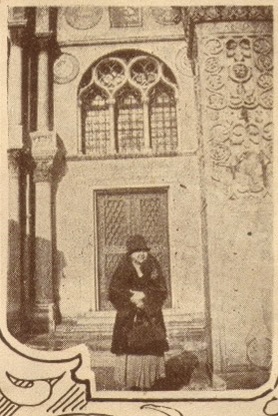
In the maiden issue of the Philippines Graphic published on July 2, 1927, the wonderful exploits of Guazon are frozen in time in the form of photographs.
Born from an affluent family in 1884, Maria Paz Mendoza grew up in Pandacan, Manila. An intelligent and well-educated woman, she is known in history for many firsts.
In 1912, she became the first woman to graduate from the University of the Philippines’ (UP) College of Medicine and also became the first woman to become a member of UP’s Board of Regents.
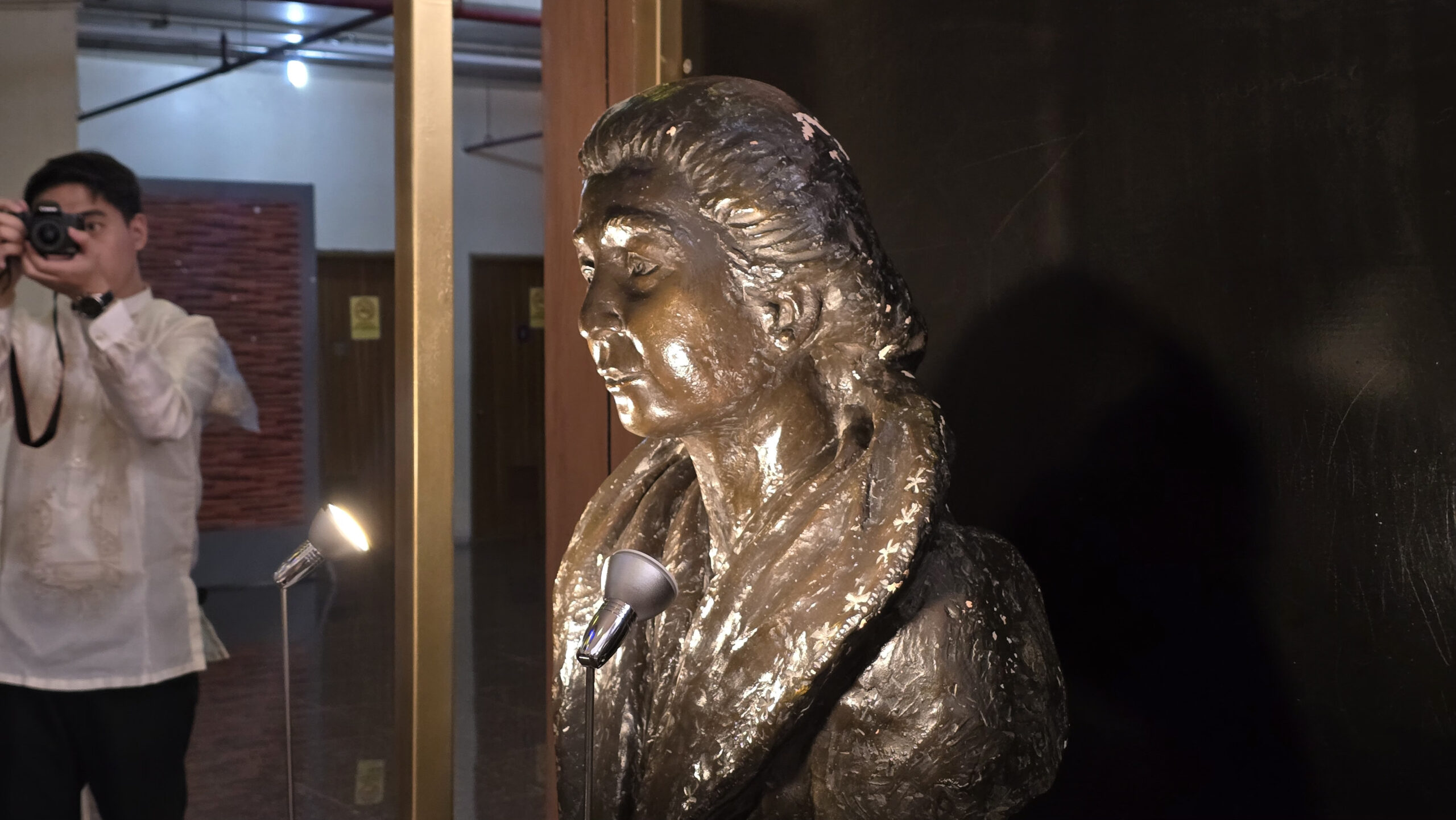
Paz Mendoza is also known as a passionate advocate for women’s suffrage in the country.
Amid her astounding achievements, her incredible work in medicine—especially in the field of pathology where she stood atop many of her peers, and in her fight to advocate women’s rights—Guazon was also keen in exploring the rest of the world.
PHOTOS OF A TRAVELLER
A lot of what we know of Guazon’s expeditions, we derive from her written journals and letters. She was an astute observer, meticulously recording in her journal the things she had observed in other countries.
But what is better than a written historical account than photographic evidence of what occurred?
In the early days of the Graphic, its founder and publisher Ramon Roces thought of the magazine as a place where photo news could flourish—something he had always dreamt of.
Believing in the power of photos, Roces said in the first page of the maiden issue: “News pictures reflect reality. They are frozen facts, excerpts of action… They tell what [someone] sees, thoroughly, comprehensively, vividly.”
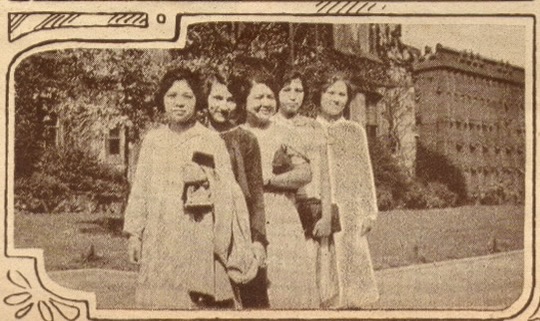
This ended up being the case as Guazon’s 1920s exploration of the world ended up frozen in time in the photos that the magazine published in 1927. They consisted of her journey to the West and the Middle East (a time when it was a peaceful region). Only two out of the 10 photos did she stand alone; most of them, someone else was with her.
Staring at these photos long enough, one might end up realizing how the places resisted the tides of time; and that all of those who are in these photos, we can confidently assume have passed in the hundred years that had gone by since then.
The people stood stiff as the cameras back then were not as instantaneous as it is now in the present times (their exposure was wont of improvement).
The photos, meanwhile, stood as evidence of a Filipina’s odyssey around the world in a time in our history when such a thing is largely uncommon.
GUAZON, THE OBSERVER
According to Victorino Mapa Manalo, the executive director of the National Archives of the Philippines (NAP), one of the primary reasons Guazon explored other countries was to observe the systems and science of other societies.
To put it simply, she observed everything she could learn from other countries which her own homeland could adapt in the name of science and progress. As a skilled physician and a great woman of education, learning and scientific progress sat close to her heart.
Given the time, opportunity, and enough budget, traveling in the present times is far more achievable than it was back then. Politics in a dominantly patriarchal society, in an era where women’s right to vote remained outside the periphery of common sense, and in an epoch where the Philippines had yet to achieve its independence from the control of any colonizer—the conditions posed hurdles for them to explore the rest of the world.
However, the explorations of a world traveler from a hundred years ago should not remain locked up in the pages of a diary or in the brittle recollection of a memory, but rather disseminated for other minds to know and learn from.
HONORING WORLD TRAVELLERS
A lot has happened in the Philippines in the 99 years since the Graphic published its photo news on Guazon.
On March 9, 2026, the Republic of Slovenia, who recently opened an embassy in Manila, worked with the Celje Regional Museum, the National Library of the Philippines (NLP) and the NAP to launch “Potovanje/Paglalakbay: Two Women World Travellers in the 1920s”—an exhibit that honored Paz Guazon and Slovenia’s own world traveller Alma Karlin.
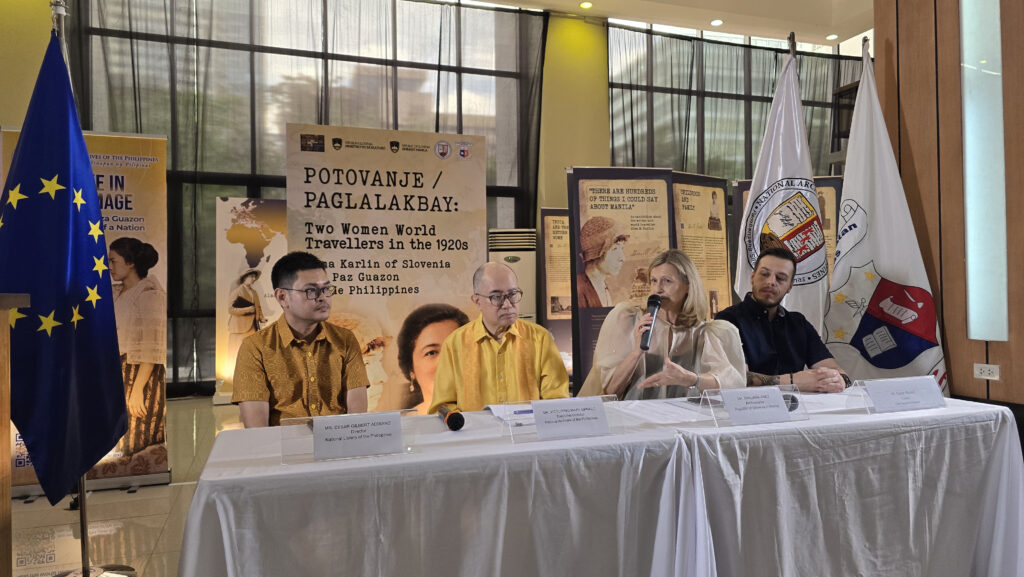
Located in the second floor of the NLP in Manila, the exhibit takes the audience to a detailed historical journey of how the two women defied expectations of their time.
The exhibit said: “Traveling alone across continents in the early 20th century—when few women could do so freely—they [Karlin and Guazon] claimed mobility, authorship, and intellectual authority in worlds that often denied women public voice.”
The introduction continued: “In crossing borders independently, they quietly challenged expectations of what women could be: scholars, reformers, witnesses, and global citizens.”
“There are three types of approaches that she [Guazon] had for travel,” said Manalo. “She was observing conditions. In a way, she was looking at government systems—on whether which country was under a government that was beneficial to the people. And she was seeing how culture spread like Greece… At the same time, she would observe history on the landscape.”
The rights Guazon fought for and struggled with, such as women’s suffrage, is now taken as a fact, as was the right of women to vote in the first place. Traveling, despite the troubles that persist in our own time, is no longer tied to the limitations and hurdles present almost a century ago.
It would be foolish to think, however, that everything had changed for the better—that the vision of a bright future as Guazon must have envisioned it in her fight for women’s rights is now wholly achieved.
March is celebrated as Women’s Month; yet in the first week alone, news and social media platforms were awash with misogynistic comments from men in power—most notably, politicians whose work is supposed to promote and advocate the rights of the public which, obviously, by its nature, should include those of the women.
When one becomes selective in whose fundamental rights are protected, it no longer stands as a right, but rather a preference—one tied to the judgement of whoever is in power.
As depressing as that may sound, there remains a ray of hope. If Guazon had proven anything, it is the fact that the fight will take time, but that it will bear fruit—and take flight.