

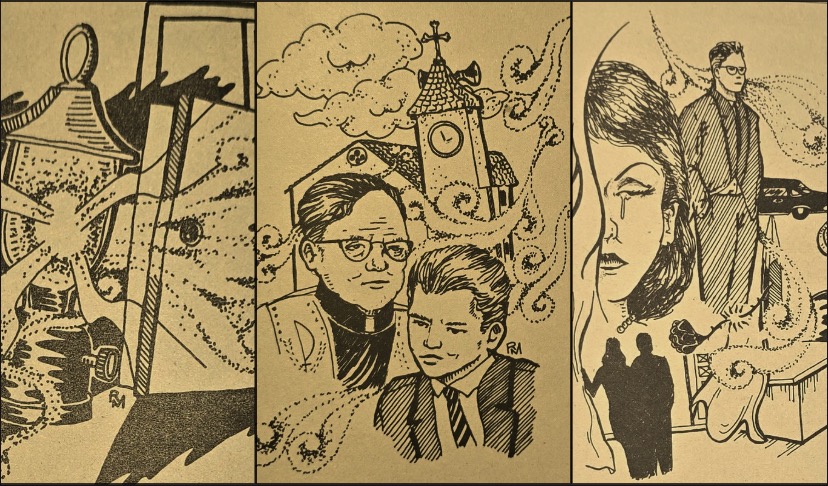
ARIMATHEA’S FRIDAY AFTERNOON
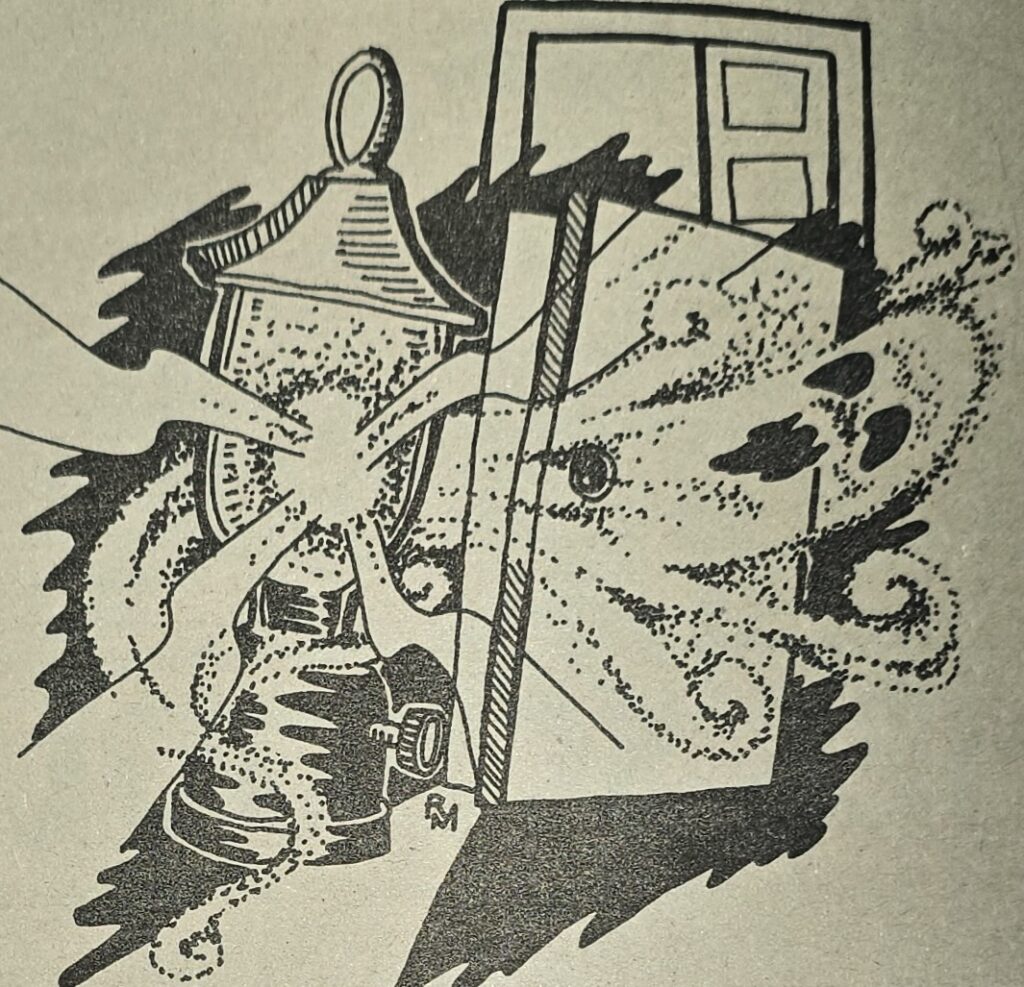
1
Relief, of course, was what he was feeling
principally. Nothing now to be afraid of
—like a name listed, a knock on the door,
or lights moving outside reflected on the ceiling.
So feared this day of quick dusk (what a bore!)
that seemed ages since yesterday's abstention from council
and the vote neither for nor against, being absent.
Discreet, he had taken into part in no judicial killing.
Yet here he sat alone in this dark room nervously
wondering: was his name cried out, was the shrilling
enforced from senses that couldn't take more
of the screw, the scourge, the cross-questionings?

2
He shuddered, rose, paced about, stopped at a window
and saw only ghosts on the loose.
Premature dark made the traffic a nightmare
and afternoon a glimmer of midnight blues
as secret as the darknesses under cover
of which he had followed curiosity
as furtive as any forbidden lover.
And oh those interviews
on the sly, on rooftops, out in the reb wilds....
Madness, madness to have gone there. Madness
to have risked what he risked—and for such "news"!
A doubtful claim, a promise, an elucidation
of the world's badness.
Word of a word in tune
with the infinite, oracle and oration
now silenced for ever in this
blacked-out afternoon.

3
The name of the game was security.
The game of a name was knowing from the womb
what was sure, what was lined up: comfort in wealth,
fame in society, high office in government,
his every want forestalled—even the tomb
ready already, a private space in a park.
How he had risked all that and his health!
Had risked the informer and the inquisitor
for interviews in the dark.
Had dared the jail door, flirted with doom,
and all this just to hear the telling of some fancies
on a roof, in the deep woods, in some secret room.
The name of that game was anxiety,
was doubt, was stealth, was the loss of confidence.
Never again, divided, should he take such chances!

4
Really, however, hadn't he known what he
was about? Careful to keep everything tentative,
he had been prudent even in imprudence
and cautious in audacity
and now could rejoice to be
a public figure not identified
with the plots of the poor or the threats of students
nor yet with the upper classes and their pride.
If he was gentry it was a gentleman
democrat, Lord Bountiful, hardly
as heartless Dives. On the other hand, who
could imagine a link between him and that crew
now found subversive? Fascinated almost
convinced, he had stopped short of enlistment:
the handshake in public, the march in the daylight
with the "brothers." Playing it safe—so they had grunted
resentfully. Now they were lost:
all scattered, gone into hiding, hunted.
He, he could stay at home and do business as usual.

5
Curious how clearer it grew the nearer drew evening
as if dawn not night was what uprose in the offing;
and from the window, watching the distance deepening,
suddenly he was watching the other
one appear, approach apace, unafraid,
with aplomb—this one also so prudent, a "brother"
in secret too, discreetly pilgrim at night
like himself; his "double"—oh, a name for straight and staid!—
but now apparently undismayed
to be seen at a door perhaps suspect, infidel,
in what was still, more or less, daylight.
Why was he coming, what could he have to tell?
Why was his "double" now taking chances?
But what a burst of hope in the heart! Had it happened?
The claim proved, the promise fulfilled, and the fancies
now all attested by a miracle?

6
Miracle! "Any news?" he asked the visitor.
And the other: "All over now, Mr. Chancellor."
So, nothing. "Dead?" He was still at the window, feeling
afternoon sky return and with it a thrilling
smell of spring. "Oh, yes, quite dead,"
replied his visitor. Over, all over
the doubtful claim, the wild promise, the fantasies
heard on a roof, at a woods, in a shed,
on the sly, after dark, in secret, under cover....
And suddenly he knew why his "double" had come
and what they would have to do. "Mr. Chancellor,
it's there, the body, still hanging." Some
would call it folly—but oh it seemed natural that the two of them, pilgrims in secret, should
now understake this daylight, this public piety,
this harvesting of criminal wood
before the eyes of the whole world. So,
leaving the window, he strode to the door: "Let's go!"
His voice rang out. (Oh, let the world hear it!)
How could the death of hope produce so aroused a spirit?

7
Out on the street, walking at his side:
"Do we know what we're doing?" wondered his ally, smiling.
"To ask for a corpse may be asking to be made one."
People were starting to look at them curiously.
"We know what we have to do," he replied
and somehow felt renewed, with each step, with each breath
as if reborn from this death.
Over, all over: himself as prudent, discreet, terrified
of hazards; wanting assurance, insurance; self-centered
and uncommitted. They were at Government House,
knocking. Sprintime green on the boughs
The great door opened. Boldly, the Chancellor entered.
COMING IN FROM THE COLD
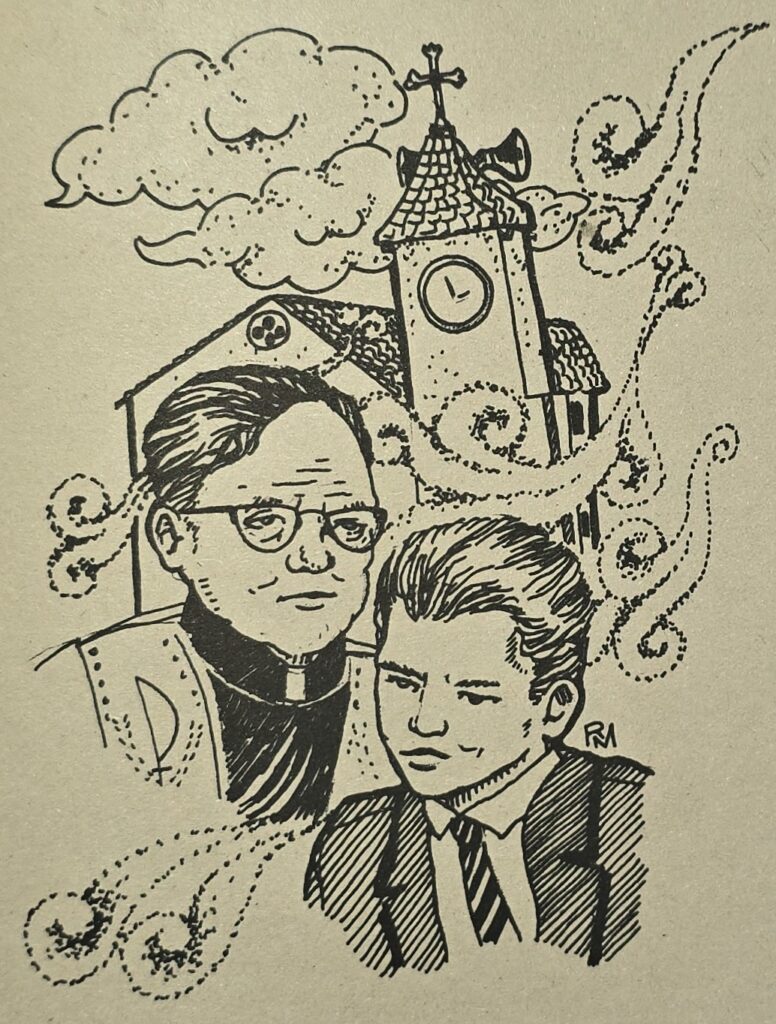
Ends and means. The priest, the politician.
Politician and priest. The means, the ends,
may indeed modify, justify, one another—but
having done one's duty (as one saw it) to the community,
why scan the methods employed or envision
alternatives? Action is singular. Cut.
Let fellow no multiple afterwards
of remorse, of regret, of reconsiderations
or, worse, of recriminations.
How return a belch to the gut?
In emergencies a political leader
can use hook, can use crook, in saving the commonwealth;
can lie and be sly, can be wanton as bleeder,
keeping the mountain of his teardrops shut.
The fate of the state justifies the unscrupulous statesman
—thought the history reader
may fault his methods, decry how he bled
not enemies only but also friends.
All this the sheerest irrelevance. Instead
one question: did the means achieve their ends?
If lack of scruple advances the state,
then hang the moralists and hooray for the statesman
conscientious enough to abandon conscience
if he has to. Yes, but what if this great
statecrafter be both priest and politico?
What if, the man being split, his two hands lead
him two ways: towards—and away from—expediency?
O this tug of war when we turn
to ponder ends and means, scruple and need,
coping and conscience! Not to mention the weight
of motives.... Was he so zealous in saving the state
because he relished his position as boss man
which thus he saved? How much was civic concern,
how much self interest?
The old prelate
sighed: he felt tired, tired—and also (he realized
suddenly) quite famished, starved. He was hungry;
had hardly eaten all day, so rushed by this business;
and now exhausted, deeply troubled, depressed, melancholy,
here in the shadows, in the cold, alone in his office:
cleric, politico, God's man, boss man of government,
so old, so wise, so profane, so holy....
But how good to find that what he felt as an upper
anguish of spirit was really a lower ache;
was not conscience but just the stomach wanting supper,
wanting buttered toast, green-onion salad, the steak
of lamb now abroil in the kitchen. Rising hungrily,
he hurried from the dark room, eager to leave behind
on the desk what had been pressure and heaviness:
the doubts, the qualms, the alarms of the mind
and the heart's misgivings.
Cold and dark in the hall.
Why should this night of all nights be so tenebrous
despite the sacred full moon? A footfall
made him stop and look back. Nothing. Or perhaps a ghost?
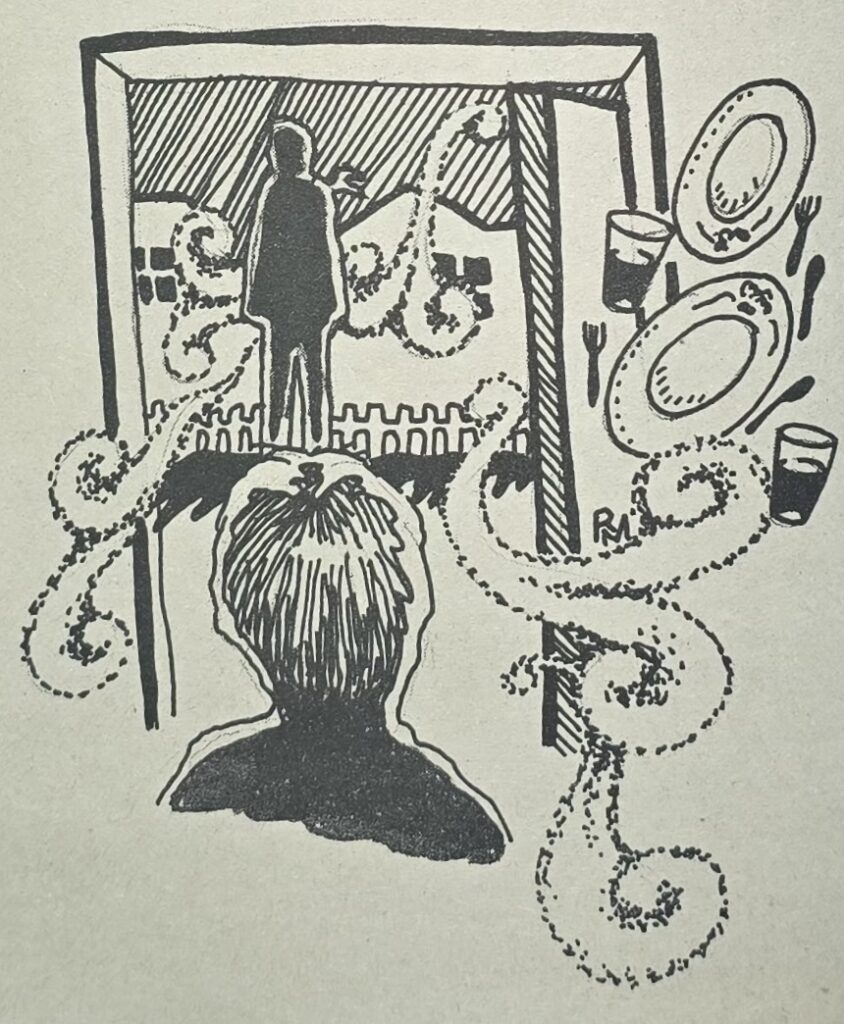
Clatter of dishes: maids laying the table in the dining room;
and the cook in the kitchen crooning over the roast.
He could smell it. Yet he paused in the hall, having turned
around to confront the deeper dusk of the front door.
Someone was there, somebody stood watching him
from the shadows. "Who's there?" Acting unconcerned,
he took a step forward. At once a tall shadow
moved, detached itself from the murk, becoming less dim
while approaching: a young man swathed in black against the weather;
white face framed in a cowl, fingers gripping black sleeves
at a draft. He and the old priest shuddered together,
staring face to face. Shrugged the prelate: "Oh, it's you.
And why have you come?" Black robes rustled like leaves
in the strong draft, handsome shoulders going askew
for another shiver, as the shrouded, the tall, the bold
young man tossed back his cowl to grin up at the eaves
and giggle: "Oh, let's just say I came in from the cold!"
Acting. The suave secret agent. The haggard spy.
The informer brute. A faint smile from the cleric: "Why,
how sad. Which bar or beerhouse has ejected
my good friend?" Hot the nose of the priest! "Look, I
was just about to dine," said he. And the young man:
"I mustn't keep you then. Smells good, your barbeque."
(No invitation to dinner offered or expected.) "But if your reverence has a minute—?"
The priest led the way: "Come into my office."
The young man smiled at the room: just one light in it.
"Were you sitting in the dark, your reverence?"
No reply from the priest, now seated again at his desk
in the shadows. The young man hovered
across the table, dumping something there.
The means, the ends—now manifest, now uncovered,
obscenely exposed, like night soil, like groin hair.
"I had to return this; so this visit which ends my mission." The old man glared: "What is it?"
Oh, he had recognized the receptacle:
for the priest in him a conscience in despair
—but the pol in him was already budgeting the illicit,
the spilled contents.
Priest and politician.
The ends, the means. Left hand against right hand,
splitting reactions. "Friend, I don't understand
why you bring this back, your mission
being accomplished and the operation successful."
Replied the guest: "I got a kick from the action
and that's pay enough. I've had full satisfaction:
a good trip, a fine thrill. So keep your fee."
The prelate shrugged: "All right. Anything more?"
But not yet was his guest to be cued his way to the door.
"One thing. I'd like to know why it was me
you picked. What made you positive I would do
as finger man?" Smiling, the cleric said:
"I'll answer that question with another one.
Had you any reason to wish him dead,
your leader?" Replied his visitor: "It's true
I had no motive.... Did you know I had none?"
And the priest: "We made it a point to be certain.
You hadn't lost faith in the movement, had you?"
The young man shook his head: "I believed in it, I still do."
Continued the prelate: "And no curtain
had fallen on your friendship with your leader?"
Said the young man, now unsmiling: "I don't think
I'll ever not be a giver or needer
of that affection!" With a leer, with a wink,
the prelate observed: "And yet you plated the deceiver
—and not with the scowl of hate
or the sneer of the disillusioned, the ex-believer....
But perhaps it was pique. In a huff, in irate
displeasure because someone was favored mightily
or became more trusted—?" And the young man: "No,
I was the most trusted. It was I handled everything:
the funds, the schedules, all matters confidential
and secret...." A pause. Then the priest: "If so,
you did not do it because you were the essential
aide no more. Then how did you do it? I mean,
if now with a scowl, and not with a sneer, then how?"
The young man closed his eyes, then sniggered: "Oh, with a kiss!"
And the priest: "Precisely! And now
do you understand why we turned so keen
on you? YOu had no reason, no motive, no wish
to destroy the movement, to spoil the scene.
And so you were the perfect agent to do it!
Oh, we had studied your group. That guy with his doubts
and this chap wanting no talk of death and suffering
and those two brothers warning how all would rue it
if they were not ensured the posts of primacy.
All these had reason and motive—or could imagine they did—
and therefore were unusable.
We would sooner have hired some flighty high-school kid!
Motives, reasons: how they shift and change
and falter. They steady man is the man without them.
And so what we wanted to arrange
was this: a 'pure' crime—tackled just for the fun of it
and with a good clean heart."
How the young man gaped,
straightening up in wonder: "My good heart?"
And the priest: "A good heart, no. What I mean is different.
Let's say you took risks: you have robbed, you have raped,
you have killed. But all this was, as it were, an art
for art's sake. You just wished to test how it felt
to robe, to rape, to slay. Not artist so much as scientist,
experimenting with happenings and the culture
of experience, of sensation, driven not by lust
or blood-lust, nor by greed, ambition, disgust
with the wiles of the world. You were without guile
and malice. Which is why I said that you had
a good clean heart. Have I caught your profile?"
Retorted the young man: "One of us is mad."
The priest made a face: "Say rather we are twin
spirits, the most brotherly of all pairs.
You and I have been in each other's nightmares
and have trafficked together unawares
before this." The young man lifted a fist
and smote his brow: "Why, yes, you are right!
Haven't we met before in many a tryst
where you pushed me an apple?" And the young man roared
with laughter. Unannoyed, the old priest
continued: "You were with the underground
before, as hit-man, he of the knife. We have your dossier.
What was that cause to you? Nothing. The knife
was the main attraction. Experiments in violence
—and the kinkier the better. Then you astound
your old group by defecting to another
and novel troop. Non-violent. Peace! A new life
for you as devout friend, as peaceful 'brother.'
As you say, you believed, you loved—but perhaps
you were a bit bored? And the artist, the pure scientist
of experience, begins to demand new additions
to the canon of kinky kicks. And what caps
your book but this betrayal without cause
of him you love wholly? What can
be kinkier? Imagine, the foe of foes
of the loved one is the lover in love to the end!
As Scripture puts it: 'Why, the very man
I most trusted, my own intimate friend
who shared my bread, has lifted his heel against me.'
Doing it, moreover, neither as boo nor hiss;
doing it just to graph your own reaction
to the fall of the idol; yourself
scanning: amused, amazed, amoral, amorous;
for, as you say, you did it with a kiss
—and for a kick, for a thrill, for the high
of technical satisfaction,
evidently so great you're now protesting why
still take a fee—Where are you going?"
The spy
had walked to the door. He stopped there and looked back
at the priest. "Maybe I'll go and test the one action
left for me to experience." The prelate was
on his feet at once. "Now don't do anything rash
for God's sake! I have blood enough on my head."
He hurried towards the young man. "Why not stay
and have dinner with me?" But the young man said:
"I can't eat anything. There is a taste
in my mouth. A vile taste. It won't go away.
Been trying to wash it off at bar and beerhouse
but nothing removes it. Like a rot of waste
on the lips, in the mouth, on the tongue, in the throat
is my own spit. Oh, I've been carrying all day
this nausea. I got it last night with that kiss,
your reverence." Rejoined the priest: "You ought
to honor last night. If we used you, we used you
in civic urgency. The country lay
in peril. Look, what you did may avert
disaster for the time being. In a way
you are a patriot." "Don't build me a monument!
Good night." "It's a bad night out. I beg you to stay
and dine with me." "We'll make it some other day."
"But where you off to?" "Oh, I must run
somewhere and have just one more try at getting
this damn taste off my mouth." He turned and was gone
The front door slammed. The prelate shook to the draft
but smelled in the wild March night the green of spring
arriving. He felt hungry. But there was that thing
obscene on his desk. He returned to it and laughed
as he shoved it down to a drawer, then smelled his fingers. Damn!
A mistake to touch it. He felt infected. What a vile taste
on the lips, in the mouth, on the tongue, in the throat
all of a sudden! However: "I am
just imagining this. Autosuggestion," he thought.
But in his mouth continued to rot a waste of spirit. "Relax," he told himself, "stay calm,"
as he sat down again in the shadows.
He had lost all appetite for Easter lamb.
EQUINOX FOR THE GOVERNOR’S LADY
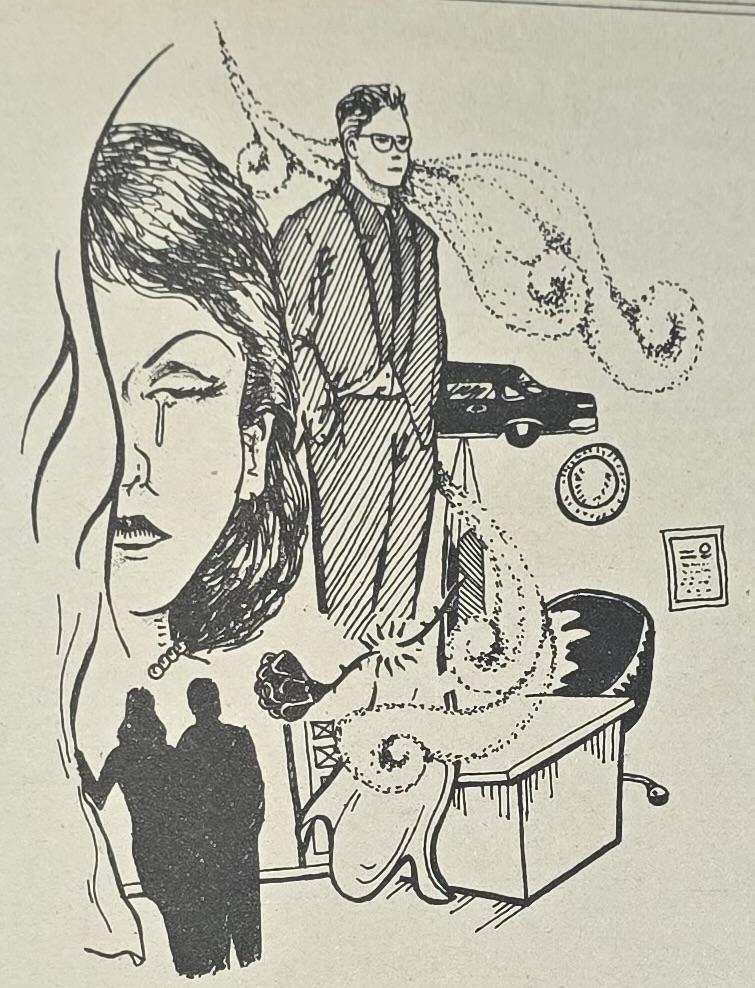
"I waited dinner," said he, "then having given up
on you and the soup, I had dinner alone—very late,
and everything was cold." SHe was taking her coat off. "Sorry
about that, dear," she said, "but why did you wait?
Surely you're used by now to my coming and going
at all hours?" They were in the halll
now they moved as one to the living room
but not quite together. "Oh," he groaned, "and so
I am supposed to be used to it by now?
When you and I know
very well this isn't like you at all,
anyway not like you till a month or two ago.
It only started one or two months ago,
this coming and going at all hours
—though, I must say, never as late as tonight.
And no explanations." Face to firelight,
her back to him, she was taking crushed flowers
from her pocket and was dropping them on the floor.
"Say something, please," he prompted. Turning to face the governor,
she asked: "How was I, what was I, before?"
He frowned at her earnest puzzling. "Well, a good wife....
In fact, I would say the best wife any diplomat
could wish for: humorous, stylish, imperial, unflappable;
in wit, in grace, in tact, real quality;
and a very equinox in punctuality."
She winced her "Ouch: but her face was a blank
only half-listening. She murmured: The equinox....
Isn't that today?" He shrugged: "FIrst day of springtime
when Adonis dies." Suddenly shivering, she sank
to her knees on the floor and hovered over the flowers
there scattered. "The first flowers of spring," she said,
touching the broken petals, "flowers for the dead."
Mystery, mystery! He sighed as he watched her
crouching there, swaying, rising, moving away,
to the end of the room where beyond pillared arches
piazza and moonlight gloomed.
"Did you spend the day on farm or hillside picking buds from shrubs?"
he asked as he followed. "Isn't all this rather strange
for a city girl not much of a nature-lover
and so quickly bored with scenery? Part of the change?
Part of the altered you I'm now supposeed to be used to?
Part of this month or so of lunch left over and dinner waited because you were 'out ofr a walk,'
or 'out sight-seeing,' or 'out
there shopping when a flash-storm broke'?
I must say your maid can command quite a range
of stories to excuse you when you're not about.
Such cute excuses." Leaning against a pillar,
she gazed at the foreign lawns of Government House
moon-frosted. "Well, I never told her to tell them."
She spoked with indifference. And the governor:
"My dear, I never supposed you did. We browse
at different bookshops now. Let's put it that way
and leave it at that, shall we?" SHe was smiling from her pillar. " Is that what you thought
I was doing: browsing at bookshops, whiling
a bored hour away at a flower show
or the native flea market?" He found himself fought
by a body that now threatened to shake
like a leaf. Would his voice break
if he spoke? His voice, however, was steady
when he answered: "No. I wondered, of course, if you had
a lover." Her smile broadened: "And now you know better now?"
Shaking his head: "I don't know that it's better. Somehow
the usual suspicion appears less suspicious
if you get what I mean—less sinister, less sad
for a man in my position." She arched an eyeborw:
"You would prefer it was a lover?" Mirthlessly
cackling: "Well, I don't say I would breathe
with relief! But still—-" She came nearer: "What made you suspect?
Was it because of my coming and going at all hours?
Or was it the sudden collapse of my myth
as perfect Governor's Lady—ready as today
and punctual as tomorrow?" He had turned away,
having felt himself reddening: "You'll probably
jump on me, but the fact is I hadn't noticed
any lack or loss in readiness or punctuality
on your part. Listen, for all I know,
you had been coming and going
at all hours more than a month or two ago
without my noticing it. No you at lunch or dinner?
I merely supposed you gave up waiting, knowing
I'd be late as usual, busy at the office
as usual. YOu know I could win no trophies
as thoughtful husband." She studied his back, amused
at the blush of his neck, the droop in his voice.
She said, folding her arms: "Oh, don't you feel you used
me badly. I'm no wistful neglected wife
turning in ennui to adulterous jous.
No, that's for silly girls—and I'm a grown woman
who likes herself too much to be bored. And another thing:
frankly, I loved position, I enjoyed my life
as your lady and the—"
"Why," he interrupted,
"do you use the past tense? She couldn't but stare: "Did I?"
At least she had made him face around again.
"You still haven't told me," she countered, "why"
you began to notice and how in you rmind suspicion erupted
like sex rearing its ugly head." Unsmilingly
did he react to her jesting. "Why? Oh, yes, the maid.
Servants are prurient. How they love being in
on bedroom ploys. By being so frantic to cover
up for you, your loyal maid was
practically
uncovering the likelihood of Sin
in your absences—and the likelihood that a Lover explained them, as she obscenely hoped. So a month
or two ago I began to notice certain things,
not just your coming and going at all hours
but the way you came and went, as if on wings;
the glow on your face, the look in your eyes
that told me you were somewhere else; the towers
from which you seemed to look down when the wise
of our own culture spoke—" She said gently:
"I wasn't looking down, I was looking elsewhere.
And I climb no towers; as a matter of fact, am trying to get out of 'em." And he: "Can I be blamed,
seeing the glow on your face, the look in your eyes,
for wondering if you were having an affair
as your maid seems to think? Or should I be ashamed
I thought so, too?" She shook her head: "How nice
really of you! I mean it. Nice if jealousy
sped the suspicion and you sent out spies
on my trail. Or perhaps you did?
Is that how you found out it was not a paramour?"
As if to a cue on which both had agreed,
they stepped out to the piazza, seeming to tread on ice.
Too cold to stand still there; so, still not quite
together, back and forth they paced the moonlight
in quiet converse.
        Replied the governor: "I found out
this morning." She glanced at him: "When I interfered?"
He nooded: "I suddenly saw what all this was about
and what you were up to." "And you thought it was weird?"
Not for a moment did they halt or quicken
in their measured pacing back and forth and side
by side. Said he: "That's why I felt the conventional
love affair might be easier to abide
or, at least, to understand.
However, I took the chance that you might sicken
in just this way when I brought you here.
This is a strange country, a strange land:
mystery its ambience, magic its atmosphere,
and madness its effect
—at least on people like us who are not of the Orient
but feel drawn to its mullahs and gurus and fakirs
and holy prophets—" She said: "You mean we defect
to witchcraft?" Sighed the governor: "Oh, I know
that even there back home, among the trendmakers,
the witchcraft of our so-called modern age
is rampant. We don't have to come east
to swoon over oriental wizards and sorcerers;
but my point is that the influence is naturally
stronger at the source." And she: "Outrage
is all your point, which is that government ladies at least
shouldn't get embroiled with the natives
if only not to make it sinister or sad
for husbands in your position."
Not hostility but sadness was indeed what he was feeling
as he walked beside her under a cold fulll moon
and the eaves of Government House. "I've always had
difficulty in dealing
with them, the colonials, what you call natives," said he,
"and today most of all: this morning till noon,
grappling with their culture, groping as in a nightmare,
myself slipping beyon the reality
of bench and bopok and law court—Such an air
of the other-worldly! What a morning! And whe
you sent down word to me, when you pleaded
for this—" She broke in quickly: "I'm sorry I interceded
for—you were going to say madman? And if mad,
I must be, too. Isn't that what you were hten
fearfully thinking and what made you feel sad?
Better a lover!" Stolid, he replied:
"What was I to think? That note you sent me,
so much hysteria in a few words, in one line,
as to make me wonder if your hand had lied
and would have bent me
thus with lies to do a will not mine
and not yours either—no, not of the you
I know. It spoke of dreaming, it spoke of suffering. How could that be you when you're not one for dreams
or drama? Yet I knew
that you had written that incredible line:
I dreamt I suffered much on his account.'
Preposterous, but, alas, it seems
that you, so level-headed, realist, rational,
have heard a voice, have seen a sign,
must travel pilgrim to some holy mount
and there be saved. Of course it's just the ambience
of this strange country, this strange land,
gone to your head."
Halting now, standing apart, she said:
"My, my, how much you have read
—voices and signs, pilgrims and holy mountains—
into just one line I wrote saying I dreamt
I suffered much, et cetera. Shall I tempt
your patience further and reveal the fountains
mystical I have been drinking at?" Still doggedly
pacing, he shrugged: "Oh, I know
just where you were this afternoon and this evening
and why." She said: "Attending an execution
on a nasty dump site. And I stayed for the funeral
afterwards." He paused before her: "SO?
And what happened? A miracle? A charge by heavenly
rescuers? A stay to dissolution
of stiffening carcass? DId it rise from the bier
as you went there to see? Your fountains, I hear,
but left you thirstier, going dead
when most devoutly expected to be springing up
miraculously."
Unpertubed, she had wandered
back to the living room, where her flowers
on the floor still sent a lingering breath
of hillside—as of energy after death—
across the living room. "It's over," he said,
stopping on the threshold, "all over now, my dear,
that nightmare. You're awake now, normal again,
though still perhaps in shock. Whatever you squandered
of good sense on wild quacks, you'll recover when
we go home. I can get leave. Springtime this year
will find us back to the good old standard
of civilized living, back to an honest clime
with no phantasmagorical bugbears in it,
and back as honeymooners. I'll find reasons
to leave at once. You can start packing this minute
—and now's the right moment, too! We're at the equinox,
first hours of the celestial year, when time
begins again in heaven and the seasons\
wheel back to line up." He had been moving towards her
and now stood at her side, his diplomat's face
almost excited. "Well, dear, are you game
for a second honeymoon? I promise you days
and nights when you won't have to browse at bookshops
and you'll find you can't even remember the name
of who or what said it was holy
to follow the folly
of spiritual extravagance—" And she:
"Madness its effect? Well, listen, the effect
on me was this: a feeling that I could be
most useful where I was. I couldn't defect
from my own world. Only in my own world could I
be effective. Therefore, my
vocation was as Governor's Lady. And that's why
I came back here, having understood
that my function was to be a good
Governor's Lady. To no more heroic effort
had I been called."
His brow cleared. "Then hooray,"
said he, "for folly!" But she stumbled away
from his arms. "I haven't finished," she said,
warding him off. "When I came back I was sure
my place was here: at your board, in your bed,
under your roof. But then you spoke of the equinox:
of a new year, a new start
—and abruptly I saw it was pure
cowardice on my part,
the smug feeling that I was called
to nothing more heroic than being the Governor's
Lady. I would rate myself as less bold
than I might be. I would stick to your old
image of me: not one for dreams
or drama, a stranger to suffering—"
He broke in: "What are you trying to say? It seems
to me this is just a hangover
speaking. And a trip, a recuperation
back home is what you need." Hands flying to cover
her ears, she cried: "It's not what I need! No, no!
I'd only feel I was running away. I can't go,
knowing I should stay. I hate that word: vocation.
But when I dreamt I would suffer much,
I was being called." He gaped, "But called to what?
And stay here why?" Apparently seized by such
emotion she seemed transfigured on the spot:
"I don't know," said she, "it's what I must apprehend.
You said I expected a miracle. What I know
only now is that it happened, it is happening
now, right here, the miracle...." What a glow
on her tanned face, what a look in her eyes!
Already she was elsewhere. "Don't think I'm not tempted
by what you offer: springtime at home
and a second honeymoon.... I surprise
myself by saying no to the native loam
and your replay. Alas, we two are not exempted
from change brought on by the equinox. I think
that there's a new world. How can I
go back with you to the old one? WHy,
I'd feel alien there!" He felt his heart sink
as he noted how she did look alien, alienated
now from even the ambience of this living room
and its decor. He thought: If I should take her
in my arms, I would be holding a phantasm.
She was moving away. He said quickly: "You hated
extremes. Isn't this far out?" But that didn't make her
stop. She was leaving. He cried: "Are you sure you rated
yourself correctly in boldness?" Nothing could wake her
from the trance in which she moved. Now out to the hall
she strode; he followed her only up to the door
of the living room. "You don't even know where you're going,"
he taunted. She was putting her coat on. "All
I know is where I am not going anymore,"
she said at last. And: "Won't you say goodbye?"
And he: "Not yet!" And returned to the hearth. A blowing
steadily of cold air told him she had gone
and left the front door open. He wondered why.
In rapture? In haste? Or had she hoped he would run
after her with appeals? He could no more have done that
than question her when he thought she had a lover.
Anyway it wouldn't be her he would try
to stop but a stranger....
Before this night was over
she would, of course, come back again, would recover
her senses. He would let her flowers lie
there on the floor until she returned, until,
herself again, she walked in—"No, she will
not come back, not again, not ever!" The cry
burst from his lungs as if to admonish, to astonish
those broken flowers of the lingering breath
he sank down to, on his knees, with a shrill
keening.
Flowers for a death.
Springtime. The equinox. The gardens of Adonis.
(Written by Nick Joaquin. April 17, 1995. Philippines Graphic.)