

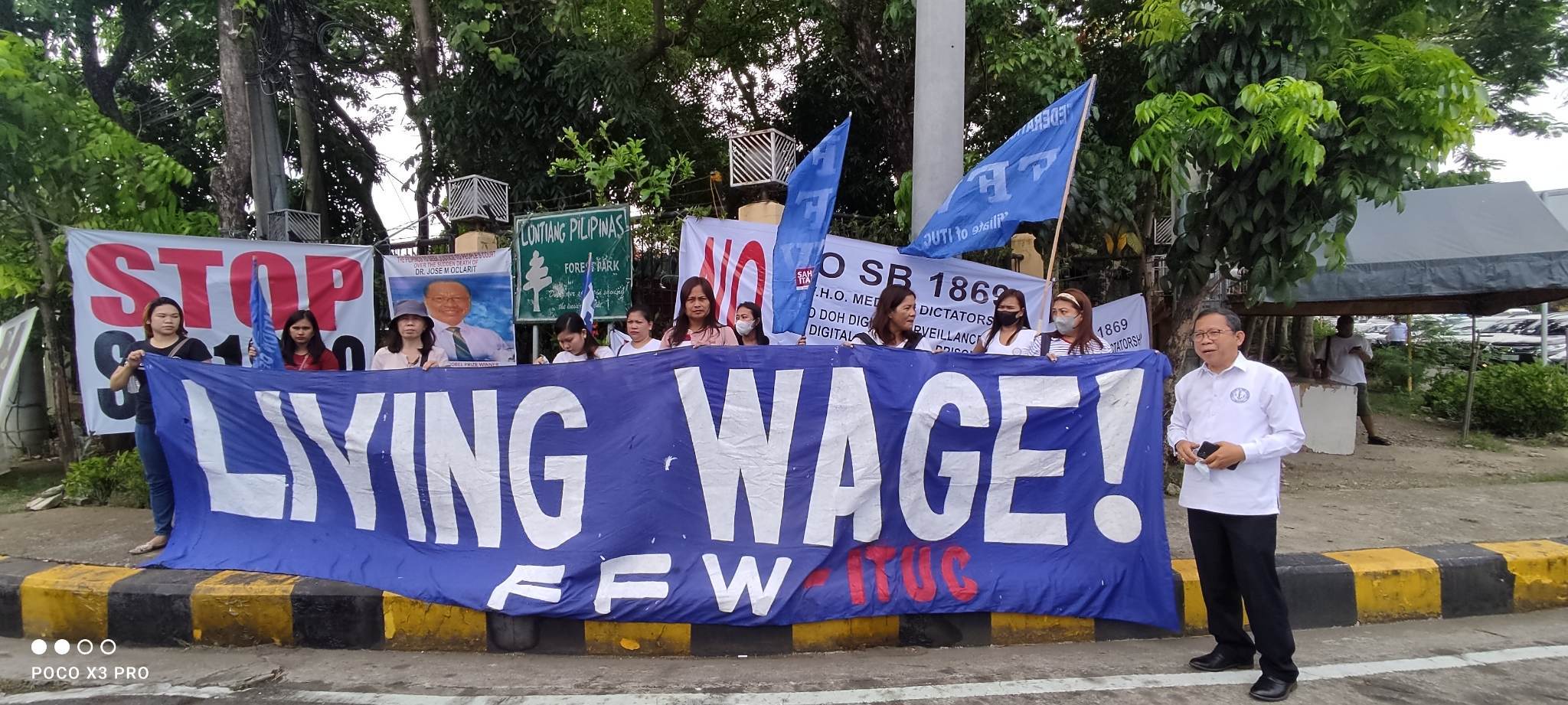
Welcomes DOLE pronouncement that should Congress adopt a new wage law, the Labor Department will adopt it
The labor group Federation of Free Workers (FFW) urged the House leadership to pass the ₱150 wage hike across the nation as an emergency measure to cope with rising prices and recover from inflation.
The FFW said the Lower House wage action is long overdue following the Senate’s February approval on third and final reading a bill increasing the daily minimum wage of workers in the private sector by P100.
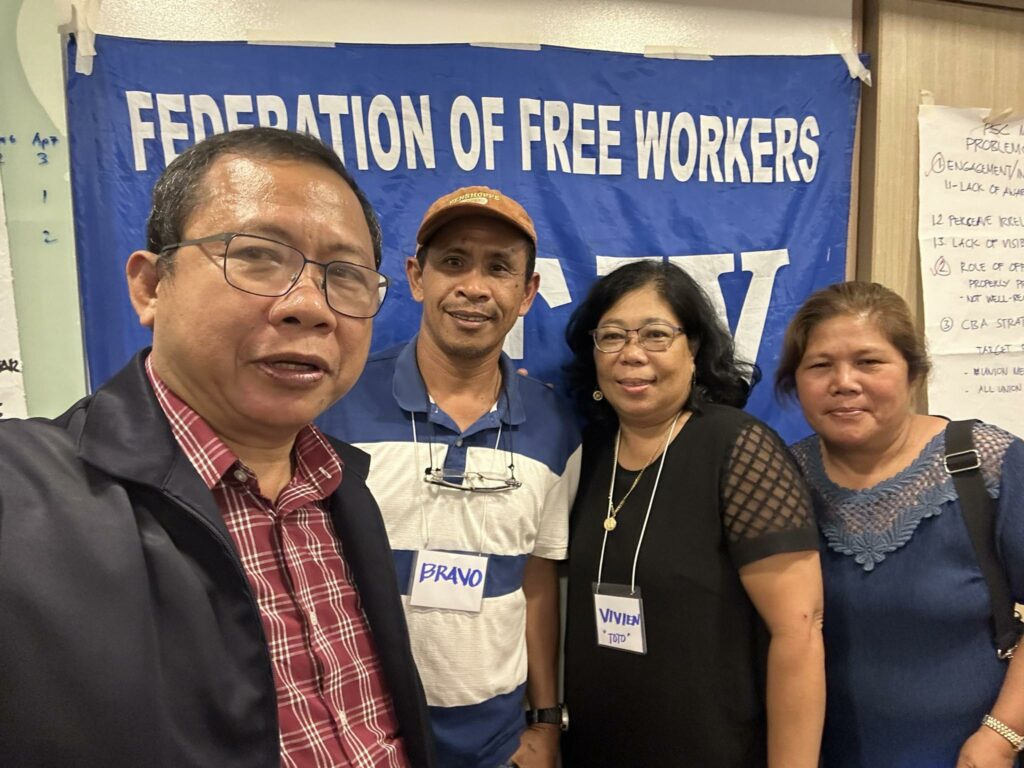
“Wag na tayong magpaligoy-ligoy pa [Let us not dilly-dally],” Atty. Sonny Matula, FFW president said. “The ball is now in the House of Representatives, don’t dribble it further but shoot the ball to the goal.”
The FFW further expressed the hope that before the end of May, the House Committee on Labor will approve the ₱150 wage hike across the board nationwide, stating that “the approval would be a significant step towards addressing the needs of Filipino workers and promoting a fair and just society.”
INDUSTRIAL TRANSFORMATION
In a recent House Labor Committee hearing, University of the Philippines (UP) Professor Rene Ofreneo said that the President Quirino administration—faced with the politico-economic crisis of 1949-1950—launched a rapid industrialization program by curbing imported finished goods and promoting “new and necessary industries.”
One outcome of this import-replacing industrial development was the rapid expansion of the economy throughout the decade of the 1950s so much so that the World Bank, in the early 1960s, concluded that the Philippines was second to Japan in Asia’s march towards industrialization, Ofreneo said.
He added that Senate President Gil Puyat hailed the industrial transformation of the 1950s-1960s for creating a new class of Filipino industrialists and a new workforce possessing manufacturing skills.
Citing the 1950 economic decisions of President Elpidio Quirino’s administration, the FFW stressed: “History tells us that even a 100% wage hike from ₱2 to ₱4 nationwide in 1951 did not lead to high inflation, closure of businesses, or the collapse of the economy. Instead, the opposite happened.”
The labor group assuaged fears that the P150 wage hike can adversely affect the economy. “The proposed ₱150 wage hike represents only 24% of the existing ₱610 minimum wage in the National Capital Region (NCR). This percentage is notably lower than the second highest wage increase of 39.1% nationwide in 1989 or the highest 100% in 1951. This modest adjustment reflects a balance between addressing economic considerations and improving the standard of living for Filipino workers.”
The FFW urged the House of Representatives to seize this opportunity to support Filipino workers by approving the ₱150 wage hike before the end of May.
DOLE TO COMPLY
As this developed, the labor group lauded the recent pronouncement of the Department of Labor and Employment (DOLE) that it will adopt any new wage law that Congress will pass.
In a statement released by the Philippine News Agency, the DOLE assured that it would comply if Congress decides to grant an across-the-board legislated wage increase for workers nationwide.
“Should Congress decide to amend or repeal Republic Act (RA) No. 6727 (Wage Rationalization Act), the DOLE’s duty will be to implement the law no matter how hard that will be,” the statement added.