
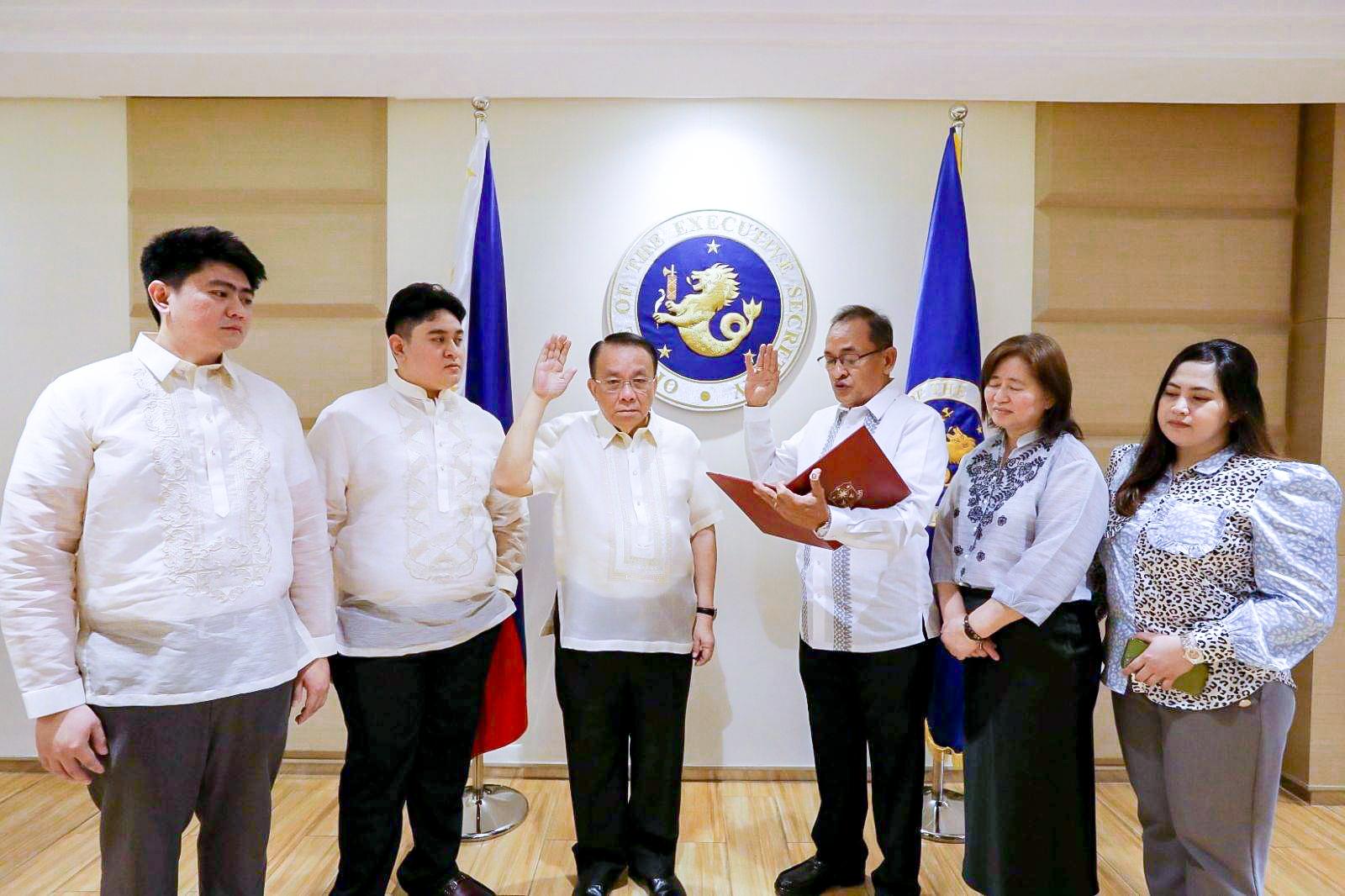
Labor group welcomes appointment of new NBI Chief

Share

The Federation of Free Workers (FFW) extended its warm congratulations to Retired Judge Jaime Santiago on his appointment as the new Chief of the National Bureau of Investigation (NBI). FFW President, Atty. Sonny Matula, expressed his confidence in Santiago’s capabilities to lead the NBI effectively.

Judge Santiago embarked on his legal career after earning his Bachelor of Laws degree from Manuel L. Quezon University (MLQU) in 1993. He subsequently served as a prosecutor and was later appointed as the presiding judge of the Manila Regional Trial Court (RTC).

“President Marcos made a good choice,” Atty. Matula remarked. “Judge Santiago is honed and fit for the job. He was ahead of me in law school, but ‘inabot ko pa siya ng dalawang taon sa MLQU’,” Matula reminisced.

He further elaborated on Santiago’s sharp intellect and legal acumen. “He was sharp in law school not only because he was a sharpshooter in the SWAT, but because he studied under brilliant professors at the MLQU School of Law. We had Judge Ruperto Kapunan in criminal law, Dean Norberto Gonzales in civil law, and Samson Alcantara in labor law. Marcos appointed a man truly fit for the job of leading the NBI.”

In addition to his academic and professional achievements, Judge Santiago was a well-respected police officer in the Western Police District (WPD) in Manila. He was admired by both police officers and common students at MLQU, earning the status of an idol among his peers.

FFW said it hoped that Santiago can inculcate respect for trade union and human rights in the ranks of the NBI nationwide.

“Judge Santiago’s extensive background and experience in the legal field, combined with his dedication and expertise, make him an excellent choice to head the NBI. The FFW is confident that under his leadership, the NBI will continue to uphold excellent law enforcement with  justice and integrity,” Matula said.

Started in 1927, the Philippines Graphic is the longest-running printed magazine of national circulation that provides relevant news and features and promotes Philippine literature.

Table of contents [hide]

Read More

The peso paradox: Why more financially literate Filipinos are still struggling to build wealth

On a payday morning somewhere in Bulacan, a mother walks into a sari-sari store clutching a handful of coins. She asks for a sachet of shampoo, P10-worth of cooking oil, and a...

Joaquin: In the nick of time

The country’s best writers and cultural institutions paid homage this year to the 100th anniversary of the late National Artist Nick Joaquin. Ironically, had Joaquin been around, he might never have allowed the tributes and accolades given in his honor. Or maybe, he would, but at great discomfort. Said writer Jose ‘Pete’ Lacaba, “Sinasabi sa amin ni Nick pag dumadalaw kami sa mga burol ‘ayaw ko ng mga tribute-tribute. Ibalot niyo na lang ako sa banig, itapon niyo ako sa Pasig River.’ Pero tinatanggap din naman niya pag binigyan siya ng award [Nick would tell us whenever we were in a wake, ‘I don’t like tributes. Just wrap me in a mat and throw me in the Pasig River. But he still would accept every time he is given an award].”

The World in the time of Nick Joaquin

Europe, the seat of everything that was grand, powerful, and prosperous, was caught in the teeth of the First World War, the year Nicomedes Márquez Joaquín was born on May 4, 1917. It was half a world away from a boy who would emerge half a century later as one of the greatest literary minds in a poor and exploited country still caught in its own, long drawn-out war of independence in 1917.

They who wrote for the Philippines Graphic

“Our sense ... of our country is a sustained act of imagination. From that vantage, it can be said that our writers and artists, who are men and women of imagination, create our country (italics mine). That is to say: they evoke those images of ourselves as we live life day and night, those images of ourselves which we share and by which we recognize our nativity. We are our own best interpreters of our history and culture because it is we who have lived through that history and created our own values by which we live.” —National Artist for Literature Gemino Abad