

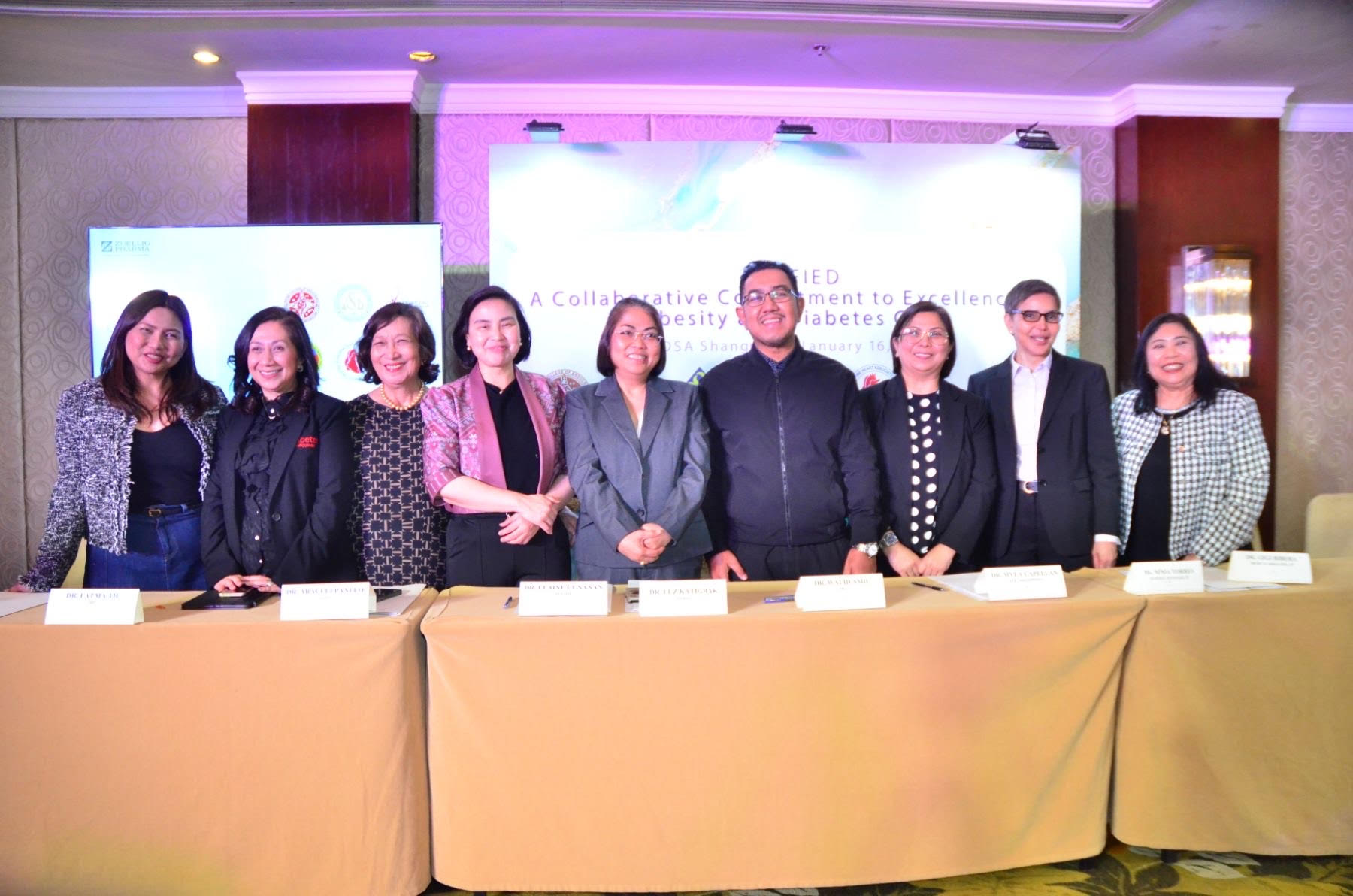
(via Graphic Plus) MANILA, PHILIPPINES (January 25, 2026) — In a historic partnership aimed at addressing the burden of obesity and type 2 diabetes1,2,3, the Philippines’ leading medical societies have signed a Memorandum of Agreement to work as a unified force towards addressing the escalating metabolic health crisis in the country1, with greater clinical urgency2,4.
Spearheaded by Zuellig Pharma, a leading healthcare solutions company, leaders from The Philippine Society for the Study of Overweight and Obesity (PSSOO), the Philippine College of Endocrinology, Diabetes & Metabolism (PCEDM), the Philippine Heart Association (PHA), the Institute for Study on Diabetes Foundation Inc. (ISDFI), Diabetes Philippines (DP), and Alliance of Clinical Endocrinologists Philippines Foundation, Inc. (ACE), came together to mark their partnership on January 16 at an event titled ‘UNIFIED: A Collaborative Commitment to Excellence in Obesity and Diabetes Care.
Also highlighted during the meet were two cornerstones that can support the advocacy: one, the timely launch of a patient program that aims to empower diabetics and the obese, and two, the FDA approval of the dual GIP and GLP-1 receptor agonists , a new modality6,8 whose efficacy shows better and more sustainable clinical results5,6,7.

Empowerment Through a Patient Program for Diabetics and the Obese
Unveiled during the event was the patient microsite First Move to My Best Me, encouraging persons with obesity to start their journey in overcoming obesity.
Designed to be easily navigable, it is patient-focused and information-rich, equipping the obese with a tool to empower themselves; notably this digital platform recognizes, and is anchored on the reality that obesity is a disease and not a failure of one’s will power and discipline5.
First Move to My Best Me provides patients the right access to legitimate, medically sound content, on how obese persons can take control of their condition, motivating them to consult medical professionals to help them achieve their personal best outcomes.
From Traditional Care to the Newest Modality
Citing the Philippine FDA’s approval of the newest modality – the dual GIP and GLP-1 receptor agonists, leaders from the Philippines’ leading medical societies lauded how treatment has evolved-from traditional methods of foundational lifestyle modification and oral medication such as metformin or sulfonylureas4,5, which see limited efficacy in those who are unable to sustain long term weight loss or for high risk patients who fall short of achieving tight glycemic control.4,5 Beyond this, leaders also highlighted that diabetes and obesity are diseases that go beyond just lifestyle choice alone.5
All co-signors were also one in highlighting that the Philippines is now in step with international guidelines on diabetes and obesity treatment2,9, citing the Standards of Care in Diabetes 2025 by the American Diabetes Association guidelines on the use of these newer drug modalities – prioritizing them for their ability to not only lower blood sugar but also to address weight management and cardiovascular risk factors more effectively6,7,8 than older therapies.
Encouraging Safe and Compliant Use of New Solutions
As one of the co-signors of the Memorandum of Agreement, Zuellig Pharma also reaffirmed its commitment to supporting the efforts of the societies. This includes promoting the safe and authorized use of GIP and GLP-1 receptor agonists and contributing towards efforts to stop the proliferation of counterfeit and under regulated medications in the market.
Emphasizing the dangers posed from online sellers who offer illegally compounded versions of the treatment, all co-signers also came together with a consensus for the public to seek medical advice from doctors on the right solutions for their conditions.
Led and supported by Zuellig Pharma, collaborative initiatives from the participating medical societies will seek to advance metabolic care for the Philippines through greater public awareness and innovative solutions.
REFERENCES:
1 Adapted from DOST-FNRI. 2023 National Nutrition Survey.
2 Sun, Hong, et al. “IDF Diabetes Atlas: Global, regional and country-level diabetes prevalence estimates for 2021 and projections for 2045.” Diabetes research and clinical practice 183 (2022): 109119 World Obesity Atlas 2024.
3 Lobstein, Tim, Hannah Brinsden, and Margot Neveux. “World obesity atlas 2022.” (2022).
4 Owens DR, et al. Future challenges and therapeutic opportunities in type 2 diabetes. Changing the paradigm of current therapy. Diabetes Obes Metab. 2017.
5 Ritten A, LaManna J. Unmet needs in obesity management: From guidelines to clinic. J Am Assoc Nurse Pract. 2017 Oct; 29(S1);S30-S42. Doi:10.1002/23276924.12507
6 SURPASS-2: Frias JP, et al. N Engl J Med. 2021;385(6):503-515.
7 Tirzepatide Tops Semaglutide for Weight Loss: SURMOUNT-5. TCTMD. Published May 12, 2025
8 GIP & GLP-1 agonism: Bailey, Clifford J. The Lancet Diabetes & Endocrinology 2021
9 International Diabetes Federation (IDF) Diabetes Atlas, 9th Edition 2019. 5 – 2023 International Diabetes Federation