


Leaders and members of the country’s biggest labor coalition have endorsed the draft Bangsamoro Labor and Employment Code for legislation by the Bangsamoro Parliament.
More than a hundred participants from labor groups joined the Bangsamoro Labor Summit organized by the Office of the Member of Parliament (MP) Romeo Sema last July 6-7 in Cotabato City.
The participating labor groups, belonging to the NAGKAISA coalition, included the Federation of Free Workers (FFW), Sentro ng Nagkakaisa at Progressibong Manggagawa (SENTRO), Public Service Labor Independent Confederation (PSLINK), and the Associated Labor Union ALU-TUCP). They joined all the other participants in endorsing the adoption of the Bangsmoro Labor Code and other social legislation by the Bangsamoro Transition Authority.
NAGKAISA lauded the effort of MP Sema, chair of the Committee on Labor and Employment, who promised to earnestly work for the incorporation of various amendments forwarded by labor groups during the conference.
BETTER PROTECTION
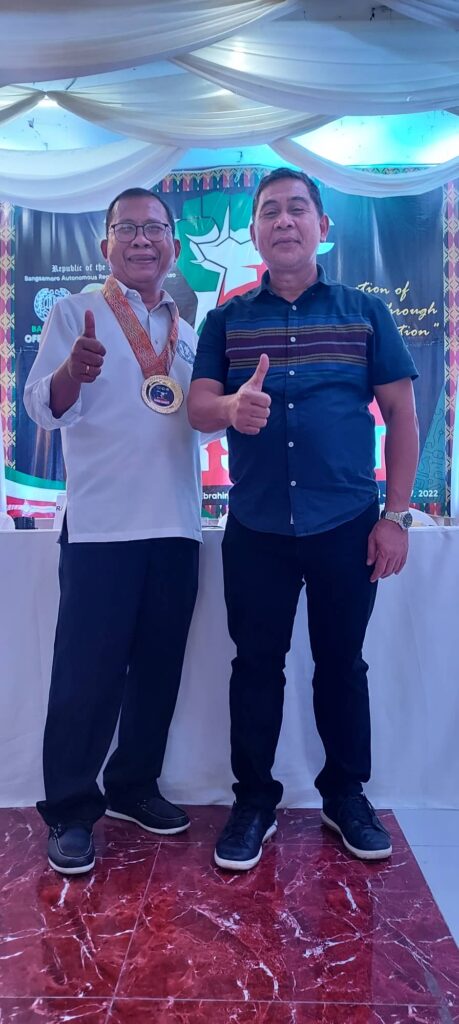
Atty. Sonny Matula, NAGKAISA chair, noted that freedom of association for all workers is well protected and the provisions on security of tenure have better protection in the Bangsamoro Labor Code than the Philippine Labor Code.
The two-day summit—held in partnership with the International Labor Organization—provided a venue for development partners to discuss, clarify, and address concerns on the proposed Bangsamoro Labor and Employment Code and other labor and employment-related measures.
In his video message, Bangsamoro Chief Minister Ahod Ebrahim called for the immediate passage of the proposed bills—the Bangsamoro Magna Carta for Workers in the Informal Economy, Bangsamoro Tripartism and Social Dialogue, the Bangsamoro Public Service Eligibility Equivalency Act, and the Bangsamoro Labor Justice Administration Act.
“The government of the day is one with the committee in calling for the immediate passage of the much-needed legislation to make the lives of the labor force much better,” chief Minister Ebrahim said.
MP Sema reiterated the importance of the active involvement of Bangsamoro workers in exercising their rights to participate in policy and decision-making as enunciated in the Bangsamoro Organic Law.
JAPANESE ASSISTANCE TO MINDANAO
Meanwhile, The Federation of Free Workers (FFW), through the Japanese Trade Union Confederation (RENGO), extended its sincere condolences to the Japanese people for the untimely demise of Prime Minister Shinzo Abe.
FFW leaders are saddened to know that he died as a result of political violence—which is rare and unexpected in a civilized place like Japan.
FFW is grateful to Japan because under Abe, other than funding the Road Network that links the BARMM to other trade centers in Mindanao, Japan had been one of the staunch supporters of the Mindanao peace process and had vowed to continue supporting the political transition and capacity-building of the Bangsamoro Transition Authority (BTA).
Japan under Abe also committed to grant socioeconomic development assistance to the people of Mindanao

Started in 1927, the Philippines Graphic is the longest-running printed magazine of national circulation that provides relevant news and features and promotes Philippine literature.