


Despite the absence of critical issues relating to workers’ rights and welfare in President Marcos Jr.’s just-concluded State of the Nation Address (SONA), various labor groups reiterated their call for a P150 wage increase, among other labor concerns.
“As we listened to the President’s SONA speech, there was no worker-related bill included in the priority legislations. No wage increase, no end to contractualization, no upholding the right to unionize. The focus is purely on new taxes, new sources of revenue, and new rules on procurement and auditing,” the Federation of Free Workers (FFW) said.
Still, Atty. Sonny Matula, president of the Federation of Free Workers (FFW) stressed that they will not let go of their demand for a P150 wage increase. Though expressing some disappointment but demonstrating resilience, FFW reiterated the urgency of its advocacy for a P150 daily wage hike across the nation by legislative fiat.
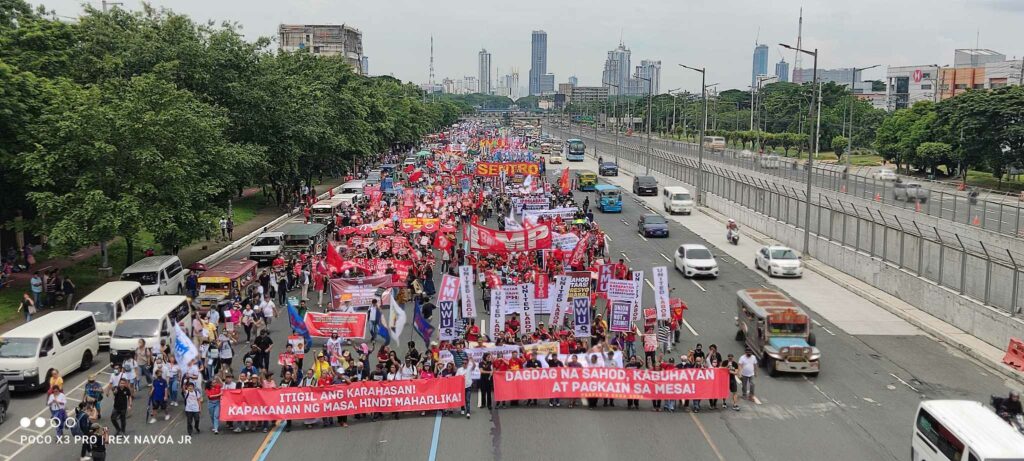
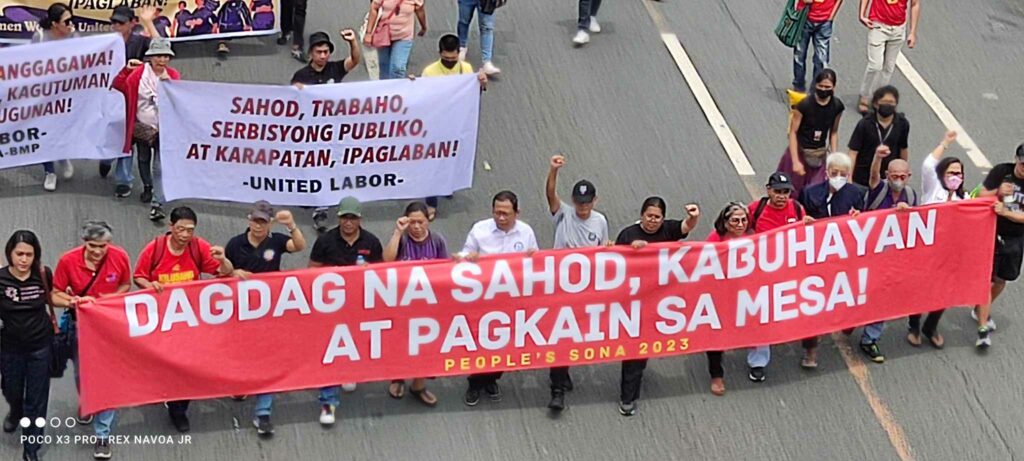
“Even though our agenda was not spotlighted in the President’s SONA speech, our resolve remains unshaken in our fight for workers’ rights and welfare. We persistently urge the government to support the P150 daily wage increase legislation, which we believe is not merely a matter of fair compensation for our workers but also a significant step towards mitigating the alarming rates of childhood malnutrition in our country,” Matula said.
Citing recent findings by the United Nations Children’s Fund (UNICEF), the FFW said that about 95 Filipino children succumb to malnutrition daily. Twenty-seven per 1,000 Filipino children fail to survive past their fifth birthday. A third of Filipino children are stunted or too short for their age. Stunting after the age of two can become a permanent, irreversible, and even fatal condition.
Still, the FFW commended Marcos on the approval of the agrarian reform condonation law. Cited in the SONA, the President recently signed a law that would write off agrarian reform beneficiaries’ debt worth about P57.557 billion.
However, according to Matula, “the silence about the wage increase, ending contractualization, and recognizing the right to organize is so deafening, workers can hear the silence with their empty stomachs and overworked bodies,” Matula said, adding that a decent wage increase will go a long way in improving the lives of children up to the next generation.
The FFW’s wage increase call was echoed by the Nagkaisa Labor Coalition and its affiliates, namely: Sentro Ng Nagkakaisa at Progresibong Manggagawa, Partido Manggagawa , National Federation of Labor (NFL), United Filipino Service Workers (UFSW), and the Public Services Labor Independent Confederation (PSLINK)
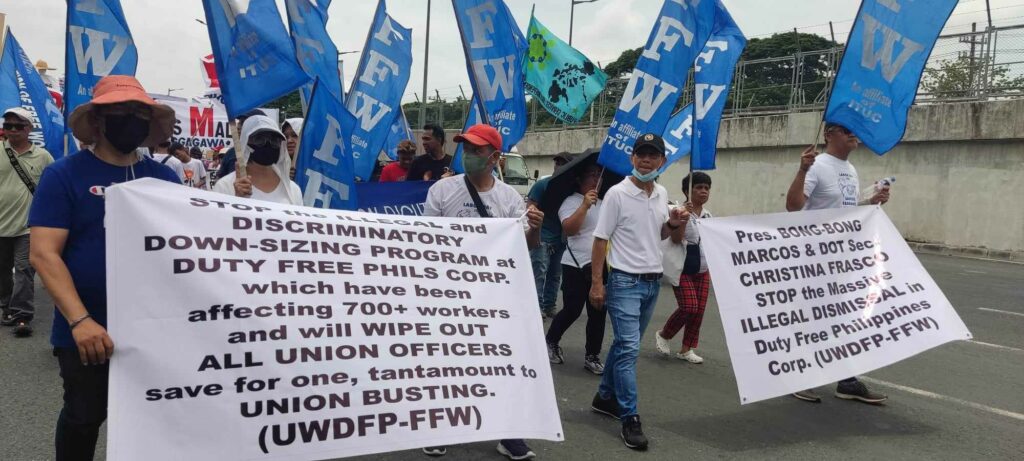
On the issue of labor contractualization, Rene Magtubo of the Partido ng Manggagawa said: “Many workers supplied by various manpower agencies or cooperatives do the work done by regular employees. And yet they are paid contractual wages, with no benefits. This practice is rampant in Metro Manila, Laguna, and Batangas in Region IV, as well as Bulacan, Pampanga, Tarlac, and Zambales in Region III.”
The FFW said that workers continue to have their right to self-organization restricted. “We ask the presidential commission to enhance freedom of association and to investigate killings, intimidations, and red tagging of trade unionists.”

Started in 1927, the Philippines Graphic is the longest-running printed magazine of national circulation that provides relevant news and features and promotes Philippine literature.