

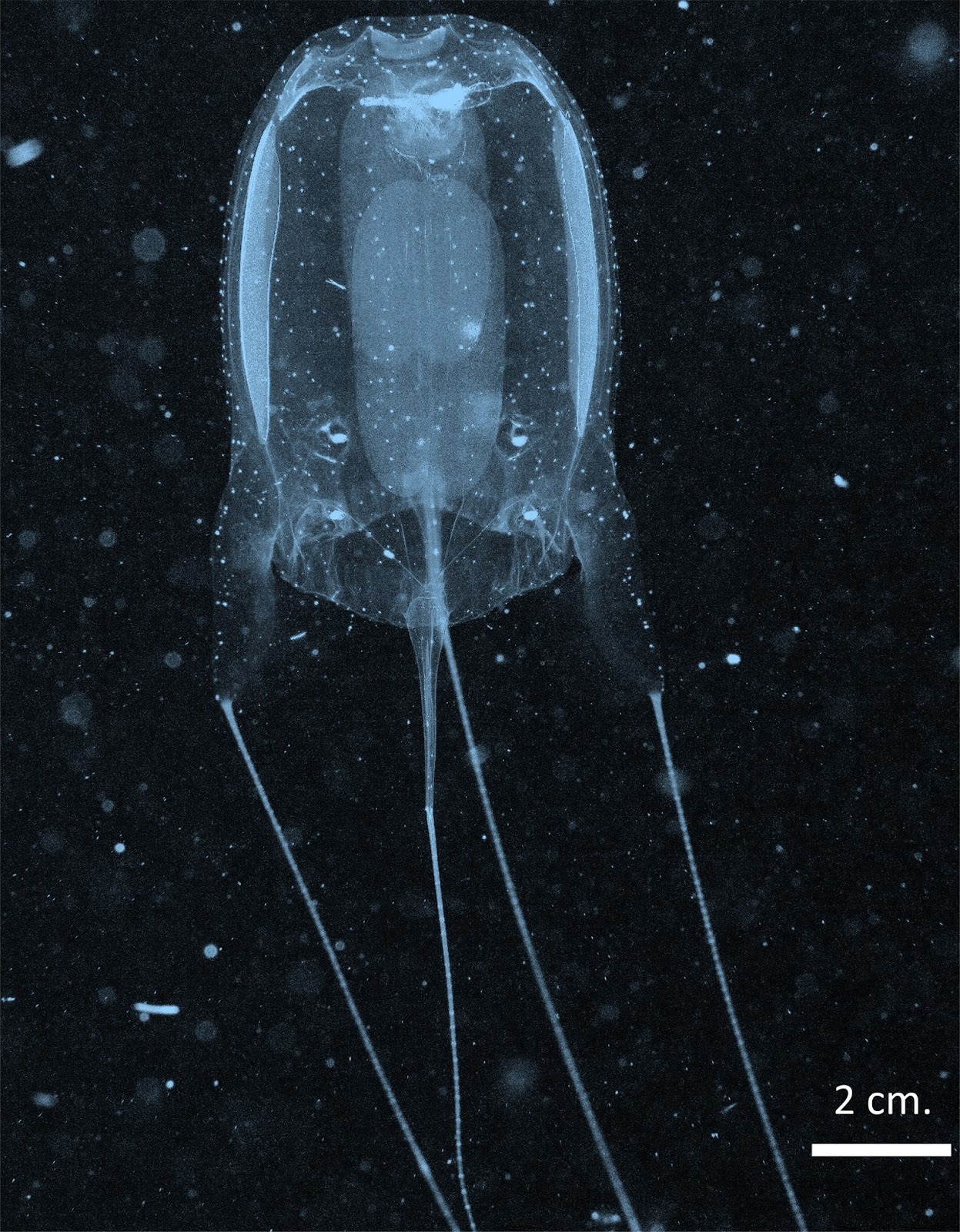
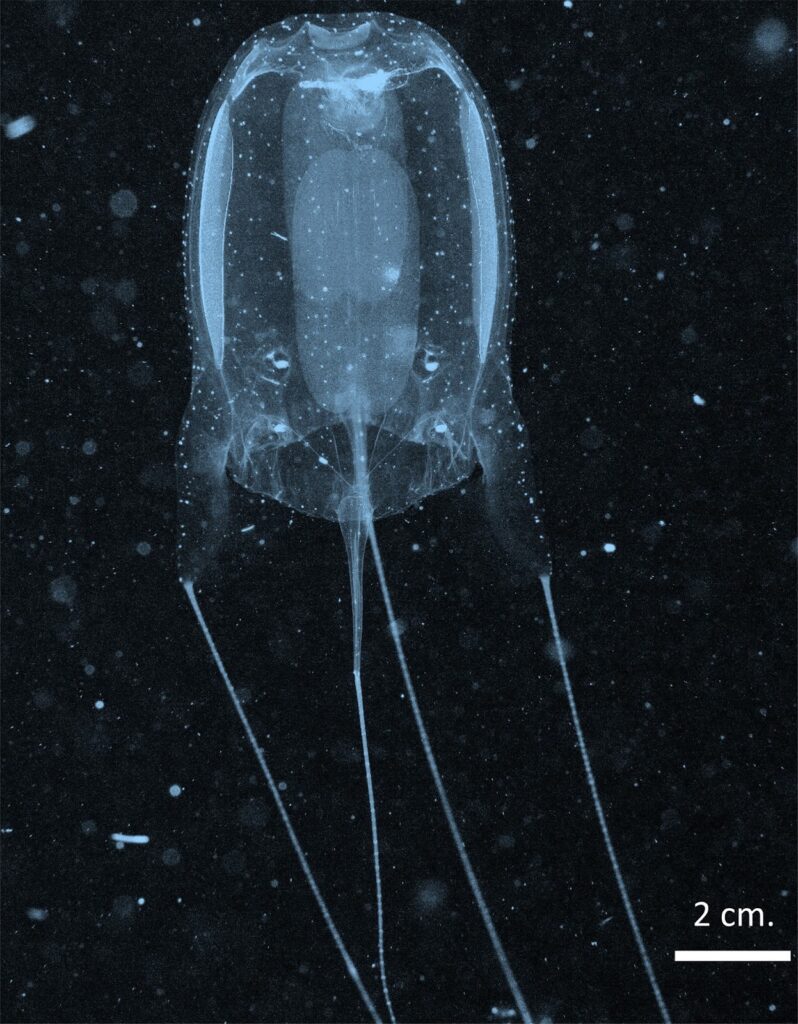
The Philippines, located within the Coral Triangle, is recognized as one of the world’s richest marine ecosystems. Yet, many marine species—such as carybdeid box jellyfish—remain poorly documented. Their potent venom and ecological significance underline the importance of conducting accurate taxonomic studies on box jellyfish.
Marine researchers have documented several newly recorded box jellyfish species in the Philippines, marking a vital contribution to the country’s growing database of marine biodiversity. The team is composed of Dr. Sheldon Rey Boco and Christine Gloria Grace Capidos of The Philippine Jellyfish Stings Project; Russel Christine Corcino and Dr. Lemnuel Aragones of the University of the Philippines – Diliman College of Science’s Institute of Environmental Science and Meteorology (UPD-CS IESM); Dr. Phuping Sucharitakul of the Batavia Coast Maritime Institute in Western Australia; Ram Yoro of RY Photography; Dennis Corpuz of Anilao Critters Studio; and Scott Tuason of Squires Sports Philippines.
“Why bother studying them? Three reasons,” Dr. Boco said. “They’re part of the marine food chain and their presence or absence can indicate the condition of marine ecosystems. They eat smaller creatures and are food for bigger ones, helping keep everything in check. And many carybdeids have venom strong enough to send people to the hospital. Figuring out how that venom works could lead to better treatments and save lives.”
The team combined in situ (on-site) observations, using high-resolution underwater photography and videography, with citizen science initiatives that were verified through digital authentication. Verified contributions from citizen scientists strengthened the team’s documentation of newly recorded box jellyfish species.
Among the notable findings are the first Philippine records of Alatina alata, Carybdea cuboides, Malo sp., and Morbakka virulenta. The researchers also confirmed new records for Copula sivickisi and Malo filipina. These discoveries enhance our understanding of where carybdeid box jellyfish—many of which can potentially cause Irukandji syndrome—occur and how widely they are distributed.
“Studying carybdeids in their natural habitat proved extremely challenging, largely because these jellyfish live in hard-to-reach places. Most species, except for a few, like the Philippine carybdeid Copula sivickisi, dwell in offshore waters at least 100 meters from shore and in depths of 20 to 30 meters,” Dr. Boco explained. The team focused on observing the adult medusa stage—the jellyfish’s visible swimming form.
To observe and document the medusae through in situ observations using high-resolution photos and videos, the marine researchers conducted several blackwater dives over open water from 2017 to 2021 and in 2024. Night diving requires specialized scuba certification and careful preparation for each trip. Before each dive, the team planned logistics, checked weather and currents, calculated air supply, and reviewed safety protocols to ensure the safety of everyone involved.
“We also gathered photos and videos from recreational divers through citizen science. This approach introduced a new hurdle: proving the images were genuine. With artificial intelligence now capable of creating convincing fake jellyfish pictures, we treated each submission like evidence in an investigation,” Dr. Boco added. The team examined metadata, lighting, water conditions, and anatomical details in the photos and videos to confirm authenticity. Dr. Boco mentioned that sorting real records from potential forgeries required patience and time, but accuracy was essential for producing reliable research findings.
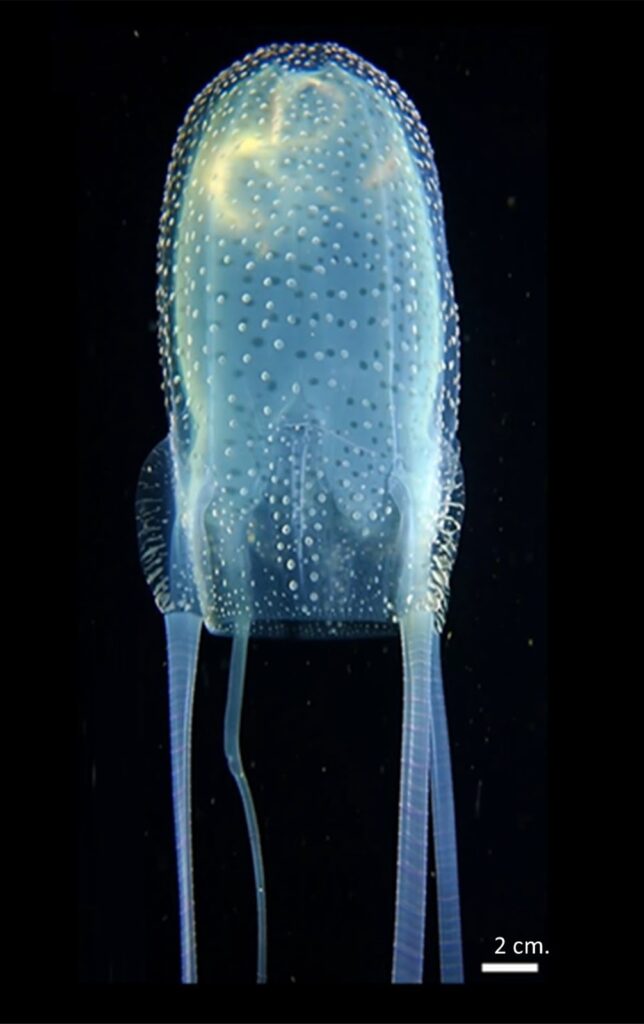
Dr. Boco and his team plan to make citizen science even easier and faster. “Our goal is to collect high-quality jellyfish sightings with the least amount of required information, so people can report observations in seconds without filling out long forms. This way, more participants can contribute quickly, and we still gather the key data needed for solid research. We also want to improve our nighttime blackwater dives,” Dr. Boco noted. Beyond just observations, the marine researchers aim to conduct more in situ experiments during these dives to learn more about jellyfish behavior, movement, and environmental conditions in real time.
Their group hopes to predict where these jellyfish species will appear now and in the future, not just in the Philippines but also across nearby seas.
Their paper, titled “New and first records of carybdeids including Irukandji box jellyfish (Cnidaria: Cubozoa; Carybdeida) in the Coral Triangle (the Philippines),” was published in Thalassas: An International Journal of Marine Sciences, which covers a broad range of locales, from the deep sea to coastal environments and includes papers on marine and coastal biology, chemistry, geology and physics, with a particular emphasis on multidisciplinary work. Their study was partially supported by citizen science contributions. — Eunice Jean C. Patron
References:
Boco, S. R., Corcino, R. C., Capidos, C. G., Sucharitakul, P., Yoro, R., Corpuz, D., Tuason, S., & Aragones, L. V. (2025). New and first records of Carybdeids including Irukandji box jellyfish (Cnidaria: Cubozoa; Carybdeida) in the coral triangle (the Philippines). Thalassas: An International Journal of Marine Sciences, 41(4). https://doi.org/10.1007/s41208-025-00970-9