
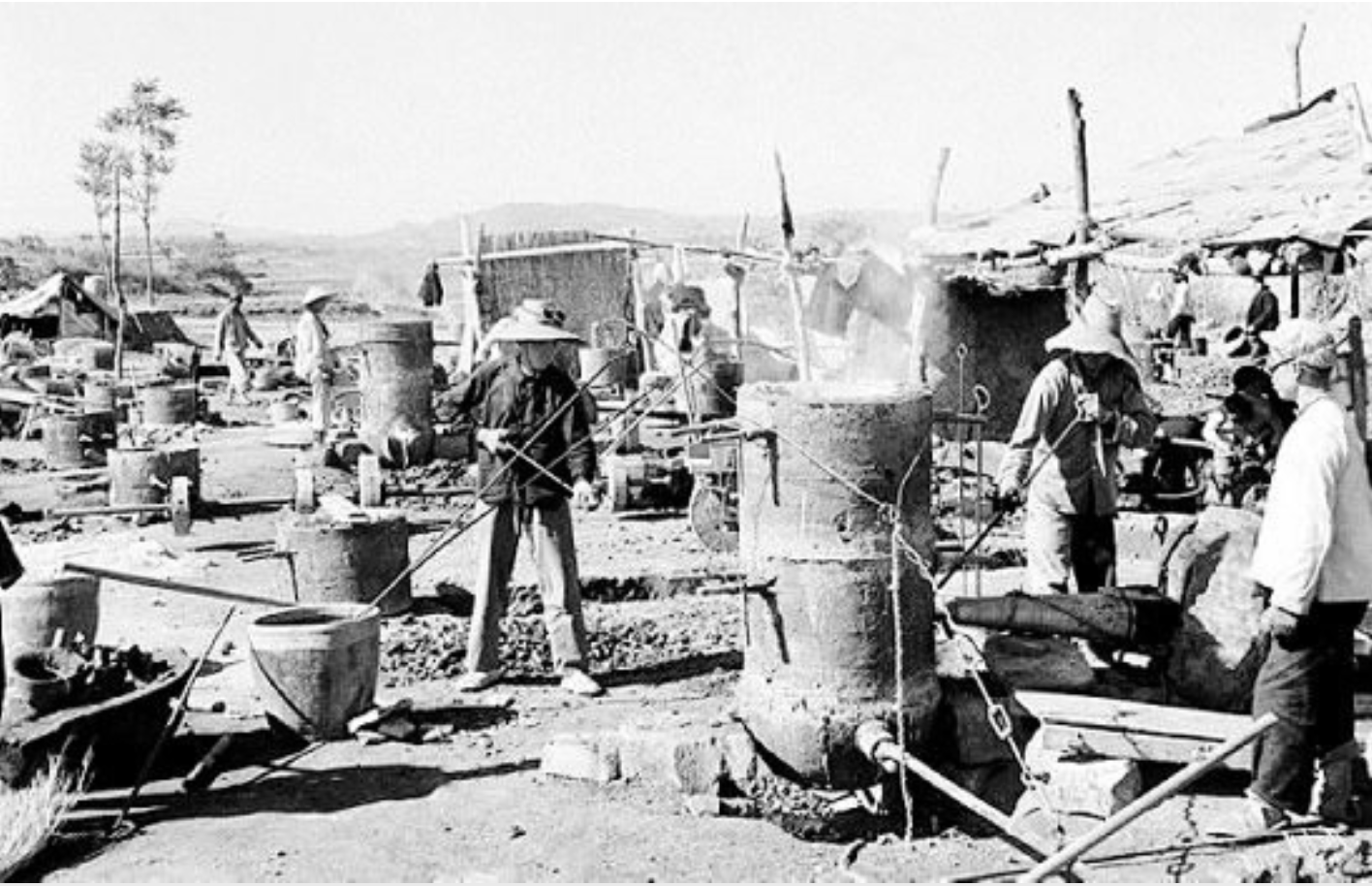
How did China make the leap from being one of Asia’s poorest nations to becoming a global economic behemoth—all in a little more than six decades?
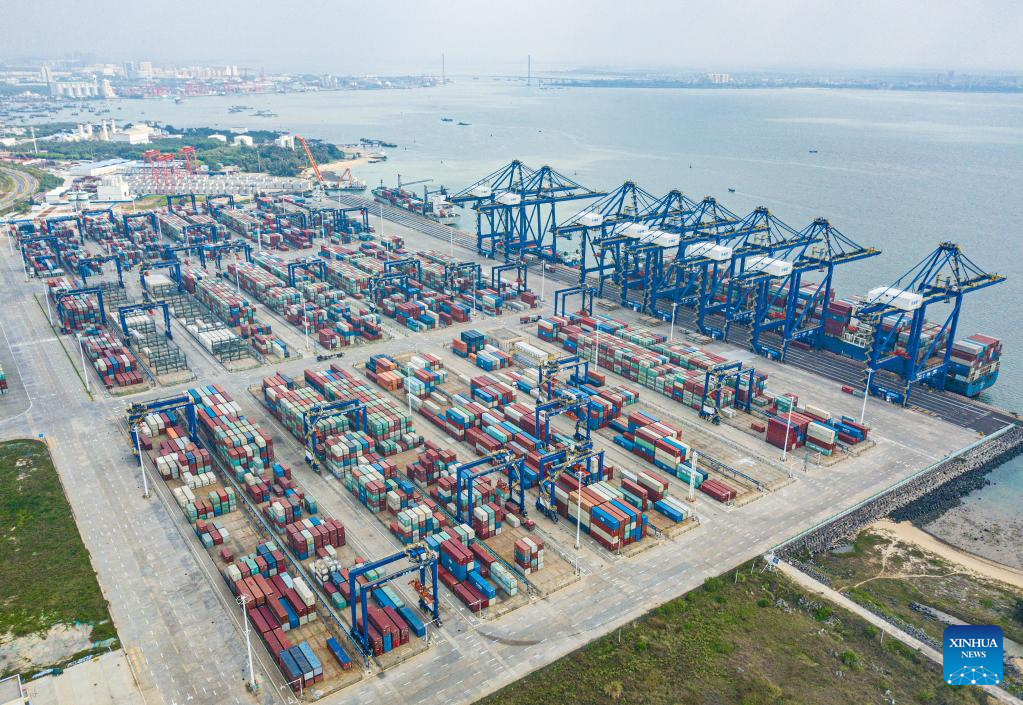
In 2013, China emerged as the primary engine of global economic growth, officially surpassing the contribution rate of other major economies.
Since then, China has consistently contributed about 30% of the world’s annual economic expansion, compared to the contribution of India (17%) and the United States (9.9%) as of 2026.
Despite a transition toward slower, higher-quality growth (projected at 4.2%–4.5%), China remains the world’s single largest growth engine due to its massive industrial scale and supply-chain dominance.
But this was not always the case.
Back in 1951, six years after the Second World War ravaged the global economy, China stood as one of the poorest and most isolated countries in the world. It was a nation that made very limited contribution to the world economy, struggling for basic survival after decades of devastating conflict.
One asks: How did China make the leap from being one of Asia’s poorest nations to becoming a global economic behemoth—all in a little more than six decades?
NEDP, 5-YEAR-PLANS
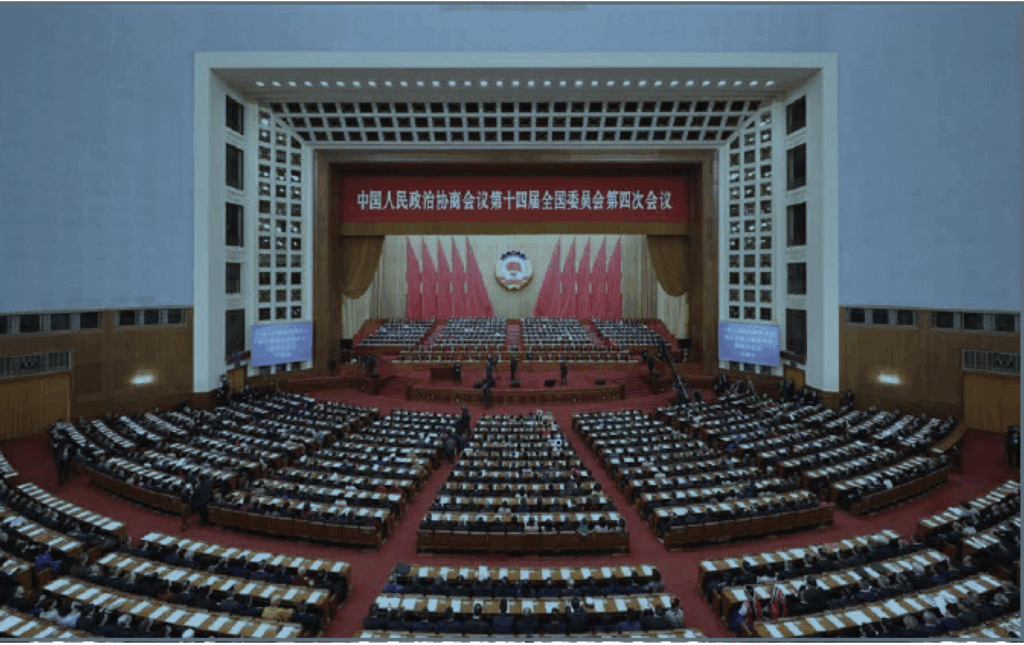
4, 2026. (Photo/Xinhua)
It all began on February 14, 1951, when Chairman Mao Zedong, the founding father of the People’s Republic of China, proposed the idea of drafting a National Economic Development Plan (NEDP).
Basically, the NEDP involves the introduction of centralized state planning and a series of Five-Year Plans (FYPs).
The first 5-Year Plan, (1953-1957), set directions such as prioritizing heavy industry and improving people’s livelihoods.
It marked a significant shift towards a centrally planned economy aimed at rapid industrialization.
The Plan prioritized the development of heavy industry, with the majority of state investment directed toward this sector, relying heavily on the Soviet model for economic development and technical assistance.
During this period, production more than doubled, with substantial investments in infrastructure including factories, roads, and dams, and by the end of 1956, agricultural collectivization had been largely completed, with over 96% of farm households participating in cooperatives.
However, the plan also faced significant challenges, such as inadequate agricultural growth and rising unemployment, despite ambitious targets and high rates of industrial output.
From the first to the fifth 5-year plan (1955-1980), China gradually built a complete and independent economic system, especially a strong manufacturing base.
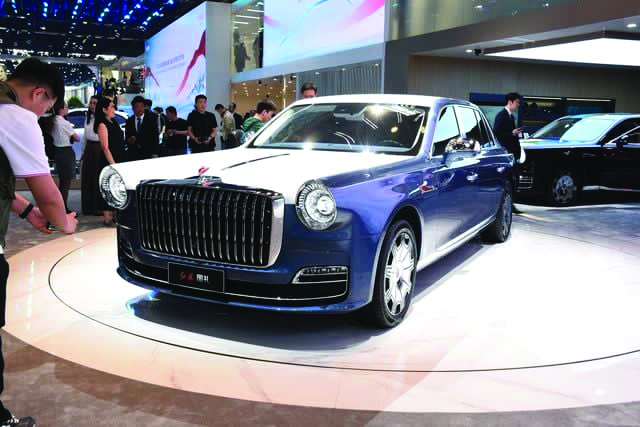
One of the outcomes of the first 5-year plan is the Hongqi (Red Flag) Sedan—a premier luxury automotive brand, familiar to many Filipino friends, and is under the FAW Group, China’s first automobile manufacturer.
From the sixth to the 13th five-year plan (1981-2020), China moved toward comprehensive opening-up, achieving an average annual GDP growth rate of 9.5%, eradicating absolute poverty, and building a moderately prosperous society in all respects.
During the 14th five-year plan period (2021-2025), under the leadership of the CPC Central Committee with Comrade Xi Jinping at its core, China has been working to raise its economic strength, scientific and technological capabilities, and overall national power to new heights.
Over a period of four days (Oct. 20-Oct. 23, 2025), the 20th Central Committee of the Communist Party of China adopted proposals for the 15th Five-Year Plan for national economic and social development.
The five-year plan (2026-2030) was subsequently reviewed and approved at the Two Sessions in 2026.
Overall, the 15th five-year plan aims to further strengthen technological self-reliance and enhance China’s capacity for innovation based on home-grown, risk-controllable core technologies.
It aims to move lab-born technologies onto factory floors to unlock opportunities for developing new quality productive forces and promoting high-quality growth across China’s real economy sectors.
In particular, the plan sets priority areas that include six emerging pillar industries-integrated circuits, aerospace, biomedicine, and low-altitude economy, new-type energy storage, and intelligent robotics-as well as six future industries-quantum technology, biomanufacturing, green hydrogen and nuclear fusion energy, brain-computer interfaces, embodied intelligence, and 6G.
The GDP growth target for 2026 is set at 4.5%-5%. China’s leaders expect sustained economic growth to mark steady progress toward building a modern socialist country that is prosperous, strong, democratic, culturally advanced, harmonious, and beautiful-by the middle of this century.
They add that the “GDP growth marks a steady progress toward building a modern socialist country that is prosperous, strong, democratic, culturally advanced, and harmonious.”
Editor-in-Chief of Philippines Graphic