
The humidity in Manila wrapped around Lia De Castro like a damp shawl as she stepped out of the National Library, a worn satchel slung over one shoulder. She had barely reached the sidewalk when her phone buzzed. A notification from a law firm she’d never heard of.
Subject: Inheritance Notification—Estate of Rosario S. Dela Peña
She frowned. Her grandmother? But Lola Saring had passed away six months ago, and the family had held a modest wake and burial in Cavite. The idea of an “estate” felt oddly formal for a woman who had lived simply, always wearing faded duster dresses and slippers that flapped as she walked.
Lia read the email again, slower this time.
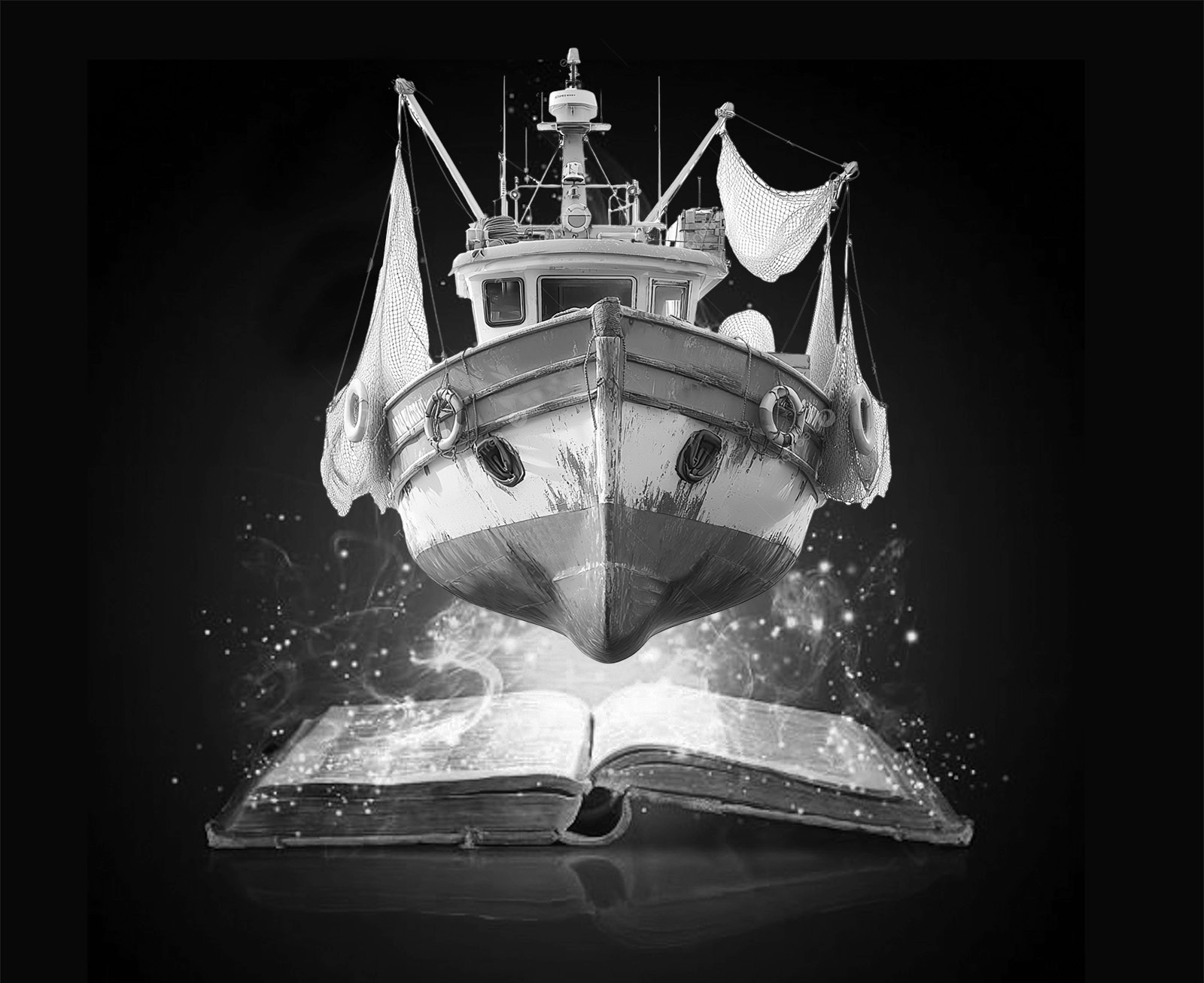
The last will of Rosario S. Dela Peña indicates that you, Ms. Lia De Castro, have inherited a vessel registered in her name — “San Gabriel” — a 26-foot fishing boat docked in Bulan, Sorsogon.
“A boat?” she muttered, staring at the screen as if it might revise itself.
Back in her one-bedroom condo, Lia turned the electric fan to high and sat cross-legged on the cool tiles, the walls stacked with books whispering their own stories. She searched Bulan on her laptop. A town cradled by the sea, far from the frayed chaos of Manila. Coconut trees, sleepy harbors, fishing nets drying under the sun. It felt more like fiction than fact.
“Bulan?” her best friend and fellow librarian Tessa asked the next day over coffee in the staff pantry. “Lia, you don’t even swim.”
“I know,” Lia replied, wrapping her hands around the mug like it was a shield. “But it’s not about the boat. It’s about Lola Saring. She never talked about her life there. Not really.”
“Maybe there’s a reason she didn’t.”
“Or maybe,” Lia said, her voice softer now, “she was waiting for someone to ask.”
The bus ride to Sorsogon took nearly 14 hours—long enough for Lia to reread her grandmother’s battered notebook, a diary of sorts she’d found after the funeral. Most pages were filled with shopping lists and prayers, but a few entries stood out: notes about San Gabriel, weather patterns, and a name that appeared again and again—Mateo.
She arrived in Bulan just after sunrise. The air smelled of salt and morning. Tricycles waited lazily by the terminal. A rooster crowed somewhere nearby as the town blinked awake.
The harbor was easy to find. She stood at the edge of the dock, her suitcase clutched tightly, and looked out across the water. And there it was.
The San Gabriel. Or what was left of it.
Its hull was bleached and cracked by the sun, leaning slightly on its side like an old man dozing off mid-story. Ropes dangled like forgotten questions. A name barely legible on the stern.
“Well,” Lia muttered, “you weren’t kidding, Lola.”
“Are you the De Castro girl?” a voice called out.
She turned. A man, perhaps in his late forties, with sun-worn skin and a fisherman’s gait stood nearby. He had the kind of gaze that didn’t flinch from truth.
“That depends,” Lia said carefully. “Who’s asking?”
He grinned, revealing a missing tooth. “Name’s Mang Isko. Your Lola and I used to fish together. She told me you might come one day.”
“She did?”
“Not in words,” he shrugged. “But she left this boat behind. And that woman never did anything by accident.”
Lia looked back at the San Gabriel. “It’s barely floating.”
“Maybe. But every boat’s got a soul. Just needs someone to remember it.”
For the first time in days, Lia smiled.
And for the first time in years, she felt something stir—like a tide turning quietly under the surface.
The Boat Builder
The salt air clung to the morning like a whispered promise. Lia crossed the weather-worn dock with hesitant steps; the old journals clutched tightly under one arm and a thermos of still-hot coffee in the other. She stopped at the edge of the boathouse, staring at the chipped blue door. The place looked as if it had grown out of the very sea—salt-bleached, tide-battered, and more alive than most things on land.
Inside, the rhythmic rasp of a hand plane moving over wood echoed like breath. Elian Rivera didn’t look up when she knocked.
“Is this a bad time?” Lia asked, voice light, half-expecting silence.
Instead, there was a pause. Then his voice, low and measured. “You’re early.”
“I thought I was late,” she replied, stepping inside. Her eyes adjusted to the dim, golden light filtering through salt-streaked windows. The place smelled of cedar, varnish, and ocean. “Your note said come by after sunrise.”
“It’s barely past it.”
She watched as he continued smoothing a curved plank, his hands moving with a kind of reverence. His forearms were dusted with sawdust; his flannel sleeves rolled to the elbows. Every movement was deliberate. He worked like someone who had been broken before and found solace in mending other things.
“I brought coffee,” she offered.
“I don’t drink coffee.”
That shut her up for a second.
She walked to the side of the room, trying not to stare at him too much. The boat—her grandmother’s boat—sat in dry dock like an old whale, wounded but not dead. Its ribs were visible in places where Elian had already started stripping it down. She placed the journals on a bench nearby and looked at him again.
“I’m not here to just fix the boat,” she said. “I want to…make something of it.”
His hands stopped.
“It’s a boat.”
“It’s more than that,” she said, sitting on the edge of a workbench, brushing a curl from her face. “My grandmother used to write about it like it was a character in her life. She named it Maribel after her sister, who died when they were kids. I want to restore it, yes—but also give it a new story. Maybe a floating library. A poetry barge. Something…alive.”
He turned to face her then, really face her, and for a second, she saw the deep lines of quiet resistance around his eyes.
“I fix boats,” he said. “Not dreams.”
“Are they so different?” she asked, quietly.
He didn’t answer.
Silence stretched. She reached for one of the journals and opened it, thumbing through until she found a page. “Listen to this,” she said, ignoring his slight flinch. “‘The boat creaked under the weight of memory, as if it, too, carried grief. We drifted, not toward a shore, but toward something softer—a forgetting. Or a beginning.’”
Elian turned back to his workbench. “Poetry won’t keep it afloat.”
“No,” she said, “but maybe it’s what it was meant for.”
He said nothing, but his hand paused over the next plank. After a long beat, he said, “It’ll need new ribs, new decking, probably a new mast. That’ll take months.”
“I’m not going anywhere.”
Another silence. Then: “You’ll work.”
Lia blinked. “What?”
“You want meaning?” he said, finally looking her dead in the eyes. “Then you help build it.”
She hesitated. “I don’t know the first thing about boats.”
“Good,” he said, picking up a chisel. “Then you’ll learn the right way.”
Her mouth tugged at the edge with a smile that surprised even her. “Is that how it works?”
He didn’t look at her again, but there was a slight softening in the way he returned to the hull. “That’s how it begins.”
Outside, the sea stretched out past the dock, quiet and vast. Inside, Lia pulled her chair closer, opened another journal, and for the first time in a long while, began to listen with more than just her ears.
The Floating Dream
The morning fog curled like lace around the harbor, and gulls called in the distance, their cries high and distant, like laughter just out of reach. Inside the boathouse, the air buzzed with sawdust and potential.
Lia stood on a low stool, her arms smudged with primer, holding up a painted wooden sign.
LAKBAY AKLAT
She looked over her shoulder. “How’s the spacing?”
Elian, kneeling nearby and fitting a new plank into the gunwale, barely glanced up. “The ‘A’ in Aklat is crooked.”
“It’s character.”
“It’s crooked.”
She grinned. “We’ll call it character, then.”
He grunted, but it wasn’t unkind.
A week earlier, it had all come spilling out.
They’d been sanding down the transom in quiet focus, the rhythmic scrape of their tools filling the silence. Lia, as always, had been the first to break it.
“My grandmother used to read to kids from this boat,” she said suddenly. “Docked off tiny islands, sometimes anchored near beach villages. She’d bring trunks of books, string up fairy lights across the mast, and read under the stars.”
Elian didn’t stop working, but the rhythm of his sanding slowed. “You’re serious.”
“She wrote about it in her journals. She called it her ‘floating refuge.’ Said kids would swim out just to hear her voice.”
He set the sander down and wiped a streak of sweat from his brow. “You want to bring that back?”
“I want to turn Maribel—well, Lakbay Aklat now—into something that moves between islands. That brings stories to places that don’t have bookstores. Or libraries. A boat of books. A traveling library, open to whoever needs it.”
Elian had looked at her then, eyes steady, quiet. Not skeptical. Just measuring.
After a long pause, he’d said, “You’d need proper shelving. Waterproofing. A secure hold. Balance will be off with that much weight.”
“And you’ll help me with that?” she asked.
A beat. Then: “I didn’t say no.”
That had been the beginning.
Now, a rhythm had settled between them. Quiet mornings with tools. Afternoons sorting donated books that came in boxes, wrapped in newspaper, smelling of old paper and rainy days. Evenings spent under a swinging lightbulb, mapping routes on weathered charts with coffee growing cold between them.
Their words came easier, though rarely wasted.
“What’s this one?” Elian asked, holding up a worn paperback from one of the donation piles.
Lia squinted at the faded title. “Papel Boats and Rainy Days. Poetry.”
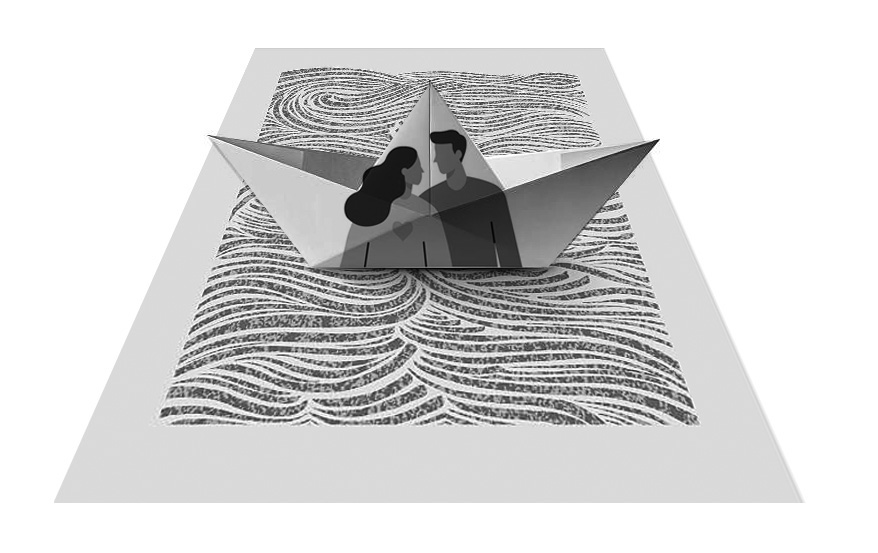
He turned it over. “Used to fold paper boats like this when I was a kid. Let them float out into the mangroves.”
“Did you imagine they’d reach somewhere?” she asked.
He shrugged, eyes scanning the pages. “Didn’t matter. It was the making of them that meant something.”
Lia watched him then—not the way a woman watches a man, not yet—but the way one soul watches another begin to unclench, ever so slightly.
She reached for another book. “Let’s make shelves next week. I want the picture books near the bow.”
“Too much weight forward, you’ll pitch in rough waters.”
“Fine,” she said, mock-sighing. “You do the balancing. I’ll do the dreaming.”
He didn’t smile, not exactly. But the corners of his eyes crinkled. “That seems accurate.”
One afternoon, they sat on the unfinished deck, their backs against the cabin wall, paint on their clothes and the smell of sealant in the air.
“I still don’t get why you’re doing this,” Elian said quietly. “You could’ve donated books to a real library. One built one on land.”
Lia was silent for a long moment, brushing flecks of dried varnish from her fingers. Then, softly: “Because there’s something about stories that move. That reach places no one thinks to send books to. My grandmother understood that. She didn’t want to plant roots. She wanted to scatter seeds.”
Elian stared out at the harbor. “What if no one comes?”
“They will,” she said with conviction, and not just for the boat—but maybe for him, too. “People come to stories. Especially when they’re brought to them.”
Another silence.
Then, softly: “We’ll need better anchors. And a water filter system. And—”
Lia smiled. “And you’ll help with that?”
He didn’t answer right away.
But when he turned to her, his voice was softer than it had been in days. “I didn’t say no.”
They sat there until the light faded, two silhouettes against the slow-building dream. The boat was still half-finished, the books still unsorted, and the future uncertain—but between planks and paperbacks, something quiet and steady had begun.
Trust. Maybe even something more.
And just beyond the dock, the sea waited—ready to carry stories once more.
Pages and Planks
The days began to fold into each other like well-worn pages—sunrises caught between rigging lines, laughter drifting like salt spray, the scent of varnish and old paper becoming the smell of something sacred.
The boat, Lakbay Aklat, no longer resembled the sagging hull Lia first stepped into weeks ago. Its wood gleamed with fresh sealant, the shelves—measured, cut, and sanded by Elian’s calloused hands—now held books sorted by genre, color-coded by Lia’s whims. Children’s picture books near the bow. Fiction nestled midship. Memoirs near the stern, as if to keep the boat weighted in memory.
But more than the vessel, it was the space between them that had shifted.
It started with shared lunches. Quiet ones, seated on overturned buckets or the dock’s edge, passing cold rice and dried mango between them. Then came the nights—long and quiet, working under hanging bulbs, where Lia’s voice rose softly over the creak of the boat as she read aloud from her grandmother’s journals or whatever book happened to be closest.
One night, her voice trailed off mid-sentence.
She looked up from the page. “You ever get the feeling that even when you’re standing still, you’re drifting?”
Elian was crouched beside the mast; fingers stained with epoxy. He didn’t answer right away. Then, “only when I stop building something.”
Lia looked down at the book, then closed it. “I never stayed anywhere longer than a few months. New schools. New towns. I used to think it made me adaptable. But lately it just makes me tired.”
“You don’t seem tired.”
“I’m good at pretending.”
Elian sat beside her, his back against the cabin wall, arms resting on his knees. He stared out at the moonlit water, face carved by shadow.
“My brother used to say something similar,” he said. “Always chasing something new. Waves, mostly. Bigger swells. Riskier crossings.”
Lia turned to him, quiet.
“He drowned,” Elian said. “Storm off Calaguas. I was supposed to go with him that night. I backed out. He didn’t.”
Her voice, when it came, was a whisper. “I’m sorry.”
“I stopped building for a year after that. Thought maybe I didn’t deserve to anymore.” He exhaled, slow and unsteady. “But boats…they’re like people. They get lost. They get battered. Sometimes you fix them. Sometimes you don’t.”
Lia didn’t reach for his hand—didn’t need to. She just stayed beside him, offering the kind of silence that felt like shelter.
The village began to notice.
It started with a shy knock at the boathouse one afternoon. A girl, no older than ten, held out a copy of Mga Kuwento ni Lola Basyang. Her eyes darted between Lia and Elian, cheeks red.
“For the boat,” she mumbled.
Lia knelt to take the book gently. “Thank you. What’s your name?”
“Isa.”
“You want to come read with us sometime?”
Isa nodded, wide-eyed, then ran off.
Word spread like tidewater through mangroves.
The next day, three more kids showed up. The day after that, a group of elders arrived with boxes—tied with twine, covered in dust. Inside were old Tagalog folk tales, English paperbacks from the ’70s, comic books with brittle pages, even an encyclopedia missing volume E–F.
Elian stood holding a hardcover in his hands, clearly bewildered.
“They’re giving us their histories,” Lia said, beaming.
“I didn’t think anyone would care.”
“They do,” she said softly. “They always have. You just didn’t see it.”
He looked at her then—really looked—and she felt the air shift.
That night, they sat on the finished deck of Lakbay Aklat, a thermos of ginger tea between them. Lights from the village blinked gently along the shore. Voices from the children still echoed faintly from the dock, their laughter lingering like embers.
“You know,” Lia said, nudging him gently, “this isn’t just a floating library anymore.”
“No?”
“It’s a story we’re writing together.”
He smirked, eyes on the horizon. “I thought I was bad with words.”
“You are,” she teased. “But you’re good with meaning.”
They sat in companionable silence for a while, listening to the lapping water.
Then Elian spoke, voice quiet, steady. “Stay.”
Lia blinked. “What?”
“Don’t drift. Not this time.”
She swallowed hard, the night suddenly full of warmth and ache.
“I wasn’t planning to,” she said.
And though nothing more was said, something old and unspoken finally settled between them—a shared anchor, forged in pages and planks, ready to hold through the tide.
High Tide
The heavy rain came without notice—enraged and merciless, like a song played out of whack.
Gusts thrashed through the natural harbor, stirring ropes like loose hair, water smacking against the mooring with ferocious tempo. Inside the boathouse, Lakbay Aklat squeaked under the tension, its half-painted exterior hauling against its berths.
Lia and Elian fought to secure tarps over the deck, but the wind tore through them like paper.
“Elian, the bow line’s loose!”
“I see it!” he shouted, voice nearly drowned by the thunder overhead.
They worked in tandem, soaked to the bone, their movements urgent but practiced. Still, it wasn’t enough.
When morning broke, the boat was listing slightly, water pooled in the lower hull, and several planks along the stern were split wide open.
Lia sat on the dock, arms wrapped around her knees, the air smelling of salt and ruin.
Elian stood a few feet away, inspecting the damage with the cool detachment of a man watching something slip through his fingers.
“It’s not beyond fixing,” he said.
“But it’s a setback,” Lia muttered. “And I just got a message from my editor. They want me back in Manila. Full-time.”
A pause.
“And?” Elian asked without turning.
“And… I don’t know.”
“Sounds like you do.”
She looked up sharply. “What’s that supposed to mean?”
He finally faced her, his face unreadable, jaw tight. “It means this—this boat, this project—it was never meant to last, was it?”
“That’s not fair.”
“You’re a traveler, Lia. This was just a stop.”
Her voice rose. “And you? You’re a builder, Elian. But you build walls just as well as boats.”
The air thickened. The kind of silence that comes after words fall like axes.
“You think I’m hiding?” he said, stepping closer. “You think I haven’t tried to move forward? My brother—he died chasing something. I stopped chasing anything. I made peace with stillness.”
“But peace isn’t the same as living,” Lia snapped. “You live like the tide’s always going to take something from you, so you refuse to let anything stay.”
“And you,” he countered, “run from anything that asks you to stay.”
She stared at him, stunned.
He didn’t wait for a reply. He turned and walked back into the boathouse, leaving her on the dock with the sea and the silence.
Later that afternoon, Lia began cleaning the cabin, needing something to do, something to touch. She tugged at a loose plank in the wall, trying to pry it away to check for rot.
It gave way with a splintering crack—and something fell out.
A folded piece of yellowed paper, tucked into the hollow behind the plank.
Her hands trembled as she opened it, the handwriting unmistakable.
Dearest Lia,
If you’re reading this, then the boat has found you again—just as I hoped it would.
This boat has never just been wood and sail. It’s where I met the sea and found the courage to speak aloud to it. It’s where I read stories to strangers and somehow found myself in every tale.
But the most important story you’ll write isn’t in a journal or a column. It’s in the choices you make when the tide rises.
Don’t be afraid of roots. Or love. Or staying.
Find the story only your heart can write.
–Lola
Lia sank to the cabin floor, her breath catching. The sound of rain had faded, but the ache remained. Not of the storm—but of all the things unsaid.
She read the letter again. And again.
Then she stood.
The next morning, Elian returned to the boathouse early, expecting silence.
Instead, he found Lia barefoot on the deck of Lakbay Aklat, holding a hammer in one hand and a rolled-up blueprint in the other.
“What are you doing?” he asked, his voice hoarse.
She looked at him with soft determination.
“Fixing the stern. The community center kids brought epoxy. And Isa’s grandfather gave me spare oak strips. It’s not beyond fixing, remember?”
He blinked, surprised. “I thought you were going back.”
She held up the letter. “My grandmother left me this. Said the real story—the one worth telling—starts when the tide rises.”
His gaze dropped to the letter, then back to her.
“I don’t want to run,” she said quietly. “Not from this. Not from you.”
He said nothing for a long time. Then he stepped forward and gently took the hammer from her hand.
“Then let’s fix it,” he said.
And this time, they worked not in silence—but in rhythm.
Plank by plank.
Page by page.
The Launch
The village woke to the scent of seawater and sawdust—and something else, too. Anticipation, maybe. The kind that hung like salt on the skin.
Lia arrived at the dock before sunrise, hair tied up, heart steady, expecting to sand down the stern or organize more donations.
Instead, she froze at the edge of the boathouse.
Lakbay Aklat was complete.
The hull had been resealed, the new stern varnished to a golden shine. Lanterns hung from the rigging like captured fireflies. On deck, painted lettering read:
“Aklat para sa lahat—Books for all.”
But it was the bookshelf that stole her breath.
It stood by the entryway to the cabin—simple, sturdy, hand-carved, each shelf trimmed with delicate patterns of vines and waves. At the top, engraved in wood:
“Lia’s Shelf – For Stories Yet to Be Written”
Her hand covered her mouth, eyes stinging.
Footsteps creaked behind her. She didn’t have to turn to know.
“Elian,” she whispered.
He stood a few paces back, hair damp from the sea breeze, shirt stained with varnish and effort.
“I couldn’t sleep,” he said simply. “So, I finished it.”
She traced the carving with her fingers. “You didn’t have to do this.”
“I did.” His voice was quiet. “For what I said. For what I didn’t say.”
Lia turned to face him fully. The silence between them was no longer distance, but understanding.
“I’m not good with words,” he added, rubbing the back of his neck.
“You built me a shelf, Elian,” she said, smiling through tears. “That’s a better apology than any sentence.”
A soft laugh escaped him—surprised, real.
And then, without fanfare, he reached out and touched her hand. Just lightly. As if asking for permission to stay in her story.
She didn’t let go.
By midday, the entire village had gathered. Banners rippled in the wind. The elders brought rice cakes and coconut water, while children wove flower garlands and handed them out with reverence.
The tide rolled in, gentle and generous.
Lia stood at the bow of Lakbay Aklat, wearing her grandmother’s old scarf tied around her hair, her heart thrumming like a song passed down through generations.
As the boat launched, the crowd erupted into cheers.
Children from nearby islands arrived in small fishing boats, their eyes wide as they climbed aboard, mouths already moving in wonder:
“Can we read here?”
“Do you have stories with dragons?”
“Is this really for us?”
Lia knelt beside them, pulling a book from the lowest shelf. “Yes. It’s all for you.”
Books were passed like gifts. Feet padded across freshly oiled planks. A boy with a gap-toothed grin hugged a tattered copy of Alamat ng Ampalaya. Somewhere, a teenager was already reading aloud to a group of younger kids under a swaying lantern.
Elian leaned quietly against the mast, watching the joy unfold like sails in the wind.
Lia joined him, brushing a strand of hair from her face.
“Looks like they came,” he said.
“I told you they would.”
He looked at her then—really looked. The way people do when they finally allow themselves to hope.
And in that moment, with laughter echoing, stories drifting in the sea air, and children cradling books like treasure, something settled between them.
Not fireworks. Not declarations.
Just a kiss—soft, steady, sure.
The kind that doesn’t ask for forever, but promises to try.
When they pulled apart, neither spoke.
They didn’t need to.
The boat rocked gently beneath them, the sea holding their story like it always had.
And Lakbay Aklat, once a reverie and now a vessel of myriad new ones, glided into the horizon—carrying books, and love, and the kind of optimism that sails best in shared breeze.
Home on the Water
The sun rose slowly over Sorsogon Bay, the water catching its gold like scattered coins, glinting between the outrigger boats bobbing on the tide. Morning came soft and unrushed here, like it had nowhere else to be. And finally, neither did Lia.
She stood barefoot on the dock, a mug of salabat warming her hands, watching as Lakbay Aklat swayed gently at anchor, already alive with the shuffling of little feet and the soft murmur of pages turning.
“Third visit this week,” came Elian’s voice behind her, quiet as always.
She smiled. “San Pascual kids can’t get enough of Alamat ng Rosas.”
He stepped beside her, holding a coil of rope slung over his shoulder, a pencil tucked behind one ear. His flannel sleeves were rolled up, hands already flecked with sawdust and sunlight.
“You going to read again today?” he asked.
“Mm-hmm. They requested riddles this time. And that one about the firefly who forgets how to glow.”
Elian nodded. “That one’s good.”
Lia looked over at him, her smile softening. “You’ve read it?”
He shrugged, then looked out at the water. “Maybe I listened once. Or twice.”
She bumped his shoulder lightly. “You’re becoming a regular reader.”
“I prefer building.”
“But you stayed,” she said, gently, with meaning tucked behind every syllable.
He glanced at her then, not with surprise, but with that familiar quiet certainty he never needed to explain.
“You did, too,” he said.
The decision to stay in Sorsogon had come like the tide—at first creeping in quietly, then undeniably.
The job offer in Manila was declined. Her apartment lease was never renewed. She rented a small nipa hut near the shore, filled it with her grandmother’s journals, a secondhand laptop, and boxes of donated books. Sometimes she wrote. Frequently, she read. At all times, she sailed.
Lakbay Aklat became a fixture on the island, a comforting vision in a lethargic fishing cove and wind-blown beach. Children would come running when the mast appeared on the horizon, waving with wide grins and tattered schoolbooks. And Lia—Lia had never felt so rooted, even as she floated from island to island.
Elian, too, kept his rhythm.
He built and repaired boats in the village, his reputation spreading farther than he cared to follow. Yet no matter how many vessels came through his hands, Lakbay Aklat remained the one he touched with the most care—every nail, every repair, every patch of fresh paint—done with quiet reverence.
It was, after all, theirs. Their anchor. Their beginning.
One afternoon, long after the children had curled into the hammocks strung across the deck and the books had been tucked lovingly back into their shelves, Lia sat at the stern, feet dangling over the edge.
Elian sat beside her; his hands were streaked with the ink of a comic he’d been fixing for a boy in Gubat.
“Did you ever imagine this?” Lia asked, looking out at the sky rippling with pinks and oranges.
“No,” he said honestly. “But I hoped for something like it. A little less loud. Fewer glitter glue bookmarks.”
She laughed, leaning into his shoulder. “I like the noise.”
“I know,” he said.
A comfortable silence stretched between them, filled only by the lapping of water and the creak of the hull beneath them.
Then Lia said, “I used to think home was a place you left behind.”
“And now?”
She turned to him, eyes warm with all the salt and softness of the sea. “Now I think home is the thing that stays with you. Even when it moves.”
Elian looked at her for a long time, then nodded. “Then we built the right boat.”
As sunset melted into night, Lakbay Aklat put out to sea toward another islet. The lamps glimmered to life, forming golden halos across the water. Children laughed on deck; books slid under their arms like riches. Some read aloud. Others curled up and listened.
Lia stood at the helm, Elian beside her, one hand steady on the wheel, the other brushing hers when no one was looking.
The stars began to emerge, one by one.
And the boat—this floating library, this story stitched from wood and heart—cut gently across the sea, carrying two souls not just toward another shore, but deeper into the life they’d built together.
One of the pages. One of the planks. One of peace.
As Lakbay Aklat steered into the golden light, it left tiny waves behind—a hushed pledge that when sketches and tales are shared, even a vast ocean feels like home. # # #
_______________________________
Gemma Minda Iso is a freelance news-and-features writer. Residing in Dumaguete City, Negros Oriental, she is also a functional art creator who dabbles with driftwood and acrylic paint. She has co-managed an organization dedicated to preserving and celebrating culture and the arts.
Written by Gemma Minda Iso, published in the March 2026 issue of the Philippines Graphic Reader.

Gemma Minda Iso
Gemma Minda Iso, 60, currently writes for The Independent Singapore as a freelance news/features writer. Residing in Dumaguete City, Negros Oriental, she is also a functional art creator who dabbles with driftwood and acrylic paint. For three years now, she has co-managed an organization dedicated to preserving and celebrating culture and the arts.