
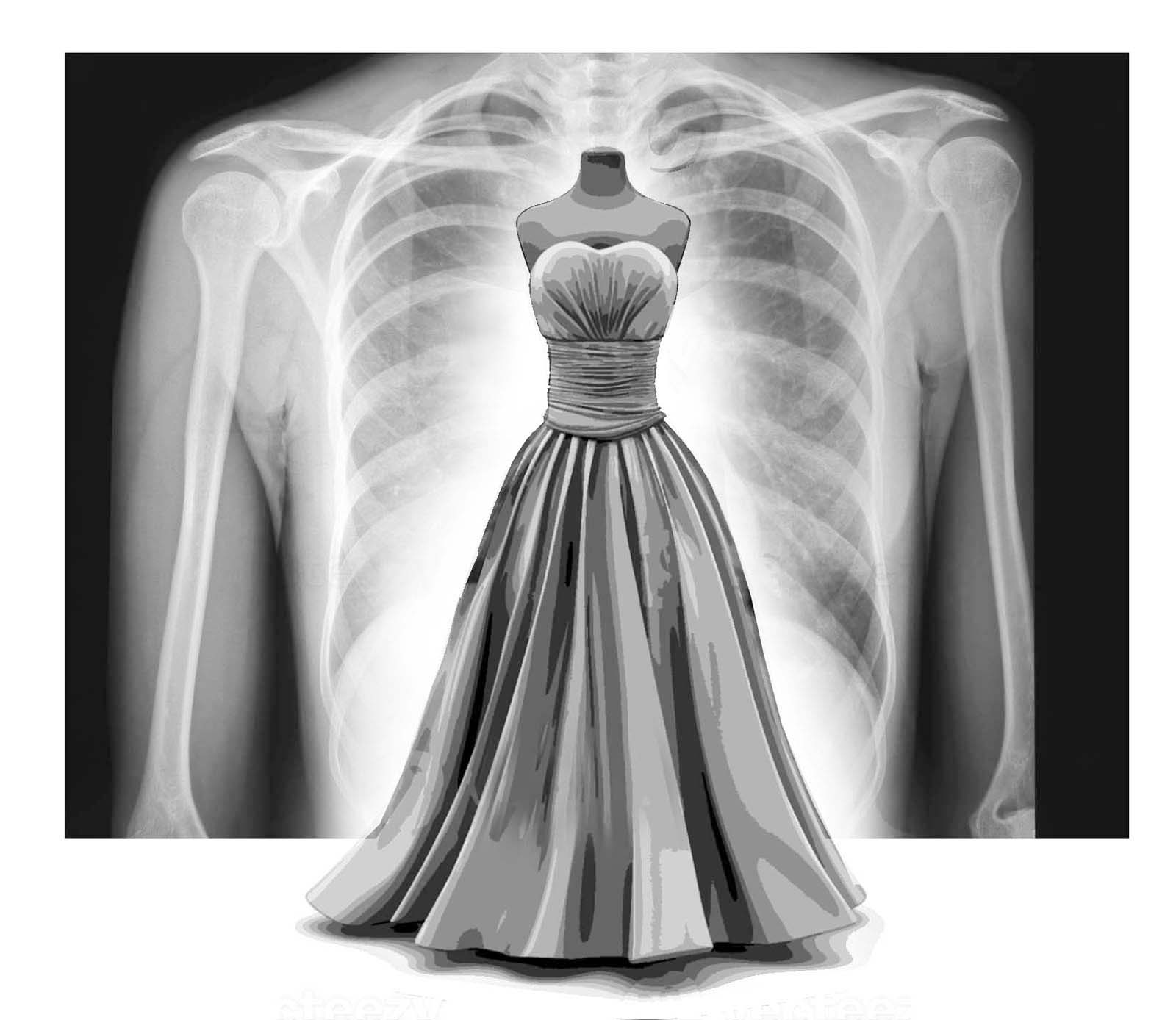
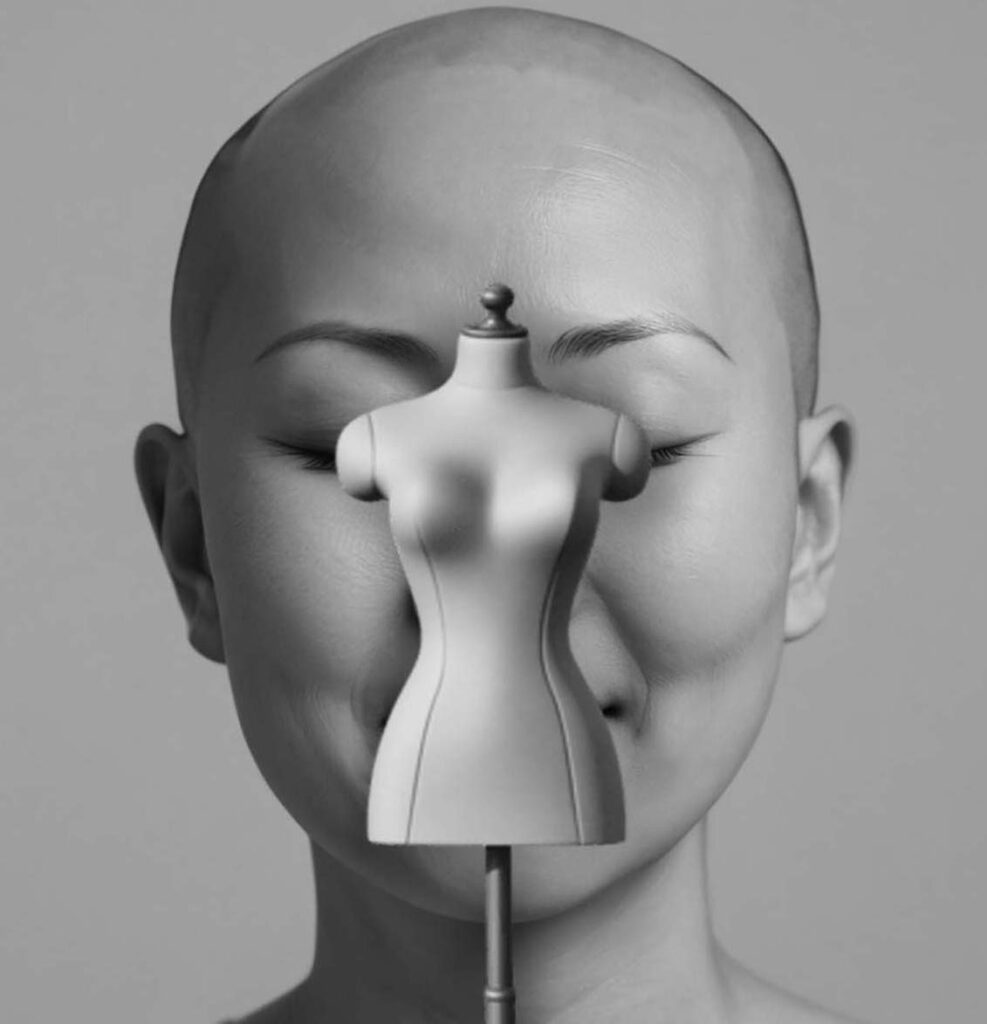
People always say that she is beautiful, that she exudes an ethereal radiance only she is privy to. It’s…this strange, brilliant glow that has cast shadow upon shadow of exclusion in our childhood, because one rarely gets to share the spotlight before it reaches its all-consuming, attention-hogging function. It always ends the same way, too. No matter the beginning, it’s the luminous one who gets to have the glory. The other is, well, othered. Bristling with ill-disguised contempt, left behind in the shade to rot.
Of course, I have made my peace with it, having done away with all the precursory resentment and grievances that come to shunted siblings, but. Now and again, it lifts its head, blinded by the shimmer; Mei-Mei has taken the dress and twirled with it on the linoleum floor.
“It’s so pretty,” she breathes adoringly. She holds the dress up to the orange glare of the lights, eyes hooded in reverence. “Isn’t it pretty, Chen?”
Oh, it is pretty, all glitter and silk on the softest material of cream. It passes through the fingers like a mirage on water. Understandable, I tell myself, why Mei Mei would gravitate to a dress of that caliber. It is often why I refuse to go on a shopping spree with her, besides my non-existent fashion sense — she naturally stands out.
“It certainly suits you and your skin, Miss!” the saleslady exclaims. Her tag proudly proclaims her name: Hi! I’m Ana from Mags! I wonder, briefly, as she coos away on Mei-Mei’s figure, whether she is only as enthused as she claims to be to kick us out of the shop in record time. And then I reprimand myself for being a huge arse on the only day that matters. Not that Ana from Mags will ever know that.
When Mei-Mei steps out of the dressing room, Ana from Mags cheers, and even the cashier eyes her frame with semi-decent approval. As Mei-Mei turns shyly to me, I find myself wishing I were doing the same thing: the supportive gaze, the affectionate smile. Instead, I have frozen in place, looking on with what most definitely feels like horror. Eyes wide. Throat clogged up and blocked.
“Do you not like it?” The lilt in her voice makes it hesitant and timid. I swallow once. Twice.
“If…if you want it, I’ll pay for it. That’s the promise, yeah?” This is not the only oath I took, but I figure that the partitioning of promises works best in desperate times.
“Hhhhmmm” Mei-Mei’s hmmms can be long and frightening. Ana from Mags learns that a few minutes later. She escorts us out of the shop through gritted teeth, not one paper bag in sight. Mei-Mei had taken off the dress, replaced it carefully on its rack, and said “Thank you, we might come back for it,” in a coded voice that Ana from Mags no doubt already deciphered. No, we are apparently not coming back for it. No, that is apparently not the dress we are looking for.
“Don’t you like that one?” I ask. She adjusts the shawl she brought with her. Her shrug says a million things.
“Too flashy, I guess.”
The mall is deceptively large, and yet most of its dress boutiques are grouped on its second floor. It is a matter of toing and froing from one boutique to another, skirting past the escalators and food stalls to get to the other side of the floor, and back again.
It has long been ingrained in my mind that shopping—especially that of a dress—is a recreational activity that can be rather tedious, and I have thus grown a whole kicking-and-screaming hatred for it. There is nothing drearier than getting dragged by your mother through all twenty-one boutiques that never sell anything past the size of 8 or a medium, all in the name of squeezing into the perfect promenade gown. Only later do you find out that if there is a perfect promenade gown for plus-size girls, it will not be here. Not in the surplus sales or the department store bargains. It will be on old gown and dress rentals, its color fading and gaudy, and reeking of dust and mothballs and something else.
Ah, Mei-Mei never has those kinds of troubles. She has been slim her entire life, her body just filling out dresses as it should be, as opposed to my hideous, gutful spillage. She is not fit—oh, God, no—although she is an excellent liar. Mei-Mei’s radiance comes with an overwhelming amount of faux-confidence. Is she using it now? Maybe. I cannot gauge or see what goes on inside her mind. It has been months since I first wished I did.
Dress upon dress, fabric upon fabric. Like a vengeful angel, she descends on those with the colors of cream. Or pearl or alabaster or floral or rose white. I can infer, at least, her feelings. She grimaced at the prepared dress at home – a beaded, stylized Filipiniana blouse and sarong. It is an old, washed-out thing, from the days of elementary Buwan ng Wika culminations: Mei-Mei the schoolgirl, acing Filipino oratory contests in pigtails and sugar-apple cheeks. But time is a bitch, and cheeks grow hollow, and dresses shrink. The dress did not fit her. Not anymore.
Mother told her she could style it like the old days. Cut the garment and drape it at the front. Mei-Mei swore that she would never be caught wearing a dress that did not fit her. The gallows standard. It has, after all, been a long time since most of her clothes do not sag.
And so we trudge on, despite sore ankles and achy legs. Another boutique, another shake of the head, another rejection. I want it over with, to curl up underneath my blankets and to never see the light. I keep my mouth shut.
On the twentieth boutique, just before I suggest giving up and calling it a day, something catches her eye. Mei-Mei squeals and steps inside. She had long vanished into the dressing room before I reached the rack of dresses she plucked whatever-it-was from. I question, meanly, her sudden burst of energy.
“Well?” She asks when she emerges. She points her toe to the floor and revolves for full effect. “What do you think?”
And it was…oh, God, it was…
“Didn’t you have that same dress before?”
She beams. “The beautiful dress Auntie Jan bought us from Kaboosh. Looks the same, yes? Does not have that huge ribbon at the back though, thank God.” Her smile is of serene happiness. “I think…I think this is it.”
I nod stiffly. I pull out my credit card, even as the voice in my head screams itself hoarse: What was she thinking? I try to hand her the card, but my hands shake too much to be steady.
“No,” I whisper. “No, I can’t do this.”
A better sister would have stayed, bought the dress, and given her younger sibling the appropriate quip-and-peck on the cheek. I am not a better sister. I drop the card and run.
She finds me in one of many dessert stalls, shoving a sundae down my throat with frightening efficiency. It is the first place she has looked, I am sure. I’m not known for my unpredictability.
She sits down and arranges the bonnet on her head. And waits.
I sniff. “I’m an awful shopping mate.”
Mei-Mei grins, and then laughs; clear and ringing, heard over the hubbub of the crowds. It can uplift any soul, that laugh, no matter how weak and diminished it may seem.
“You did okay. I was so sure you’d want to go home after 30 minutes of walking. Or that you’d complain all the time.”
I look at her, heartbroken and stung. “I cannot do that to you. I made a promise.”
“Yes, you did. But it’s also not an easy one, is it?”
My lip trembles. So does the spoon in my hand. “No,” I tell her. “Not one bit.” A deep breath, one and two. I set the spoon down. “I just don’t want you to see me like this.”
There it is: the hotness stinging my eyes, before streaking down my cheeks. “I wish I’d gone with you to your shopping sprees. We could have had more time together.”
It always comes down to this—me breaking down in front of her. Her calming me down, tethering me back from the void. I cannot fault her, begrudge her, blame her for all the hurt and mistakes. I loved Mei-Mei, love her, will love her, despite the finite set we have been given. I fall into her arms, and she holds me really, really tight, as I did to her when we were little.
The sundae has melted inside the plastic cup by the time we broke apart. She looks at me, barely visible brows furrowed almost apologetically.
“Shall we get that dress?”
I nod.
What choice do I have?
Does she look like she is sleeping? That’s what most guests say. Lying there in the dress we bought, not cut up and draped; instead, it’s snug onto the contours and crevices of her body. Her hair is gone, eviscerated by the chemo, but she still has the same fine creases, the same pink glow on her cheeks, and the same tilt of the lips that might indicate a smile.
They say she battled long and hard against the mets. I do not tell them that she never wanted to be a warrior. Mei-Mei was a diva, a fashionista. She knew what she was doing before I could even grasp her choice in its daunting entirety.
On the glass lid, a picture frame of the two of us on her ninth birthday, arms around each other. Mei-Mei’s dress here is eerily like that inside the coffin, though smaller, tighter. Unlike the Mori Dress: bright with defiance and nostalgia and decision. A last stand.
The candles flicker, and the radiance is warm.
Written by Marianne T. Mendoza, published in the March 2026 issue of the Philippines Graphic.
Started in 1927, the Philippines Graphic is the longest-running printed magazine of national circulation that provides relevant news and features and promotes Philippine literature.