
It was the day I turned eighteen the day when I learned that silence could scream a thousand truths. The afternoon gleam at five o’ clock was golden when I arrived home. It made even the most mundane things shimmer and the air smelled faintly of dust and gasoline as a friend from school, Miguel, offered to drive me home in his small car after rehearsal for an upcoming school festival. Our house stood alone at the end of a narrow alley. There were no neighbors on either side, just cracked walls and wild grass creeping through the pavement. People rarely passed by except for delivery men with parcels or stray cats that prowled around at night.
We were both laughing over a clumsy way he forgot his part when I noticed a familiar motorcycle parked in front of our old, rusty gate. Beside it stood a man, Uncle Ramon, or Tito Mon, as I called him. My uncle’s badge glinted with its polished chrome, a mark of law and authority that everyone admired. He always had that air of command around him, his right hand resting on his belt, the other with a scar was brushing on his holstered gun like it was a part of his body.
Our laughter was caught mid-air.
Miguel awkwardly saluted then smiled, “Your uncle?”
I nodded, feeling my stomach tighten. “Yeah. He’s…a police officer.”
Tito Mon’s gaze locked on us as I stepped out of the car. He did not acknowledge Miguel, not that he had to. The street was quiet the moment Miguel’s car drove away, the hum of its engine fading into the distance. I could almost hear my own heartbeat as I walked toward Tito Mon.
“Home early,” he said with a hardened expression as I approached. He opened the gate, letting me pass first. The small gesture felt less like courtesy and more like control, especially now that no one else was looking.
Inside the house breathed its usual scent of varnish and camphor. Dust motes floated in the beam of fading light that slipped through the capiz windows, their fragile shells glowing like trapped sunlight. It was the same house I grew up in. A two-storey house made of wood and concrete, its corners softened by time. Framed certificates lined the wall, their paper yellowed with the faintly foggy glass.
From the last room upstairs at the corner came a sound I dreaded to hear since my childhood, the trembling voice of my father breaking into incoherent cries, followed by the dull thud of something heavy against the wall.
I heard Lola sigh as I went my way near her in the kitchen. I could see her flinch at every thud.
My father’s aggression episodes had become the rhythm of our days. He was always sick, unwell, no longer himself. They said the drugs did it to him. They said it was his fault Mama died.
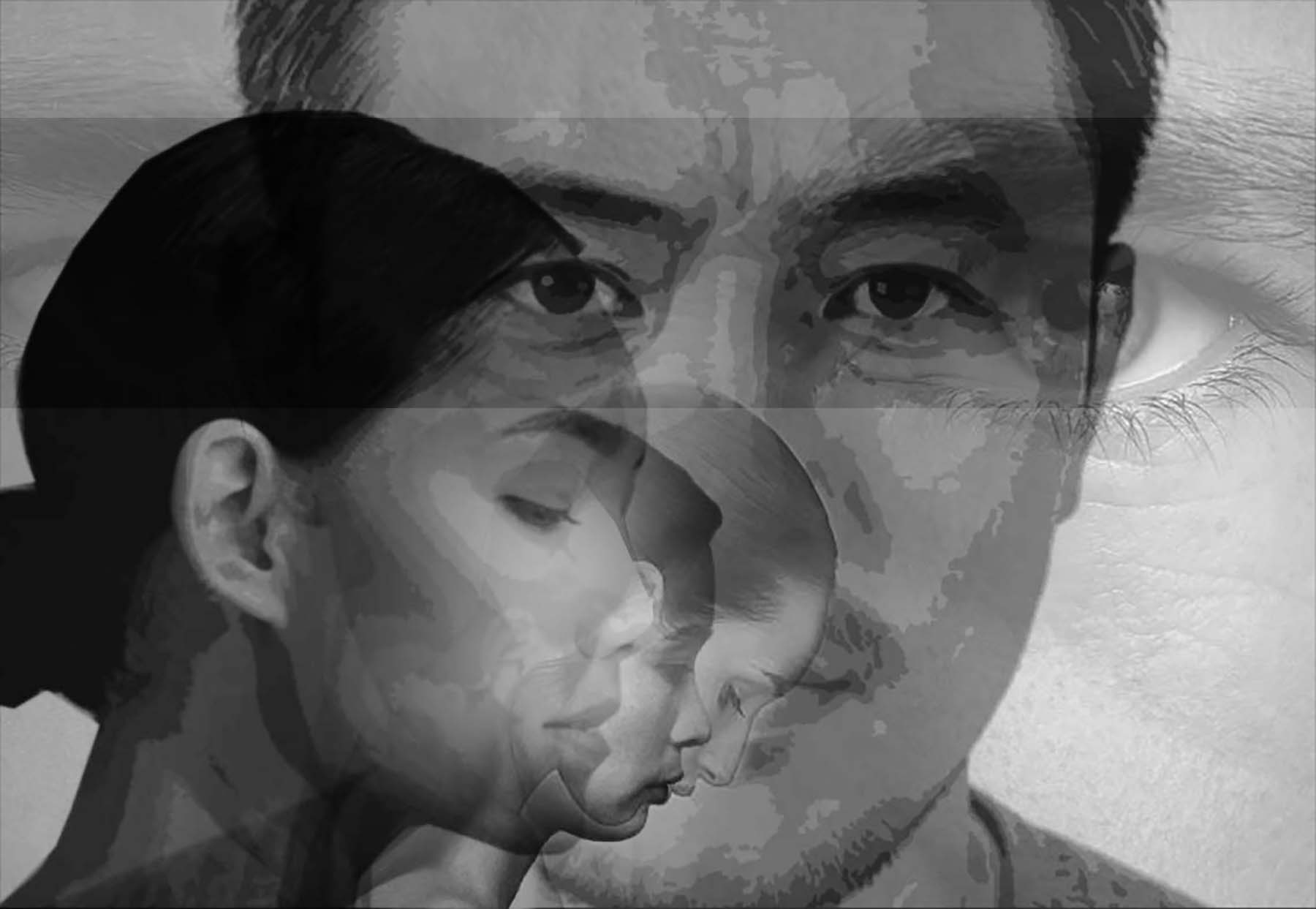
Schizophrenia…the word I had typed into Google one night, was a condition that changed people’s way of thinking, feeling, and seeing the world. That it could make someone hear voices no one else could or even believe in things others couldn’t understand. But what if those voices weren’t just in his head? What
If the madness was born from something real, something that no one wanted to speak about? Because every time when I peeked through the small space of the door and caught my father’s eyes, I saw something that didn’t look like madness. It looked like grief, like a truth too heavy to tell.
“Ma. We’re home,” Tito Mon’s hoarse voice pulled me back to my senses.
I greeted Lola by kissing her hand. She looked at me softly with her tired eyes.
“God bless you, Hija. How was school?”
“Good, ‘La.”
Then Tito Mon scoffed. It made me face him but he looked away. I thought his silence was over but I spoke too soon. “Boys his age can’t be trusted.” I did not wait for my grandmother to ask questions. I walked past Tito Mon, not daring to look back.
My room was the only space that still felt like mine. The wallpaper peeled in the corners with the scent of old perfume clinging to the curtains on my windows. Near the bed stood the only framed photograph I had seen every day of my life. My mother smiled softly, holding me closer to her chest, her arms wrapped around mine, and my father was standing behind her with his hands on her shoulders.
Mama looked beautiful in the portrait. She was the kind beauty that looked gentle. Her almond eyes seemed to glow even through the faded print and her long hair fell in loose waves over her shoulders. Lola used to say I inherited her features. I had the same gentle expression and the small dimple that appeared whenever I laughed. My eyes, however, were deep black eyes like my father’s.
My father, in the picture, looked rather fit and strong. So unlike the frail man he had become. The longer I looked at their faces, the more I yearned for a family I never truly had. Deep down, I feared what people at school would think if they knew the truth. In a world where families like mine were whispered about, mental illness was still something you kept hidden behind locked doors.
Days after, Tito Mon became more present, or should I say too present. His motorcycle was often parked outside our school gate, even during his shift. He hovered constantly, asking where I went, what I wore and who I talked to. I can’t help but feel uneasy. Was he always like this when I was young? Or am I really that clueless with how he treated me, especially with his voice that had always found a way of sounding so affectionate yet controlling. Lola said he only wanted to protect me, but that unsettled me.
“He’s like a father to you,” she would perpetually say, assuring me with pride and bitterness at the end that seems apologetic to me.
But I didn’t need him to act like my father.
I already had one.
He just wasn’t allowed to be one.
Those words never left my mouth. I was too afraid and scared of what would happen.
As my eighteenth birthday approached, the house grew livelier. Tito Mon began to act differently.
“May I come in?” His voice came through the door after a faint knock.
I hesitated. “I’m tired, Tito. Maybe later—”
The knob turned anyway. He stepped inside, then his eyes traveled around my room before settling on me. His face wore that soft, practiced look of care.
“It’s almost your debut,” he started.
“Yes,” I replied flatly. “What about it?”
“Do you want to celebrate it? We can throw a party for you.”
“As if you’d agree I’d invite boys,” I muttered.
The mask of concern drained from his face. “Is it still about that boy?” His tone was laced with malice. “Why? Did he try anything with you?”
His words struck me like a slap I hadn’t seen coming. I froze where I stood, torn between disbelief and rage. I wanted to say no, to tell him it wasn’t like that. There were no more Miguels who would drive me home. Boys at school kept their distance. They were too afraid that my uncle might one day use his gun on them, like how policemen now act higher than the law instead of bound by it.
But something in Tito Mon’s stare pinned me in place. It wasn’t concern in his eyes. It was something else, something that made my skin crawl. He moved closer. So close that I felt the air around us thinned and my throat tightened.
“You’re young, as beautiful as your mother. I don’t want anyone to ruin you.” He placed his hand on my shoulder. It might have looked paternal, but the pressure of his fingers sent shivers down my spine. I averted my eyes but I could still feel his gaze lingering. From my peripheral vision he smiled softly.
“I just want my precious niece to be safe,” he added, brushing a strand of hair from my face. Then he left, the door clicking shut behind him.
Only then could I breathe but I felt queasy. My legs gave away and I dropped to the floor with tears pooling in my lap. The sound of my father shouting, a few walls apart, filled the house again. It was desperate and incoherent cutting whatever calmness I thought I’d found. I hugged myself, staring at the family portrait until their faces blurred.
True to his words, Tito Mon took charge of my debut. Everything, from the decorations to the food, and the guests. Lola seemed relieved, even grateful, that he was willing to make it special for me. I wondered if she ever felt what I did that night he barged into my room, his hand resting too long on my shoulder. Perhaps she did not know. Sometimes I wondered if I was imagining it all if I was becoming schizophrenic, too? Like the man locked in the room upstairs.
Tito Mon’s laughter interrupted my thoughts. He was talking to Lola about his work, about the scum they had caught last night.
“Drug addicts,” he said. “They’d better be shot outright than follow due process.” He spoke with the kind of certainty like the madman somewhere from the south.
“Then why did you let the man upstairs live?” the words slipped out of my mouth without a second thought.
Lola, who was placing fried rice on my plate, stopped, her hands shaking slightly. I watched her intently but she avoided my eyes.
“He brought it upon himself. He brought ruin upon your mother.” And those words from him were enough to shut me off. The breakfast before my birthday tasted neither salty nor sweet.
The night of my debut came like a storm. The small yard of our house was dressed in borrowed joys. Lots of pink balloons, ribbons, candles, and guests I roughly recognized. My classmates came, smiling, unaware of the gaze from someone who prepared everything as his gift to me. Tito Mon played the part of the proud uncle. He was perfectly smiling, laughing, raising his glass in toasts that made everyone, mostly his co-workers, cheer. But behind every theatrics he made, I felt watched. His eyes followed wherever I went, even in the moments of applause, even when others were speaking.
Lola moved carefully between the tables, placing food, offering polite smiles to guests, all while stealing glances at me. I could see the exhaustion etched in her face, the tightness in her jaw, the way she seemed to carry the weight of the entire celebration on her shoulders. And I felt it, too, the suffocating pretense of a party I hadn’t wanted, of a happiness that had been prepared for me like a stage set I did not belong to. I longed for my father, the one presence that would have made the night feel real.
Tito Mon might have not noticed me this time.
“You did a great job grooming her, ‘Pre. She really grew up fine with that young age just like Odessa,” said a drunk police officer, around the same age and build as my uncle.
Odessa, my chest ached with the mere mention of my mother’s name. The officer laughed, spilling beer across the tablecloth, while my uncle’s face hardened only for a moment then softened again into that same charming, hollow grin he wore around in public.
“Careful with your mouth,” he said, his tone light but his jaw rigid. The officer chuckled nervously, lifting his glass.
“Just saying, ‘Pre. You sure got good genes running in the family,” he jested. The laughter at their table resumed. But their conversation pierced something inside me.
I walked away from the yard. The noise from the party faded into a distant hum as I stepped inside the house and went straight to my room. My body sagged with exhaustion, the kind that came not from dancing or celebration but from pretending. I leaned my back against the wall, wishing I could disappear into its shadows.
I reached for the family picture. All I could think of were the stories. My mother who, according to Lola, had died peacefully in her sleep after an overdose of sleeping pills.
Peacefully…
People didn’t die peacefully when they left a young daughter behind and a husband who tore through his own mind trying to understand why.
I took the frame with me as I stood before his door. It had been so long since I last spoke with him. Somehow, it made me nervous. The knob was cold and slightly rusted with its metal biting against my palm. I twisted it gently then the door creaked open, and in the half-light, there he was sitting by the window. The moonlight etched his thin figure that filled the frame.
“Papa?” I called softly.
He turned with eyes wild but not the violent kind. I took a step closer in one corner but he could barely move. He tried to approach me but his left ankle was bound by a chain. Tears ran freely down his face.
“Odessa…” he whispered breathlessly.
My chest tightened with her name again.
“Papa, it’s me,” I said softly, though my voice came out small, uncertain if I should reach out but I still did. “It’s—”
He only shook his head slowly. His eyes glazing over as if he was staring through me seeing someone else.
“Don’t…don’t come closer, love. He’s here. He’s always here,” uttering those words while pressing a finger on his lips, warning me to stay silent. “He said he’d protect you while I was away clearing my name.” Then strangely, a smile was plastered on his face, one that did not reach his eyes.
I took another step forward. “Papa, please, it’s me. It’s not Mama.”
He blinked, confusion was written all over his face. The chain on his ankle scraped the floor as he stood and staggered a little closer. “Do you remember, love? The lights, the shouting—‘Police!’ they yelled that I was a user,” he grabbed his hair, tugging it so heavily that I wanted to stop him.
“Your hair…just like hers when she was your age.” He laughed, so hard that it felt fake. Then the laughter he made went on weakly. “He’ll come for you, too. He sees her in you.” He caught my eye, watched me so intently it brought burning sensations to my skin.
He pressed himself against the wall now. “He wears the law, no one will believe. You will not believe me.” He then shouted, “He killed her, you hear me? But you shouldn’t be here. He’ll say I hurt you. He always does.”
Then as if on cue, the doorknob turned. It made my father shrink into the corner, his eyes wide with fear. “He’s here. Hide, Odessa! Hide!”
Then the door creaked open.
“Talking to your ghosts again, Kuya?” Tito Mon’s low voice slipped through, taunting Then he looked in my direction. His pupils looked blown wide even under the dim light, his movements quick and jerky, like he was vibrating under his own skin. Sweat gleamed on his forehead, catching the moonlight.
“What’s this, sweetheart? Talking to your sick old man again? He’s not supposed to be disturbed.” His grin was crooked as he talked. It made my stomach twist with fear.
Papa screamed. “You bastard!” He lunged forward at Tito Mon. “You killed her! You ruined us!”
But my uncle just laughed hysterically, “You see what I mean with drug addicts, Hija? It melted his brain. He says the wildest, most bizarre things now.” The scent of alcohol coming from him filled the space inside the room.
“Liar…” I managed to say despite the uneasiness.
Tito Mon’s jaw tightened but his smirk didn’t fade. “He’s sick. Still high even after all these years.” But if anyone looked high, it would be my uncle…
A sudden abrupt pull happened that the rusted loop around my father’s ankle snapped free. Tito Mon reached for his gun. I screamed.
There was a struggle…shouts…the sound of metal striking bone. Everything happened too fast. Arms grappling, feet scraping against the floor. The room trembled with shouts that no longer sounded human. I heard my own voice rise above it all, hoarse and pleading.
“Stay away from her,” my father cried. Then the deafening sound of a gun being cocked.
I tried to lunge forward, reaching between them. “Stop!”
The next moment was a blur of movement and pain. Someone’s elbow, or maybe the butt of the gun hit my temple. The world around me spun, I saw two—no, three figures, in front of me, a woman. Then I fell.
“Put it down—”
“You ruined everything—”
“She’s not—”
Then, a single gunshot. Or maybe two.
And then…came silence.
When I opened my eyes, everything was quiet. The room was dim and my head throbbed. There was a ringing in my ears. I tried to sit up but my body refused. Across the room lay Tito Mon, motionless, his gun beside him. And my father, he was gone.
Footsteps thundered towards the room’s direction. There were voices calling my name, Lola’s loud cry cut through the night of my special day like a blade.
“An accident,” someone said. But whose voice was it? I couldn’t tell.
Days blurred into one another like a fevered dream.
The police said my Father had escaped and that he must have killed Tito Mon during one of his fits, including hurting me. They called him a murderer. And my uncle, they buried him with honors. I refused to believe either.
“Your father didn’t mean to hurt anyone. He was just…sick.” Then Lola pressed her forehead against mine and never spoke of it again for it was the last encounter we had before they brought me here to this asylum.
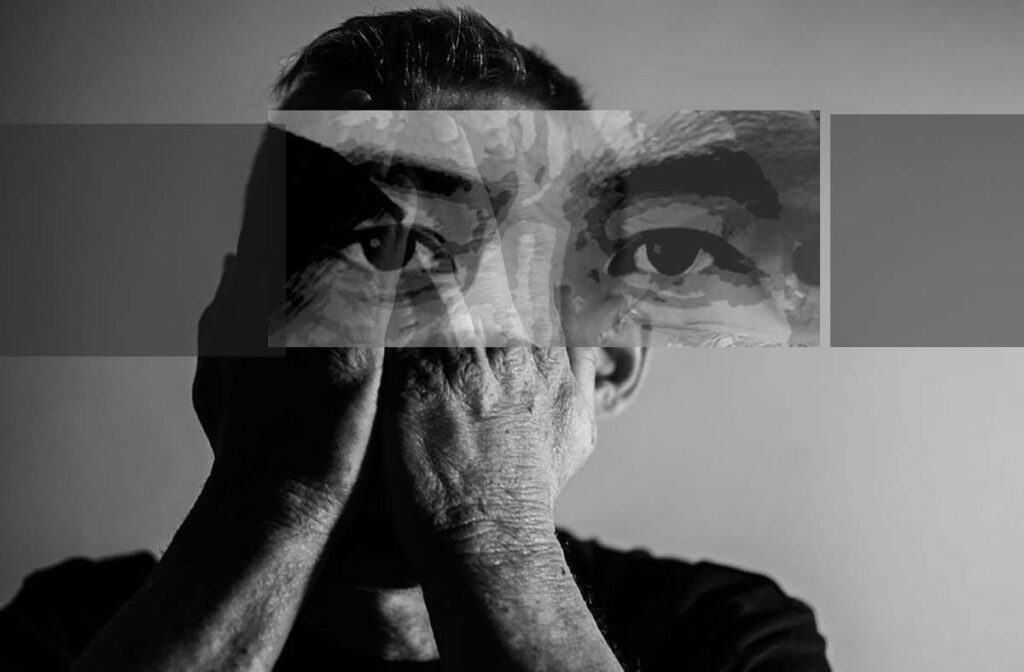
They said schizophrenia runs in families. That it can lie dormant until something awakens it. Be it trauma, grief, guilt, or perhaps…truth. That truth sleeps only when fear keeps it fed. The doctors here say the mind invents stories to protect itself. But what if the stories were the truth all along?
I looked in the mirror in front of me. I thought I saw my father’s eyes. Those same deep black orbs staring from my own reflection.
Empty, but familiar. Not violent. Just…broken.
Written by Julia Marie A. Milana. Published in the January 2026 issue of the Philippines Graphic Reader.
Started in 1927, the Philippines Graphic is the longest-running printed magazine of national circulation that provides relevant news and features and promotes Philippine literature.