

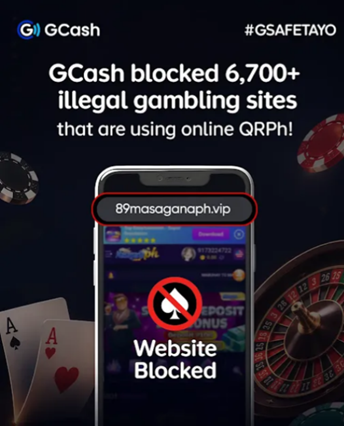
GCash has blocked over 6,700 fraudulent merchants using “quishing”—a new tactic where scammers use fake QR codes to steal payments
VIA GRAPHIC PLUS — As QRPh continues to transform the way Filipinos pay for everyday purchases, scammers are also evolving their tactics to exploit the country’s growing reliance on QR-based transactions. To help keep digital payments safe, GCash has intensified its efforts against fraudulent merchants and fake payment pages, blocking over 6,700 suspicious accounts linked to QRPh-related scams while continuing to educate users on how to identify and avoid emerging threats.
How scammers exploit QRPh payments
Fraud monitoring teams at GCash have flagged a sharp rise in schemes where fake websites mimic legitimate GCash payment pages and use QRPh codes to collect payments. An example of a growing scam is known as “quishing” or QR phishing.
In these schemes, fraudsters exploit QRPh codes to redirect users to malicious payment pages or steal sensitive information, while misusing official branding to appear credible and deceive users into completing unauthorized transactions.
Some cases also involve fraudulent QRPh codes being embedded in posters, emails, receipts, or messages. When scanned, these can redirect users to fake login pages for e-wallets or banks, or even to sites that install harmful software on their devices. This results in users unknowingly sending money to illegitimate accounts, even if the transaction appears familiar or routine.
Protecting QRPh ecosystem through stronger enforcement
As QRPh-related scams continue to evolve, GCash has strengthened its enforcement measures to protect users against quishing and other QRPh-based scams.
Suspicious wallets linked to fraudulent QRPh activity are immediately blocked, preventing scammers from receiving stolen payments through the platform. Fake websites impersonating official GCash payment pages are likewise identified and escalated for takedown, while incident reports are submitted to PH Payments Management Inc. (PPMI) and relevant government authorities to support further investigation and enforcement.
These efforts form part of GCash’s broader collaboration with government agencies, including the Cybercrime Investigation and Coordinating Center (CICC) and the Bangko Sentral ng Pilipinas (BSP), to disrupt scam networks, strengthen consumer protection, and preserve trust in the country’s digital payments ecosystem.
“Scammers are constantly evolving their tactics alongside digital payments, and we are equally committed to staying ahead of these threats,” said Miguel Geronilla, Chief Information Security Officer at GCash. “By proactively blocking suspicious accounts, flagging fraudulent payment pages, and reporting these activities to regulators and law enforcement, we help stop these schemes before they can affect more Filipinos.”
Geronilla added, “Protecting users is at the core of our platform. We have zero tolerance for those who exploit digital financial services, and we will continue to strengthen our safeguards while working hand in hand with government and industry partners to keep the country’s digital payments ecosystem safe and secure.”
Protect yourself from QRPh-related scams
As scams become more sophisticated, GCash urges users to remain vigilant and practice safe digital habits when using QR-based payments:
l Always check the website URL before making payments and ensure it matches official GCash domains
l Verify the merchant name displayed before confirming any transaction
l Avoid transacting with suspicious or unverified sites
l Be cautious of QR codes from unknown or untrusted sources
l Report suspicious links or payment requests through the GCash Help Center
Users are strongly encouraged to verify merchant names and payment URLs before completing transactions and to immediately stop any transaction that appears suspicious.
Keeping digital payments safe for every Filipino
GCash reaffirms its commitment to protecting users and maintaining the integrity of the country’s digital payments ecosystem. Through proactive detection, continuous monitoring, and strong collaboration with regulators and law enforcement, the platform continues to strengthen its defenses against emerging threats.
GCash users can report suspected scams through the GCash Help Center at help.gcash.com by chatting with Gigi and selecting “I want to report a scam”, or by calling the official GCash hotline at 2882.
Users may also report incidents to the PNP Anti-Cybercrime Group at (02) 8414-1560 / 0998-598-8116 or acg@pnp.gov.ph, and to the Cybercrime Investigation and Coordinating Center (CICC) via hotline 1326, mobile 0991-481-4225, or report@cicc.gov.ph.
By staying vigilant and using trusted platforms, Filipinos can better protect their funds and ensure that every peso counts.
More information is available at www.gcash.com.

Started in 1927, the Philippines Graphic is the longest-running printed magazine of national circulation that provides relevant news and features and promotes Philippine literature.