

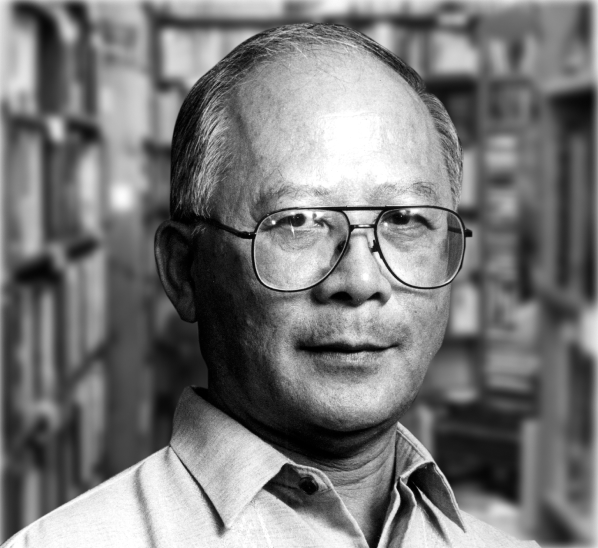
Written by National Artist for Literature Bienvenido Lumbera. First published in Philippine Graphic, January 1968.
ONLY the very naive or the very cynical would try to predict the future course of Philippine literature. There are only the weekly magazines or the occasional books as signposts to indicate trends, and these signposts do not give very coherent directions. In an economically underdeveloped country like ours, the profession of letters is an anachronism, with its practitioners, sensibly enough, dedicated first to the pursuit of a living and secondly to the luxury of creative writing. Even the audience for literature is circumscribed by economic needs and therefore could not care less whether books are published or read. Nevertheless Filipino writers continue to write as though writing were an act of faith. And Philippine writing persists, thrashing about blindly most of the time and eluding the attempts of sociologists and literary historians to chart its erratic course.
The second half of the 60s reaches midpoint in 1968. Looking back at the output since 1965 might help us see where Philippine writing seems to be going. The decade between 1955 and 1965 saw intensive literary activity which resulted in the development of the novel in English and the rise of new writing in Pilipino. During the past two years, English writing has been dominated by the same literary figures who made the years after the Pacific War an exciting period. Nick Joaquin turned out two stories, “Candido’s Apocalypse” (1965) and “The Order of Melkizedex” (1966). Bienvenido N. Santos collected some of his prose works in “The Day The Dancers Came” (1967). N. V. M. Gonzalez is out of the country at present finishing his third novel. In fiction Gregorio Brilliantes’s “The Fires of the Sun, etc.” was awarded first prize in the Palanca contest in 1967. Edith L. Tiempo won the top prize for poetry with her volume “The Tracks Of Babylon And Other Poems” (1967). Winner of the same award the previous year was Emmanuel Torres’s “Angels And Fugitives” (1966).
Pilipino writing, on the other hand, is full of new names, each one a rebel against the kind of writing represented by traditionalist elder writers. The young writers come from the universities and colleges where the student publications have served as their outlet for experimental poems and stories. These are the Kadipan writers who, for the moment, seem to have assumed leadership in the creation of new writing in Pilipino. “Mga Piling Akda Ng Kadipan” (1964) contains prose and poetry that had won awards given annually by Kadipan, a society of university students writing in Pilipino. In 1965 a group of fictionists put out “Agos Sa Disyerto,” a collection of stories that prove conclusively that a new era in Pilipino writing has begun. An anthology of poems, “Manlilikha,” came out in 1967 and the pieces in this volume point to a future of exciting possibilities in the development of Pilipino poetry.
Despite the economic drawbacks, our writers continue to write as though writing were an act of faith
The most remarkable prose work of the past two years is Joaquin’s “Candido’s Apocalypse.” The long story establishes its author as our boldest craftsman and artist, most penetrating cultural historian and most stimulating lay theologian. After “Candido’s Apocalypse,” there can be no more doubt about Joaquin’s pre-eminence among Filipino writers. His portrait of the Filipino as teenager gives the initial impression of being a native version of Salinger’s “Catcher In The Rye.” Along the way the story catches fire, lights up the confused values of the Filipino middle class, explores the question of the Filipino identity and sears on the mind the metaphysical issue of the sacredness of the flesh. It tells the story of Roberto Heredia, son of a middle-class executive living in one of the exclusive suburban villages, whose nervous condition develops into schizophrenia as a result of a feeling of alienation from his father. Bobby Heredia repudiates the values of his family and social set. He rejects even himself when he decides that he is Candido, the name being that of a martyr on whose feastday he was born. His apocalypse begins when his hatred for sham and hypocrisy allows him to see people naked. But the grossness of the human body repels him. His revulsion changes to horror when he sees through the flesh and finds people as no more than robot-like skeletons. After he is shot by a fellow teenager with whom he had a feud, Candido makes peace with Bobby Heredia, his family and social group, having discovered during his flight from himself and his parents the terrifying loneliness of the man who cuts his links with life in search of a utopia of abstractions.
“Candido’s Apocalypse” is Joaquin’s testament of his commitment to the present. Hitherto commentators have talked of Joaquin’s nostalgia for the past and concluded that he is a romantic escapist. The present story leaves no doubt as to where Joaquin’s allegiance lies. His commitment is to life, and that is the here and now, this period of the flesh and blood. While recuperating from his wound in the hospital, Bobby expresses the wish to live with his grandmother as soon as he gets out. The grandmother with the old house in Quiapo represents in Bobby’s mind the past when values were honest and stable. But the grandmother does not accede right away to such an arrangement. She speaks to Bobby’s parents and makes them understand her grandson’s problem:
“My children never felt embarrassed about their home. It gave them no reason to be. But it is of the old style, no? Bobby understands style. It may be he is too fastidious about style. He wants the style authentic. He knows that style is having grandfathers. But he must not reject you for them. That would be sad...”
The affinity of Joaquin’s story to Salinger’s novel allows an insight into the limitations of realism as exemplified by “Catcher in the Rye.” Salinger’s tale about Holden Caulfield is nothing more than a boy’s odyssey to young manhood told in the pungent language of the young in America. Joaquin breaks through the boundaries of realism and enters the realm of Kafkaesque expressionism, thereby endowing his narrative with sociological and theological implications that make the reading of the story such an enriching experience. The comparison between “Candido’s Apocalypse” and “Catcher in the Rye” further demonstrates that greatness in art is measured by the artist’s daring and by the rewards brought in by the risks the artist has taken. Joaquin’s story is art whose worth goes beyond its being an expertly turned construct of words; it is a carefully crafted initiation story that is also the Filipino’s cultural history and the existential man’s affirmation of the goodness of the body.
“The Order of Melkizedeck” (1966), Joaquin’s latest work, picks up certain motifs in the Joaquin canon, like the search for identity, reconciliation with the past, loneliness in a society alienated from tradition, and so on. The writer’s performance does not measure up to the skill and artistry that went into the writing of “Candido’s Apocalypse.” Its daring lies more in the subject matter than in the writing which relies heavily on the antedeluvian device of having various characters narrate to other characters the incidents that make up the plot. The device confirms one’s suspicion that Joaquin in this story is more interested in the idea than in the drama behind Isidro Estiva’s return from exile in the nationality-less world of the United Nations in New York into his native land. The idea is a new theology forged out of a fusion of European Catholicism and indigenous worship, a rather sensational concept that gives one the uneasy feeling that post-Vatican II theology is becoming the new pornography among Catholic artists and their audience. The vein of fantasy that feeds “Candido’s Apocalypse” with rich implications is very much in evidence in “The Order of Melkizedek.” It is unfortunate that fictional strategies have not been assiduously marshalled to draw from that vein all the meaning waiting to be tapped in the material.
Discontent with realism is not new in contemporary Philippine writing. Wilfredo D. Nolledo was its celebrated highpriest during the early 60s and his followers were legion among the beginning writers in the universities and colleges. Now that Nolledo’s followers have assumed ascendancy in the literary scene, expressionistic fiction has become the current mode in local English writing. Its popularity among writers has been helped on by new writing abroad which is characterized by wildness and violence both in subject matter and execution.
Three young fictionists whose respective careers have been launched by winning prizes in the annual Free Press short story contest weave fantasy and poetry in their latest work. Ninotchka Rosca, the latest topnotcher, joins the “apocalyptic” school of writing represented by “Candido’s Apocalypse” with “In the Convent.” The story is the work of an angry young woman, but the anger has been given form by the writer’s craft which helps Miss Rosca make a believable character of the perverted protagonist and a plausible milieu of the corrupt society that is her target. In her prizewinner, Miss Rosca demonstrates amazing growth as a writer whose “Diabolus” (1964) one recalls as a juvenile exercise in baffling and shocking her elders. Erwin Castillo, winner of the first prize in 1966 and of the second prize in 1967, has emerged as a writer with a personal voice and his is a voice worth listening to for the masculine lyricism which controls the violence at the heart of his fiction. Several years ago, in a review which mentioned “Tomorrow Is a Downhill Place,” I wrote that Castillo was a writer to watch once he sheds the mantle of his literary masters and find his own voice and method. With “Ireland” and “The Fairy Child,” the young man has signified that he has arrived as a writer. Newest of the three writers is Resil B. Mojares, but his exquisite prose style already ranks him among the important young writers in the contemporary scene. That he seems, at the moment, less interested in people and greatly fascinated by the web of words he can weave in such stories as “Ireland” and “In the Cave,” may be attributed to youth. Compared to the young Nolledo, however, Mojares shows a sense of discipline that governs his poetic use of language in fiction; this encourages optimism in predicting that Mojares will never lose his way in a wilderness of words before he finds the locus of his stories.
The future of English writing in the Philippines depends upon the writers’ solution to the problem of language and its effect on the problem of audience. As long as writers entertain the illusory hope of finding an audience abroad, they will continue to produce what may be described as “wall-eyed” writing. That writing is “wall-eyed” which looks in two different directions and so fails to see deeply into its material. Filipino experience as the subject matter of English writing can evoke sympathetic response only from a Filipino audience attuned to the cultural background of Philippine literature in English. Filipino writing must be addressed to Filipinos rather than to the English-speaking world at large. If it communicates as well to American, British, or Australian readers, well and good. But first it must speak to the Filipino, and this means that it should avoid the superfluous task of explaining Filipino mores or traditions to Filipino readers.
“Candido’s Apocalypse” is one of the few Filipino works in English that conclusively proves English can faithfully record the Filipino experience. A number of Manuel Arguilla’s stories, notably “How My Brother Leon Brought Home a Wife” and “Midsummer,” did the same thing in the 30s. N.V.M. Gonzales did it in “A Season of Grace” and “Lupo and the River.” Joaquin’s solution is perhaps the most daring and the most valid. In his story, English is used as only Filipinos use English, thus making the foreign language conform to the native material rather than imposing it on the subject matter. Joaquin has thus limited his audience to Filipino readers who alone can recognize the use of language as proper to the sensibility in the story and accurate for the cultural overtones of the action.
The tension between languages and material is not as pronounced in the writing of poetry because the poet is not moored like the prose writer to the minutiae of day-to-day living which help the fictionist create verisimilitude. Since he is not obligated to create a believable facsimile of the real world in which men and women move, the poet can prescind from the question of nationality. Nevertheless the poet working with images drawn from his immediate environment cannot avoid allusions and references to objects and customs familiar only to a Filipino audience. In such a case the measure of his talent is his ability to find a meaningful part in the verbal structure for these details. In the poets of the early 60s there was a self-conscious attempt at creating ”Filipino” verse in English. Alejandrino G. Hufana’s “Sickle Season” (1959) and “Poro Point” (1961), and Ricaredo Demetillo’s “Barter of Panay” insisted on the nationality of their poetry in English.
There is less self-consciousness in the “Filipino-ness” of the poetry of Edith L. Tiempo and Emmanuel Torres, two recent winners of the Palanca prize for poetry. Mrs. Tiempo’s “The Track of Babylon” contains poems in which the use of Philippine materials seems to derive from the rural scenes the poet had observed in Dumaguete City. The poem “Green Hearts,” in exploring the theme of age and memories, alludes to a native custom observable at Easter in describing a man’s progress toward wisdom:
        A full measure of rice he spilled
	On the stairs those Holy Saturdays;
	He clenched his stripling hands about the trees,
	Shook the plump boughs to fruit while the bells trilled
	Through the air past the meadows stung by bees;
	Moons later, boys shook down the heart-shaped mangoes
        Tender and unripe in the warm night; sticks flung
        Skyward whipped the wigs till the green fruit rained . . . .
The legend of Malakas and Maganda, the first man and woman who, in Philippine folklore, emerged from split bamboo, becomes the central metaphor in a poem about a blacksmith and his washerwoman-wife living out a marriage from which labor has banished all dreams. “The Pestle” closes with an allusion to another Philippine legend, that of the creation of the stars and the moon:
	Old woman, best leave the wash-stick in the sun,
	(The pestle pushed the thigh-bone comb
	And the beads of baked clay high, too high)
	Our tough hands shake and our sweaty lips smirk and lie
	We had stored our treasures in a maggoty home.
Torres, in “Angels and Fugitives,” is a poet of the city, but he is similarly attracted to imagery arising from the native scene. “The Lizards at Sunset” dramatizes a sick child’s apprehension of death by referring to the old wives’ tale about lizards kissing the ground at angelus time:
	. . . The lizards are running
	Loose on their ceiling chuckling a paired sound.
	He cannot see them. Mother, do not cry so hard.
	Not for me, Father, must you bar the gates and windows.
	O what loud flickering of lizards
	Makes him see the sunset ripen through his tears . . .
Man’s isolation from his fellowmen, the core of poignancy in most of Torres’s poems, finds objectification in the walls topped with broken glass which are a common sight in the city. “Raising Walls” begins:
	Awareness of a wall raised higher than my scorn
	Will never do to make us know
	What is respected in each other’s privacies.

	Stones huddle a conspiracy of shades
	Pieces of jagged glass that rim the wall
	Wound the sky like rockcrystal teeth of sharks.
There are more good poems in Torres’s book than in any other volume of poetry by a Filipino, but one reader has complained that “the trouble with Mr. Torres is he celebrates too much.” The complaint arises perhaps from a conception of the poet as a vate, a seer much like the sibyl of Cumae whose utterances were those of a creature possessed by a god. The poems in Epifanio San Juan, Jr.’s “The Exorcism and Other Poems” (1967) are pieces that ostensibly do not cerebrate at all. The poet seems possessed by some daemonic power that makes him utter imprecations against a world that treatens to annihilate the individual, against an order that breeds conformity and mediocrity. When the poems are read closely and with sympathy, however, one begins to see that it is cerebration that saves San Juan’s poems from being no more than rantings of a word-crazed seer. The discipline that gives shape to San Juan’s verse comes from an intellect that is allowed to range over a wide range of topics that concern the individual in the world of the 20th century. A universal man is the speaker in most of the poems, so that only occasionally are we reminded that the poet is a Filipino. This perhaps is San Juan’s way of solving the language problem referred to earlier.
While our English writers have been working hard at being FIlipino, Pilipino writers are trying to break away from that traditionalism that marks vernacular writing as Filipino, “Agos sa Disyerto” and “Manlilikha” are evidence of a movement toward cosmonopolitanization. The opposite directions that English and Pilipino writers are taking indicate what each group wants to prove. Writing in a foreign language, the English writers seek to establish their Filipino identity through subject matter. The Pilipino writers, already marked “Filipino” by the language they use, would want to prove that they are capable of producing urbane writing.
The fictionists represented in “Agos” all demonstrate that they have learned their craft from a study in school of American, British, and Continental writers. The sophistication of their work distinguishes them from many of their elders who have been content with the outmoded manner of pre-war Tagalog fiction. For instance, Rogelio R. Sikat’s “Tata Selo” tells a story that countless other Tagalog writers have told — that of the oppressed farmer and lustful landowner. Sikat chooses to narrate his story piecemeal. The killing of the landowner is already over, and the reader is made to reconstruct the incident out of fragments of conversations which eventually bare the motive behind Tata Selo’s act of violence. Sikat’s technique involves the reader in the search for the motive and draws the reader to participate in the experience contained in the story. Nowhere is the reader asked to compassionate with Tata Selo; instead Sikat maneuvers the reader into sharing Tata Selo’s protest against injustice and also the pain of the old man’s humiliation. Detail is piled upon details to create the characters surrounding the protagonist. With the milieu vividly presented, Tata Selo emerges as a plausible human being with a claim on our compassion.
Efren R. Abueg, the Palanca prizewinner in fiction for 1967, similarly uses an old tale in “Sa Bagong Paraiso.” The tale is about the conflict between the young who are in love and the adults who want to keep them apart. Once again, it is the treatment of the subject matter that gives the stale plot freshness and poignancy. The story is divided into 13 episodes of varying length, each one providing a detail that is woven into the pattern until the richly textured fabric of the story belies the hackneyed plot. Like Sikat, Abueg sees the writer’s task as not so much making a point as creating what Henry James calls “felt life” that the reader can share.
“Di Maabot ng Kawalang Malay” is about two slum children whose innocence insulates them for the present, from the squalor and filth of their lives. Edgardo M. Reyes writes the story from the point of view of the children, thus giving the sordid plot touches of humor that only serve to heighten the pathos behind life in the lower depths. Reyes writes with compassion but he avoids sentimentality which is the curse of many a Pilipino writer who writes about the poor. In his story he demonstrates that the writer has to earn the tears he might want to draw from his readers through the accumulation of details which is the fictionist’s way of documenting his insights into the human condition.
While our English writers have been working hard at being FIlipino, Pilipino writers are trying to break away from that traditionalism that marks vernacular writing as Filipino
It is significant that Sikat, Abueg, and Reyes have refurbished old plots. Together they prove that the inventiveness of the creative writer does not rest simply on the ability to weave new tales, but rather on the perceptiveness with which he can explore his material with the techniques he has acquired, discovered or invented.
New poetry in Pilipino has also turned away from traditionalism. As of now, there is little of it that is truly memorable. What is exciting about following developments in the field is the thrill of being part of a pioneering venture. “Manlilikha,” edited by Rogelio C. Mangahas, presents the works of 10 young poets. One of the most promising is Rio Alma (pseudonym of Virgilio S. Almario) whose “Agunyas-Lunsod sa Abril” reveals the influence of T. S. Eliot in both tone and technique, an influence the poet does not attempt to hide. The old theme of disenchantment with the city, a favorite among folk-based poems by elder Tagalog poets, is at the heart of Alma’s poems:
	subalit isipin mong ang lunsod,
	mamayang hatinggabi’y osang libingan —
	ang gusali’y mga nitsong walang kurus,
	ang neon ay mga koronang walang tarheta,
	ang buwan ay matiyagang sepulterero.
	diyos ko! tayo ba’y uod lamang?
What gives the long work contemporaneity and immediacy of impact is the texture. This texture is created by the commonplaces, the language that is alternately formal and colloquial and the allusions to native and foreign literature.
The contemporary scene is rendered by C. C. Marquez, Jr. in free verse that allows imagery to bear the burden of indignation in “Bukangliwayway sa Vietnam”:
	nasaksihan ko sa lalawigang tay ninh
	ang pagsasalubong ng nananaog
	na hatinggabi
	ay umaakyat na bukanliwayway;
	hilahila ang di ko matitigang umaga
	na lalapangin lamang
	ng mga putak ng dumalagang
	nangitlog ng plastic bomb!
When the poet chooses to retain time and meter, as in the case of Rogelio C. Mangahas in “Awit Kay Idyanale,” he invents his own stanza form, which is rhythmical and melodic in its very individual way. Mangahas’s imagery is drawn from the countryside but his music is definitely urban in its ruggedness, which is a deliberate departure from the mellifluousness of conventional poetry.
In Epifanio San Juan, Jr.’s Pilipino poems, we find the same elliptical technique that marks the poet’s English works. The result is Pilipino poetry that is dazzlingly new and frustratingly difficult. The difficulty stems from San Juan’s complete isolation from tradition, an isolation which leaves the reader with no point of reference in interpreting the poems and deciding on their worth. On recalls the surrealistic verse of Hernando Ocampo as a precedent for what San Juan is doing in Pilipino poetry, but it is daily safe to assert that in San Juan we have the first really cosmopolitan voice in the history of Tagalog poetry. The poem “Pahayag sa mga Kapanahon,” one of the simpler works of the poet, gives a sampling of San Juan’s highly allusive style which is complicated by the sudden shifts from one subject to another. In it the speaker, as in an apocalyptic vision, foretells the coming deluge that would wipe out all the corruption and ugliness in the world today. The concluding section of the poem refers to the Passion of Christ in a few phrases that function like images in a film montage:
	Pumipihit sa lusong ang silakbo
	Ng bahang bubuhos:
	Putong tinik ay pumipihit—
	Sa tilaok ng manok, kaputol na taynga, higos
	Ang mahuhuli ng lambat.
	Hugos ang tinig — “Ikaw ang nagsabi.”
	Sa gayak ng panganorin
	Pumipihit ang balaklaot.
Writing in Pilipino has many roads open to it but it needs critics who would point the way. Pedro L. Ricarte and Epifanio San Juan, Jr. perform this signal service in the pages of Panitikan, a quarterly magazine hospitable to new writing. It will take time, however, before Pilipino writing can move unfalteringly toward new poetry or fiction. The economic conditions in the country have pushed many young writers into the staff of the commercial magazines for which they have to grind out novels and stories. Because Filipinos are ever prone to absorption into the Establishment, there is a very real danger that these young writers would eventually be lost from serious writing in Pilipino. Thanks to Panitikan’s dedication to serious literature under the editorship of Alejandro G. Abadilla, writing in Pilipino has found an enlightened forum through which it reaches a great number of students in colleges and universities.
The growth in sophistication in Pilipino writing is no doubt the result of contact with Western literature. This contact is abetted by translations such as the verse translations in “Kudyaping Banyaga” (1967) by Rufino Alejandro and Federico Licsi Espino. The latter is a young writer whose translations and original poetry are evidence of the enriching effect of intercultural literary relations. Espino, in his translations, would be doing Pilipino writing a greater service if he would follow a definite program of translation instead of working at random on poems that strike his fancy. As it is, many of the works he has put into Pilipino are useless except as exercises for the translator’s own development as a poet. His translation from Byron, Wordsworth, or Blake, for instance, do not contribute significantly to Pilipino writing because these poets, in the original and in translation, are closely allied to traditionalist writing both in temper and technique.
Traditionalism has kept Pilipino poetry from keeping abreast with the sophistication of English poetry by Filipinos. This makes of Pilipino poetry some kind of homegrown flower that is pretty only in the backyard plot where it blooms amid so many weeds. This was driven home to me sometime ago when I prepared a sheaf of translations of Tagalog poetry for The Asia Society. I chose four poets, namely Alejandro G. Abadilla, Manuel Principe Bautista, Jose F. Lacaba, and Rolando S. Tinio. The Asia Society has farmed out the translations among various English little magazines. So far only three poems, all by Tinio, have been published: “ Ang Lola” (Grandmother) in The Malahat Review, and “Kanta sa Patay” (Song for a Dead Man), and “Mirindal” (Afternoon Dead Man) in Genre. Personally I think that the most felicitous of the translations were those from Bautista’s poems. But in the context of international developments in poetry, the works of Bautista are hopelessly provincial in appeal. Even the free verse of Abadilla sounds dated when rendered into English.The point is that Pilipino writing has a lot of catching up to do if it is to supplant English writing in importance in the future. Young writers with talent are using the language with new vigor. It is not enough, however, to coast on the tide of nationalism to make Pilipino literature acceptable. Knowledgeability and craftsmanship are needed in the development of significant artists. The “Agos” fictionists and the “Manlilikha” poets show that they have these qualities. Dedication and hard work might yet turn the trick and produce Pilipino writers of the same caliber as Joaquin, Gonzalez, Tiempo, or Torres. —January 3, 1968. Philippine Graphic.
RELATED ARTICLE

Graphic Archive
The Graphic Archive contains the articles and literature published in the Philippines Graphic since it was first established in 1927.