
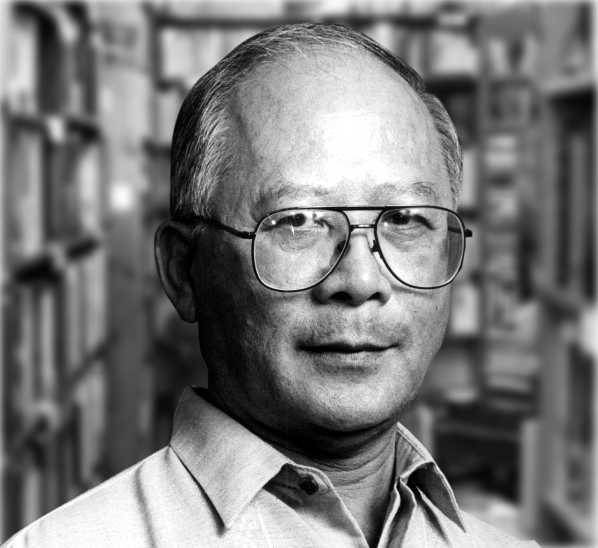
One day, toward the end of 1967, National Artist for Literature Bienvenido Lumbera sat down to look critically at the state of Philippine literature and what sorts of styles and literary figures have come to the scene.
Lumbera’s particular interest was with the outputs that came out in the decade between 1955 and 1965 to help “see where Philippine writing seems to be going,” as that time period “saw intensive literary activity which resulted in the development of the novel in English and the rise of new writing in Pilipino.”
The result was Lumbera’s “Looking Back at the Future of Philippine Writing:” a 4,500-word article that came out in the Graphic on January 3, 1968.
The thing about “divining” the future of anything always carries a possibility of getting it wrong. The future national artist knew this, as he began his article by saying that “only the very naive or very cynical would try to predict the future course of Philippine literature.” He continues that “there are only the weekly magazines or the occasional books as signposts to indicate trends, and these signposts do not give very coherent directions.”
A lot has happened in the almost 60 years that have passed since Lumbera wrote his piece. The literary landscape has seen thousands of talented wordsmiths since then and, most certainly, hundreds of literary greats.
But instead of looking once more at the future of Philippine writing as Lumbera had done, there is a crucial part of the story that requires (re)examination: the Filipino writers themselves.
What will the future Filipino writer be like, and what lies in the future for both our country’s readers and wordsmiths? This is less about the works that our future writers will create, or that our future readers will consume, but rather, the people themselves.
To do so, it is perhaps only appropriate to follow the footsteps of Lumbera and interrogate the “then” and the “now.”
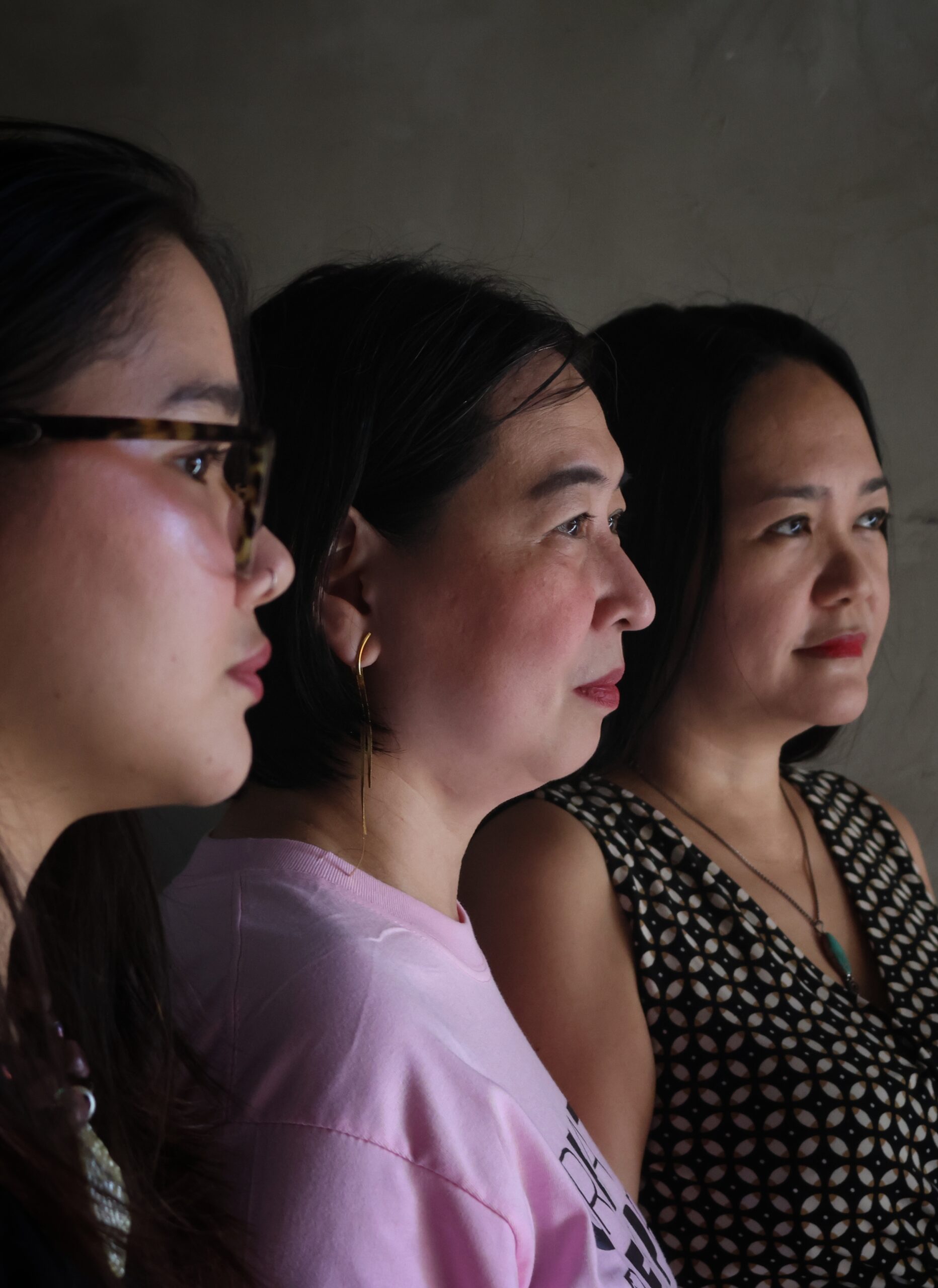
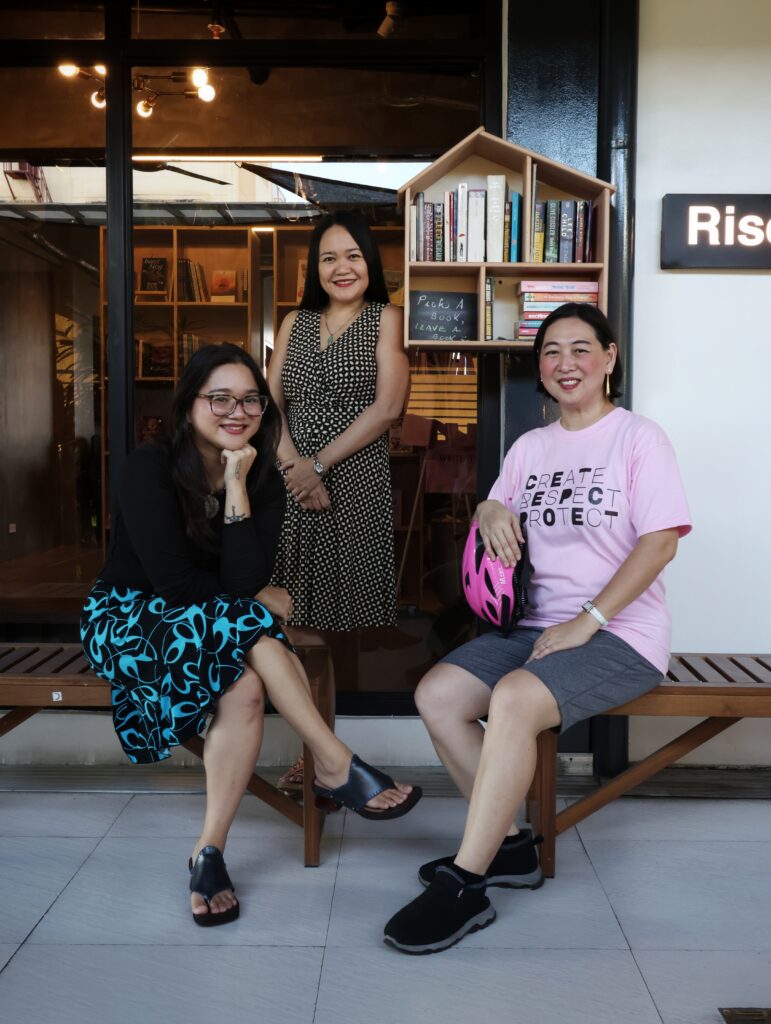
So, in one afternoon, in the stinging heat of summer at the Good Intentions Books office in Makati City, the Graphic met with three writers across three different generations, who occupy three distinct dimensions of the literary scene.
COMPLEX BEGINNINGS
Like any kind of artist, all writers started somewhere. No writer ever popped up from their mother’s womb knowing they wanted to become a wordsmith. Most of the time, an event had steered them toward that direction, just like it did for the interviewees.
In this piece, we have three kinds of the trade: the professor, the magazine writer, and a cultural worker.
Prof. Noelle Leslie dela Cruz’s first stint at writing was with campus journalism—having been an editor-in-chief of The LaSallian: the official student publication of the De La Salle University (DLSU)—before eventually finding her way into poetry.
“I did not really choose the genre,” she said. “It was more of, as they say, the genre chooses you, because I took classes with Dr. Marj Evasco.”
Dela Cruz, who teaches Philosophy at DLSU, considers herself more of an academic philosopher, who happens to write and publish poetry. She went through a Master of Fine Arts program in the same university.
“Currently, I have a manuscript under contract with Bloomsbury [Publishing] on, coincidentally, philosophy and poetry. As someone who teaches philosophy and writes poetry, these are two things I like to bring together.”
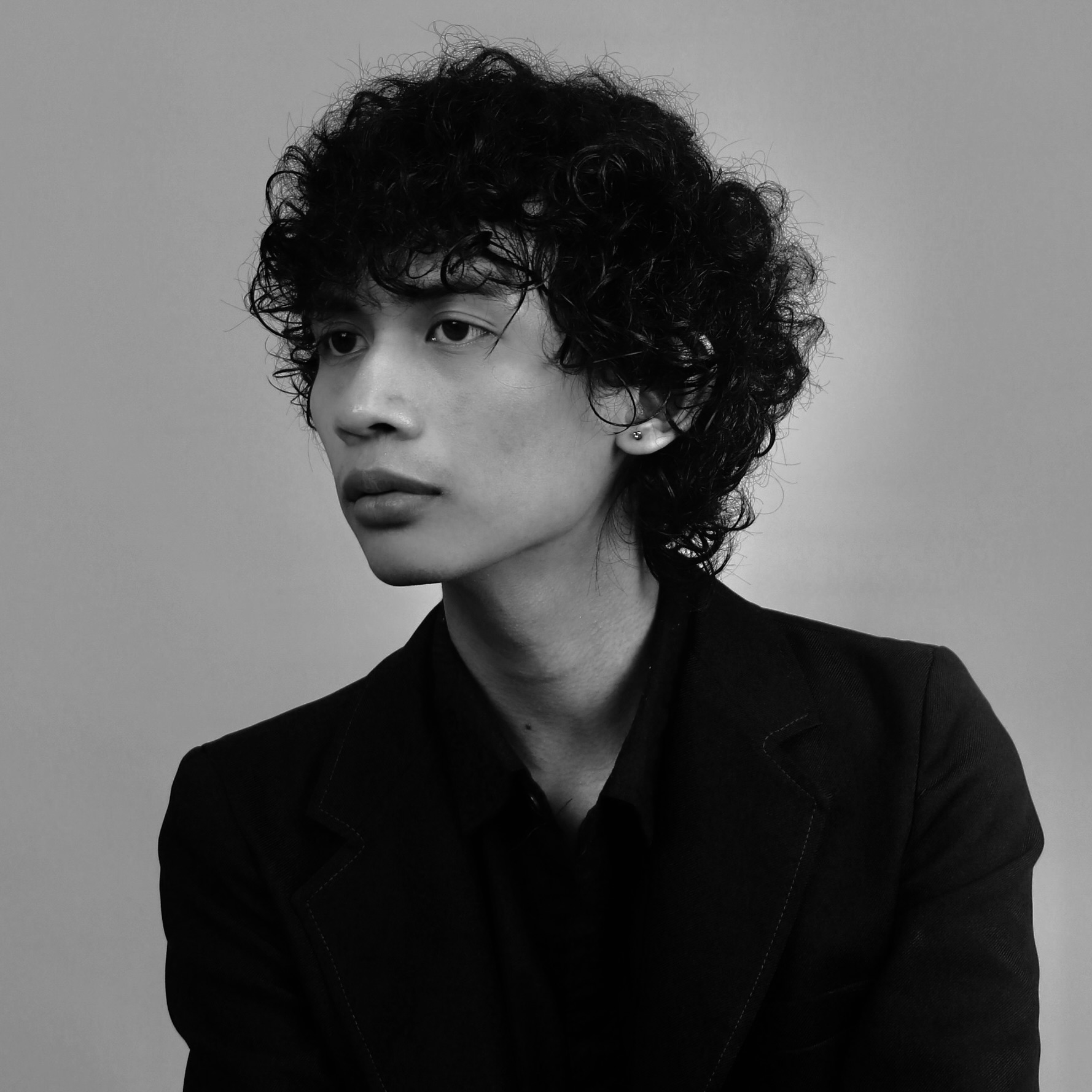
Zea Asis, the youngest among the three interviewees, started her journey in high school through a regional competition in Butuan City in Mindanao, where she hails.
The task was to write an essay about the Agusan Marsh Wildlife Sanctuary: a protected area in Agusan del Sur. Asis, a sophomore at that time, won first place, besting her schoolmates who also joined the contest.
“Seniors in my high school were like, Ba’t siya nanalo? Sophomore lang siya [Why did she win? She’s only a sophomore],” she shared. “That’s kind of when I was on everyone’s radar.”
The validation and recognition stirred something in her and led her to continue writing. “It was kind of a big deal in a very small town in Mindanao. But also, I just really remember the pleasure of trying to write for the first time an essay and using all of my creative faculties in order to create an image of the Agusan Marsh Sanctuary.”
“I think that was the very first time I was like, ‘Oh, I want to be a writer,’ not because I have some talent, but also I like the act of writing,” she confirmed.
It is not surprising at all that a young teenager from Butuan would eventually grow up to become a skillful writer. (After all, novelist and short story writer N.V.M. Gonzalez had said many decades ago that the finest writers come from the provinces.)
Asis wanted to pursue either a Literature or Creative Writing degree in college, but her mother didn’t allow her, citing its impracticality as a profession. So she ended up taking Electronics Engineering in DLSU.
“Eventually, I stopped going to class. I was kind of a rebel, because I was like, ‘I really hate this.’ I hated it so much,” Asis confessed.
One Christmas morning, she “demanded” her parents to allow her to shift, as she had her eyes fixed in a Literature program. But it was to no avail. Her compromise was to study psychology, which she deemed “very helpful” in writing.
Though the circumstances and the way they are manifested differ from person to person, “compromises” tend to be common among anyone pursuing the literary arts as a career. Bebang Siy had her fair share of such, but the start of her journey as a writer did not begin with one. Rather, it began with a revolt.
In 1996, when Siy was still in high school at the Philippine Christian University in Malate, she created a spoof of the campus paper after being rejected by the publication staff.
Everything there was a joke, she told Graphic, and every bit of it was her creation: the parodied news, crosswords, and even the comics. She tried selling it for P2, but no one bought it. Not one to back down, she secretly shoved copies inside her classmates’ bags.
None of the copies survived, unfortunately.
“Kung alam ko lang na magiging writer ako, sana nakapagtago ng isa [If only I knew I was going to be a writer, I would’ve kept a copy.].”
Siy went to college at the University of the Philippines (UP), where she passed for any non-quota course. A famed writer she may be now, but writing was neither her first nor second choice; rather, it was geodetic engineering or metallurgical engineering. It did not matter to her what course it was, so long as it was “something new.”
But she eventually realized that it was expensive to take any of those two courses. Her father had just passed away, and she didn’t have any money to sustain her in college. So she removed the engineering courses from her list.
While enlisting for a course, someone suggested that she take up Film and Audiovisual Communication instead: “Manonood ka lang ng sine, papasa ka na [You just have to watch films and you’ll pass].”
This got Siy excited, but the thought of having to spend money on movie tickets throughout her college life made her rethink about it.
Right at the door where the enrollment was, she considered two courses where she might not have to spend a lot: Bachelor of Arts in English, and BA Malikhaing Pagsulat sa Pilipino.
With an actual flip of a coin, she landed on the latter.
But it didn’t last long. After the first semester in college, she got pregnant. She eventually had to leave college, and juggle multiple jobs.
“Nanganak ako… nagbago ang tingin ko sa mundo. Parang nag-mature ako bigla [I got pregnant, I gave birth… The way I looked at the world changed. It’s like I suddenly became mature],” she told Graphic.
Siy eventually returned to college with the same course, then found out that it was surprisingly easy.
Her professional writing began when playwright Rene Villanueva hired her as a writer for a radio drama.
TRANSITIONS
The manner in which any writer grows is also influenced by his or her milieu, and the cultural and sociopolitical climate that the writer moves through. The language and the literature of any given time are affected by the aforementioned aspects of society, just as much as language and literature affect society.
Lumbera and his 1968 article were also influenced by his time’s sphere. By the time his article was published, only a little over two decades had passed since the Philippines gained independence from the Americans. The shift in the Philippines as a nation was still reverberating through the masses.
The question of Filipino identity remained ever-present in 1968, which may have been a factor why literature at that time was rapidly flourishing.
Lumbera wrote that the “decade between 1955 and 1965 saw intensive literary activity, which resulted in the development of the novel in English and the rise of new writing in Pilipino.”
How a writer experiences life (and reacts to it), and the world the writer occupies inevitably and powerfully, influences his or her writing. Society shapes the writer, and should greatness beckon, she or he will, in turn, shape it.
The three writers interviewed by the Graphic were no exceptions.
For dela Cruz, nothing much has changed in the political context from when she began. “I didn’t really go through the Marcos era. So there was, more or less, I think, freedom of expression that I had the privilege to enjoy.”
When Siy began her journey, former president Fidel V. Ramos had just ended his term, and the Eraserheads were at their peak.
Society shapes the writer, who may one day shape it in return
Asis, meanwhile, had spent most of her childhood in the post “Y2K” era when the Internet was still developing, and the digital world was slowly embedding itself into society.
But if the state of society definitively molds the writers of a particular time, what kind of future writer will this current milieu produce?
KILLING HUMANITIES
To start, it might be helpful to look at the biggest aspect that continues to affect future writers the most. No, it is not the current state of the publishing industry, or the rapid rise of artificial intelligence technology, nor is it the epidemic of doomscrolling among the young.
It’s education.
Recently, the Commission on Higher Education (CHED) caught the ire of the public when they announced their plans to enact changes in the curriculum. It expressed an interest to cut in half the minimum number of general education (GE) units from 36 to 18. Most notably affected will be the humanities and social sciences subjects.
The standalone Ethics subject might get axed, with topics distributed and integrated into others. So too are those concerned with literature, philosophy, art appreciation, and history—subjects that mold future writers. The proposed curriculum intends to combine these previous standalone subjects into a more streamlined set of GE courses.
Edizon Fermin, who serves as the chair of CHED’s Technical Panel for General Education, said that they are focused more on broader outcomes, and away from “standalone subjects,” with ethics, for instance, becoming a “cost-cutting consideration.”
This is not the first time that governmental institutions tasked with overseeing education in the country drowned in backlash after their attempts to “modernize” or “streamline” learning in the country.
CHED started with Filipino subjects, then “Panitikan (Literature),” said Siy, who now heads the Intertextual Division of the Cultural Center of the Philippines.
However, she shared that this is not new nor isolated, and that even schools in Europe are also seeing a decline in interest in the humanities.
Subjects that mold future writers might get axed, with pieces distributed and integrated in other subjects
During the 2025 Frankfurt Book Fair, some Filipinos took Siy—who represented CCP—and her group to Switzerland. A work of the critically-acclaimed writer Lualhati Bautista—which had just received a German translation—was scheduled to be introduced during a two-day festival in a small town.
It was also there where they met two literature students who came from afar just to visit the festival.
Elated, Siy shared her impressions that humanities and literature were very much active and alive in the European country. But one of her companions, Swiss writer and translator Annette Hug, expressed the contrary.
Hug told her that every year, the number of students enrolling in humanities courses was dwindling across Europe.
“Hindi siya unique sa Pilipinas [It’s not unique to the Philippines],” said Siy, pertaining to the decline of learning humanities.
Dela Cruz, who is a Philosophy professor in DLSU, noted that the proposed curriculum changes might have had an unassuming foundation before it blew up as a national issue.
“Even before these assaults against the humanities in higher education—this technocratic move—we were already colonized by that mindset that, if I’m privileged enough to go to college, my course has to get me a job, or has to be useful [and] practical,” the academician explained. “So my first love—whether it’s literature, or philosophy, or the arts—I have to set aside, or find some way to justify it to my parents.”
She thinks that what CHED is doing “is formalizing an attitude and a set of assumptions that have been there since the beginning. We are really just mimicking a worldwide trend.”
If Hug was correct in her assessment of the humanities in European education, and dela Cruz’s observation is indeed the root cause for CHED’s recent announcement—that the changes are being enacted to keep pace with the world—are we taking the correct route in our education? Trying to adapt to what the Westerners are doing even if we neither have the same opportunities nor the resources as them is equivalent to forcing a square peg into a round hole.
When things are streamlined, we must ask what is lost. If something called “Humanities” is at stake, we must then ask what education even is for.
“I would be a college student, [and] wouldn’t have a Philosophy, literature, or a history course. Instead I would have these straight to application [courses],” detailed dela Cruz. “The assumption is you would only study these things if there’s some kind of use for them.”
“It’s all in the service of capital,” dela Cruz argued. “And we’re all being made to conform.”
“The effect on writers is, I think, it’s really demoralizing. I hope that there’s some way that our institutions could [resist this trend],” she concluded.
Universities, teachers, and students have clamored against CHED’s proposal. In a letter addressed to Shirley Agrupis, chairperson of CHED, the Ateneo de Manila University asked: “What does it mean, now, to have a university education given this ‘Reframed GE’? Are we really educating people or are we just training them for the world of work whose landscape is quite unstable/volatile? What is the real end goal of university education? What kinds of citizens are we producing?”
The University of Santo Tomas also expressed their stance on the matter, saying that “curriculum streamlining need not happen at the expense of formation in disciplines essential to critical thinking, ethical reasoning, discernment, cultural literacy, civic consciousness, and global citizenship.”
The Alliance of Concerned Teachers Philippines said that various stakeholders have collectively petitioned against the proposal, gathering over 2,000 signatures, airing out concerns on how CHED’s move will affect an already troubled education system. On May 12, educators, alongside advocacy groups and faculty unions protested in front of CHED’s main office in Quezon City for the same reason.
Obviously, the future metrics might not reflect that, especially if the focus is on the number of graduates exported to other countries or in the number of employable graduates. As we move with the tech-heavy age and adapt our education solely for the purpose of that or capital, we will, indeed, look to be flourishing.
But did our students really learn? Learning stopped being pursued for its own sake, but for the sake of employers.
It is, as dela Cruz mentioned, demoralizing. If such a trend continues in our education system, the literary landscape might see two new trends in the future: a surge of mediocrity in writing, and the decline in the number of people who aspire to write.
Imagine a writer without any grasp of ethics, philosophy, art, or worse, literature.
However, all hope is not lost…hopefully. CHED insists that these proposed changes are still being reviewed, so there might still be a chance that the proposal could be scrapped.
Can you imagine a writer without any grasp of ethics, philosophy, art, or worse—literature?
LANGUAGE OF THE TIMES
Back in 1996, Gonzalez had expressed that writers should tap more into their local language and culture when writing.
At the University of the Philippines’ 25th National Creative Writers Workshop held in Mindanao, he said: “We probably will be multilingual here, if creativity of expression were to be hugely encouraged; we would have more poetry straight from the soil, rather than a derivative one, which is the bane of too urbanized imaginations.”
When asked about Lumbera’s views conveyed through quotations from his article, the three writers expressed more or less that the difference in views is a difference in eras. He was shaped by his time; the three were shaped by theirs.
One such view is Lumbera’s observation about how Filipino writers were adapting to the two prominent languages in use at that time: English and Pilipino (or Filipino).
He wrote: “While our English writers have been working hard at being Filipino, Pilipino writers are trying to break away from the traditionalism that marks vernacular writing as Pilipino.”
“I wonder if that is partly due to the use of English versus Filipino language. I think that might be a function of the language that you use also,” said dela Cruz. “If you’re writing in Tagalog, I think the fact that you’re writing in Tagalog already marks you as Filipino. You’re more at home in that language, so you don’t have to prove anything. You don’t have to say you’re Filipino.”
“For Filipino writers writing in English,” she continued, “I think it is possible that, because they’re using a language that is not their first language, maybe that inclines them to assert themselves to show their mastery of the language as coming from their particular function.”
But Lumbera also wrote that “it is not enough, however, to coast on the tide of nationalism to make Pilipino literature acceptable.”
The national artist, who wrote the article 21 years after the Philippines gained independence from the Americans, must still be reeling from the effects of colonization. After all, he was born in 1932, when the Philippines was still considered a United States territory. He had experienced firsthand what it was like to be a Filipino under the American rule—just as much as his contemporaries did.
However, the current literary landscape now caters to both languages much, much better than it did for writers back in the 1960s.
Despite things being better with regard to writers who write in either English or Filipino, there is another problem that is becoming an epidemic as of late: the number of people who could understand what they read.
Because after all, in trying to see the future of Filipino writers, one must also consider the future Filipino readers. And if the present trend continues, things do not look promising.
ALARMING INCOMPREHENSION
Several surveys and studies over the past few years concluded that there is a decline in reading comprehension. If there is a word to describe the state of functional (let alone, critical) literacy in the Philippines, it is “alarming.”
According to Siy, the results of the 2022 PISA or the Programme for International Student Assessment—a worldwide study conducted by the Organisation for Economic Co-operation and Development (OECD) that measures 15-year-old students’ reading, mathematics, and science literacy across the world—ranked the Philippines as one of the lowest among the 81 countries who participated.
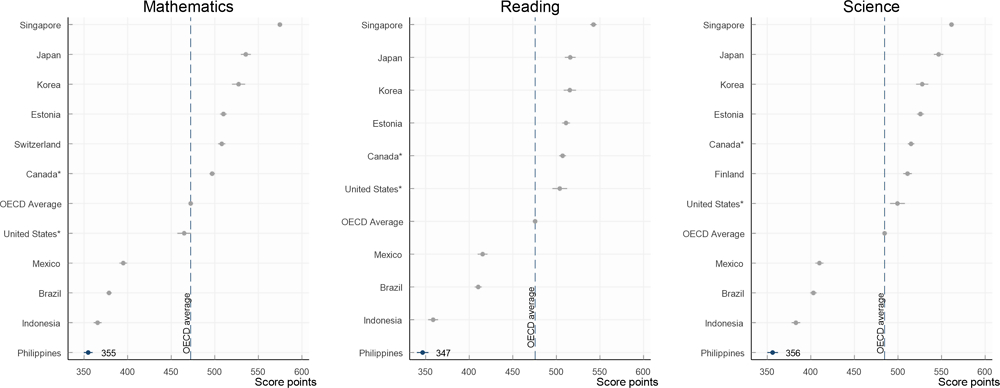
“Students in the Philippines scored less than the [the organization’s] average in mathematics, reading and science,” OECD reported.
The report continued: “In the Philippines, almost no students scored at Level 5 or higher in reading. These students can comprehend lengthy texts, deal with concepts that are abstract or counterintuitive, and establish distinctions between fact and opinion, based on implicit cues pertaining to the content or source of the information.”
To be clear, the text used in PISA was written in English.
But when the head of the arts education department in CCP attended an event organized by the DepEd, Siy recalled, it was reported that the reading comprehension in Filipino was also low.
“Filipino na yung text ko, ang hina pa rin nung mga high school students natin [The text is already Filipino, but our high school students still struggled in it],” Siy said.
If this is the situation of our students according to OECD and DepEd, we wondered: What more if CHED pushes through with its plans?
“Mga reading materials, mababawasan. Definitely yung reading time, mababawasan. So what do we expect after ng graduation ng mga batang ’to [The number of reading materials will be reduced. Definitely, the reading time will also be reduced. So what do we expect after these kids graduate],” Siy lamented.
“So much of what defines us writers is what we read, and who reads us,” said dela Cruz, who believes that “our formation as a writer… is intertwined with who we are as persons and what we have to say.”
She argued that there is no writer who is only a writer, and that “it’s about who they really are as persons, because when you write, you’re introducing a worldview.”
“I think our reading habits—the culture of reading that we are inhabiting—they’re of a piece with what we write,” the educator added. “It’s very worrisome if the value of reading is not valued anymore—if no one reads anymore. This is not even just a problem for our students or our young people. There’s so much going against reading. When you read, it demands a particular kind of attention.”
There was a consensus that, even in the act of writing, one requires a healthy amount of attention, apart from the knowledge and experience one must accrue before any kind of writing could take place.
“It’s hard to write; you have to be in a kind of a zone—you have to be in this protected space,” dela Cruz furthered. “As a writer, before I can write, I need to have read, like lots and lots and lots. I need to populate my mind with ideas.”
DISENCHANTMENT
There are those who cannot comprehend what they read, and then there are those who cannot find the time to read.
“As an academic, I feel this keenly: the lack of readers. I feel lonely as a teacher,” dela Cruz shared. “People don’t have time to read. If you haven’t read, what will we discuss [in the classroom]?”
The market also often reflects this. A popular bookstore (that has a “bookstore” right in its very name) is mostly composed of office supplies and stationeries. The books are relegated to less than half of a branch’s space, and with prices at rock bottom. There was a time when this was not the case.
In 2025, Solidaridad Bookshop, established by the esteemed writer F. Sionil Jose, announced that it will be closing after 59 years.
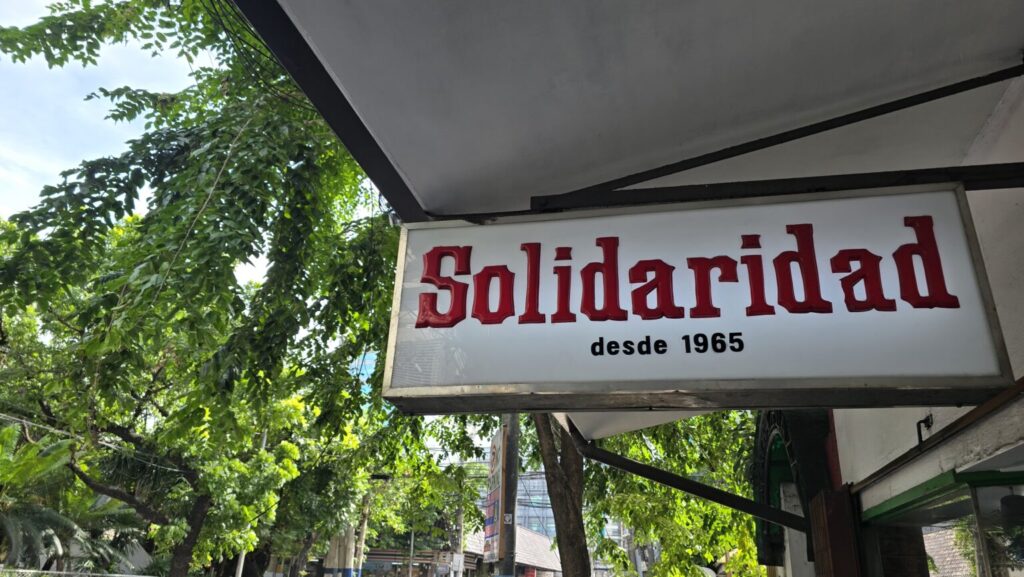
His oldest son, Antonio José, said in an exclusive interview with the Graphic that the bookshop became hard to sustain: “There was no profit during the [pandemic] lockdown. And then when it opened, none—still weak.”
This view that the interest in reading throughout the country has been dwindling may seem to run against the fact that book fairs have been popping up across the Philippines, drawing huge crowds.
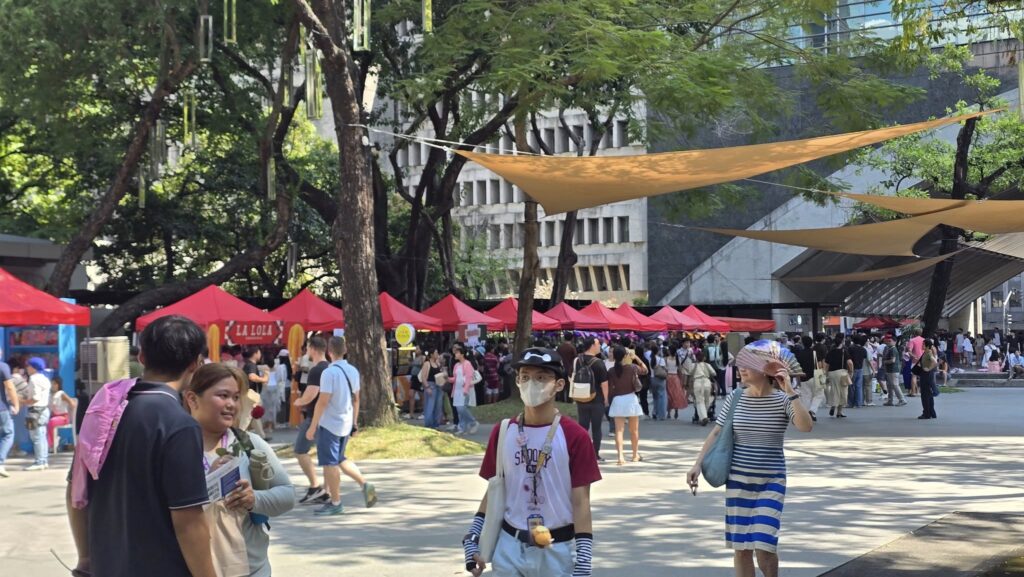
Perhaps there is some truth in it that the enormous audience these book fairs or festival draws show that reading is not dead in the Philippines.
But one must also remember that our country is home to around 112.7 million Filipinos, according to a 2024 census conducted by the Philippine Statistics Authority. Compare that with the number of reported annual visitors for one of the country’s largest book fairs, the Manila International Book Fair (MIBF). The MIBF claimed in their website that the event draws “over 160,000 visitors annually.”
That is 0.142% of the total population.
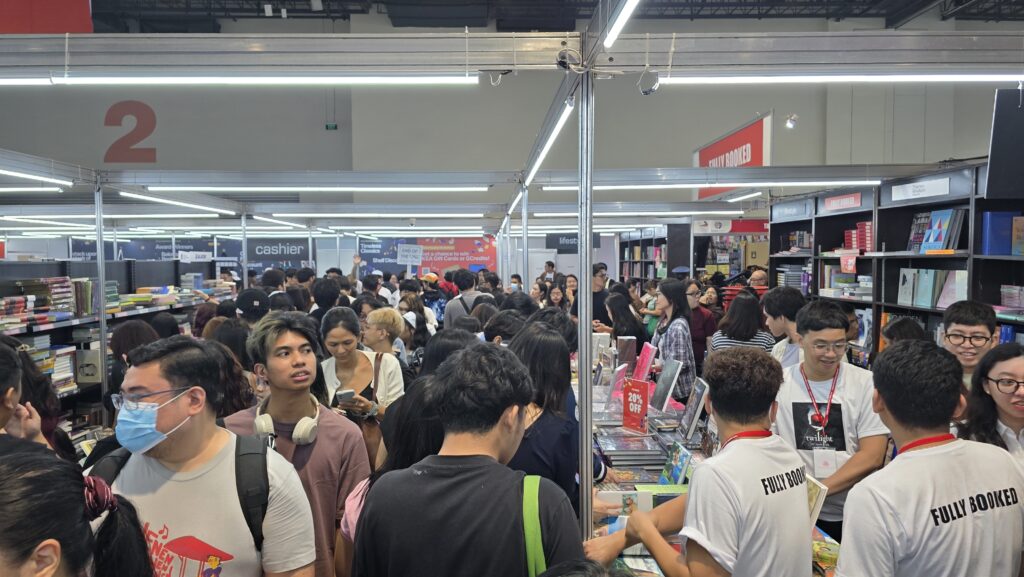
Even if we only take the population of students who enrolled in basic education for School Year 2025-2026, which, according to DepEd, is around 27.6 million, the percentage then shoots to only 0.58%.
To be even more generous, let us shift to only the college students, who have more means to go to these book fairs than those in elementary and high school. According to CHED, the number of students who enrolled for Academic Year 2022-2023 was around 4.79 million. That is approximately 3.34%.
Dela Cruz, however, remained optimistic.
“I think people like to read,” she said, pointing to the popularity of genre works, Wattpad books, and bite-sized stories often seen online. For her, it’s only a matter of channeling that interest to reading “for its own sake.”
“That kind of engagement with the world… changes us into a certain kind of person, a certain kind of human being. That is the real education we should really be worried about,” she said. “We should all think about how we could encourage that kind of cultural attitude, which our national policies are going against.”
It is no surprise that reading, like writing, demands time and dedication. There are those who point to the activity being boring and cumbersome, as it requires one to be still and to slow down. But the pace of the world veers away from any form of slowness. It is weird that stillness is frowned upon in reading, and yet it is stillness that the younger generation engages in whenever they are absorbed in their mobile devices.
“I’m genuinely scared of the implications of [the low reading comprehension],” Asis shared.
She recalled the questions posed during a discussion with her professor in literary history of the Philippines: What is the point of still studying literary history? Why does it take so long to finish a doctorate in literature?
A previous professor of her classmate said that it’s because “inaaral mo ulit paano maging mabuting tao [You’re learning again how to be a good person].”
“That struck me, because I realized that really is the core of why we study humanities: how to be a good person, how to be fair and just,” Asis said.
She fears that this move informed by technocratic decision is teaching (and in essence, forming) a new generation of students without values and who do not know “what it means to be a human being—a good human being.”
“Reading to me has been my way to comfort myself and to take refuge and solace in times of grief and hardship. It’s my way of knowing that I’m not alone because other people have struggled through different things” Asis shared. “Poetry has helped me so much. And I’m concerned that if a new generation of students and readers don’t have that option anymore, like, they can’t turn to poetry or they can’t turn to books in order to find refuge and solace in the world—where will they go?”
LAMENTATIONS AND HOPE
If in 1968 Lumbera was concerned about the great difference between writers who write English and those who write in Filipino, we now have to contend with Filipinos who have trouble reading either language, and with the future generation who does not know, or is not concerned to write at all, regardless of the language.
He said that “knowledgeability and craftsmanship are needed in the development of significant artists,” but with the present situation, the future writers are in peril.
How can our future writers be knowledgeable when the Humanities are being taken away from them? And how will they have the basic foundation for craftsmanship in writing if they do not understand what they read? And thus, how will they be knowledgeable if they cannot comprehend what they read?
It is a terrible cycle, as each problem worsens in the absence of the other.
Any writer worth his or her salt is educated. It doesn’t have to be in the traditional sense; there are a number of great writers in the history of the world who famously did not go through a formal education.
But writers are required to know the world that they converse with, and have the tools and means (which education provides) to dissect it, to observe it, to critique and explain it.
Should these conditions worsen further and no nationwide solution is enacted, we might have to expect less learned writers and readers in the future—a total contrast to the “intense literary activity” from 1955 to 1965 which Lumbera spoke of.
It is any sensitive artist’s lamentation that our country—once shaped and revolutionized by (and through) the arts, that champions a writer as its national hero, that boasts a healthy amount of literature since the precolonial times, whose people was once kindled into action and nationalism by means of books—have spiraled down to such a state wherein the government itself seems to forget that before anyone goes to work and be slaved away to capitalism, they have to first wake up as a human being.