

In the history of mankind, wars have taken away far more than it created anything. The 1945 Battle of Manila and the recent attacks in Ukraine’s capital of Kyiv have shown us what we lose as a species when a war—and the people behind them—threatens culture.
IT IS MOST OFTEN in times of war that entire evenings could become as bright as summer noon. Flashes from missile explosions would light up the sky just as well as the morning sun, long enough to see the before-and-after silhouettes of buildings.
Ukraine has known for four years now that no relief could come from the sky ever since Russian paratroopers first parachuted down at the Hostomel Airport, located northwest of Kyiv, on February 24, 2022. Russian President Vladimir Putin deployed about 200,000 soldiers to Ukraine. On that same day, Putin said in his announcement that he was conducting a “special military operation.” Events in the years that followed might say otherwise.
Like all wars that came before it, military strikes involving missiles and drones have turned Ukraine’s most populous city into one of its most devastated.
Lives were permanently snuffed out.
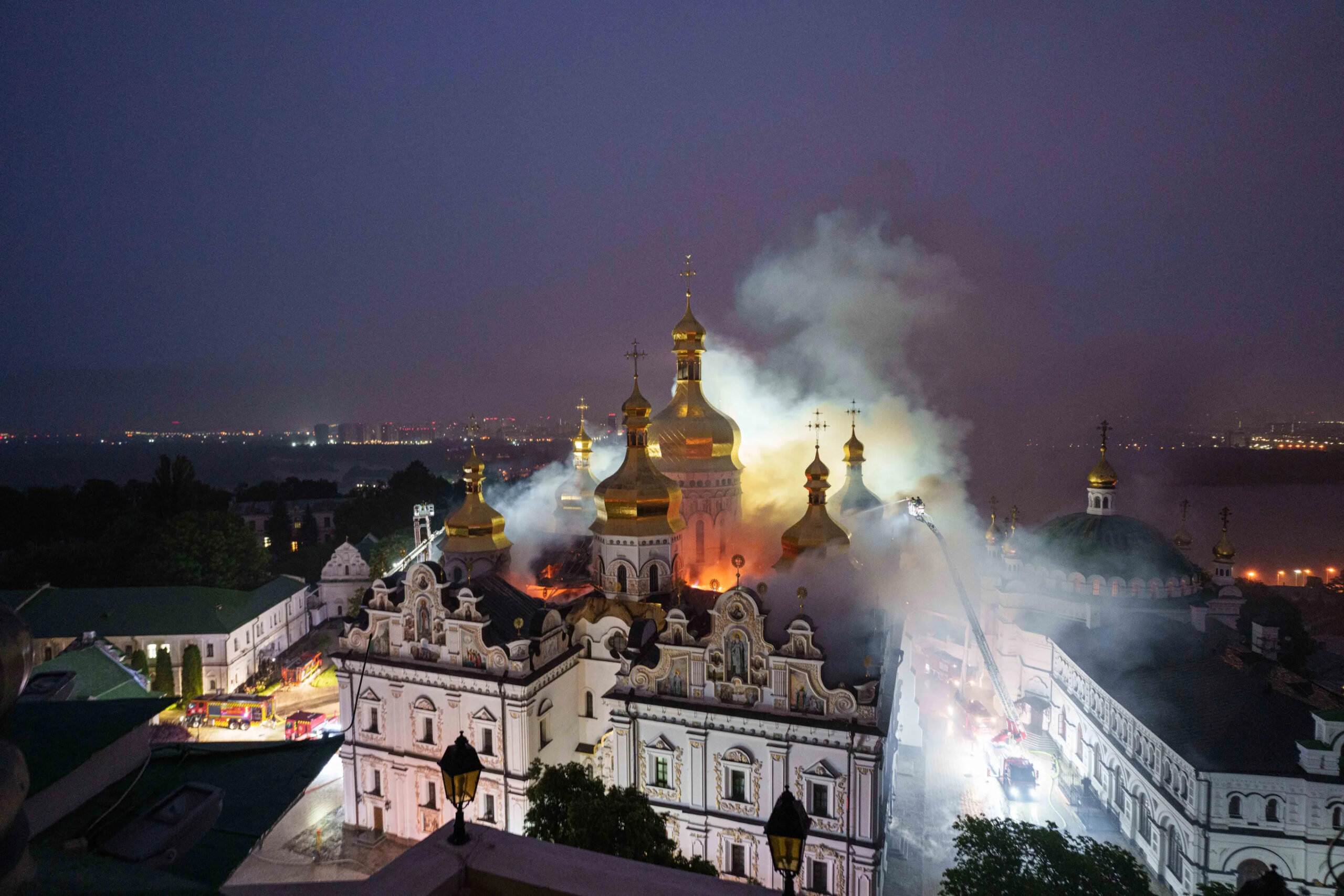
Those who survived bear the pain of those who didn’t, and on one particular night of June 2026, what remains of the city will also have to bear the weight of a nearly thousand-year-old cathedral falling victim to the unforgiving war.
HISTORIC MONASTERY
Monasteries are places of worship where monks and nuns devote their lives to prayer and religious traditions, secluded from the outside world. The word has its roots in the Greek monazein, meaning “to live alone.” A monastery can range from a building to a group of buildings called a monastery complex.
The city of Kyiv has more than a 1500-year-long history behind it, with chronicles mentioning the then capital of Kyivian Rus, the first East Slavic state, as far back as 862 A.D. An essential part of that history lies in the monastery complex of Kyiv Pechersk Lavra, located in Ukraine’s capital, which is considered one of the oldest and holiest places in the Christian tradition. It was founded by monks Anthony and Theodosius in 1051. The architecture is famous for its distinct use of Ukrainian Baroque.
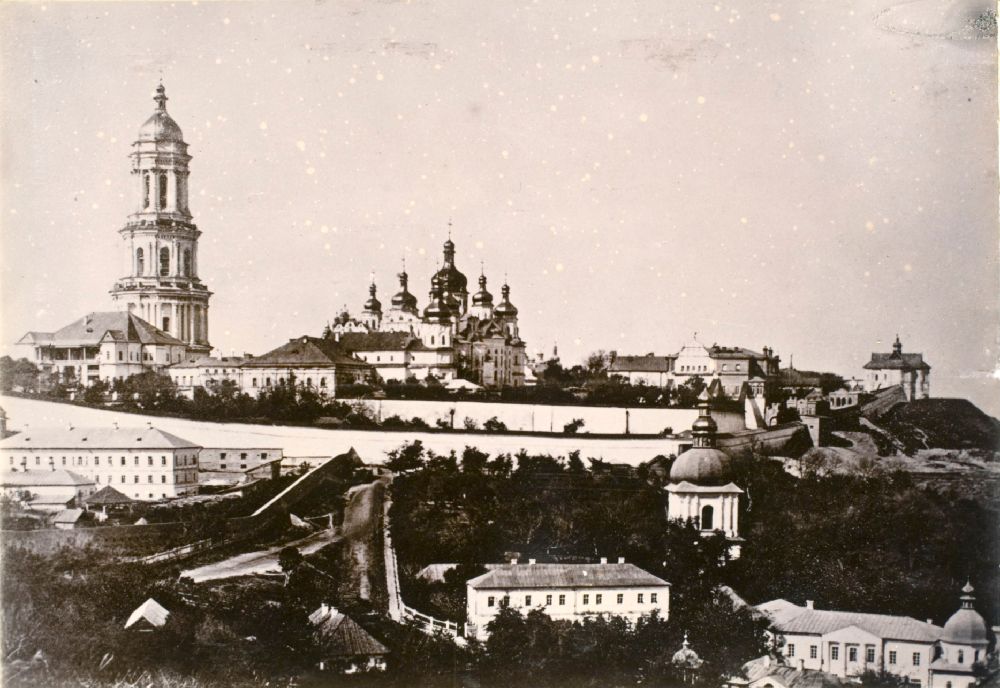
The complex is… well, complex and sprawling, in that it is composed of the religious buildings aboveground and a system of caves underground, further subdivided into three sections.
According to the 2019 research Monitoring and Preservation of the Kyiv Pechersk Lavra Caves, the monastery played “a significant role in the unification of Eastern Slavic lands, being a spiritual, social, cultural and educational center.”
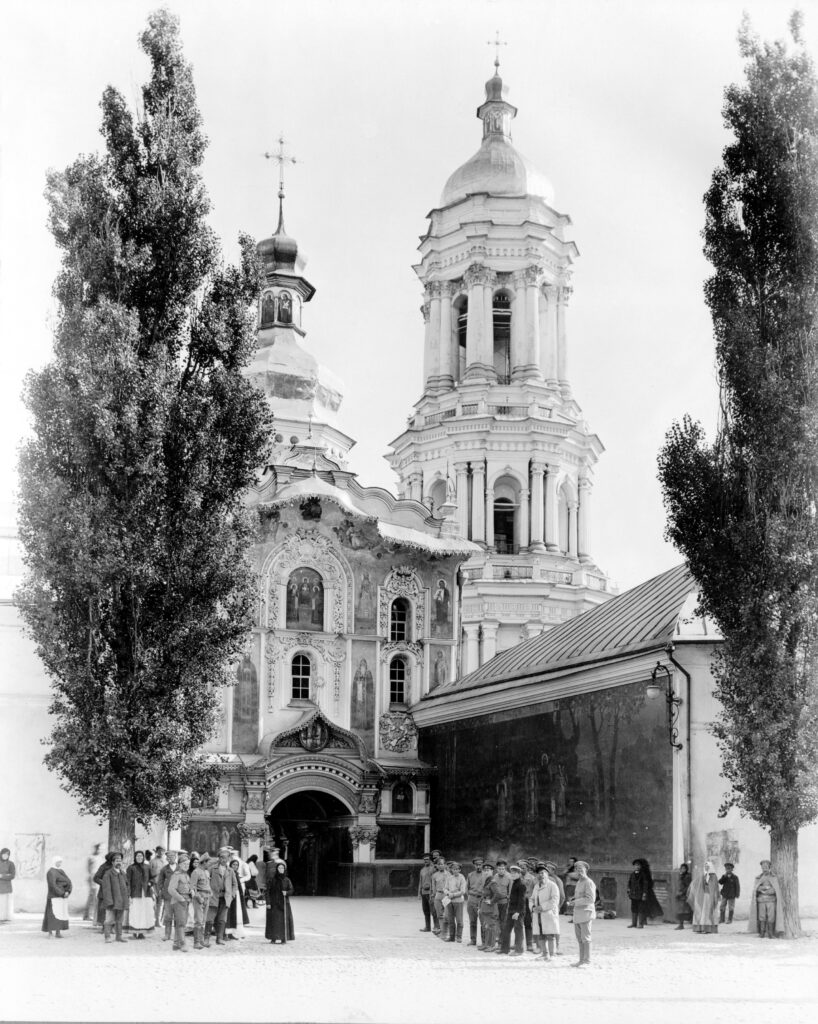
In 1990, the monastery complex was conferred as a World Heritage site by the United Nations Educational, Scientific and Cultural Organization (UNESCO).
The complex, apart from being a land for religious devotion, is also a complex of museums, housing priceless relics and artifacts that are hundreds of years old.
Within its borders lies the final resting place of saints, monarchs, and the head and relics of Pope Clement I—the first Apostolic Father.
Of the bodies and relics kept safe inside the 26-hectare complex, the architecture and libraries safeguarding the region’s history, the traditions still practiced, and the nearly thousand-year-old cultural identity preserved in these grounds, it is an understatement to say that here in Kyiv Pechersk Lavra, the passing of time weathered no history to ashes, rust, and smithereens.
No—for that, war can do it all alone.
For the Pechersk Lavra’s venerability did not exempt it from drones and ruination. Nothing is kept sacred in a time of war.
TIME(S) OF DESTRUCTION
For all the havoc that tanks and drones and bombs are capable of making, it cannot make a decision on what to strike and why. That alone is the capability of man.
In the history of mankind’s armed conflicts, items and places of art and culture had all too often fallen victim to the whims of powerful men.
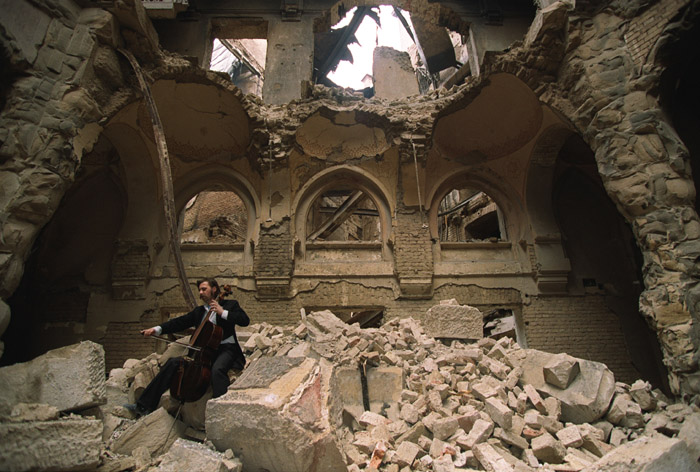
Take, for example, Vijećnica—the city hall of Sarajevo in Bosnia, established in the late 19th century, which became the country’s national library in 1949. During the catastrophic Siege of Sarajevo in 1992, Vijećnica was annihilated, and along with it were more than 1.5 million books and hundreds of thousands of rare manuscripts and documents.
Or the time when two iconic Buddha statues called the Buddhas of Bamiyan—6th-century statues carved into the sandstone cliffs in central Afghanistan—were destroyed by the Taliban in 2001.
The Syrian Civil War laid waste to the region, and one among its many victims was the Great Mosque of Aleppo, one of the oldest mosques in the city, dating back as far as the 8th century. The place was believed to be the resting place for the remains of the Hebrew prophet Zechariah, but that did not matter because it too was not spared in 2013 during the events of the civil war.
The nearly-millenia-old monastery of Perchersk Lavra is not foreign to such threats, even before the Russia-Ukraine conflict began in 2022.
No less than seven times did the religious site suffer massive damage. One instance was caused by a powerful earthquake in 1230; another was when a fire broke out in 1718.
Five of those? Invasion. In the last hundred years, one happened at the hands of Soviet secret police NKVD saboteurs. In November 1941, the Dormition Cathedral, considered as the “spiritual center” of the monastery, was blown to smithereens.
This wouldn’t be the last that the holy grounds would witness hellfire.
RECENT DEVASTATION
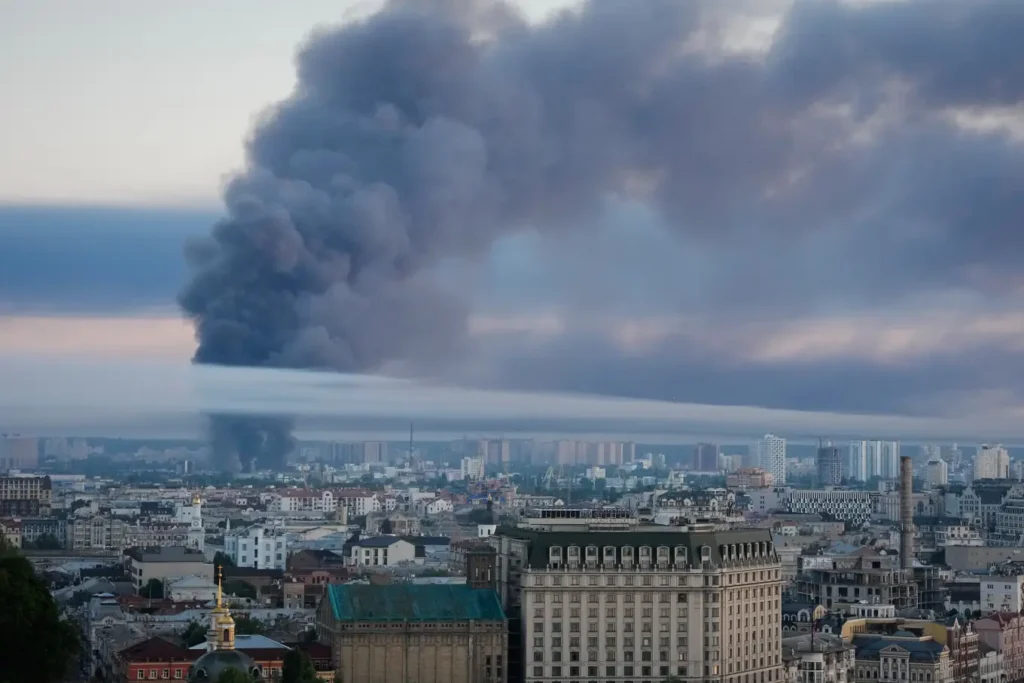
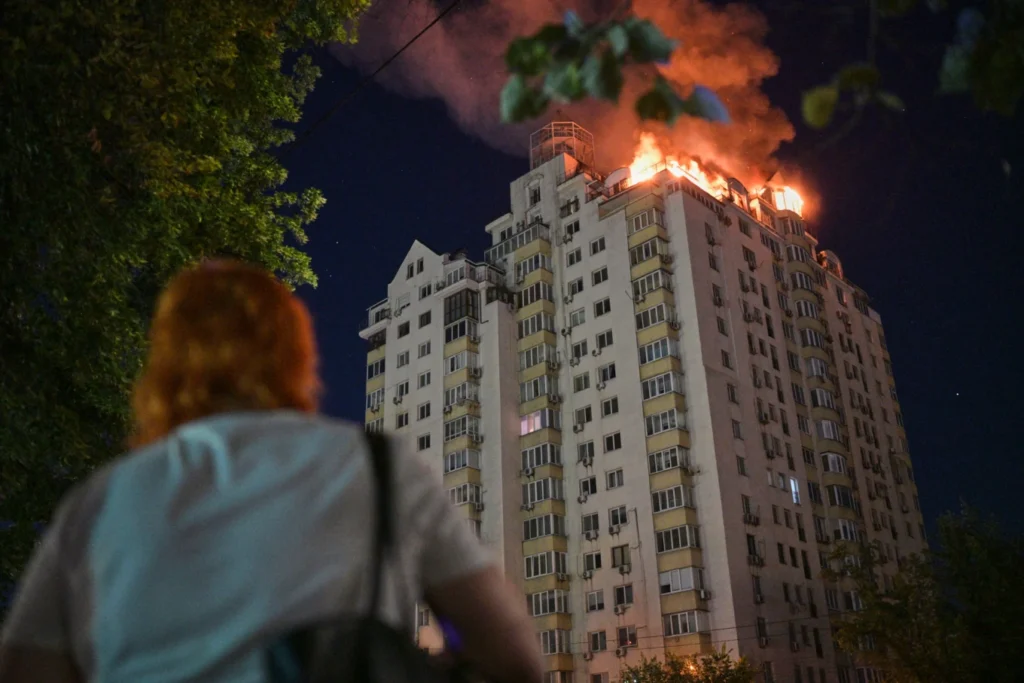
On Monday evening, June 15, the sky over the city of Kyiv (alongside other Ukrainian cities) held its breath as Russian forces launched a deadly strike.
Missiles rained; armed drones flew over and laid waste to the land. Videos of the event saw balls of fire lighting several city blocks and columns of smoke towering over the buildings. Had a devotee in the ancient Pechersk Lavra witnessed such an event from the ground in the 11th century, he would have mistaken it for what it was not—which is divinity.
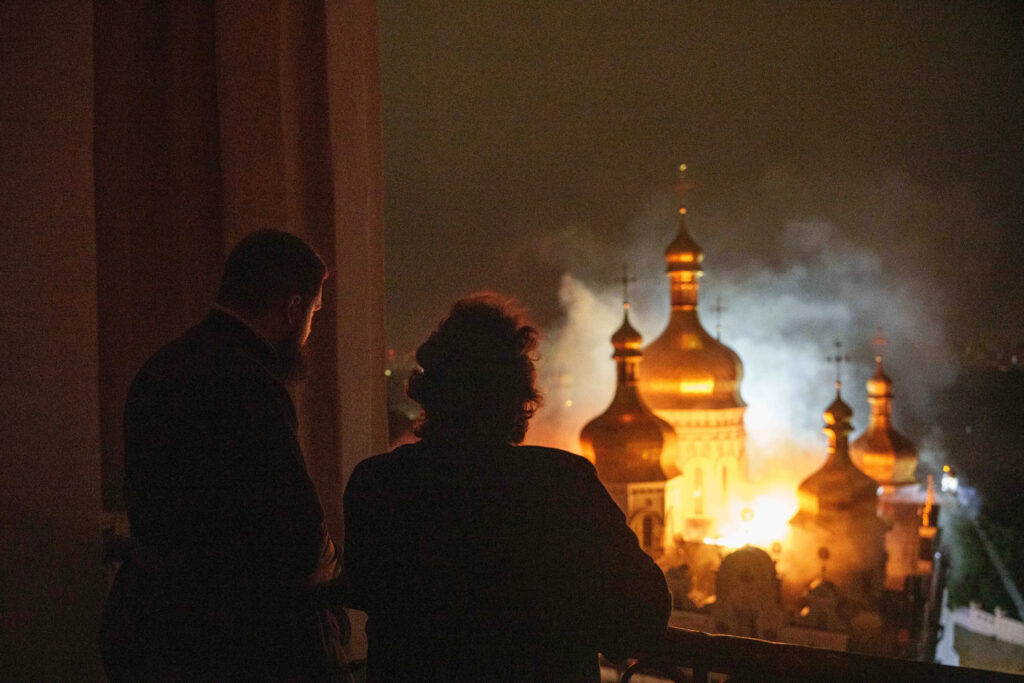
The strike severely damaged several buildings. A statement from the Ukrainian National Committee of the International Council on Monuments and Sites (ICOMOS) revealed that “the Dormition Cathedral—the compositional and spiritual center of the Lavra ensemble—sustained the most severe damage.” The Tower of Ioann Kushnyk, the buildings of the Treasury of the National Museum of the History of Ukraine, the Museum of Books and Printing, and the National Historical Library were also damaged.
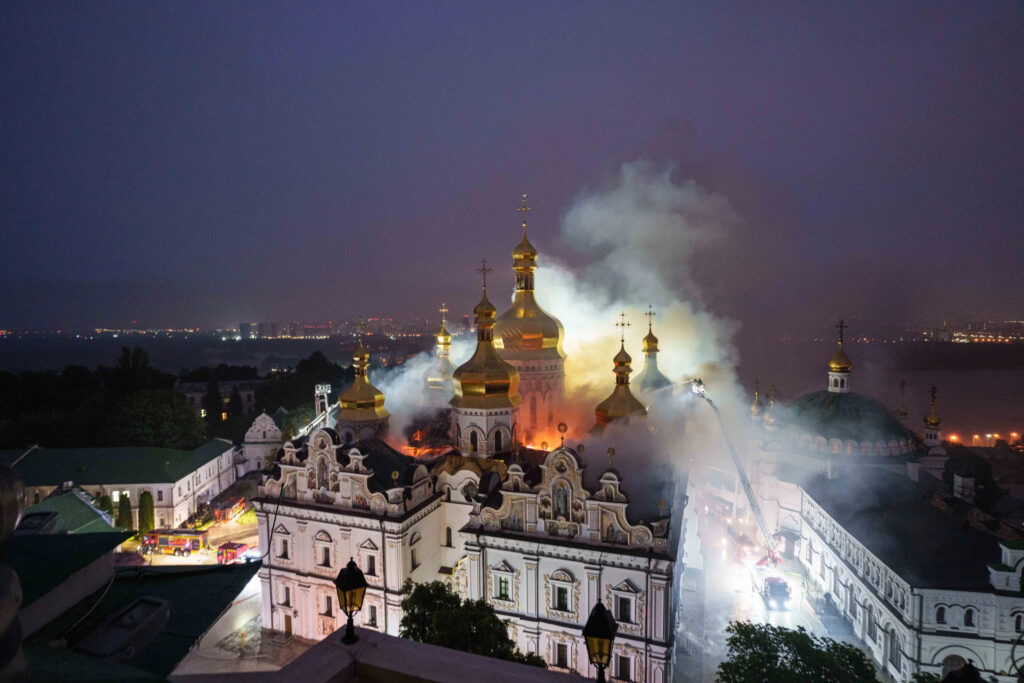
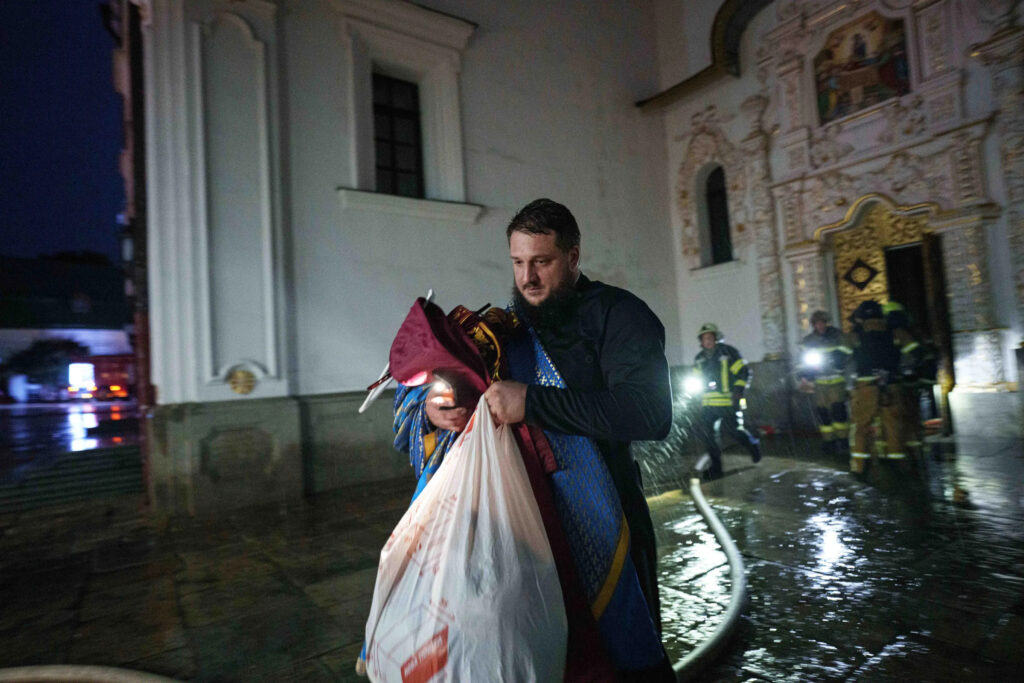
The Dormition Cathedral was engulfed in so much flame that it took authorities until early morning just to put out the fire.
UNESCO also released a statement “in the context of the escalation of the war in Ukraine following the invasion by the Russian Federation,” criticizing the reported strike that struck the monastery complex.
“UNESCO condemns attacks against cultural property, educational institutions, students, education personnel and media professionals protected under international law. Damage to such institutions deprives communities of access to culture, education, and shared spaces that are essential for recovery and social cohesion,” the statement continued.
The Ukrainian National Committee of ICOMOS saw the Russian attack as a “systemic threat to the cultural heritage of Ukraine and Europe,” intended “to ‘scorch’ Ukrainian history and eradicate its tangible symbols.”
The committee also pointed to the targeting of several cultural sites as evidence of a pattern, as previous strikes targeted “prominent symbols of Ukrainian culture, such as the Art Museum in Kharkiv, the National Art Museum, the Chornobyl Museum, the Oleksandr Dovzhenko Film Studios in Kyiv, the Bernandine Monastery ensemble in Lviv, and the Transfiguration Cathedral in Odesa, just to name a few.
On a Monday evening, skies over the city of Kyiv held its breath as Russian forces launched a deadly strike
‘THE PLUNDERED GRAVE’
The Philippine Embassy in Warsaw, Poland coordinated with the Honorary Consulate General in Kyiv nearly two weeks before the 2022 invasion.
Officials confirmed that there were approximately 380 Filipino nationals living in Ukraine, most of whom were in Kyiv. At least 14 of them promptly returned to the Philippines in the days that followed.
On the day the invasion struck, the Department of Foreign Affairs confirmed that 181 Filipinos in Ukraine have already been accounted for. Some Filipinos refused to leave.
The Center for Strategic and International Studies (CSIS), a bipartisan and nonprofit policy research organization, reported on July 1 of this year that there have been more than 2 million casualties from both sides of the war.
Among them was a “John Patrick,” an alleged Filipino mercenary working for Russia. According to Holovne Upravlinnia Rozvidky, Ukraine’s military intelligence, Patrick died in Donetsk City in eastern Ukraine in January 2026. Further details on the matter are yet to be confirmed.
The United Nations Human Rights released a report by the Human Rights Monitoring Mission in Ukraine, revealing that “at least 274 civilians were killed and 1,793 injured in Ukraine in May 2026… the highest total number of civilians killed and injured since April 2022.”
In the June 15 strike alone, at least eleven people died.
And it is not only the human lives that the war had taken; casualties extend to the culture being chipped away by the destruction, in which, in the process of erasure, those who survived will become half-empty, half-lost; thus, in the event they once more gain their footing, a huge part of what was once theirs is now only held in memories, in photos and facsimiles, in the accounts of those who have seen tangible pieces of their history and national identity.
NO WAR IS ‘CULTURED’
War’s destruction of culture is not endemic to the Western region. The Philippines has seen its fair share of culture—material or otherwise—fall prey to invaders, often threatened to near or total erasure.
Our history is littered with these instances. One example would be the 1945 Battle of Manila during the Second World War, which, according to the U.S. Department of War, “is widely considered to be one of the most destructive urban battles ever fought in terms of lives lost, with near-total destruction of the capital.”
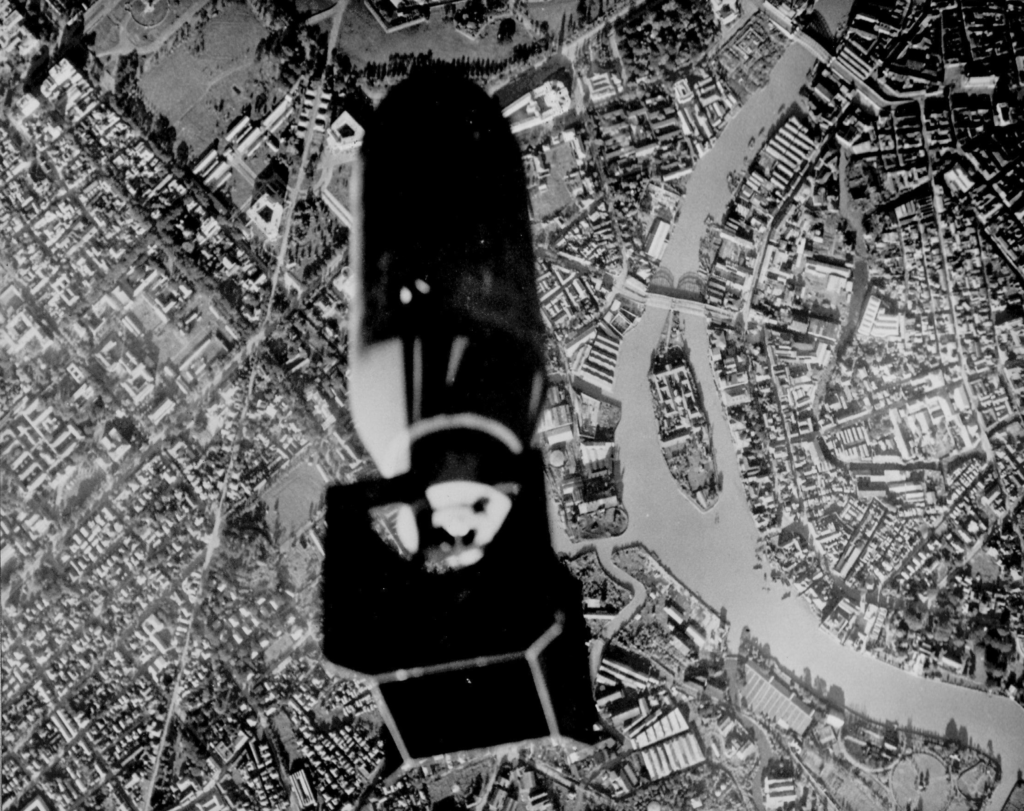
For nearly a month, the battle totaled the city. The official Intramuros website said that “more than 600 city blocks were systematically razed to the ground by Japanese fire or finished off by American artillery.”
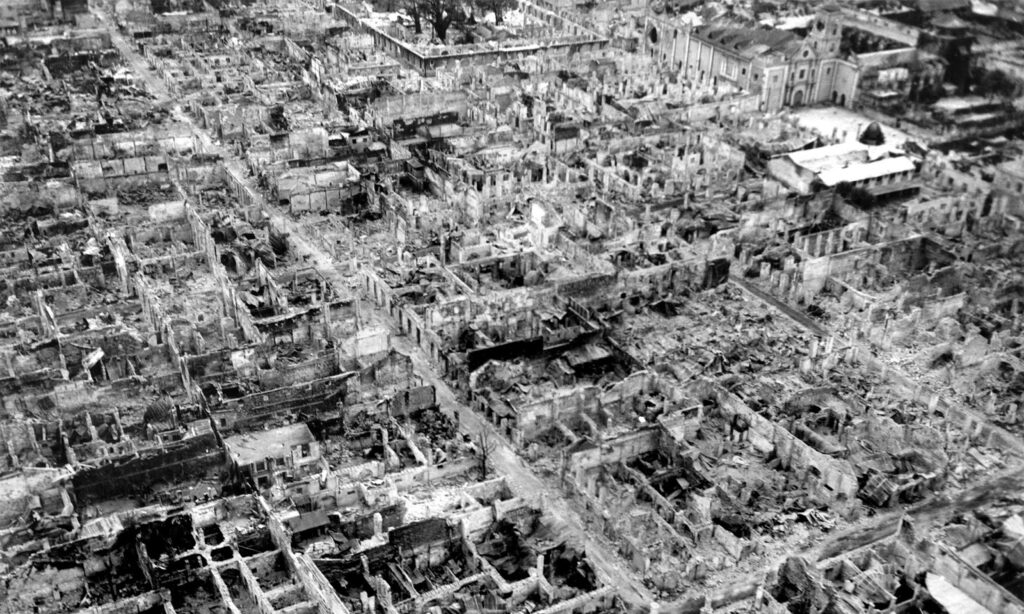
The Battle of Manila decimated an incalculable amount of cultural heritage hailing from this side of the world. The walled city of Intramuros was eviscerated to a pile of debris. So too were the buildings that occupied the rest of the city. Heavy artillery from US forces and exchanging gunfire with the Japanese—the city became a lifeless backdrop to foreign powers, and the heritage we tried to preserve became inconsequential to the eyes of invaders.
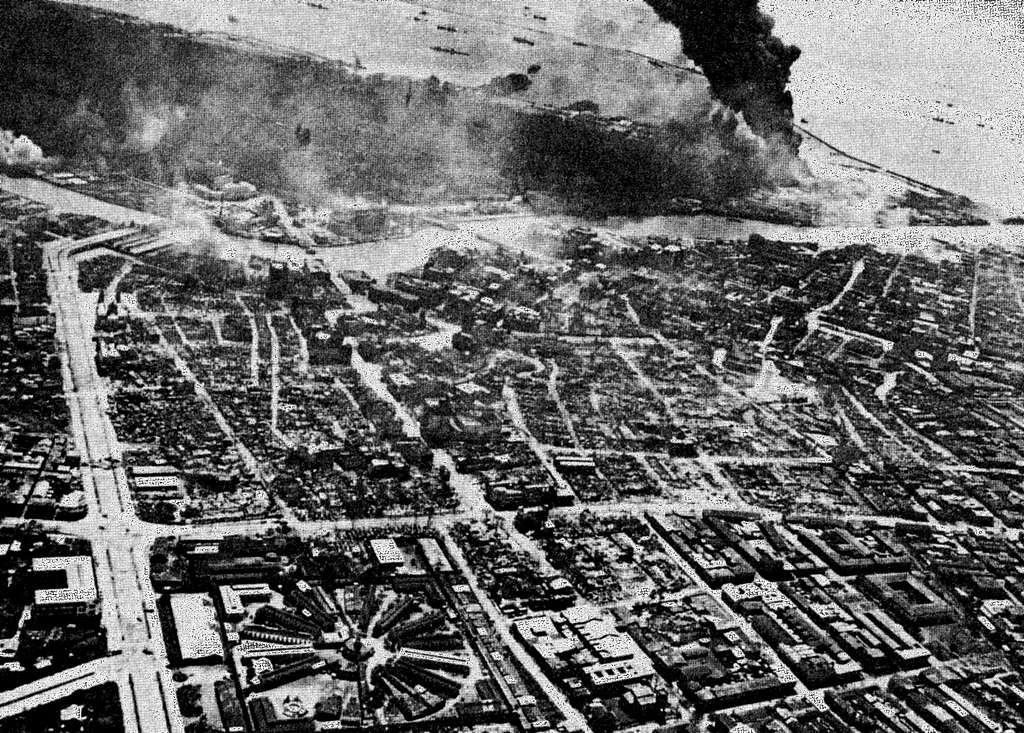
Over a thousand tons of artillery wiped off Manila. Over a hundred thousand innocent civilians died. Hospitals, government buildings, museums, churches, houses—nothing mattered but the military victory.
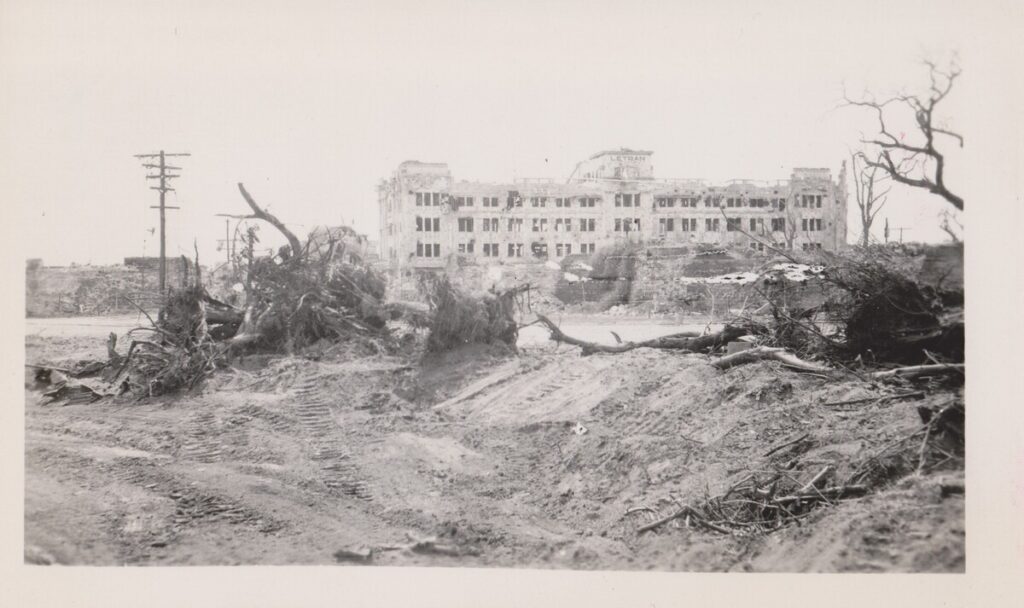
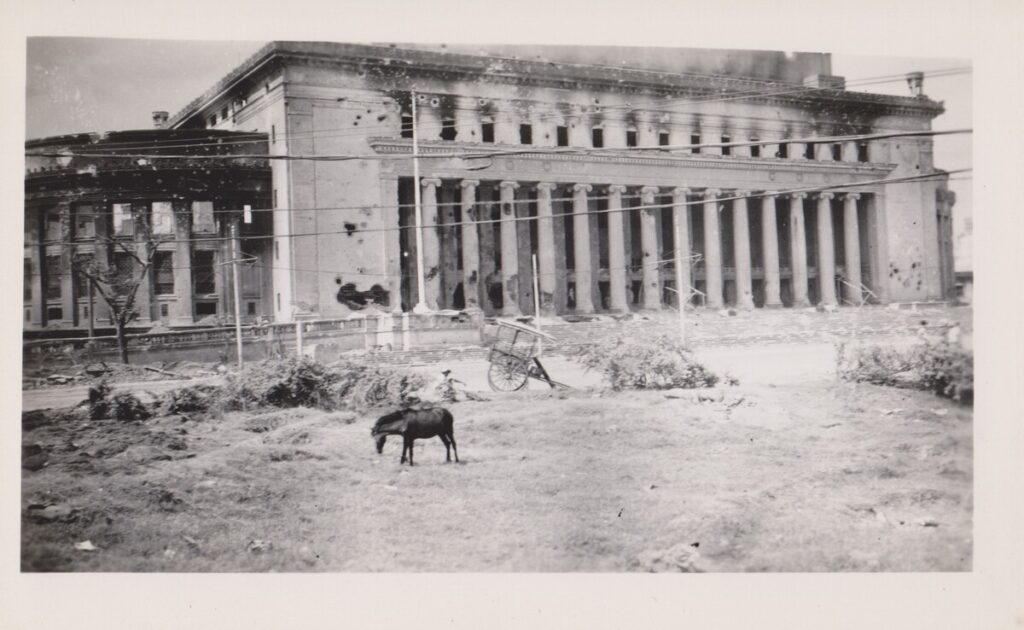
What was once the Pearl of the Orient became a lackluster nacre.
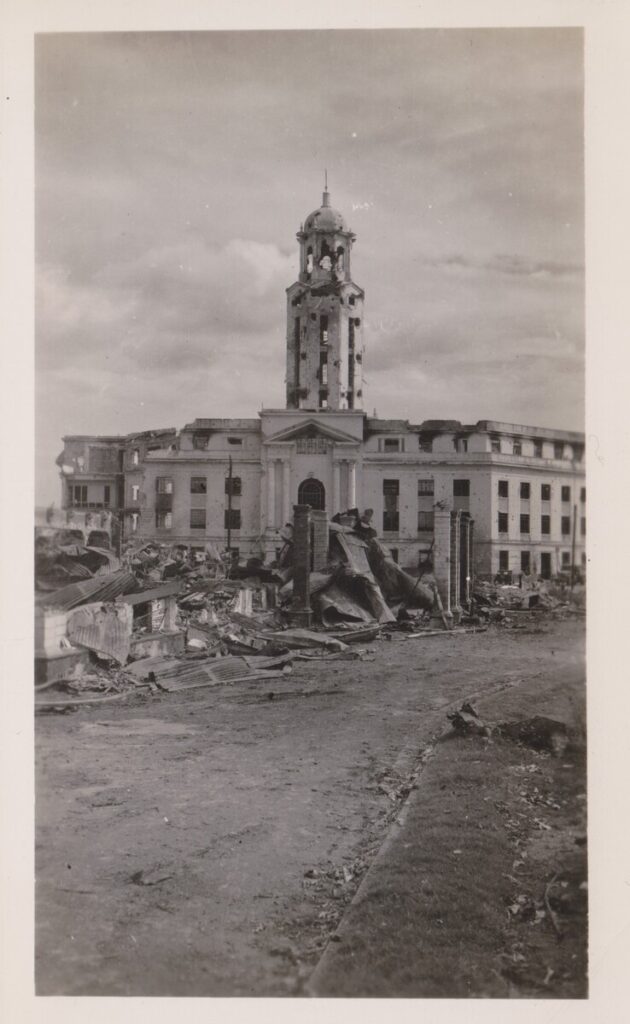
The Battle of Manila decimated an incalculable amount of cultural heritage hailing from this side of the world
A country’s culture names the roots of an individual, details the soil it grew on, and extends his being beyond his birth and death. That if one were born in an unknown and foreign place, one would still bear from one’s parents the twig or root of being part of a shared human existence. That even if one’s birth is in space, one’s existence is not formed from a vacuum but as a continuation of the human story.
A survivor left without a birthright culture to grasp could wander in the densest city and still find a quarter of himself permanently unattainable, unrecoverable.
The Kyiv Pechersk Lavra, a complex older than Moscow, had seen it all. Whatever original brick or stone is left, whatever paintings or stained glass windows remain intact, were once the same as what the old kings and saints saw. The destruction and the subsequent repairs would preserve for the next generation what something once looked like, but it becomes an iteration away from what it once was.
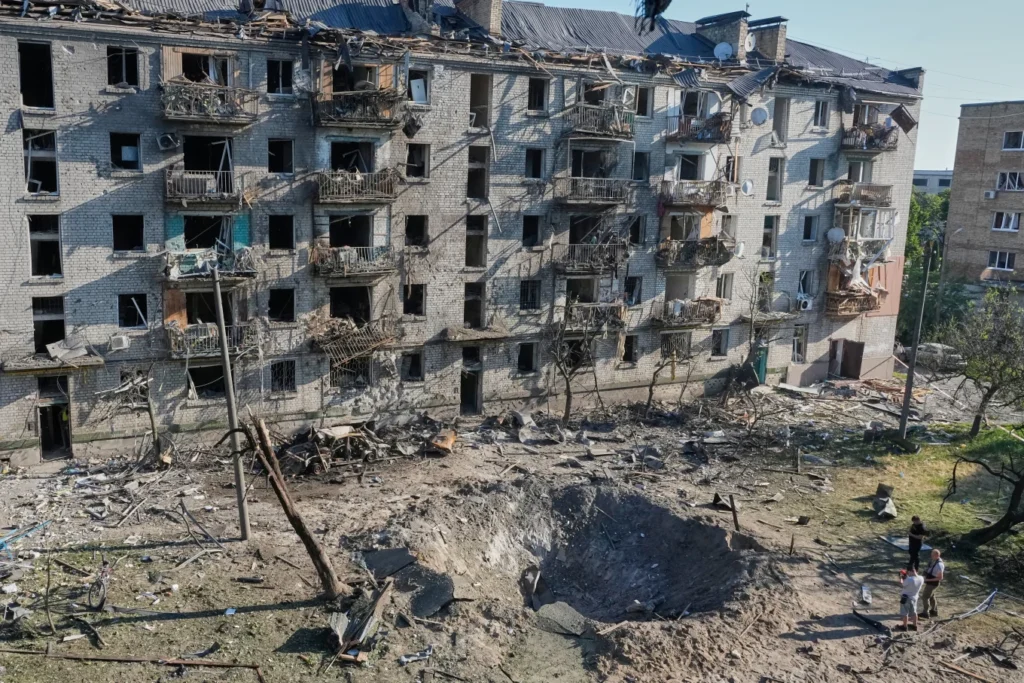
Missiles kill not only the living, but also maim the souls that once lived and the space and society they inhabited. Culture makes humanity—is humanity; history is simply telling it chronologically and contextually.
Perhaps that is why invasions have the incessant need to disregard cultures. Culture requires a semblance of order and civility to survive; war can only proceed in the opposite direction.
Perhaps that is why: because culture requires humanity, and invasions require inhumanity.
As the Ukrainian National Committee of ICOMOS wrote in their statement, the protection of cultural heritage such as the Kyiv Pechersk Lavra “is not solely Ukraine’s concern [but] a matter of shared responsibility for the international community to safeguard the cultural heritage of humanity.”

Von Zyron Alimorong
Von Zyron Alimorong is a writer and social media point person for the Philippines Graphic. He is based in Makati. His works often dissect human nature, infusing narratives with introspection and existentialist thought. He studied Literature at the University of Santo Tomas and served as a Literary writer for The Flame. He is also the rhythm guitarist for the band COALESCENCE.