

Inside the storied halls of Hospicio de San Jose (HDSJ), art is not just displayed—it is revived, reimagined, and given a second chance to be seen, felt, and understood.
A total of 102 artworks created by the Angels of Rendu, fill the exhibit space—pieces gathered from shows held between 2024 and 2025, under the auspices of the Rotary Club of Manila, last February 20-27.
Rather than keeping them in storage, organizers chose to bring them back into the light, allowing each work another opportunity to connect with an audience.
“We were thinking about giving these art pieces a second chance,” said Maribel Ardales, assistant administrator of HDSJ told this writer. “Hopefully, someone would connect to it—and maybe purchase it.”
Proceeds from the exhibit aim to sustain the institution’s art program aside from renovation of the dormitories for special needs and the art classes and classroom, —supporting materials, workshops, and exposure trips such as museum visits that expand the students’ creative horizons. But beyond funding, the exhibit reveals something more profound: art as a voice.
Since its first exhibit in 2019, the Angels of Rendu art club, has grown from 2 to 15 artists, including children from other institutions managed by the Daughters of Charity.
Art as Expression and Advocacy
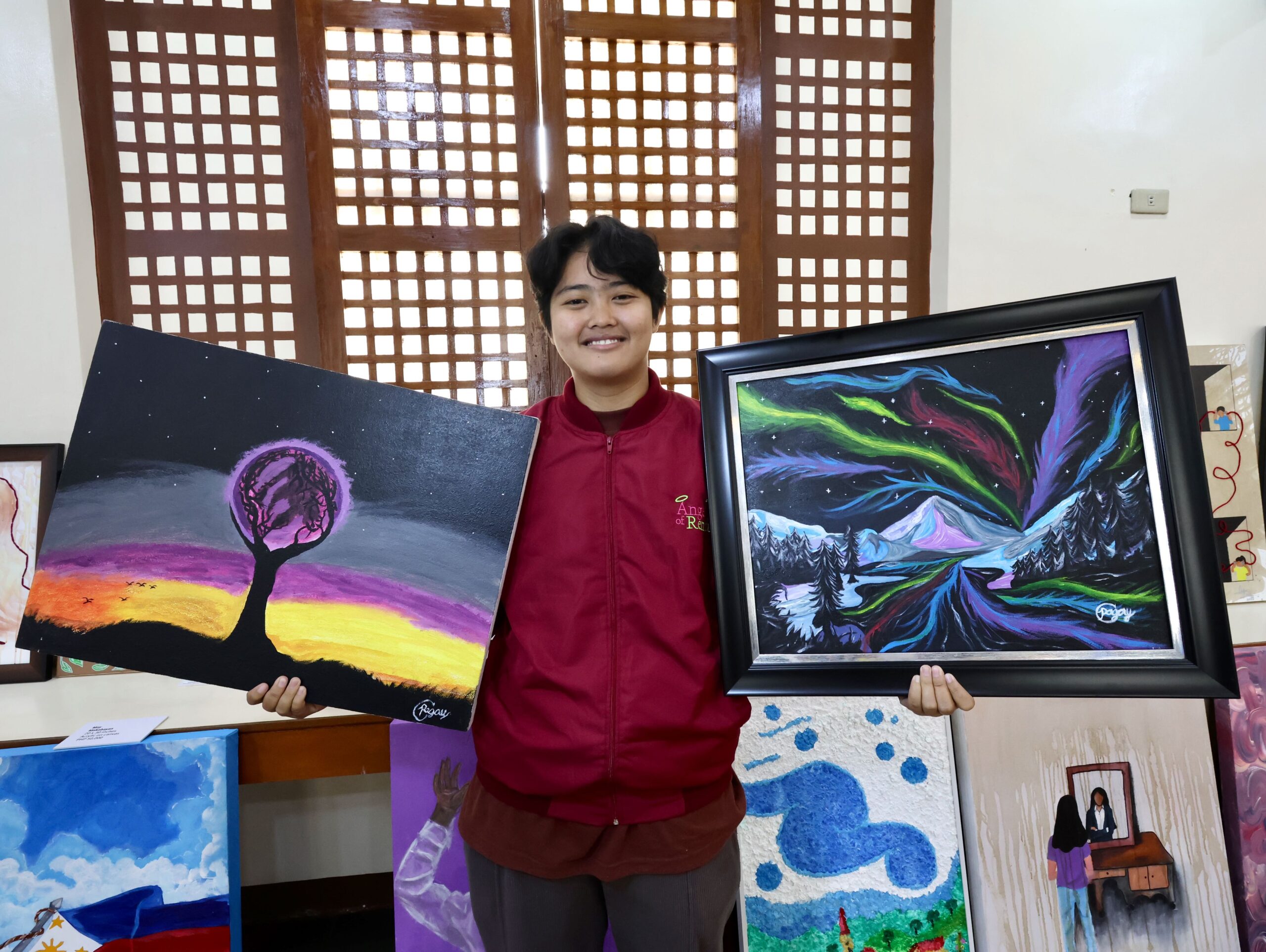
Among the artists is May, an artist-in-residence whose work The Last Tree reflects her concern for the environment. Inspired by nature and anime, her piece carries a message that is both urgent and deeply personal.
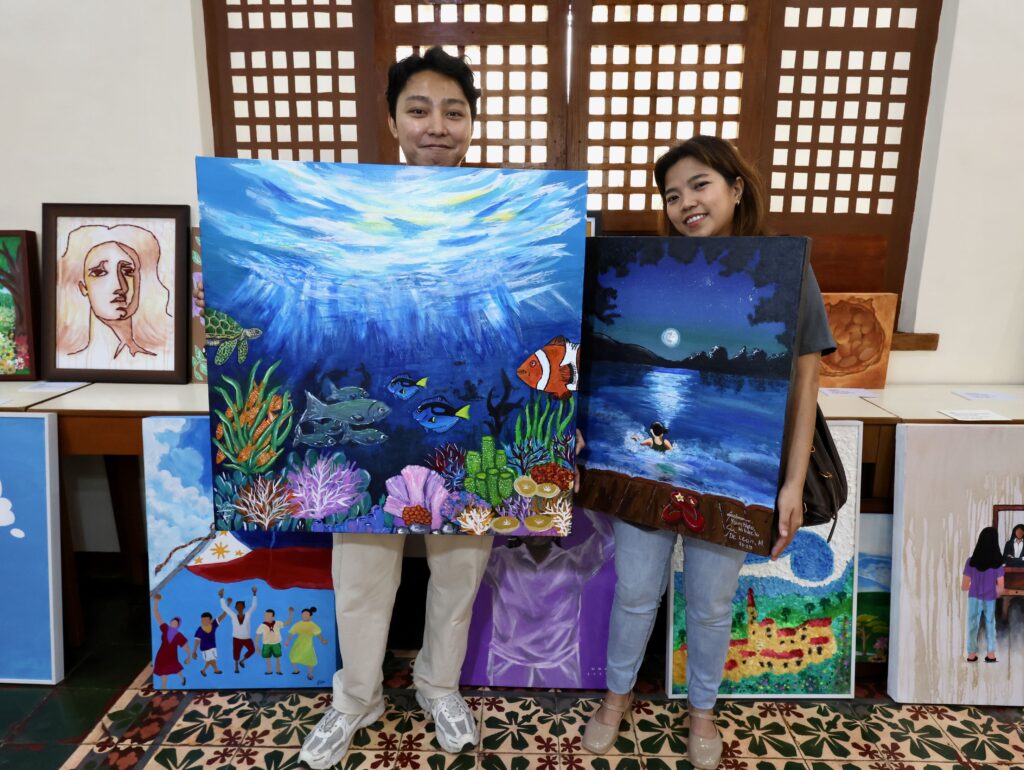
“Sunod-sunod na ang pagbaha… unti-unti nang nawawala ang at gumaganti na ang kalikasan. Paano na ang susunod na generation?,” she said.
May discovered her talent only in 2023 at the age of 18. What began as curiosity soon turned into passion, nurtured through art lessons at the Hospicio.
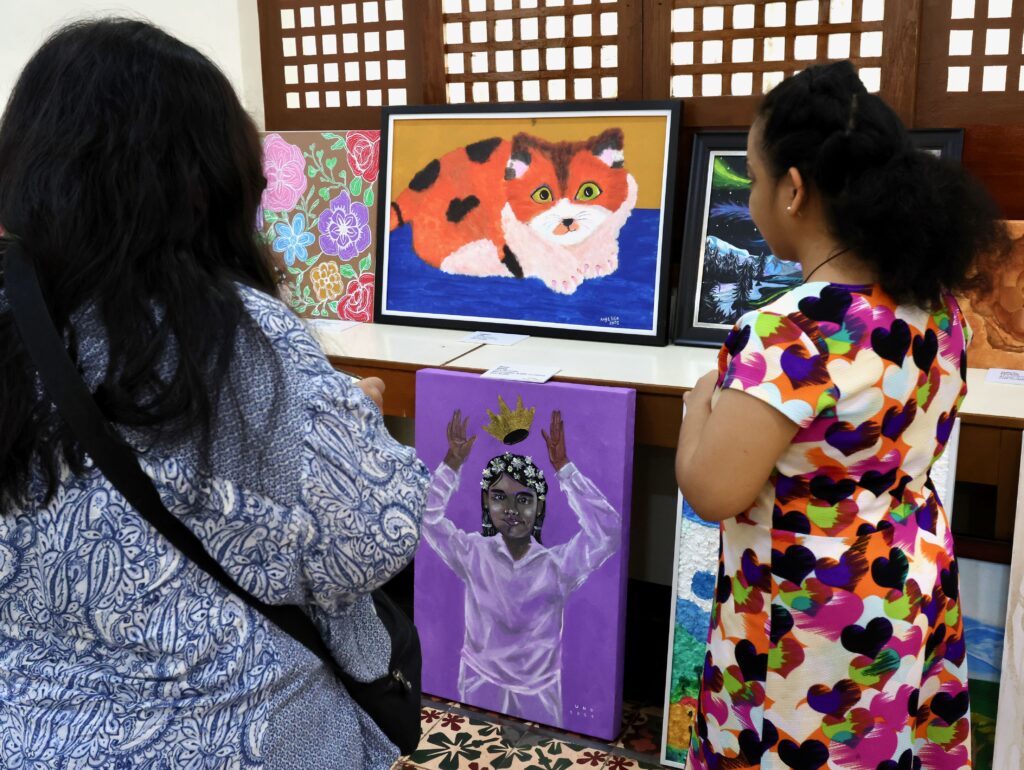
“Bigla na lang po pumasok sa isip ko… gusto ko mapuntahan yung mga lugar na ‘yon,” she shared, explaining how her dream destinations inspired her to paint landscapes she hopes one day to see in real life.
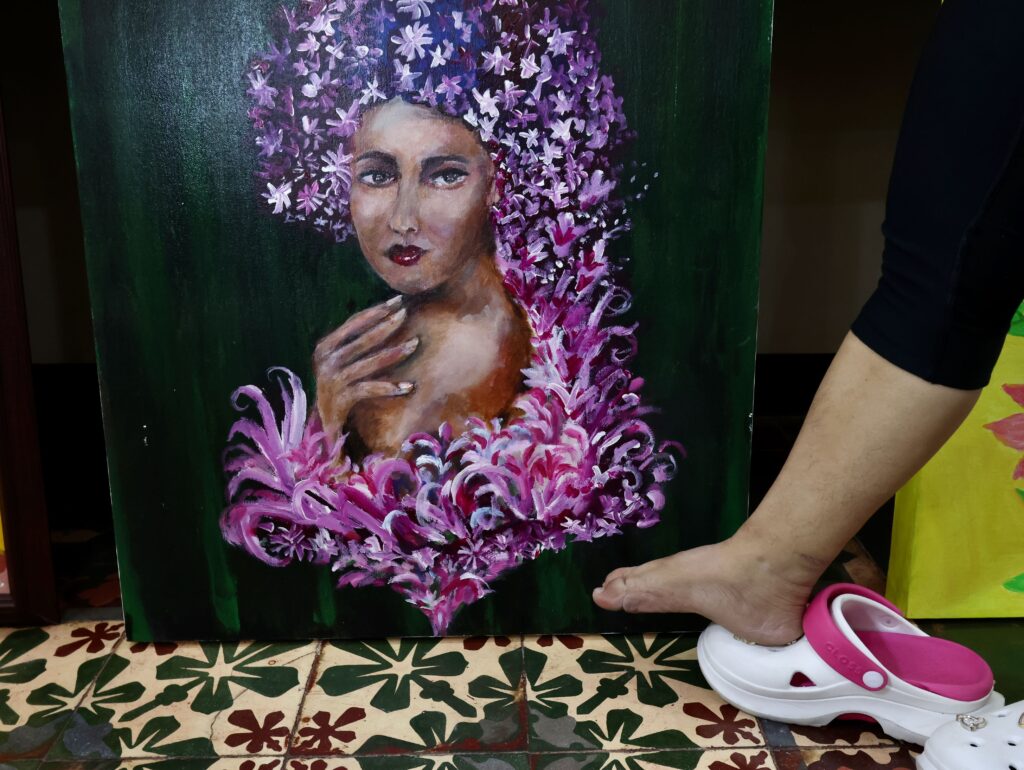
Her journey was shaped by inspiration from a fellow artist-in-residence, Angie—who paints using her feet.
Defying Limits Through Art
Angie’s story stands as one of resilience and determination. Despite her physical limitations, she has created around 300 artworks, selling most of them. She can complete a piece in as little as two days.
She began painting at just 11 years old and continues to hone her craft through weekly art sessions.
“Para sa akin, ang pagpipinta ay pagmamahal. May tiyaga… at sa basic art lessons, natutunan kong ma-express ang sarili ko nang mas maayos,” Angie said.
Her perseverance has inspired many within the community—including May, who found confidence in her own abilities through Angie’s example.
Collaboration and Creativity
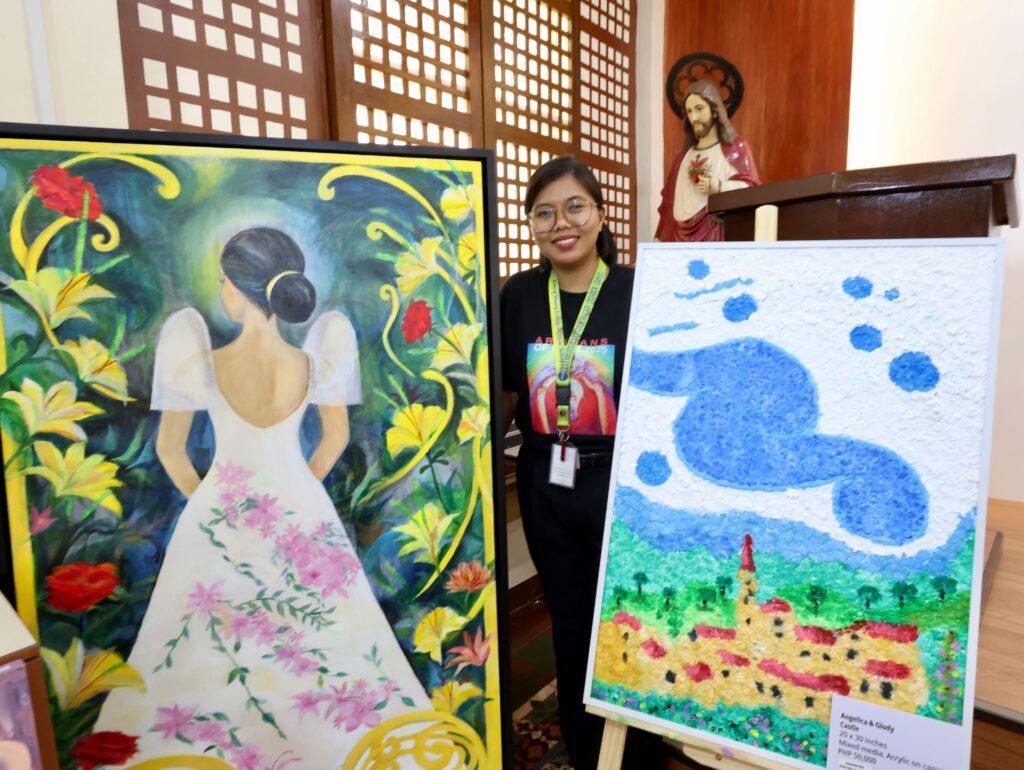
Art at the Hospicio is not always a solitary act. Collaborative works also emerge from the program, such as The Castle by Angelika and Glody.
The concept—a grand house surrounded by clouds and trees—came from Angelika’s imagination, while Glody helped bring it to life using a unique technique learned in class: painting with tissue dipped in different colors to create varied textures and hues.
The piece reflects not just creativity, but the shared learning experience fostered within the program.
Seeing Through the Eyes of the Young
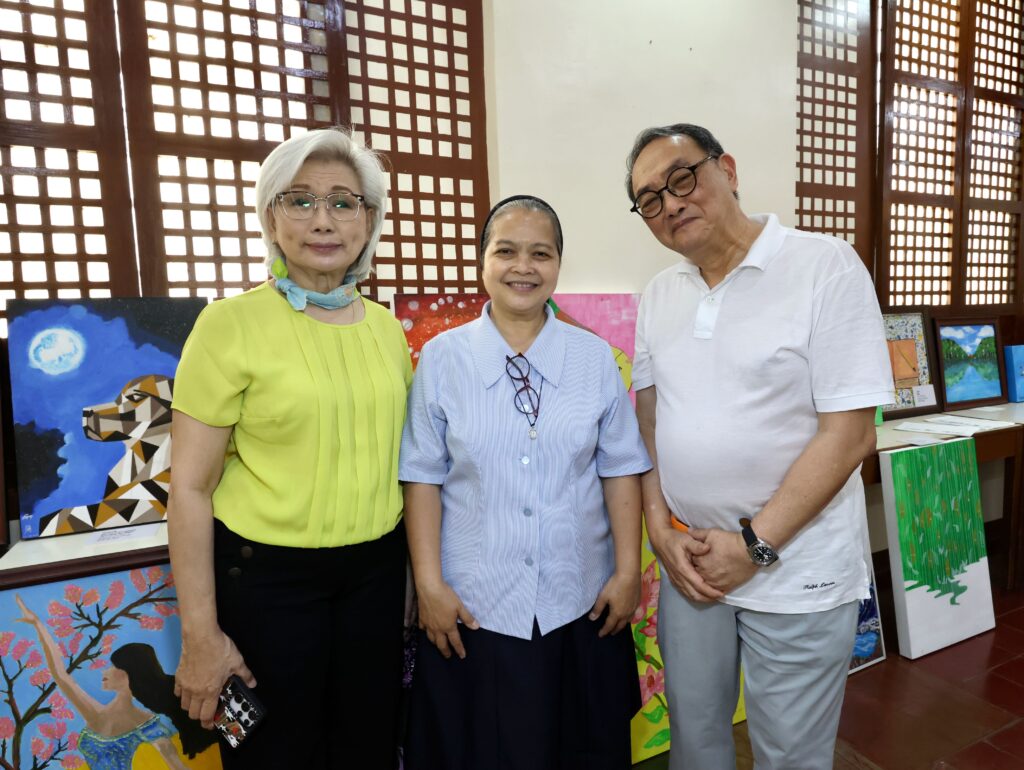
For visitors and guest artists, the exhibit offers a glimpse into the inner worlds of its young creators.
“Nakakaantig ng damdamin to see what these kids have in their hearts and minds—their desires, their emotions,” said artist-invitee Hazel Llemos. “I’m happy that they have this avenue for expression.”
Her companion, Nicole Asares, echoed the sentiment. “May kanya-kanya silang stroke… ang gagaling nila. I’m really happy for them.”
Guiding Without Limiting
Behind the program are mentors who serve not as directors, but as guides. Architects Melanie Basco and Jao Mandanas volunteered to teach the students, drawing from their own background in design and art.
“Advocacy siya—but it wasn’t really planned. Naghahanap sila ng art teacher, so we volunteered,” Basco shared.
Rather than imposing structure, they focus on helping students translate imagination into form.
“Nasa kanila ‘yung pagpipinta. Naging guide lang kami kung paano nila mailalagay sa canvas ang imagination at inspiration nila,” she added.
Sustaining Art, Sustaining Stories
The exhibit runs for a limited time, but its purpose extends far beyond a single week. Around 40 pieces are already set to travel for another exhibit at LRI Design Plaza this coming June, continuing the journey of these artworks.
For those that remain unsold, the story does not end.
“We don’t want to waste any canvas,” said Maribel Ardales, assistant administrator. “We either display it, sell it, or repurpose it—paint over it, create something new.”
In this way, sustainability becomes both a practice and a philosophy—ensuring that no piece of art, like no voice, is ever truly discarded.
At Hospicio de San Jose run by a well loved Administrator Sr. Martha A. Gamble, DC, every brushstroke carries a meaning. It is raising HeArts, turning struggles to strengths, ideas to arts.
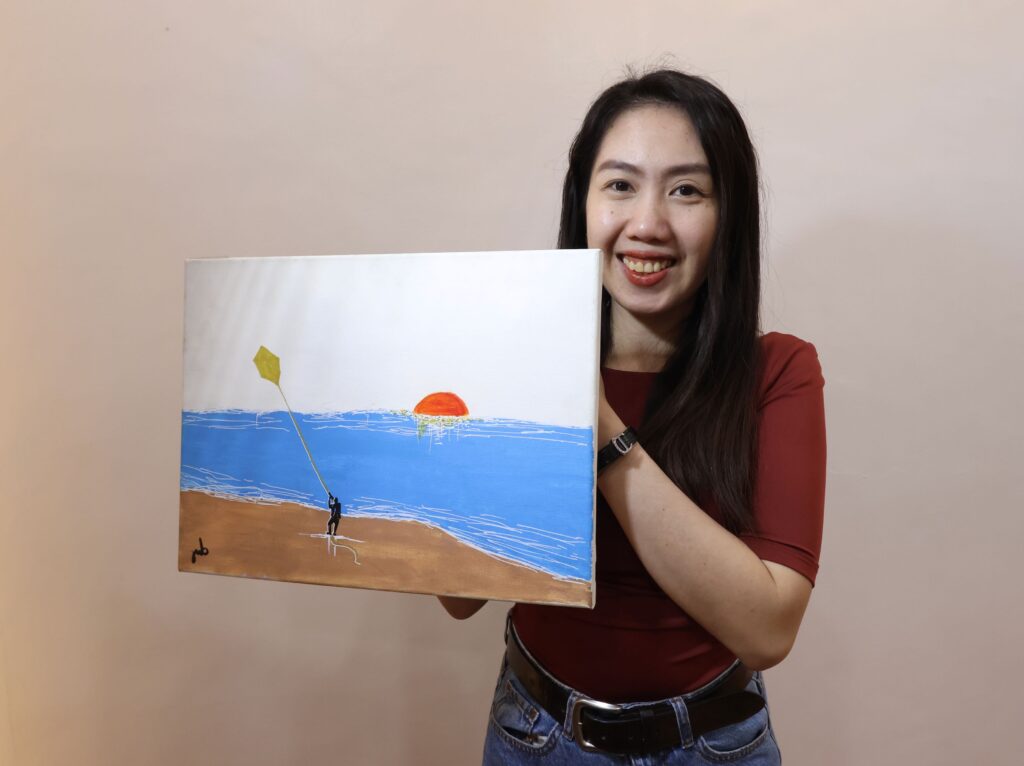
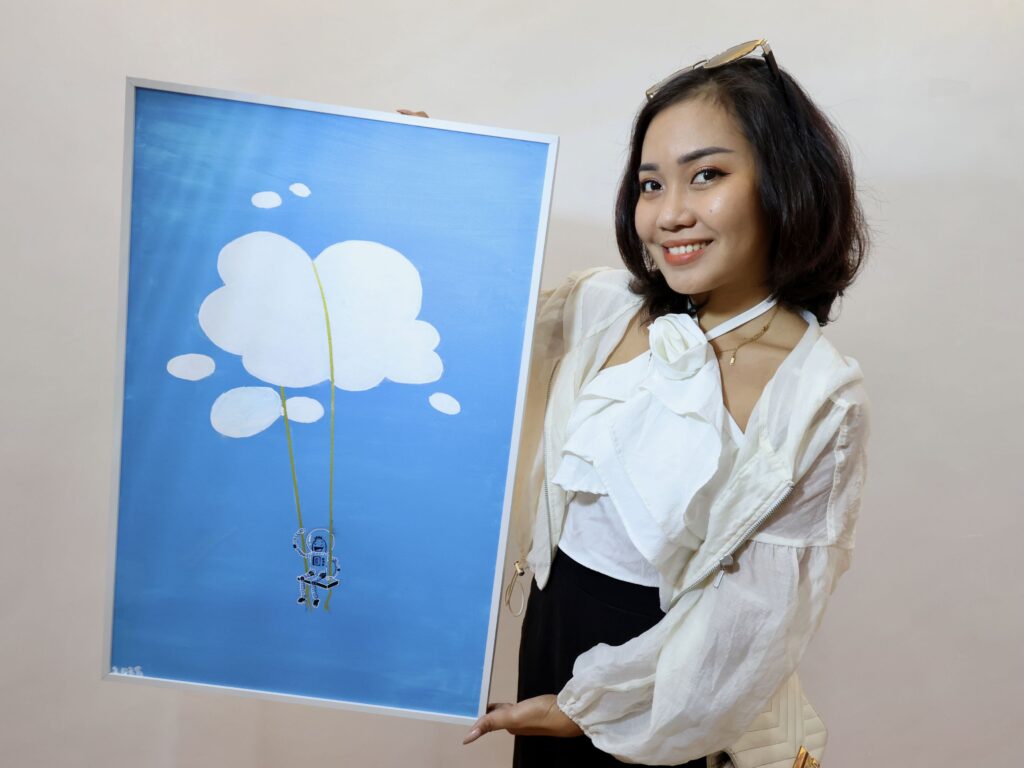
Whether painted, repurposed, or shared, each artwork stands as a testament to resilience, creativity, and the enduring human need to express, connect, and be seen.
This is the Hospicio way. — Bernard Testa

Bernard Testa photographs human triumphs, evoking emotions of struggles between the good, the bad and the ugly. He was a former president of the Press Photographer of the Philippines. Before joining BusinessMirror and Philippines Graphic magazine, he was the photographer of the now defunct InterAksyon.com

, art is not just displayed—it is revived, reimagined, and given a second chance to be seen, felt, and understood.)