
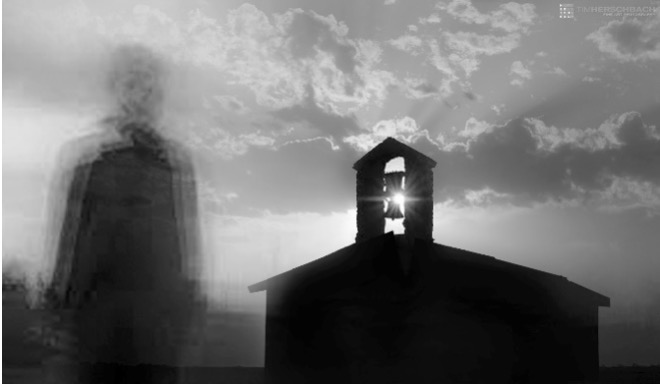
The church stood alone and abandoned at the edge of the town, an old structure built with weathered stone walls darkened by years of sun, rain, and neglect with tall wooden doors that creaked when pushed open. Its stained-glass windows cast colored light across the empty pews, and a large cross hung above the altar, slightly faded but still visible. Dust settled on the floors, candles lined the altar, and silence filled the space – giving it a solemn and mysterious presence that felt both sacred and unsettling.
Ivy climbed slowly along its cracked surfaces, wrapping around broken windows and creeping through gaps in the wooden doors. The bell tower leaned slightly, as if burdened by the weight of years and silence. Once, it had been the center of gathering and hope. Now it was a shadow that people walked past with quickened steps.
For years, no one entered it.
Some villagers believed the church was sacred – blessed by prayers that had once echoed through its halls. They remembered stories from elders about weddings celebrated under its high ceilings and candles lighting the altar during difficult times. Others, however, whispered that something had changed within its walls. They spoke quietly about strange sounds heard at night and cold drafts that passed through even when the doors were sealed.
Over time, fear replaced memory.
After years of silence, unusual situations began happening around the village. Unexplained illnesses spread through the village. Children woke from nightmares crying, unable to explain what they had seen in their sleep. Others noticed sudden changes in their daily lives – livestock acting strangely, pets disappearing for days before returning, objects inside homes were found moved from where they had been left and small incidents that created fear and uncertainty among families.
People also felt a growing tension in the community. Misunderstandings between neighbors increased, and conflicts that were once easily resolved became harder to settle. Many believed the village lacked a strong center of unity and support.
Desperate for answers, the villagers gathered in the town square.
Someone suggested reopening the old church.
“If it is holy,” they said, “then prayer will protect us.”
“If it is cursed,” another replied, “perhaps we must face it together.”
Hope – mixed with fear – led them to the heavy wooden doors. When they pushed them open for the first time in years, dust rose into the light like a silent cloud. The air inside was cold and still. Sunlight filtered through broken stained-glass windows, casting fractured colors across the cracked floor. The altar stood untouched, covered in dust but still upright, as if waiting.
They cleaned the pews and repaired what they could. Candles were placed at the altar. For a moment, the church felt peaceful.
On the day of the first service, the church was full once again. Families filled the wooden pews, and the quiet space that had stood empty for years now echoed with soft footsteps and whispered prayers. Candles burned at the altar, their warm light casting gentle shadows across the cleaned stone floors and restored walls. The altar had been carefully prepared. Dust was wiped away, old marks were polished, and fresh flowers were placed at its center. Everything felt renewed – not perfect, but cared for with hope and intention.
The new priest stood in front, facing the gathered crowd. He looked at the people with calm compassion, aware of the fear and uncertainty that had brought them back to this place. When he spoke, his voice carried clearly through the hall.
“God sees your pain. Bring your worries here.”
His words seemed to settle over the congregation like comfort. One by one, people knelt. Some closed their eyes tightly, fighting back tears. Others bowed their heads quietly, holding the hands of loved ones.
They prayed for healing for the sick.
They prayed for protection from the unknown.
They prayed for forgiveness – for mistakes, for doubts, and for the times they had turned away from faith.
In that sacred moment, the church felt alive again – not with fear, but with shared hope and renewed belief.
Some villagers claimed that after the prayers, the nightmares became weaker. Others said the strange noises at night stopped. The missing pets were never fully explained, but no more disappeared after the church reopened. Whether the church had been holy all along or whether it had simply held the fears and hopes of the people within its walls, no one could say for certain. But standing once more at the heart of the village, the old church was no longer abandoned. It had become a place where the community gathered – not just to pray, but to remind themselves that together, they could face whatever lay beyond fear.
Days passed, but strange things began to happen during prayer services.
At first, it was subtle – a soft whisper that seemed to drift through the air when the congregation knelt in silence. Some people believed it was simply the echo of their own prayers bouncing off the high ceilings. Others turned their heads slowly, trying to trace where the sound was coming from.
But the whispers did not sound like people. They seemed to come from the walls.
As the services continued, the whispers grew clearer. What once sounded like distant echoes slowly turned into faint voices – murmuring words that no one could fully understand. The voices overlapped, rising and falling like restless thoughts trapped inside the stone structure itself.
Confused parishioners looked around, searching for anyone who might be speaking.
The priest stood at the altar and noticed the disturbance, but he did not stop. He lifted his hands higher and continued praying, his voice steady as if trying to overpower whatever others were hearing. Suddenly, the candles flickered violently, their flames bending and dancing without wind. The light in the room shifted erratically, casting moving shapes across the walls. Above the altar, the large cross tilted slightly, creaking as if something unseen had brushed against it.
A woman in the front row screamed. Her hands trembled as she pointed toward the space behind the priest.
She claimed she saw shadows standing there.
Not one shadow.
Many.
They were tall and distorted, stretching across the wall and moving even when no one in the room did. Some appeared human in shape, while others seemed twisted and uneven – shifting as if they were alive.
The congregation gasped and stepped back in fear.
The priest paused for a brief moment, sensing the tension in the air. For the first time, doubt flickered across his face – not panic, but awareness that something was happening beyond explanation.
Yet he remained still.
He lowered his head and began praying again, his voice now louder and more urgent, as if confronting the unseen presence directly.
The shadows lingered.
Watching…
Waiting…
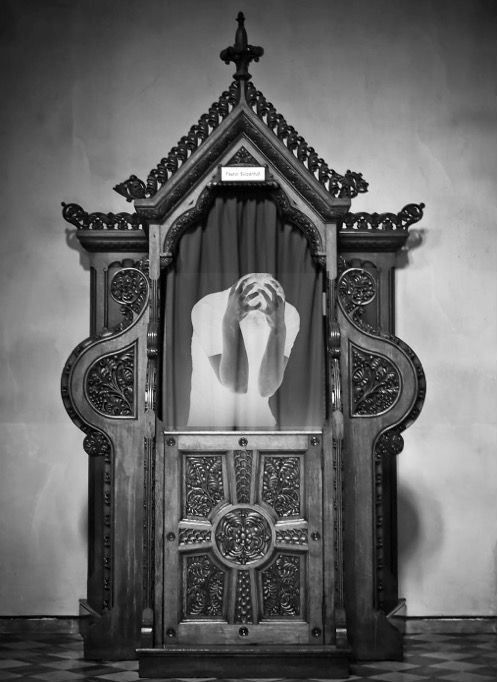
Another odd thing happened during confession.
They entered the booth one by one, closing the small wooden door behind them. Inside, the space was dim and silent – divided by a thin screen that separated the penitent from the priest.
Minutes later, each person would step out. But when they emerged, their faces were pale.
Some avoided eye contact. Others walked past the crowd quickly, their hands trembling. A few wiped tears from their cheeks but refused to explain what had been said.
Whispers spread through the hallway. What had happened inside?
One man, shaken and unable to hold his silence any longer, finally spoke in a low voice. “The priest didn’t ask about my sins,” he said. “He told me mine.”
The words unsettled everyone who heard them.
Inside the confession booth, something unusual had occurred.
Instead of waiting for the person to speak, the priest began first. He described actions no one had ever confessed aloud – hidden mistakes, private regrets, thoughts buried deep in shame. He spoke of secrets so personal that only the individual concerned could recognize them as true.
His knowledge was not vague. It was precise. He named moments. He described memories. He spoke of guilt that people had locked away and convinced themselves no one else could see.
“How do you know that?” one frightened parishioner had asked from behind the screen.
The priest had remained silent for a moment. Then he smiled.
“I hear what the church hears.”
“And the church remembers everything.”
His answer did not clarify anything – it only deepened the fear.
Some believed he was gifted with divine insight. Others began to suspect something far stranger. If he truly heard the secrets of those who entered, then perhaps the walls themselves carried those confessions. Perhaps the church absorbed every whispered regret and revealed it to him. Or perhaps the knowledge did not come from God at all.
As more people left the booth shaken and silent, doubt began to grow within the congregation.
The church that had once been a place of comfort was slowly turning into something else – a place where hidden truths were no longer safe. And whatever power allowed the priest to know those secrets was only becoming stronger.
The doubts in the congregation grew heavier with each passing day.
Whispers spread that the priest was not simply guided by faith – that something else allowed him to know the deepest secrets of those who confessed. Fear replaced trust. Curiosity slowly turned into suspicion.
They did not want rumors.
They wanted answers.
Determined to understand the growing mysteries, the villagers began investigating the priest’s past. They searched church records, diocesan archives, and nearby parishes for proof of his identity.
But they found nothing.
There were no seminary documents under his name, no ordination certificate, no baptism record, and no official assignment from any church authority. It was as if he had never existed before the day he arrived in their village.
The revelation unsettled everyone.
How could a man who claimed sacred authority leave behind no trace of training or history? Questions turned into suspicion. Armed with doubt and fear, the villagers decided to confront him directly.
They walked toward the church together, ready to demand answers. When they pushed open the heavy wooden doors and stepped inside, the church was silent.
The altar stood untouched.
The candles that once burned during prayer were now unlit, their wicks cold. The space that had recently echoed with whispers and unsettling confessions felt strangely empty – heavier in its silence than when voices filled it.
They searched the pews, the confession booth, and the back rooms.
They called out for the priest.
No response came.
There were no signs of struggle, no belongings left behind, no indication of where he had gone.
It was as if he had simply vanished.
Some villagers noticed something else – the shadows on the walls were normal again. They no longer stretched or moved unnaturally. The cold presence that had once lingered near the altar seemed to have withdrawn completely.
Others felt a deeper fear.
If the priest had truly been bound to the church, then his disappearance did not mean freedom. It meant the connection had been severed – or transferred.
The church stood quiet, but not empty.
Then they heard it.
A voice echoed through the church, clear and steady, filling every corner of the church. It came from the speaker system – yet the villagers froze in confusion. The church had never installed speakers. There were no visible devices on the walls, no wires running through the ceilings, no equipment that could explain where the sound was coming from.
The voice spoke again.
“You asked for forgiveness.”
“You asked for answers.”
“I gave them.”
The words vibrated through the floor and echoed off the stone walls as if the building itself was speaking.
Before anyone could react, the heavy church doors suddenly slammed shut on their own. The sound echoed like a final warning, trapping everyone inside. The windows darkened instantly. The stained glass did not simply lose light – it transformed into reflective surfaces, turning into mirrors that surrounded the congregation.
Fear spread quickly. Some people ran toward the doors and pushed against them, desperate to escape. Others turned slowly toward the windows – and what they saw made their breath catch in their throats.
In the reflections, they saw themselves. But not as they stood in the pews.
They saw themselves standing at the altar, wearing priest robes, holding the cross, and speaking confidently to empty seats as if they were delivering sermons. The mirrored figures moved even when they did not. They raised their hands. They turned their heads. They continued speaking words of guidance and confession, acting as though they were the true priests of the church.
The realization hit them slowly: the priest was not the source of the knowledge – the church itself was.
The priest they had feared. The shadows that followed him. The knowledge of their hidden sins. The revelations during confession.
It had never come from a human being.
The priest had not been a man. The church had never required one.
All of it came from the ancient spirit that had awakened within the sacred structure.
It had been observing.
Listening…
Adapting…
It reacted to whoever stepped inside its walls, shaping itself into the form they expected – a spiritual authority that could hear confessions and reveal truth.
When they sought a priest, it became one.
When they demanded answers, it answered.
When they feared judgment, it reflected their guilt back at them.
The power had not belonged to an individual. It belonged to the structure that absorbed their prayers, their emotions, and their beliefs – transforming them into a presence that felt real.
The voice echoed one final time through the silent sanctuary.
“You created me…”
“When the church was abandoned, it did not become empty. I became aware.”
Then the reflections slowly faded. The doors unlocked. The darkened windows returned to ordinary glass.
The people stood in stunned silence, breathing heavily, unsure whether what they had experienced was divine, supernatural, or born from their own faith turned into something alive.
They walked out of the church changed.
And behind them, the building stood quiet once more – waiting.
Waiting for the next ones who would enter.
And ask.
The town realized the truth – but it was already too late.
They understood that the church did not truly belong to God nor did it belong to any force of evil. It was not controlled by a single priest, nor by shadows lurking within its walls.
It reflected the intentions of the people who entered. The church responded to belief.
If someone stepped inside with faith, it became a sacred place of comfort and reassurance.
If someone entered with fear, it transformed into something frightening and unsettling.
If someone carried guilt within their heart, the walls revealed their hidden sins, turning their thoughts into visible judgment.
It did not create meaning on its own. It mirrored what already lived inside those who sought it.
That night, standing outside the silent church, the villagers finally understood.
The whispers, the shadows, the voice from the unseen speaker – none of it had existed independently of them. The presence they had feared was not trapped inside the church.
It had been awakened by their doubts. Shaped by their expectations. Given form by their own beliefs.
The realization settled heavily in their minds.
The monster was not inside the church.
It was inside them.
And as long as they carried fear, guilt, and uncertainty – the church would continue to reflect them back.
Frances Michelle Soliven Pera
Frances Michelle Soliven Pera, 39, is a registered nurse with a passion for providing quality patient care. She enjoys writing as a hobby, and is dedicated to continuous learning and professional growth in both healthcare and writing