

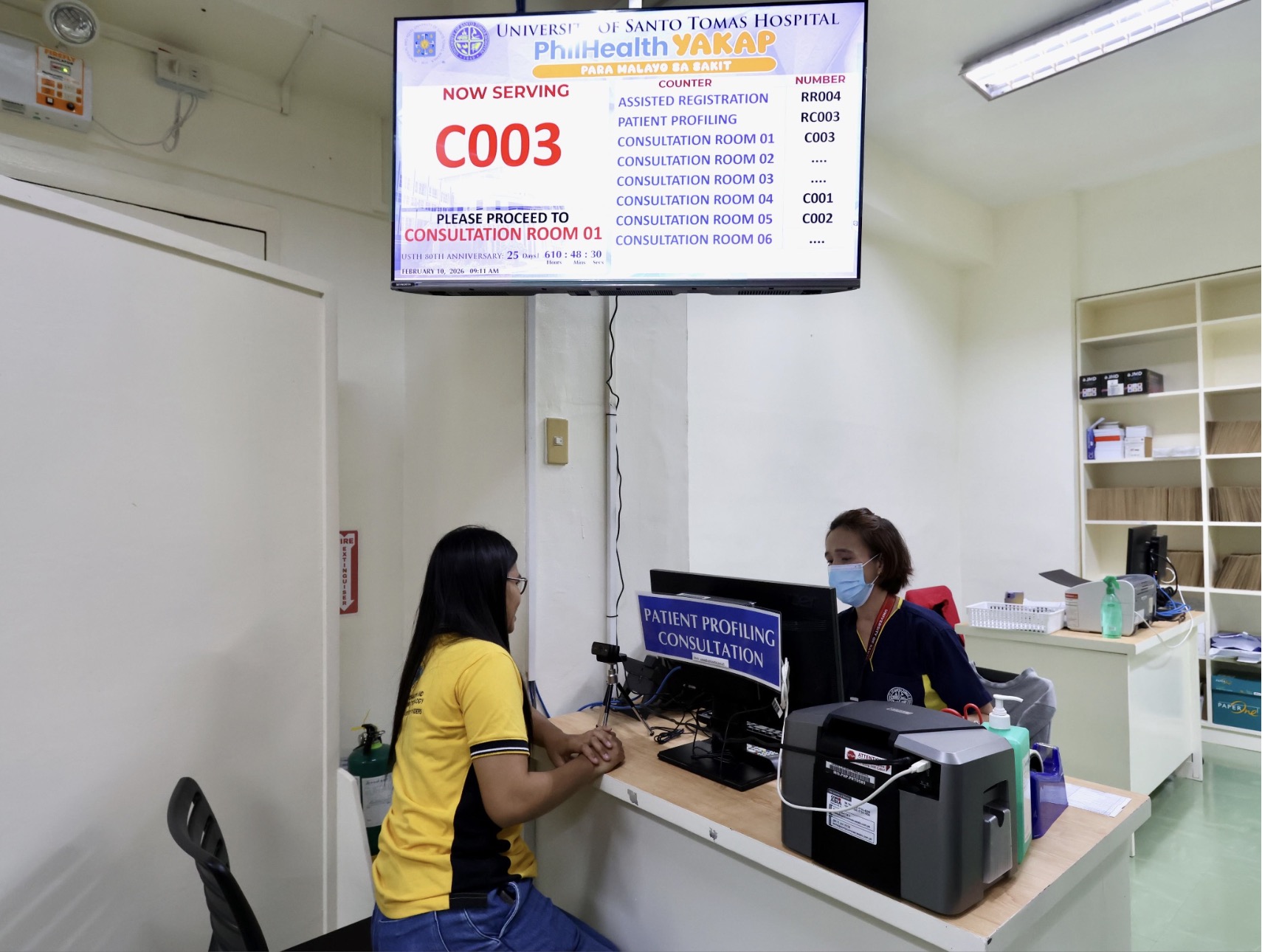
From clinics to pharmacies, YAKAP reshapes how care is delivered—closing gaps, restoring trust, and making prevention part of everyday life.
By the time PhilHealth began speaking more openly about prevention, much of the groundwork had already been laid. Institutional discipline had been tightened. Provider relationships had begun to stabilize.
Internally, the organization began to see itself not merely as a payer of claims, but as a system actor shaping how care is sought and delivered. What followed was the translation of that intent into a concrete program. Rather than relying on broad policy shifts alone, PhilHealth moved to embed prevention directly into the everyday experience of care—through a structured, provider-based pathway designed to encourage early engagement and continuity.
That pathway took shape through YAKAP.
WELLNESS AS A FORM OF WEALTH
From the patient’s point of view, YAKAP is designed to be clear, predictable, and easy to navigate—qualities that have often been missing from health care encounters. The program begins not with treatment, but with a defined process.
The first step is registration and identity verification. For PhilHealth, this is more than an administrative requirement—it establishes both access and integrity, ensuring that benefits are properly assigned, and that patient records are accurate from the outset.
Once registered through the eGov app or official PhilHealth channels, a member selects a YAKAP provider, either near their place of residence or workplace—an intentional design meant to reduce distance as a barrier to care.
After choosing a provider, the member receives an email confirming that the assignment has been completed. The provider is likewise notified and given the member’s contact details. From there, the provider reaches out to schedule what is called the first patient encounter.
That first encounter marks a critical shift. Under YAKAP, it is known as “empanelment”—the point at which an explicit patient-provider relationship is formed. It is no longer a one-off consultation, but the beginning of an ongoing relationship of care.
“And to ensure that you understand your empanelment, we have what we call the YAKAP Empanelment Slip that contains all the benefits and rights of the patient,” Dr. Mercado detailed. “That slip tells you that you are entitled to unlimited consultations, unlimited laboratories, and 21 medicines that you should be getting from them.”
By spelling out entitlements at the beginning of the process, YAKAP seeks to remove uncertainty that often discourages patients from seeking preventive care. When people know what they are entitled to—and what they will not have to pay for—they are more likely to engage early and consistently.
The PhilHealth chief explained that members who enroll with government providers do not need to shell out any additional amount. The ₱1,700 per member annual rate was derived through a detailed costing process that considered manpower, medicines, laboratory tests, and utilization patterns across the population.
“It was based on the cost of the provider’s inputs: manpower, medicines, laboratory tests, and then costing it out based on prevalence rates—meaning what percentage of the total population actually consumes these services,” he said.
For private sector providers, PhilHealth recognized a different reality. Without subsidies from the national government or local budgets, private clinics face higher operating costs. To address this, PhilHealth allows private providers to charge an additional ₱900 per year.
“That ₱900 gives you unlimited access to 21 medicines that are part of the capitation,” Dr. Mercado explained.
He stressed that PhilHealth shoulders the cost of medicines and cancer screening under YAKAP. Medicines are covered up to ₱20,000 per year, while cancer screening coverage depends on the member’s clinical indications. This design reflects the program’s preventive intent: to address conditions early, before they escalate into more complex and costly interventions.
YAKAP also builds in flexibility. Members who are not satisfied with their provider may transfer during the last quarter of the year—October, November, and December—known as the open enrollment period. By that time, the provider has already been prepaid for the year, as the first patient encounter or FPE serves as the trigger for PhilHealth payment.
“To transfer to another provider, you will have to go to a Local Health Insurance Office or LHIO to fill out a transfer form,” Dr. Mercado said. “However, if you did not undergo your FPE, you can transfer anytime to another YAKAP provider.”
This structure reinforces accountability on both sides. Providers are incentivized to build and maintain relationships, while patients are encouraged to stay engaged once care has begun.
“The idea is to move away from fragmented encounters toward continuity,” Dr. Mercado said. “YAKAP is meant to make the health journey easier to navigate, so patients are not moving blindly from one facility to another. Instead, there is a clear entry point and a clear relationship with a provider who is responsible for guiding care.”
The head of PhilHealth has been clear that prevention does not produce dramatic results overnight. The real impact of YAKAP, he said, will become evident over three to five years. Still, the logic behind the program is sound and well-established.
“When patients consult earlier, conditions are detected before they become severe,” he said. “That reduces the need for hospitalization and lowers the overall cost for families and for the system. It also improves outcomes. Treating illness early is almost always less expensive and less disruptive than treating it late.”
From a system perspective, prevention also strengthens sustainability. Earlier intervention allows resources to be allocated more efficiently and eases pressure on hospitals, which are often overwhelmed by cases that could have been managed at the primary-care level.
In this sense, YAKAP is designed to intervene upstream—where care is simpler, less costly, and more effective.
One of the most prominent features of the program is the inclusion of cancer screening. PhilHealth’s rationale is straightforward: when cancer is detected late, treatment becomes more invasive, more expensive, and more disruptive to a person’s life.
“Early detection changes everything,” Dr. Mercado said. “It improves survival rates, reduces the intensity of treatment, and lowers the total cost of care. But beyond the medical and financial aspects, there is also the issue of productivity and quality of life.”
“When cancer is detected early,” he added, “people are more likely to continue working, supporting their families, and contributing to society.”
That said, cancer screening under YAKAP is both a health and socioeconomic intervention. It preserves productive years, protects household stability, and reduces long-term strain on both families and the healthcare system.
Taken together, these design choices reflect how PhilHealth is translating prevention from policy into practice—embedding it into the everyday experience of care, and reframing wellness as a form of shared and sustained wealth.
A WARMER EMBRACE

For YAKAP to work as intended, PhilHealth recognized early on that prevention could not be sustained through one-off encounters. It required continuity—care that does not end after a single consultation, and systems that support patients and providers over time. This is where the concept of “liveness” becomes central.
Under YAKAP, liveness carries two related meanings: The first is identity verification, which helps prevent abuse and ensures that benefits reach the right people. The second—and more consequential—refers to continuity of care. It ensures that engagement with the health system continues beyond the initial visit.
“We are working toward systems where medical records follow the patient—not the other way around,” Dr. Mercado explained. “Electronic medical records and a national health repository are essential to this. When providers have access to accurate patient information, care becomes safer and more coordinated.”
This emphasis reflects a shift away from episodic care into a more connected health journey. When medical histories are accessible and up to date, providers are better equipped to manage risks, avoid duplication, and make informed decisions.
For patients, this continuity reduces confusion and the sense of starting over with each new consultation.
PhilHealth is also strengthening referral pathways to ensure that care progresses logically—from primary care to secondary, and when necessary, to tertiary levels. Under YAKAP, referrals are designed as part of a guided process that keeps patients within the system rather than leaving them to navigate it on their own.
“This is where patient navigators come in,” Dr. Mercado explained. “They help ensure that individuals do not fall through the cracks. Continuity is critical to prevention. If patients drop out of care after diagnosis, the benefits of early detection are lost.”
For providers, this approach clarifies roles and responsibilities. Primary care facilities are positioned as the first point of contact and ongoing managers of patient care, while higher-level facilities handle more complex cases through structured referrals. The result is a more coherent system that supports prevention rather than reacting to crises.
Trust between PhilHealth and providers remains a decisive factor in making this work. YAKAP, Dr. Mercado has said, cannot succeed without provider participation and confidence. Clinics and pharmacies are not merely implementers of policy; they are partners whose cooperation determines whether patients remain engaged.
“That is why we focus on both incentives and discipline,” he said. “We have clear rules, including a three-strike policy for violations, but we also recognize and support providers who consistently comply and perform well.”
For trusted providers, PhilHealth offers so-called green lanes—streamlined processes that reduce friction and speed up transactions. These mechanisms are not about special treatment, but about predictability.
“Predictability is important,” Dr. Mercado said. “When providers know that payments are timely and rules are applied fairly, they can plan better and focus more on patient care.”
Over time, he added, this predictability fosters cooperation. When PhilHealth is seen as reasonable and reliable, trust improves, and the benefits of that trust flow directly to patients—through smoother service delivery, better follow-through, and more attentive care.
As of now, more than 4,000 clinics nationwide are participating in the YAKAP program. Scaling to this level has required constant adjustment. One of the earliest lessons from YAKAP’s rollout, Dr. Mercado noted, is that systems must be capable of evolving.
The medicines platform alone has gone through 18 iterations. Each version reflected lessons learned from implementation—what worked, what caused delays, and where safeguards needed to be strengthened. For PhilHealth, this iterative process signals responsiveness.
Readiness, he emphasized, matters as much as ambition. Before expanding YAKAP further, PhilHealth assesses information technology capability, compliance with electronic medical records, and provider training. Additional field personnel have been deployed to support implementation and monitoring, while partnerships with professional associations have been strengthened through formal agreements.
Pilot sites play a critical role in this process. Rather than rushing nationwide implementation, the state insurer has treated early sites as learning laboratories—spaces where weaknesses can be identified, processes adjusted, and safeguards against abuse reinforced.
“These lessons are critical to ensuring that when YAKAP scales further, it does so in a way that is sustainable and credible,” Dr. Mercado said.
Taken together, these measures reflect a deliberate effort to bring providers closer into the reform process. YAKAP’s warmer embrace is operational. By investing in continuity, predictability, and partnership, PhilHealth seeks to ensure that prevention is supported not only by policy, but by the everyday realities of care delivery.
In this environment, providers are better positioned to do what preventive care demands: guide patients consistently, follow through on treatment, and remain engaged long after the first consultation ends. And for patients, that consistency may be the difference between a system they avoid and one they trust enough to return to—before illness becomes a crisis.

Started in 1927, the Philippines Graphic is the longest-running printed magazine of national circulation that provides relevant news and features and promotes Philippine literature.