
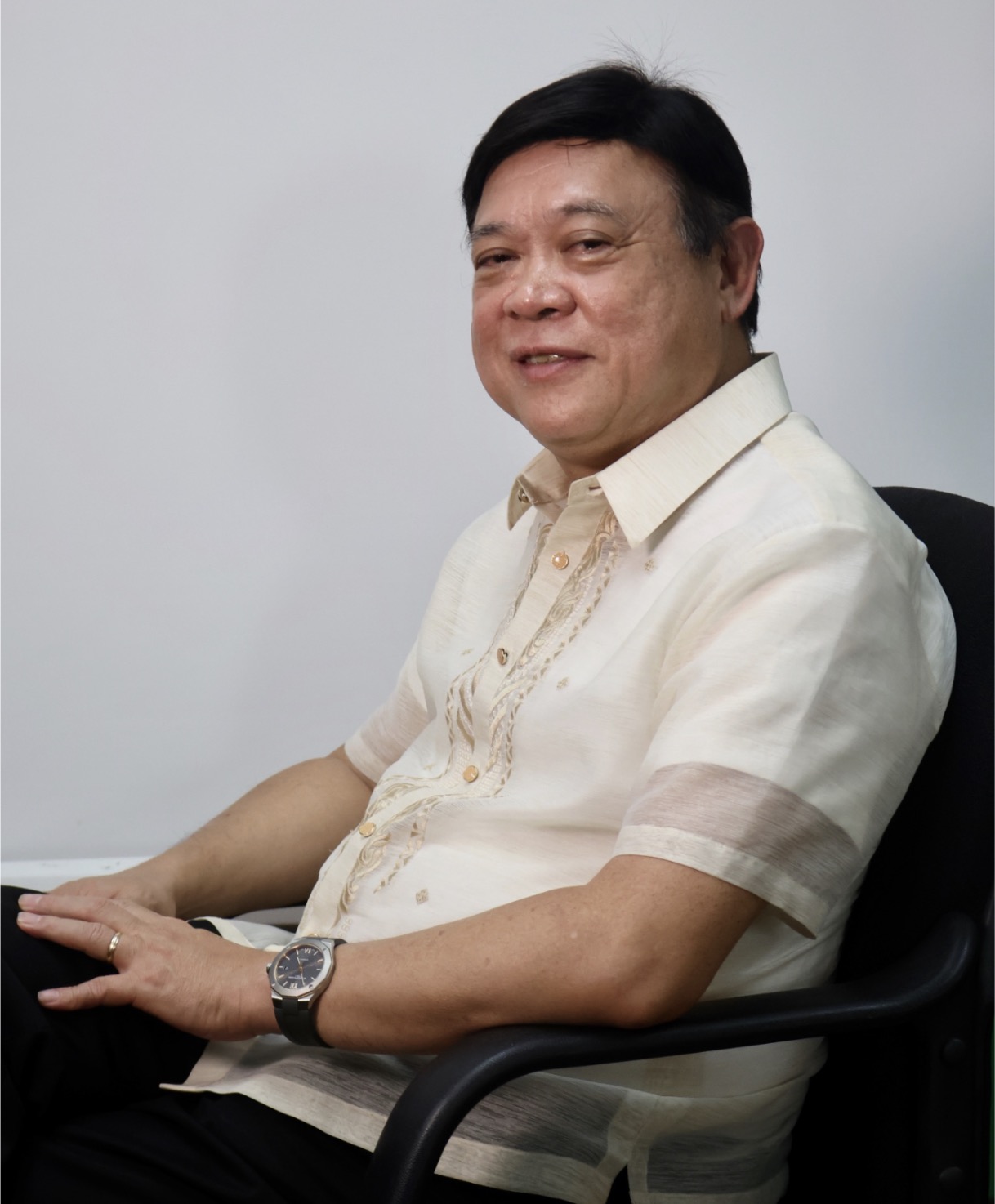
As PhilHealth recalibrates its role under UHC, its physician-leader rethinks how systems shape outcomes.
Before “yakap” ever became part of a national health lexicon, the Philippine Health Insurance Corporation (PhilHealth) was already navigating one of the most consequential inflection points in its three-decade history.
At the helm was Dr. Edwin M. Mercado—a physician whose professional path had taken him from clinical wards to the administrative frontlines of hospitals and health systems. In his first months at PhilHealth, he confronted a familiar paradox: a national insurer with a broad legislative mandate, yet widely seen as relevant only when Filipinos were sick enough to seek care.
Under Dr. Mercado’s leadership, institutional reform was not merely an operational priority; it was a philosophical pivot. Tasked with steering PhilHealth into its next chapter, he outlined a 30-month reform agenda called the “RISE 30 Mission.” Designed to strengthen institutional capacity, rebuild public trust, and improve access to services, RISE 30 served as a blueprint for modernization at a time when the institution’s credibility had been strained by past controversies and service gaps.
“When I assumed office, we already drafted a 30-month agenda,” Mercado shared in an exclusive interview with the Philippines Graphic. The objective, he said, was threefold: “to regain member trust, improve processes, and institutionalize the inherent capacity of PhilHealth. We want a fast, fair, and reliable state health insurer that truly responds to the needs of Filipinos.”
At its core, this reform was about reshaping expectations—not just about how claims were processed and paid, but how PhilHealth was perceived by its members and by providers in clinics and hospitals across the archipelago. A report from the Philippine News Agency described one early, concrete outcome of these efforts: accelerated reimbursements to partner service providers. Under RISE 30, Dr. Mercado had pledged to cut down payment turnaround times dramatically: from weeks or months to, eventually, a target of seven working days—a shift aimed at reinforcing provider confidence and operational coherence.
Yet even as institutional reforms like RISE 30 set the internal direction, a deeper, more foundational challenge lingered: how Filipinos themselves understood health and the role of a national health insurer. Across the country, decades-old habits had taken root. Health-seeking behavior tended to be reactive rather than preventive—people sought care only after symptoms became serious, rather than a part of routine wellness.
Public health observations confirm this pattern of behavior, noting that delayed consultations and self-medication often result in late diagnoses and higher medical costs. One recent press briefing by a regional PhilHealth official bluntly summarized this pattern: “Sa totoo lang, tayong mga Pilipino, naghihintay tayo hanggang tayo ay malala na ang sakit. [In reality, until an illness becomes serious, we Filipinos are wont to delay.]”
This mindset is not unique to the Philippines, but it has particular consequences in a country where out-of-pocket spending on healthcare has historically been high. A recent BusinessMirror report noted that up to 40% of hospital admissions could have been avoided through effective primary care—a striking figure underscoring systemic gaps in prevention.
Dr. Mercado’s leadership emerged precisely at this intersection—between institutional reform and national behavior change. He understood that PhilHealth’s role under the Universal Health Care Law was not merely to finance treatment but to help steer the system toward preventive care and early intervention. The UHC framework mandates expanded financial risk protection and broader access to essential services, positioning PhilHealth as the state’s key instrument in achieving these goals.
The deeper challenge was cultural: persuading Filipinos to see PhilHealth as relevant not only in illness, but in maintaining health.
In the PhilHealth chief’s view, leadership had to start by diagnosing the system the way a physician would properly diagnose a patient: not by immediately prescribing a treatment, but by understanding patterns, gaps, and behaviors that led to recurring problems in the first place.
As Dr. Mercado himself has said in public engagements, PhilHealth’s reform is about more than internal mechanics. It is about signalling—to members, providers, and the broader public—that the service they once associated only with hospital bills and claims processing is becoming something wider, more proactive, and more responsive.
This reframing sets the stage for what comes next: a discussion of how these institutional changes translate into people’s lived experiences and how preventive care becomes a practical, not just aspirational, part of Filipino life.
BUILDING A GENUINE RECONNECTION
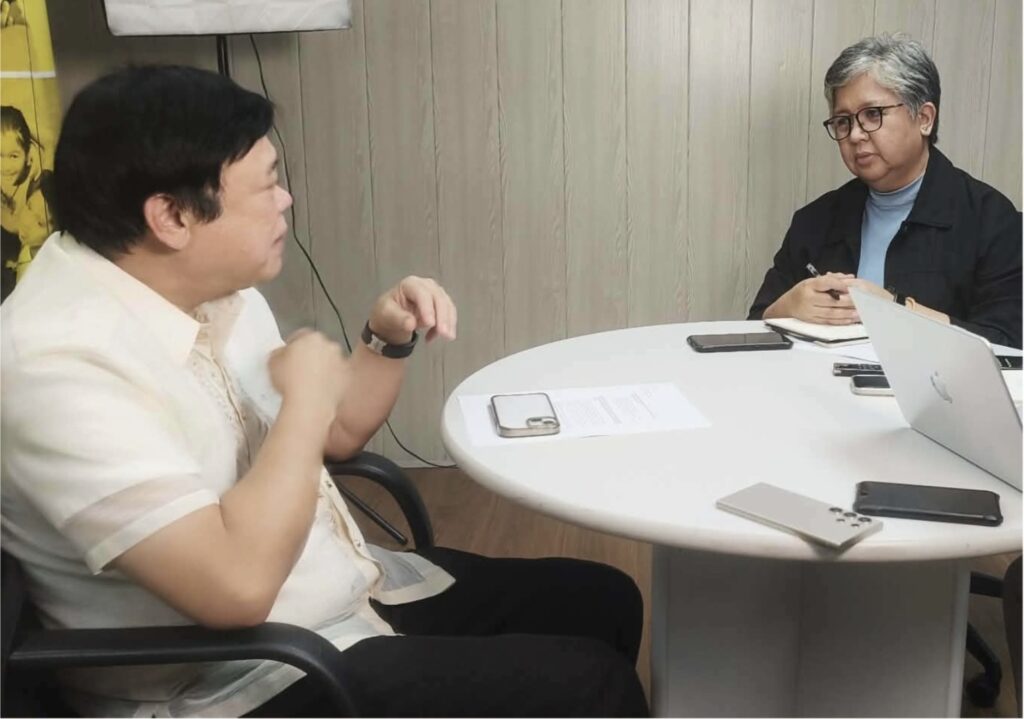
For the PhilHealth chief, reconnection could not happen if the institution continued to step in only when people were already sick. Universal health care, Dr. Mercado emphasized, simply does not work that way.
PhilHealth, he pointed out, is the largest purchaser of healthcare in the country, and that position carries both responsibility and leverage. “The way we design benefits influences how the entire system behaves,” he said. “That is why we have been very deliberate in aligning our benefits with the diseases that Filipinos fear the most—heart disease, stroke, cancer, and other major conditions that can easily lead to catastrophic spending.”
He acknowledged that access to healthcare remains uneven across regions, making coordination with the Department of Health and other partners essential. But what was clear, he said, was that PhilHealth had to move beyond being perceived as a claims processor. It had to be seen as a partner that helps families manage health risks before those risks turn into crises.
Translating that vision into reality required more than new benefit packages. It required changing how people inside the institution thought and worked.
“One of our earliest priorities was restoring confidence—both externally with providers and members, and internally within PhilHealth itself,” Dr. Mercado said. “Trust does not come from announcements. It comes from systems that are fair, predictable, and consistently implemented.”
Internally, PhilHealth placed heavy emphasis on institutional strengthening. Time-bound performance indicators were introduced. Processes were mapped, redundancies identified, and reporting lines clarified to strengthen accountability.
“We also instituted monthly reporting, not just at the top, but across the entire PhilHealth community,” he said. “Everyone should know where we are, what is working, and what still needs to be improved.”
BRIDGING THE GAP
This internal reset also meant revisiting the institution’s mission and vision statements to align more clearly with its mandate under universal health care. Internally, PhilHealth adopted the tagline Isang PhilHealth na umuusad, nagtutulungan at kinikilala. Externally, it embraced Isang PhilHealth na mabilis, patas at mapagkakatiwalaan (fast, fair, and trustworthy)—a signal of the standards it sought to live by.
What became increasingly clear in Dr. Mercado’s assessment was that reconnection required aligning policy, practice, and perception. Filipinos needed to see health not only as something to protect when illness strikes, but as something to sustain over time. And PhilHealth needed to create conditions where seeking care early felt practical rather than burdensome.
This perspective reframed the role of the national health insurer. Instead of focusing solely on coverage at the point of hospitalization, PhilHealth had to widen its lens—to consider how benefits, providers, and systems could encourage people to consult earlier, complete treatment, and remain engaged with care even when they felt relatively well.
In this way, reconnection was not about introducing a single program or intervention; rather, it was about closing a long-standing gap between mandate and experience. By addressing trust, accessibility, and continuity together, Dr. Mercado began steering PhilHealth toward a posture that made prevention possible—a practical next step in the health journey.
It is from this point—where institutional reform meets everyday behavior—that the conversation naturally turned toward prevention, early engagement, and continuity of care. The groundwork had been laid. What followed was an effort to turn reconnection into action.
This article came out in the February 2026 Special Issue.
Anne Ruth Dela Cruz
Anne is a seasoned journalist and corporate communications specialist. After 13 years in the health care industry, she is back to where she started—print media.