
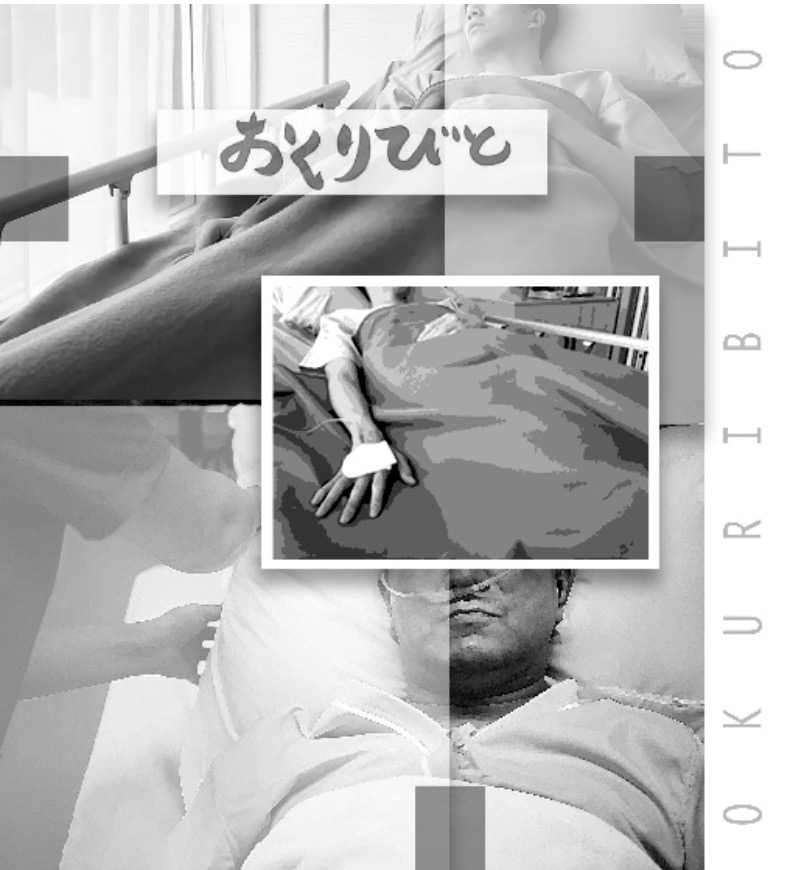
There is an old Japanese film called Okuribito, which Marvin once told him about in a hospital room as if recommending a comedy. In the film, a man cannot find respectable work and so falls into a profession no one will admit to admiring: preparing the dead for burial. He washes the bodies, dresses them, arranges the hands. He performs these tasks in front of the family. It is, Marvin said, like a magic trick without the magic. Or a dance without music. Everybody is watching to see if you will embarrass the dead.
Marvin liked things that were solemn in other cultures and ridiculous in this one. He liked Japanese ghost stories, Viking funerals, the way some tribes exposed their dead to birds. He liked the fact that somewhere in the world there were people who believed grief deserved choreography.
“The old man in the other bed died last night,” Marvin said, his face puffed by fluid, his lips dry and faintly bluish. “Can you believe that?”
He laughed after saying this, which made his brother laugh, too, because what else was there to do. They were in the charity ward annex of the Philippine Heart Center, where laughter carried badly and every cough sounded like a warning addressed to everyone. The beds were close enough that a stranger’s sleep became your problem. Curtains could be pulled between them, but the curtains were the color of diluted tea and had the moral authority of tissue paper. Nothing stayed private for long. Not the smell of urine. Not the muttered prayers. Not the family arguments about money. Not the sound of a body giving up in increments.
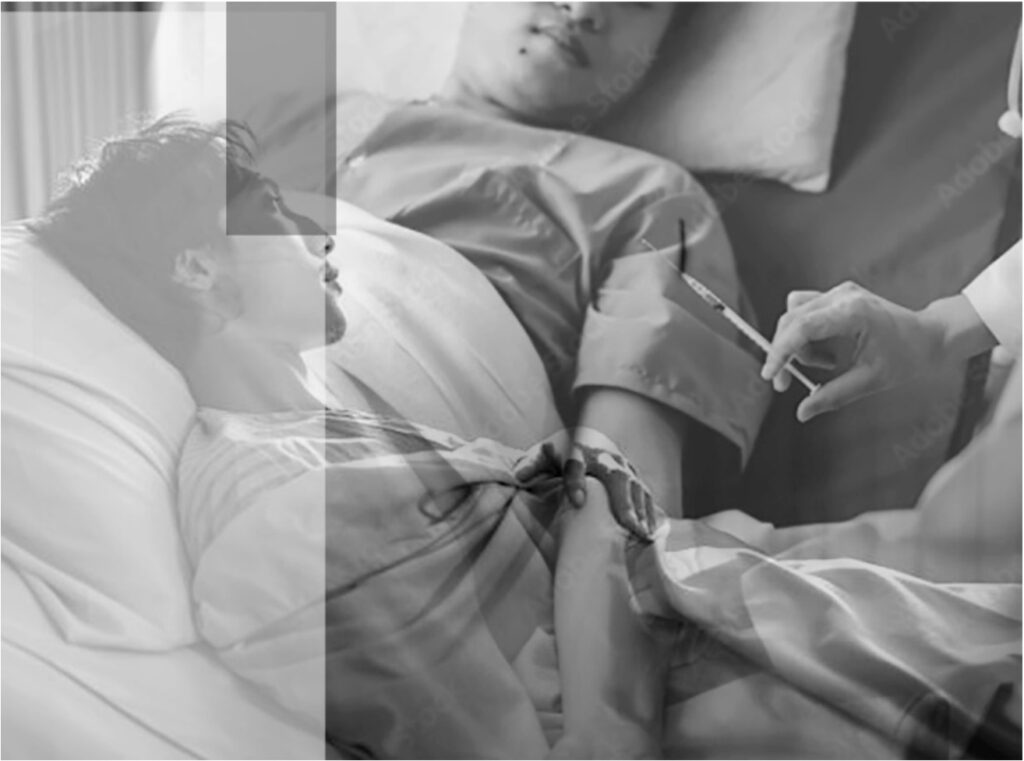
His brother smiled at Marvin in what he hoped was a convincing way. He nearly mentioned Okuribito then and there—said it was a pity nobody in Quezon City had the energy for graceful rituals—but instead he stood, murmured something about the restroom, and locked himself in one of the stalls down the corridor, where he leaned both palms against the tiled wall and stayed until the dizziness passed.
He could hear people moving outside, slippers dragging, a pail set down, a woman clearing her throat in the long theatrical manner of the poor, as if illness too required an audience. He stared at the metal partition in front of him and tried not to think the words the old man died last night in the order Marvin had given them, because once arranged that way the sentence had a terrible neatness to it. Last night. The old man. Died. It suggested sequence. It suggested turn-taking.
When he emerged, Marvin was where he had left him, alive in the bed, one hand resting on his chest as if calming the animal within. The bed’s backrest was at the wrong angle again. Marvin hated being too flat. He said it felt like drowning in furniture.
“Raise me a little,” Marvin said.
The crank on the side of the bed stuck halfway, then jerked loose. By the time the mattress lifted a few inches, his brother was sweating. Marvin watched him with an expression that was half amusement, half pity.
“You’re the one who needs admission,” Marvin said. “You look worse than me.”
“Very funny.”
“It is.”
Ten years of diabetes, most of them neglected, had enlarged Marvin’s heart until the doctors spoke of it as if it were no longer entirely a heart but an object resembling one: thickened, exhausted, more scar than muscle. One resident, young enough to have acne beneath her makeup, had shown them the scans with the detached courtesy of someone presenting weather. The heart was more than twice the normal size. It labored to pump against its own damage. There were terms—cardiomyopathy, congestive failure, ejection fraction—that were supposed to help, but to his brother they seemed only to multiply helplessness into syllables.
The senior consultant was kinder and therefore crueler. She spoke to him in the hallway while Marvin was having blood drawn.
“Your brother is very sick,” she said. “He could decompensate suddenly. You have to be prepared.”
Prepared for what, he wanted to ask. Prepared how? There was no preparatory course for this. There was no checklist. Bring extra shirt. Sign forms. Learn which expression to wear when someone tells you your brother may die on an ordinary afternoon in a city where people are also buying slippers and arguing over fish and getting haircuts and worrying about parking.
Instead, he nodded as if she had reminded him about an umbrella.
At work, he was considered a reliable man. He had been with the paper for ten years and people said of him, with the same confidence they used to recommend dentists, that he was trustworthy. He never knew what exactly they meant. He met deadlines. He did not steal quotes. He returned phone calls when it suited the story. He had written about election fraud, crooked procurement, illegal demolitions, a mayor who kept two wives and three payrolls. He had interviewed mothers whose sons had been shot and cabinet secretaries whose consciences had not. None of this made him trustworthy. It merely made him employed.
The newsroom liked to imagine itself as a place where truth arrived grimy but intact, where facts could be scrubbed and arranged and sent out into the world like a corrected child. In fact, truth usually came in incomplete, hysterical, and smelling faintly of somebody’s agenda.
For three weeks a source who refused to identify himself had been faxing the office smeared copies of documents concerning the Vice President. This was back when government offices still trusted fax machines with their filth. The pages came through faint and diagonal, as if they, too, were trying not to get involved. Statements of assets. Flight manifests. Meeting schedules. A grainy photograph of men in barong emerging from what might have been a private hangar or might have been a wedding. The source signed nothing except DEEPTHROAT, which was either a tribute to American political mythology or proof that he was an idiot.
“It’s going to blow up in everybody’s faces,” Deepthroat had told him on the phone in a voice distorted by either static or caution. “The Vice President is planning something. A bomb, maybe. A lot of people will die.”
Will die, not could. The certainty annoyed him. Conspiracy theorists always spoke with the confidence of weather forecasters and the evidence of fortune tellers. Still, he took notes. That was his job. You never knew which madman contained one useful fact.
“This is going to save millions of lives,” Deepthroat said.
He looked through the glass at the city desk while the man spoke. Lito was trimming his nails over a wastebasket. Two copy editors were arguing about whether a senator could be described as “embattled” if he had never once seemed bothered. Somebody had ordered siopao. Nothing in the room suggested millions of lives.
He could not make himself care in the proper abstract way. The country, the Republic, democracy, innocent civilians—these were all very grand, but at that moment his brother was in a hospital bed with an oxygen cannula pinched crooked under his nose. There are emergencies large enough to be history and emergencies small enough to fit inside one man’s chest. Only one of these asks you to adjust a pillow.
Marvin had once been mistaken for Roderick Paulate in Divisoria and enjoyed the error so much that he signed three receipts and a cigarette pack before his friends dragged him away. He was not an actor. He was not even especially handsome. He simply had that soft-cheeked, mischievous face that in another life might have belonged to someone famous for being silly on television. Afterwards he had practiced celebrity waves in the mirror for a week.
There had also been the dance. At a cousin’s birthday he had performed Michael V’s “Hindi Ako Bakla” with such wholehearted commitment that old women had to sit down from laughing. He was a large man, never graceful in the usual sense, but capable of surrendering completely to a joke. His body was one of those bodies people believed would always remain available to them, useful for carrying sacks of rice, reaching high shelves, lifting children, dancing in family gatherings until midnight. It did not look like a body preparing its exit.
In the first days after admission, when everybody still believed in reversals, relatives came with grapes, boiled corn, oranges no one could peel. They stood around the bed and retold Marvin to himself, as if reminding him of his best scenes might persuade him to stay in character. Marvin the mimic. Marvin the singer. Marvin who could do that line from Merde—I hate innocent civilians—with such perfect deranged French fury that beer came out of people’s noses. Marvin who found it unbearably funny that a terrorist might actively hate the innocent in particular, as if the guilty had somehow been spared on moral grounds.
“I hate innocent civilians,” Marvin had said one night, collapsing onto the sofa and clutching his sides. “That’s beautiful. That means if you’re corrupt or a murderer, he has no issue with you. It’s the decent citizens he can’t stand.”
That had been the night before the first heart attack. In the early hours of morning Marvin had come to his room bent double, one fist pressed into his chest, and said with strained politeness, “I think something’s wrong with me.” Even then he had looked embarrassed, as though inconveniencing the household with potentially catastrophic symptoms were bad manners.
Now in the ward Marvin dozed in bursts. Sometimes his dreams surfaced as muttering. Sometimes his eyes opened and fastened on a point beyond the ceiling.
“What are you looking at?” his brother asked once.
“Nothing,” Marvin said. “A lizard.”
There was no lizard.
At noon, the family of the old man in the next bed arrived with a folded blanket and a plastic bag of clothes. No one had yet told the daughter that her father’s eyeglasses were missing. An orderly had probably taken them, or another family, or they had slipped beneath the bed to join the civilization of dust and bottle caps and expired receipts that flourished there. The daughter was stout and efficient. She did not cry. She inventoried. Towel. Slippers. Bible. She spoke to the nurse in the tone of a woman who had been handling practical disappointments for many years and had become good at distinguishing between those she could correct and those she could not.
Marvin watched her over the rail.
“That’ll be us soon,” he said.
“Don’t start.”
“I’m serious. Check if I have decent underwear.”
“Jesus Christ.”
“You don’t want strangers finding me in torn garterized shorts. Promise me.”
His brother promised. There are promises the living make to the sick not because they intend to keep them but because refusal would be obscene. He would have promised Marvin a military band, a horse-drawn carriage, a dove released at sunset. Decent underwear cost nothing.
The problem with Marvin was that he was not afraid continuously. Fear came over him in waves, and between waves he became talkative, speculative, almost cheerful. He asked questions that sounded academic.
“If you knew exactly when you’d die, would that be better?”
“No.”
“You didn’t even think.”
“I thought enough.”
“I think I’d like to know. Just to schedule properly.”
“Schedule what?”
“I don’t know. Haircut. Last meal. Apology tour.”
“You don’t need an apology tour.”
“Everybody needs one.”
Later, when Marvin slept, his brother went downstairs to take a call from the newsroom because mobile signal inside the building was a theological matter. The city editor wanted to know whether he had gotten anything more from Deepthroat.
“Nothing usable,” he said.
“You sure this guy isn’t on to something?”
“He may be on to many things. Most of them not in this century.”
“Keep him warm.”
As if sources were casseroles. As if his brother were not upstairs dying. He said yes because yes was faster than honesty.
Outside the hospital entrance, vendors sold boiled peanuts, cigarettes by the stick, and pirated DVDs whose covers had been sun-faded into ambiguity. Ambulances came and went with no sense of urgency, as though the city had taught them that catastrophe would wait its turn. A woman in uniform was eating an ice candy with devastating concentration. Somewhere a radio played a love song that had outlived its decade.
He thought then of a woman he had once loved, or said he loved, which at the time amounted to the same thing. There are some years that seem specially appointed for collapse. In his memory 2010 had this quality. That was the year her car struck a bus on Commonwealth. The police report was full of measurements and therefore useless: angle of impact, skid distance, approximate speed. None of it explained how a neck could become broken while a face remained recognizably the same. At the funeral he had stared at her hands in the coffin because the face was too social, too corrected. The hands told the truth. They lay there with their ordinary nails, their blue veins, saying: this happened to a person who once drove, reached, buttoned a blouse, turned pages, pointed at restaurants she wanted to try.
He remembered none of this as noble grief. He remembered it as an inconvenience imposed upon disbelief. The mind kept returning the dead to use. She should have been texting. She should have been late. She should have been annoyed at traffic. Instead, she was horizontal forever.
Maybe that was what he found unbearable in hospitals and wakes and news copy alike: how fast the world converted lives into categories. Casualty. Body. Patient. Fatality. Survived by. Subject was declared dead on arrival. Subject was pronounced at 2:14 A.M. Subject is now in a better place, said people who had no evidence for better places.
When he returned upstairs, Marvin was awake and looking peculiar—too alert, as if fever had burned off a layer of softness.
“I had an idea,” Marvin said.
“That’s dangerous.”
“If I die, do not let them put too much powder on my face.”
“You’re not—”
“I know, I know. But listen. Natural. I don’t want to look like an old auntie.”
“You won’t.”
“And don’t let anyone use that awful picture from Tita Lina’s wedding.”
“Which one?”
“The one where I look like a mayor caught in a scandal.”
This was the sort of talk that would have enraged other families. In theirs it passed as intimacy. They had never been skilled at saying the large soft things directly. Love was usually expressed through correction, mockery, reminders about meals, the transfer of money in envelopes, the saving of the last fried piece for someone not presently in the room. The only person who had spoken love plainly was their mother, and even she had preferred practical versions of it. Eat now. Bring umbrella. Text when you arrive. After she died, language in the family tightened around the absence she had left, like scar tissue.
“Did you tell Dad?” Marvin asked suddenly.
“About what?”
“That I’m here.”
He had. Their father had grunted over the line and said he would try to come Sunday if the buses were not too full. Their father believed distance could excuse nearly everything. He lived now in Pangasinan with a woman younger than his youngest regret. He sold hardware or coconuts or perhaps nothing. The specifics shifted. He had not been reliable in marriage and had no reason to improve at fatherhood.
“I told him.”
Marvin smiled a little. “He’ll come when I’m dead. Easier conversation.”
“Stop it.”
“What? He’s not good at the living version.”
That evening the nurse inserted a fresh line into Marvin’s hand. He watched the tape being smoothed down over his skin and said, “I look like a machine people are still trying to return under warranty.”
The nurse laughed in spite of herself. Marvin liked making nurses laugh. He liked any evidence that the institutional face could crack. He had always distrusted official seriousness, perhaps because he himself could not sustain it. Even now, even swollen and short of breath, he seemed to regard his body’s failures as a bureaucratic nuisance he might yet charm his way around.
But in the early hours, when the ward dimmed and visitors had gone home and only the fluorescent light above the station remained fully committed to existence, fear came for him without disguise.
His brother woke to hear Marvin whispering his name.
“What?”
“I can’t sleep.”
“Try.”
“I think if I sleep, something will stop.”
His brother got up and stood beside the bed. Marvin’s face was wet. Whether from sweat or tears it was hard to tell.
“You’re okay,” he said, the stupid sentence everybody says because there are only so many phrases available at three in the morning.
“No,” Marvin said. “I’m not.”
There it was: the simple thing. The barred animal finally through.
His brother put a hand on Marvin’s shoulder, then on his head, not knowing which was less foolish. Marvin’s hair had thinned in front. His scalp felt warm and strangely tender beneath the sparse strands. They stayed like that for a while, the one standing, the other lying there not asleep. Machines blinked. Somebody far away groaned the name of Jesus with argumentative persistence. The ward smelled of alcohol, damp linen, and the metallic edge of oxygen.
He thought then of the final scenes in Okuribito, although he had still never seen the film, knew it only from Marvin’s retelling. A body made presentable. The family gathered. Grief transformed by exact motions of the hands. He wondered whether that was all civilization amounted to in the end—not justice, not progress, not the exposure of corruption, but the willingness to treat the helpless with care while others watched.
By morning Marvin seemed improved, which was the special cruelty of illness. The body rose half an inch and everyone called it hope.
A call came from the newsroom. Deepthroat had sent another packet. More documents. More claims. The Vice President had met with military men or businessmen or armed businessmen. There were whispers of destabilization, of explosives, of events meant to look like other events. Could he come in just for two hours?
“No,” he said.
“You’re sure?”
“Yes.”
There was a silence in which his editor, to his credit, understood something and did not press.
Near lunch Marvin asked for lugaw but ate only three spoonfuls. He chewed carefully, as if food had become conceptual. Afterwards he leaned back and closed his eyes. His brother watched the rise and fall of his chest. Human beings are absurd in what they become willing to monitor. Once he had spent nights waiting for text messages. Now he counted respirations.
At some point he must have dozed in the plastic chair, because he woke with his neck kinked and sunlight slanting through the windows at a late angle. Marvin was awake again.
“Hey,” Marvin said.
“What?”
“If I make it out of here, I’m going on a diet.”
“That’s original.”
“I mean it.”
“Of course.”
“I’ll walk. I’ll eat vegetables. I’ll stop pretending halo-halo is hydration.”
“Good plan.”
Marvin looked at him for a long second, smiling faintly. “You don’t believe me at all.”
“No,” he said, and Marvin laughed, then winced from laughing.
In the bed beside them a new patient had arrived, this one younger, with a wife who arranged bottled water and biscuits on the bedside locker with devotional care. Life slid into vacated places with obscene efficiency. The old man gone, the new man installed, as if beds themselves could not bear emptiness.
Toward evening their father called, not from a bus but from somewhere noisy, a cockpit perhaps or a market.
“How is he?” he asked.
“Same.”
“Tell him to fight.”
“Okay.”
There are fathers who say I’m sorry I’m not there. There are fathers who say Put him on the phone. There are fathers who cross provinces. This father said, “Tell him to fight,” as if Marvin had been considering a graceful surrender in round nine.
He did not relay the message.
That night Marvin slept at last. Not peacefully, not deeply, but enough. His brother sat beside him and watched the dark window reflect the ward back at itself: rows of beds, thin curtains, people arranged in temporary relation by disease. He felt tired beyond tired, in the dry clean way that comes when panic has spent itself and left only endurance.
He thought about the packet waiting on his desk at the paper. He thought about bombs and plotters and innocent civilians. He thought about the Vice President, who for all he knew might indeed be planning something monstrous while here, in a public hospital, a nurse was adjusting the blanket over Marvin’s feet with more care than any cabinet official had ever shown the nation. History liked to flatter itself. Most of life occurred elsewhere.
Near midnight Marvin stirred and said without opening his eyes, “You still there?”
“Yes.”
“Good.”
Then, after a pause: “On a day like this, people should be nicer.”
It was such a Marvin sentence—half joke, half law of the universe. On a day like this. As if the day had a recognized category, like holidays and feast days and election day. As if the calendar somewhere listed day your brother may die and citizens were expected to behave accordingly, with softened voices and honest faces and no stupid quarrels.
His brother nearly laughed. Instead, he said, “Yeah.”
Marvin’s breathing eased again. Outside the ward, a guard’s radio crackled and went silent. Somewhere below, in the city that continued to regard itself as normal, jeepneys rattled through intersections, lovers fought over nothing, men counted money, somebody watched the late news. The world had not paused for this, and never would.
Still, sitting there in the dimness with Marvin’s hand loose in his own, he understood something he would not have known how to print in a newspaper. Not that love redeemed suffering. Not that families healed old damage in the presence of death. Nothing so complete. Only that people went on touching one another’s foreheads, raising the backs of hospital beds, passing tissues, checking bandages, making jokes over the abyss. Only that even badly loved people remained, stubbornly, loved.
He sat awake while Marvin slept, and when the nurse came by to take the vitals, he lifted his free hand to signal that his brother had finally drifted off. The nurse nodded and moved more quietly. It felt, in that moment, like the beginning of a ceremony no one had taught them and everyone somehow knew.
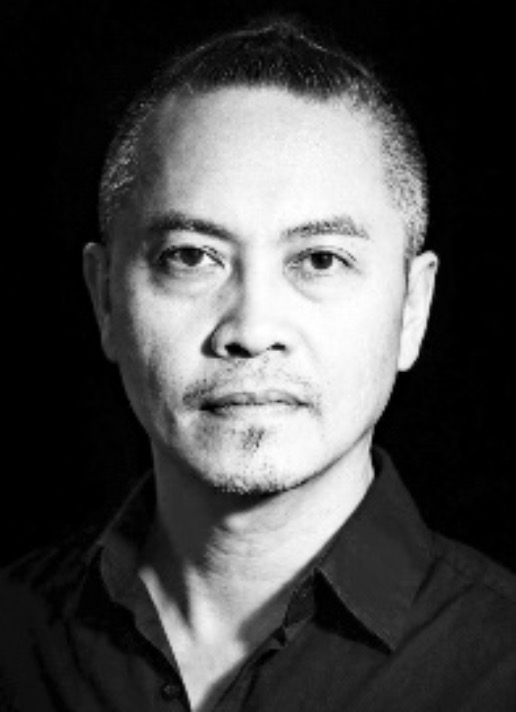
JB Lazarte
Joe Bert Lazarte, 49, is an award-winning Filipino author and editor, with multiple recognitions including the Carlos Palanca Memorial Awards for Literature. He has over two decades of experience in writing, editing, and marketing communications, currently serving as Associate Director for Strategic Communications and Creative Production at Okada Manila. His work spans fiction, essays, and creative media, often exploring themes of memory, identity, and the quiet tensions beneath everyday life.