

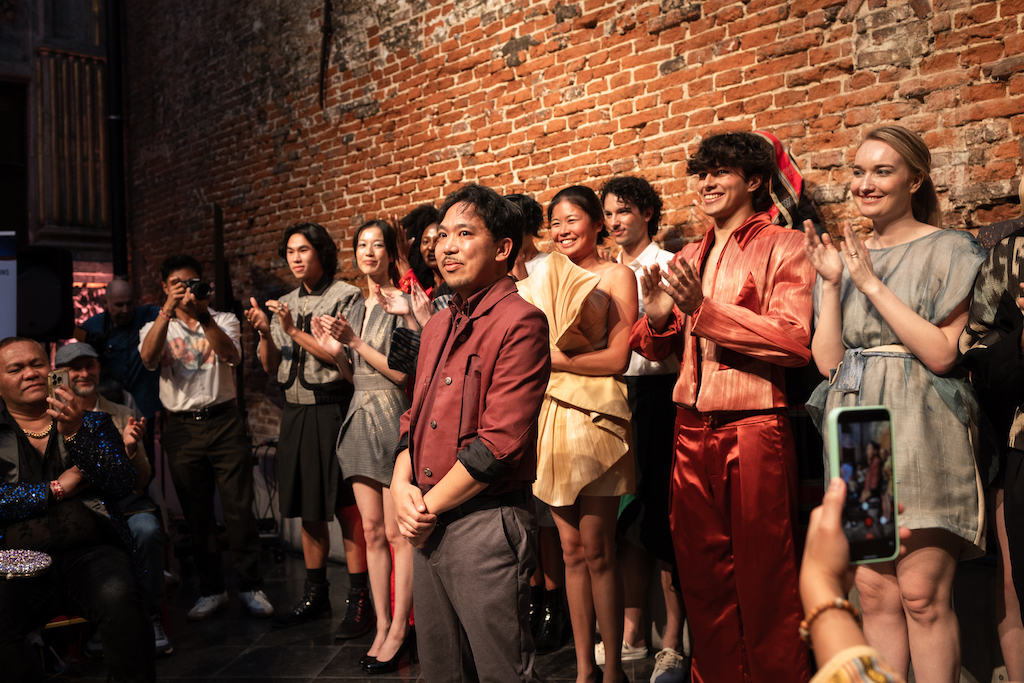
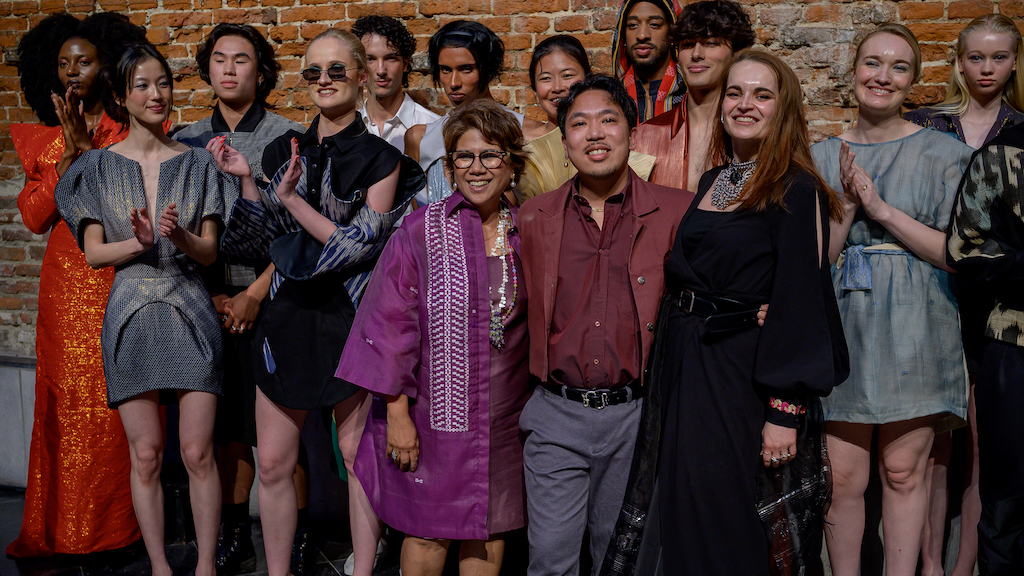
BRUSSELS — Belgian fashion designer Maxime Edward stood teary-eyed before a full house of friends, family, guests from the fashion and art circles, and members of the Filipino community, who rewarded him with a standing ovation that lasted several minutes and called him back for multiple encores during the fashion show Roots and Weaves, held on June 6 at the heritage site La Bellone in Brussels.
For Maxime, the event marked a full-circle moment. Thirty-four years after being adopted and raised by Belgian parents, he had reconnected with his Filipino roots, using fashion as a vehicle to renew ties with his country of birth.
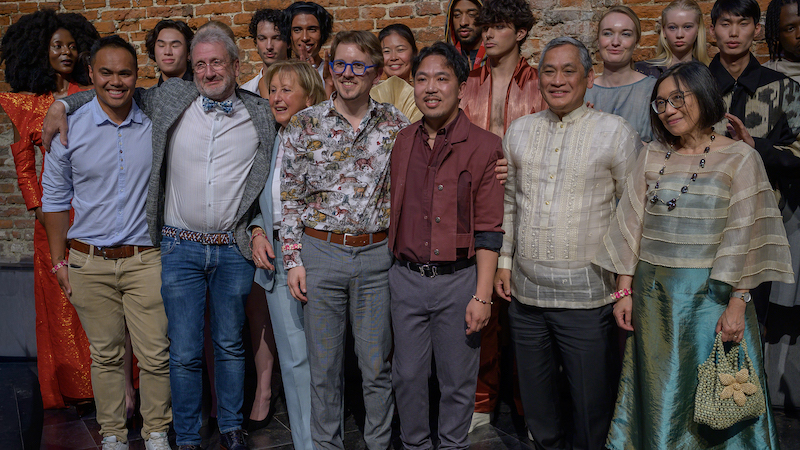
The fashion show, a project of the Brussels-based non-profit organization Philippine Art and Culture Exchange (PACE) in collaboration with the Philippine Embassy in Brussels, was the culmination of two years of work. It included Maxime’s emotional journey back to the Philippines, where he met artisans in the weaving villages and ateliers of Kalinga and Western Visayas.
“I was not looking for trends. I wanted a lasting connection with the artisans,” Maxime said of his sentimental journey. “What touched me the most was the welcome and the feeling that a missing part of me had finally found its home.”
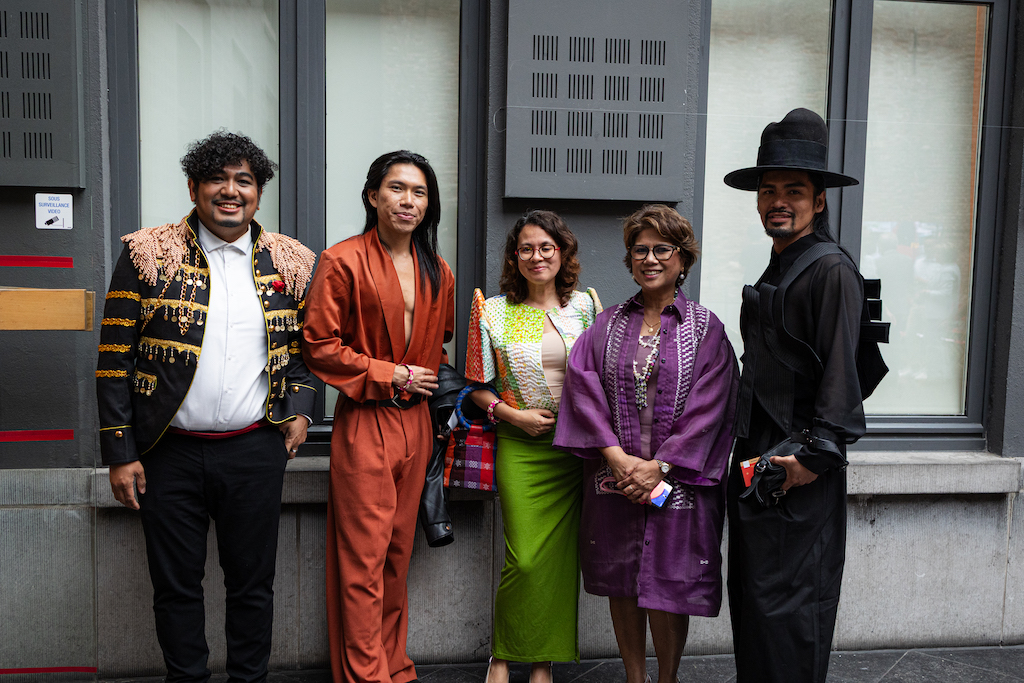
Beyond the discovery of new materials and inspiration for a collection, Maxime said the trip helped him better understand himself. Born in a charity hospital in Quezon City, he arrived in Belgium at the age of nine months. Although his appearance and skin color never caused him difficulties growing up, he was always aware that he was different and that part of his identity remained connected to the Philippines.
More than just a fashion event, Roots and Weaves gave Maxime the opportunity to reconnect with the Philippines, according to Louise Baterna, president of PACE.
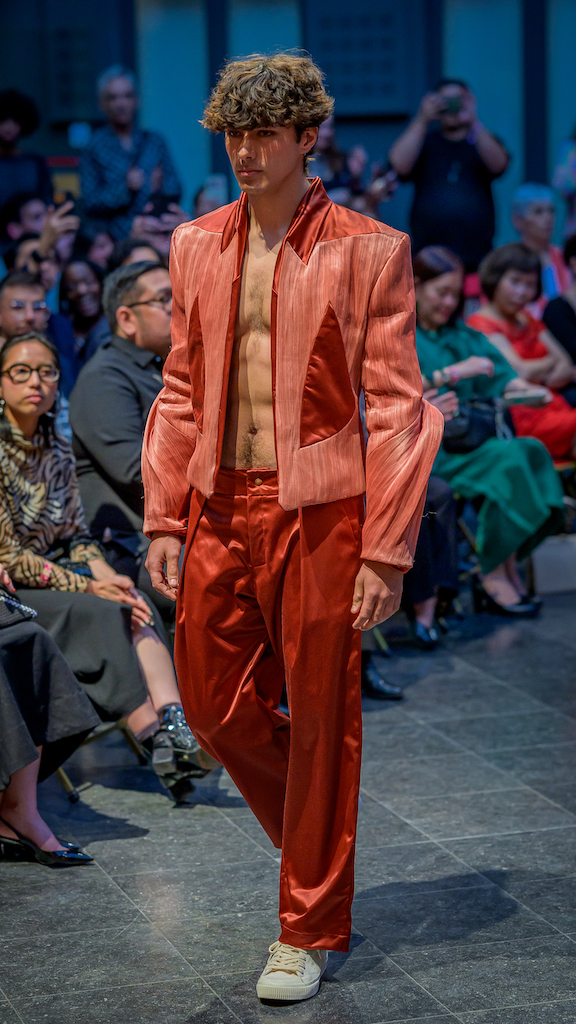
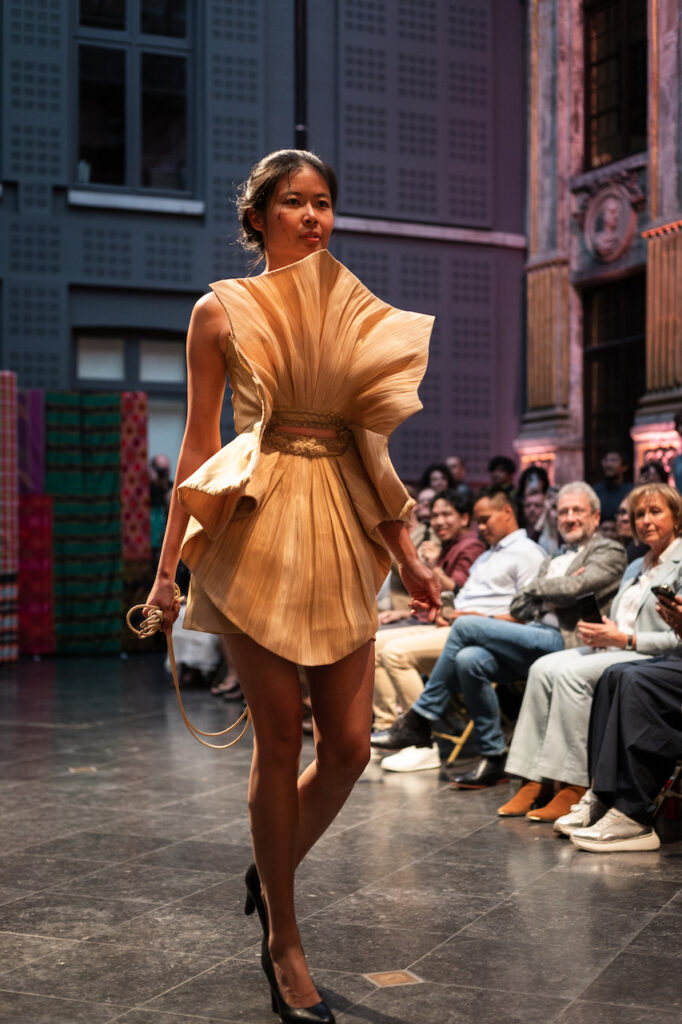
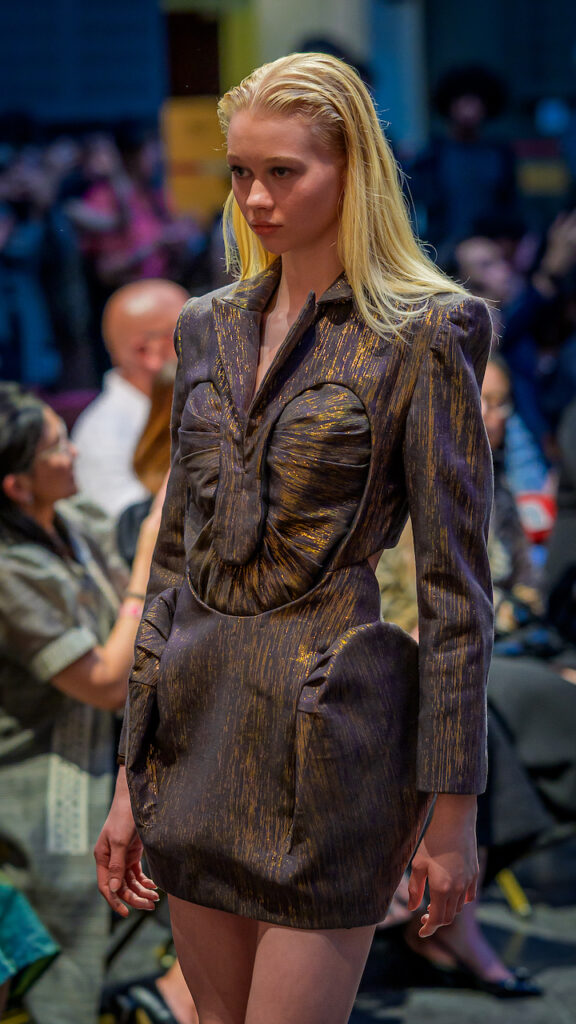
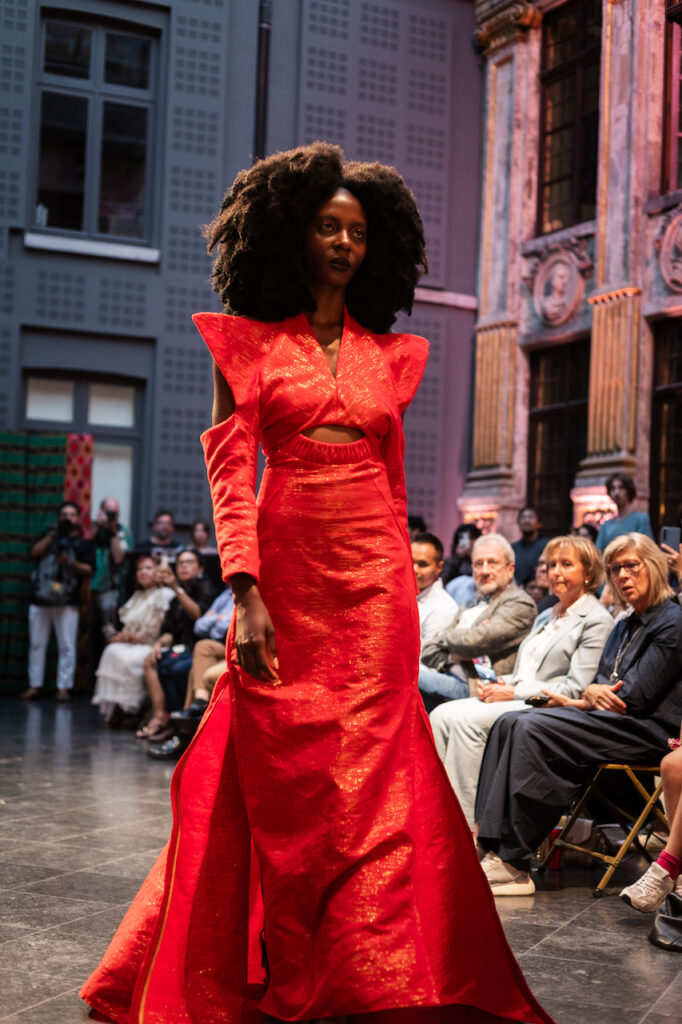
“The work of PACE is not only about promoting Philippine art and culture in Belgium and beyond, but also fostering connections, networks, sustainable relationships, and inclusivity,” Baterna said. “Maxime’s background made him the perfect partner for this project. His participation in Tokyo Fashion Week and Vancouver Fashion Week generated considerable attention and demonstrated his growing influence in the international fashion scene. We wanted someone with a European perspective to showcase Philippine indigenous textiles on a Belgian runway.”
She added that collaborating with a local designer who is well integrated into Belgium’s fashion community helps ensure the continuity of initiatives promoting Philippine textiles long after the show has ended.
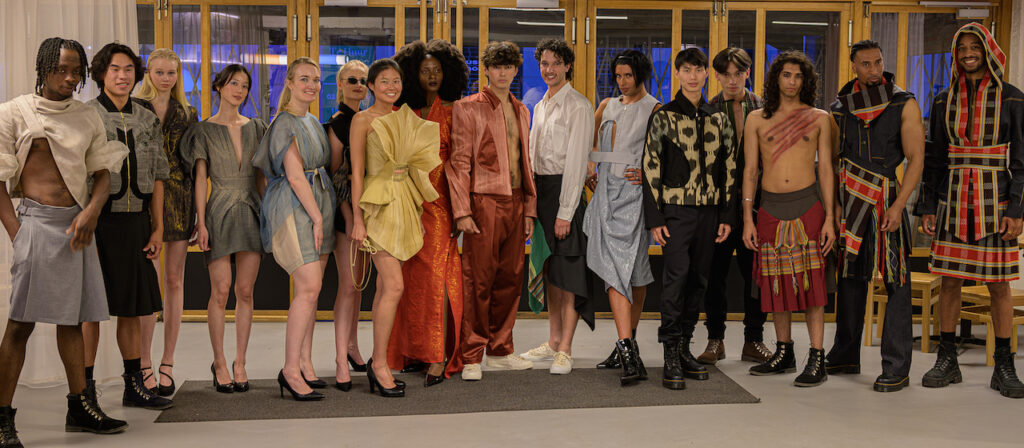
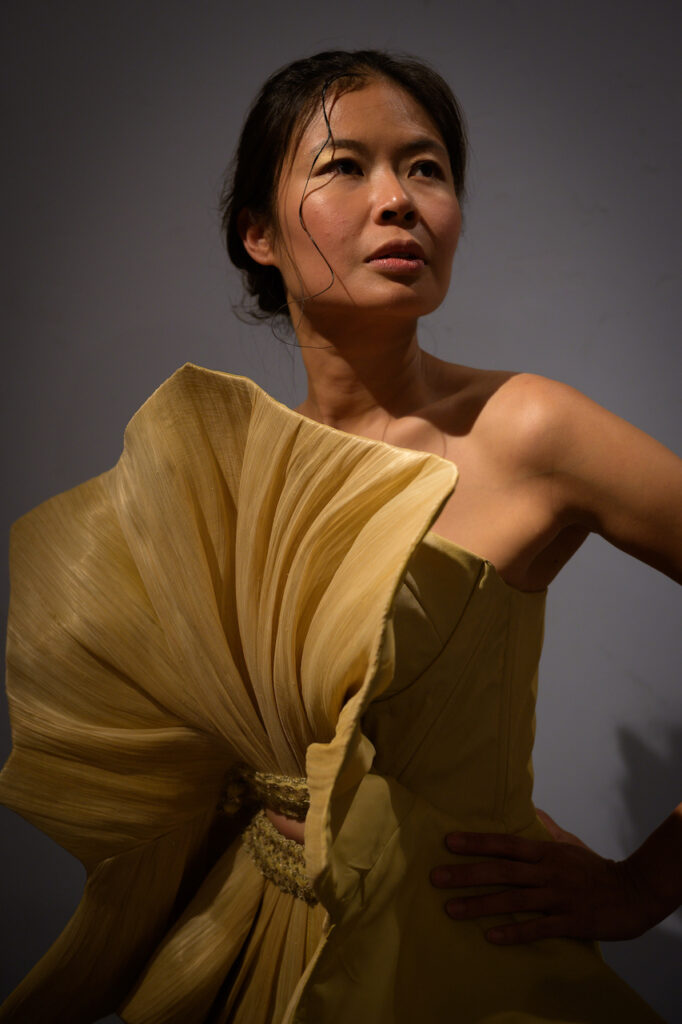
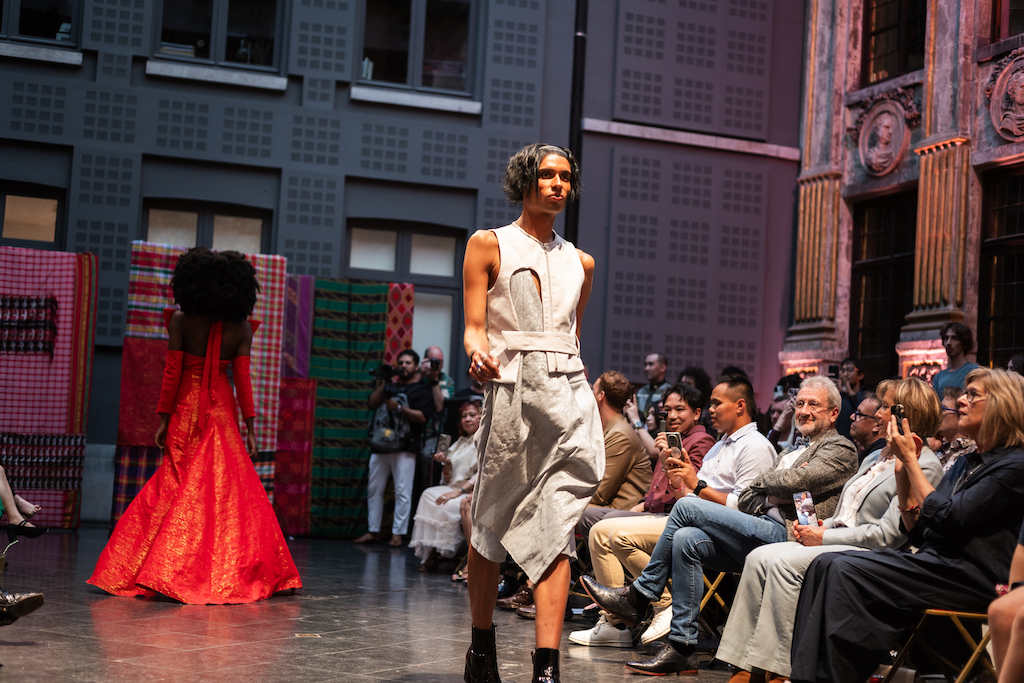
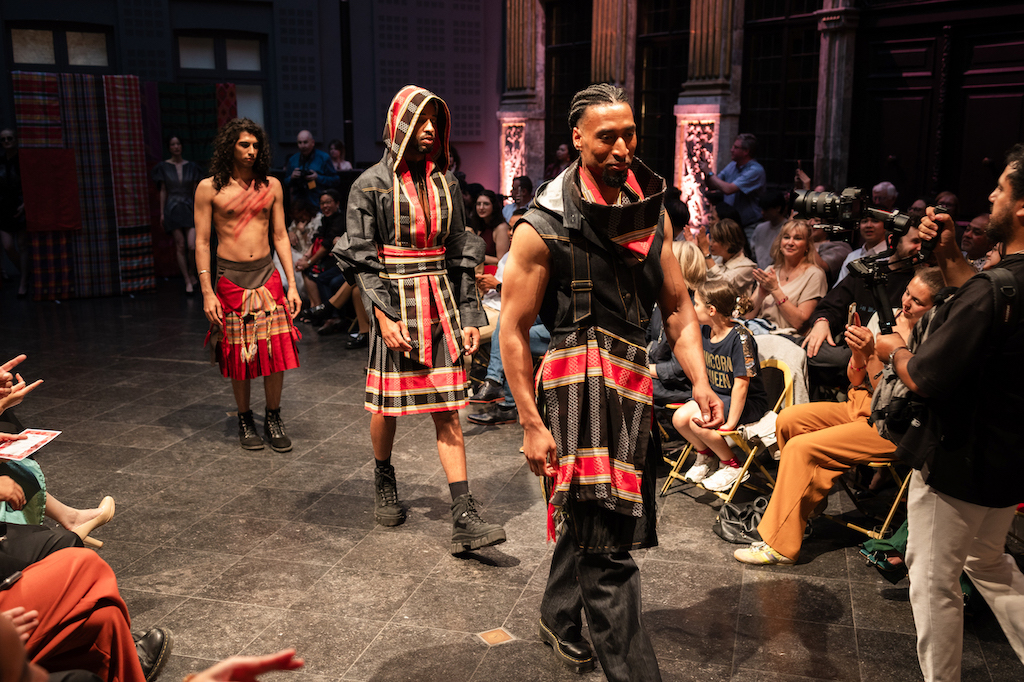
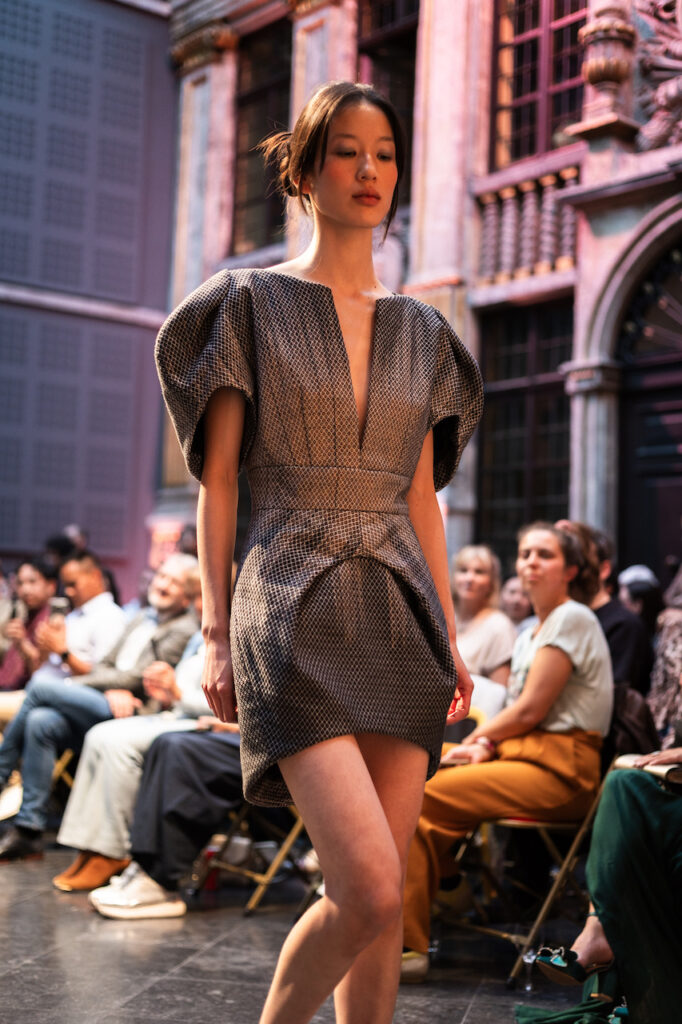
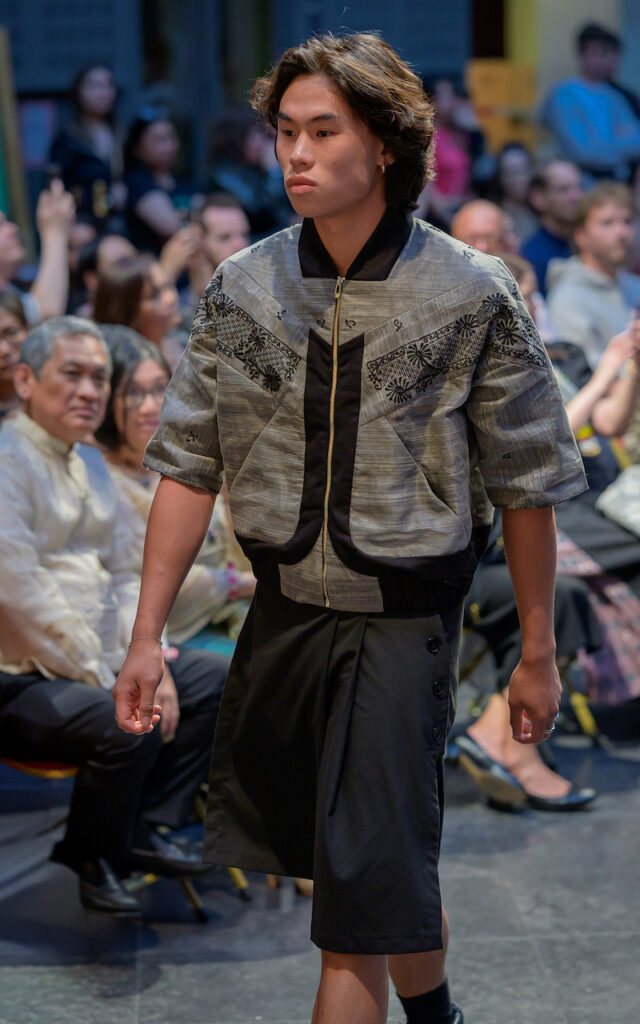
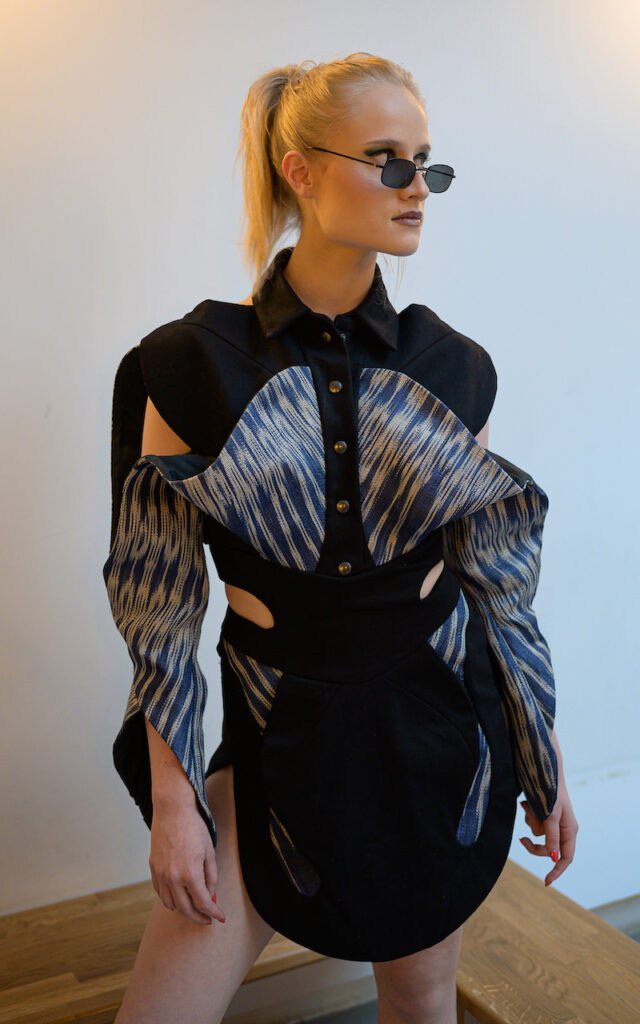
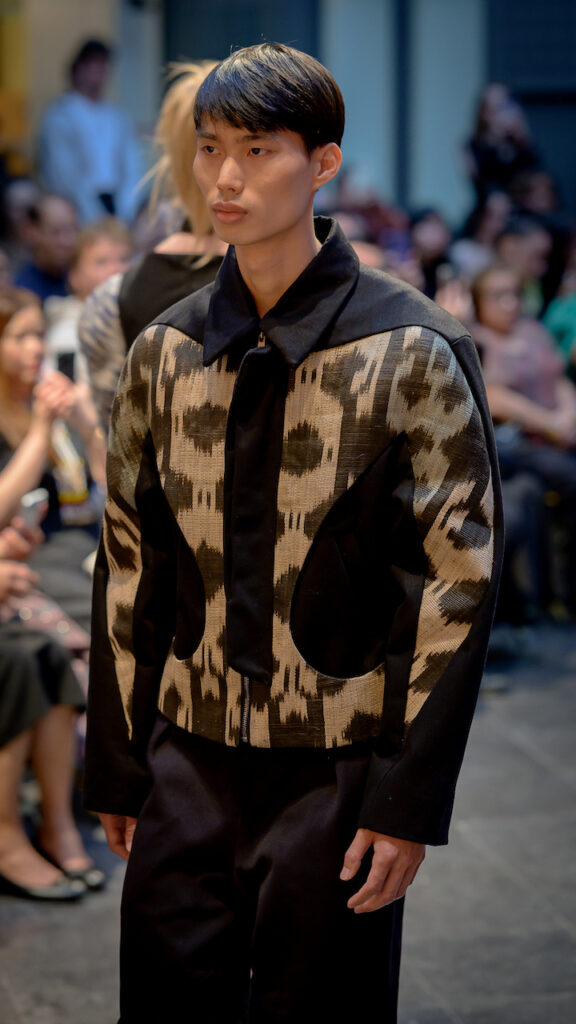
On the runway of La Bellone, one of Brussels’ “hidden” architectural and cultural gems, 17 models of diverse ethnic and cultural backgrounds showcased Maxime’s innovative use of Philippine textiles. Rather than attempting to replicate traditional Filipiniana—a heritage he did not grow up with—he remained true to his signature aesthetic, creating pieces that highlighted his mastery of structure, construction, and texture.
Drawing from a rich palette of indigenous fabrics, including handwoven cotton textiles from the Mabilong Weavers Village in Kalinga, inabel from Ilocos, abaca and piña fabrics from Antique and Aklan, and hablon from Miag-ao, Iloilo, Maxime crafted garments that were both contemporary and wearable. The collection demonstrated how handwoven Philippine textiles can transcend cultural and ceremonial contexts, finding a place in modern wardrobes and adapting to different occasions, seasons, and climates.
Yet Maxime managed to weave subtle references to his Filipino roots into the collection. Butterfly sleeves, for instance, were cleverly reinterpreted as sculptural elements positioned on the hips, while the sun motif of the Philippine flag appeared in the finale look, crafted from turmeric-dyed abaca. Or inserting jeepney sounds and Sinulog rhythm into the catwalk music.
Emotions ran high throughout the evening, and the enthusiastic public response came as a surprise to the designer. Tickets were sold out. Many younger guests described the show as a fascinating introduction to the Philippines, while others were moved by Maxime’s personal story and came to support him in what many described as an unusual homecoming.
Philippine Ambassador Jaime Victor Ledda said that Roots and Weaves was a fitting demonstration of the Philippine-Belgian connection, spotlighting a Belgian designer with Filipino roots and one who created an entire collection from Philippine textiles and presented it to an international audience.
Ambassador Ledda also highlighted ongoing government efforts to preserve traditional Philippine weaving by supporting artisans and encouraging younger generations to learn the craft. He cited the continuing work of the Philippine Fiber Industry Development Authority (PhilFIDA) and the Philippine Textile Research Institute (PTRI) in advancing sustainability, innovation, and the development of the country’s textile sector.
The fashion event, which also included a VIP seven course dinner and a mini concert by Filipino baritone Cipriano de Guzman, was part of the 80th anniversary celebrations of the Philippine-Belgian diplomatic relations. It was supported by the Philippine Department of Agriculture, PhilFIDA PTRI, Lakat Sustainables, Fashion Revolution Belgium, Champagne Florence Duchêne and Thinking Threads Slow Fashion Advocate.
Photos by Chris Bulte and Benina Hu

Started in 1927, the Philippines Graphic is the longest-running printed magazine of national circulation that provides relevant news and features and promotes Philippine literature.