

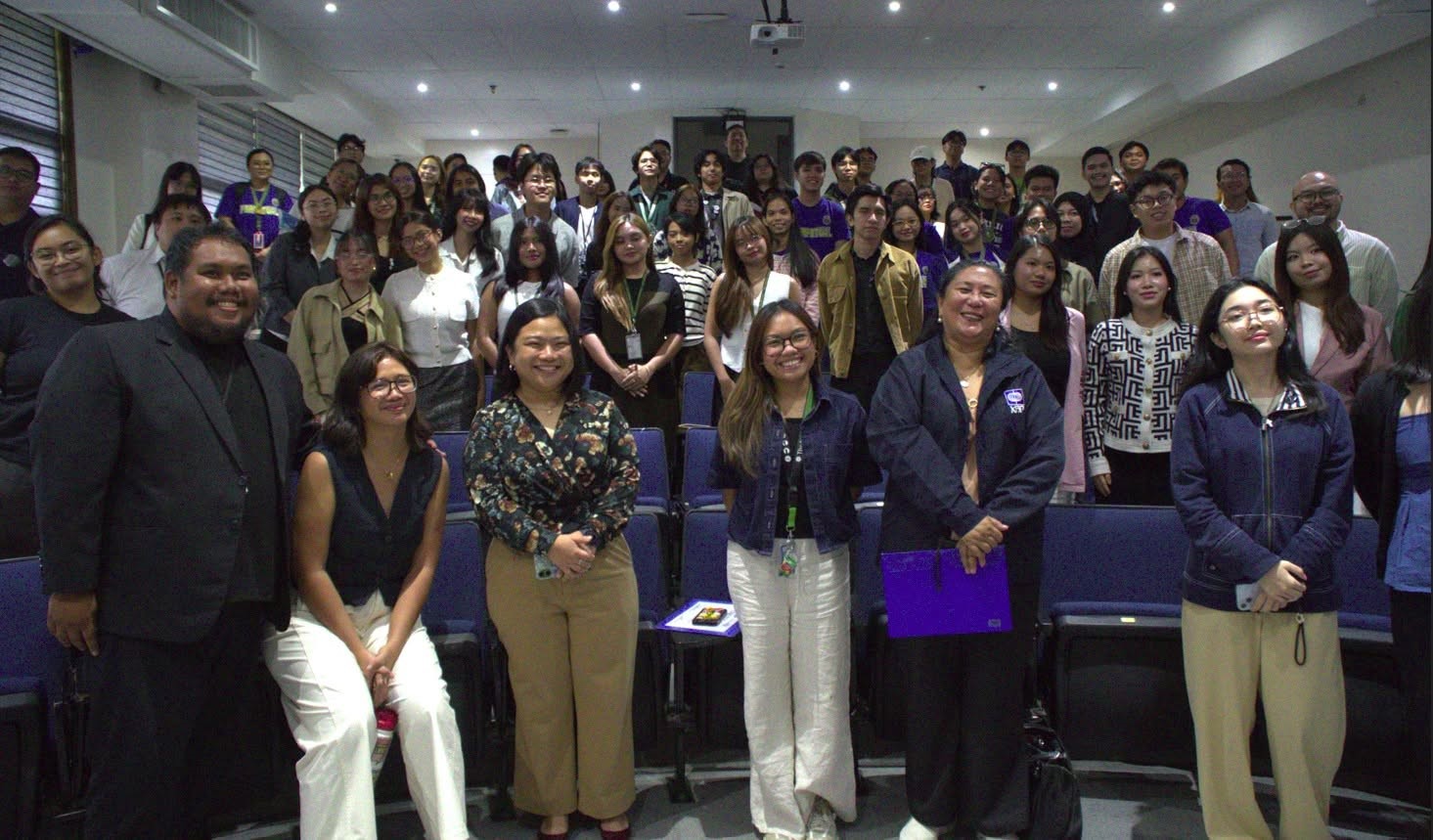
In an era increasingly defined by institutional censorship, digital harassment, and sophisticated disinformation networks, student journalists find themselves thrust into the frontlines of truth-telling.
Reporting on local communities and structural vulnerabilities means navigating a minefield of legal threats, bureaucratic blockades, and safety risks. The contemporary media landscape requires not just basic reporting skills, but it also demands a deep understanding of human rights and the ethical frameworks necessary to protect both the storytellers and the communities they cover.
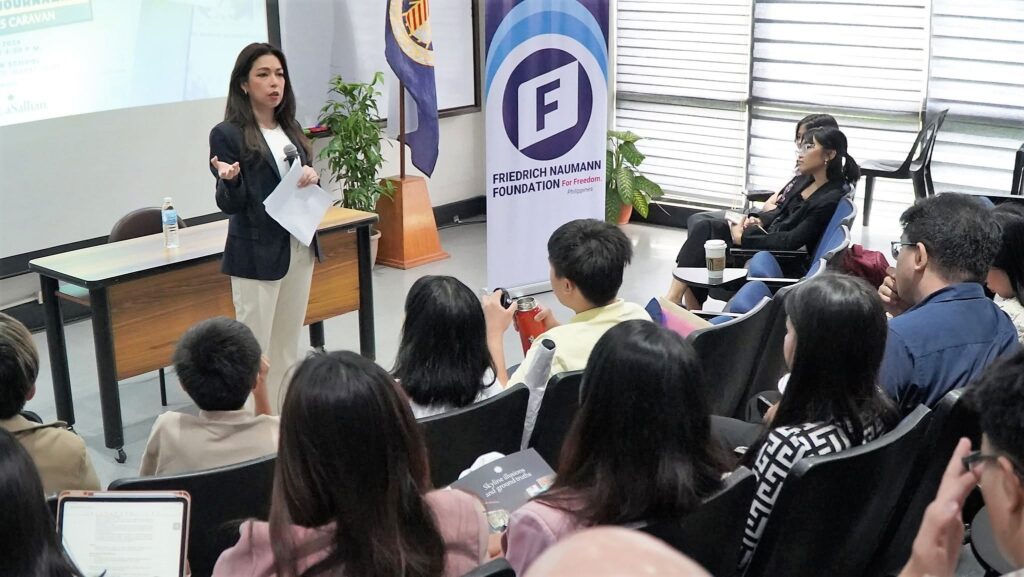
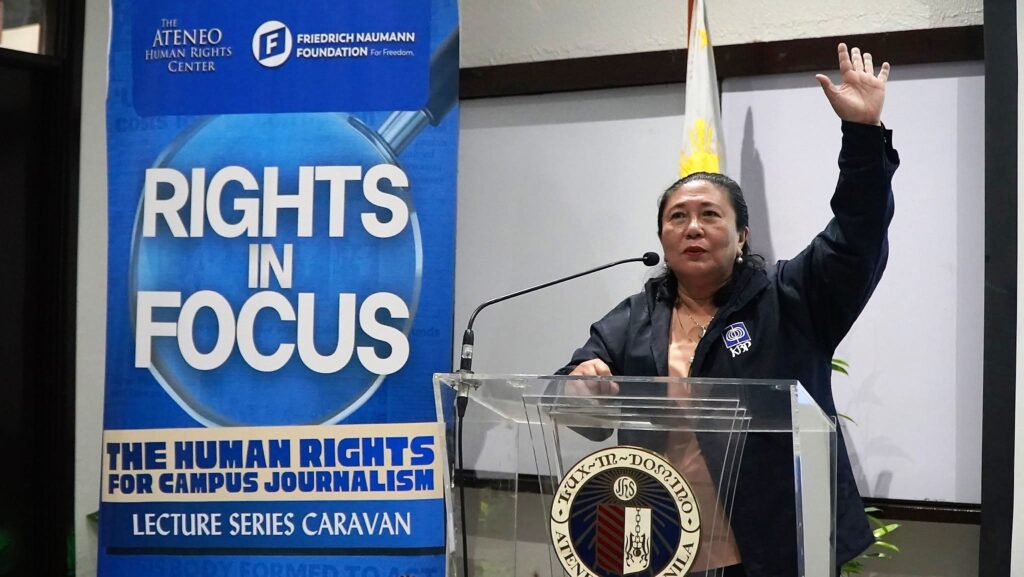
To bridge critical gaps in rights-sensitive reporting, the Ateneo Human Rights Center, in collaboration with the Friedrich Naumann Foundation Philippines, spearheaded “Rights in Focus: The Human Rights for Campus Journalism Lecture Series Caravan.”
For six months, the initiative served as the third phase of Project Human Rights Lens, engaging nearly 300 student writers, editors, and photojournalists from higher education institutions. By bringing human rights education directly to universities, the caravan sought to equip the next generation of media practitioners with the operational, legal, and conceptual tools necessary to report ethically, safely, and courageously.
Identifying the gaps in campus journalism
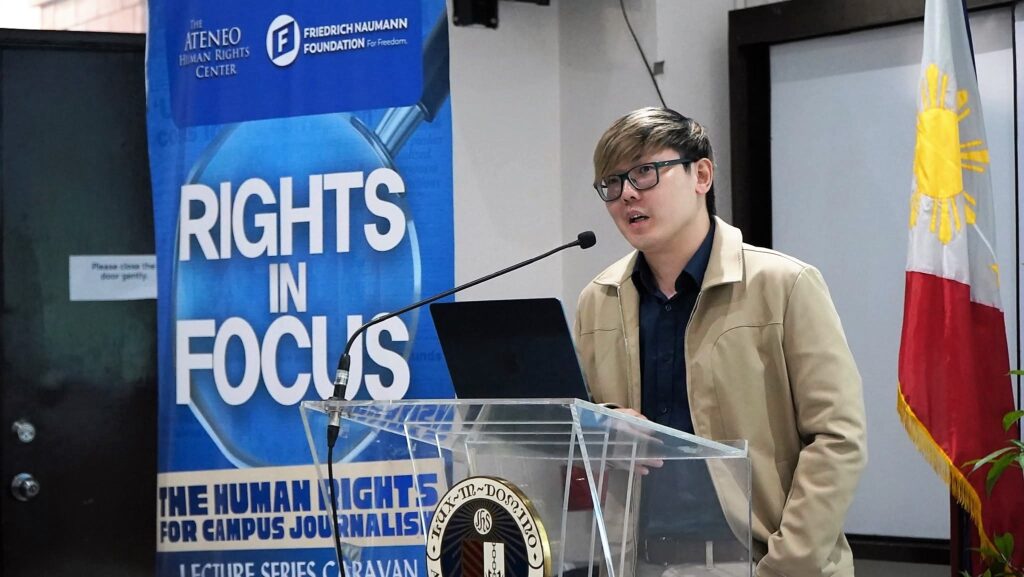
The spark for the lecture series caravan came from a reality uncovered during the earlier phases of Project Human Rights Lens. While campus journalists across the archipelago demonstrate a desire to cover pressing social matters, investigative pieces, and localized struggles, a significant number continue to encounter difficulties when trying to isolate the human rights dimensions of their beats.
Furthermore, a lack of training has hindered student publications from applying rights-sensitive, ethical, and trauma-informed reporting frameworks to their journalistic output. These gaps pointed to a need for deeper, more accessible, and sustained capacity-building interventions. Student publications face the same hostile environments as the mainstream press, yet they often do so without legal defense funds or safety nets.
The Rights in Focus caravan was designed to respond to this vulnerability. Rather than requiring student journalists to seek out external training, the learning opportunities were brought directly to the schools, ensuring that the insights of human rights defenders, legal scholars, and veteran investigative reporters were accessible to them.
The direct-to-campus model also aimed to address the escalating pressures that student journalists endure. In the digital age, a hard-hitting campus editorial or investigative report can expose a student writer to systemic online harassment, doxxing, coordinated trolling, and censorship from conservative school administrations.
By contextualizing human rights within the practical boundaries of journalism, it sought to transform how young writers view their roles, shifting their perspective from passive observers to active, protected watchdogs of truth, accountability, and social justice.
The journey begins
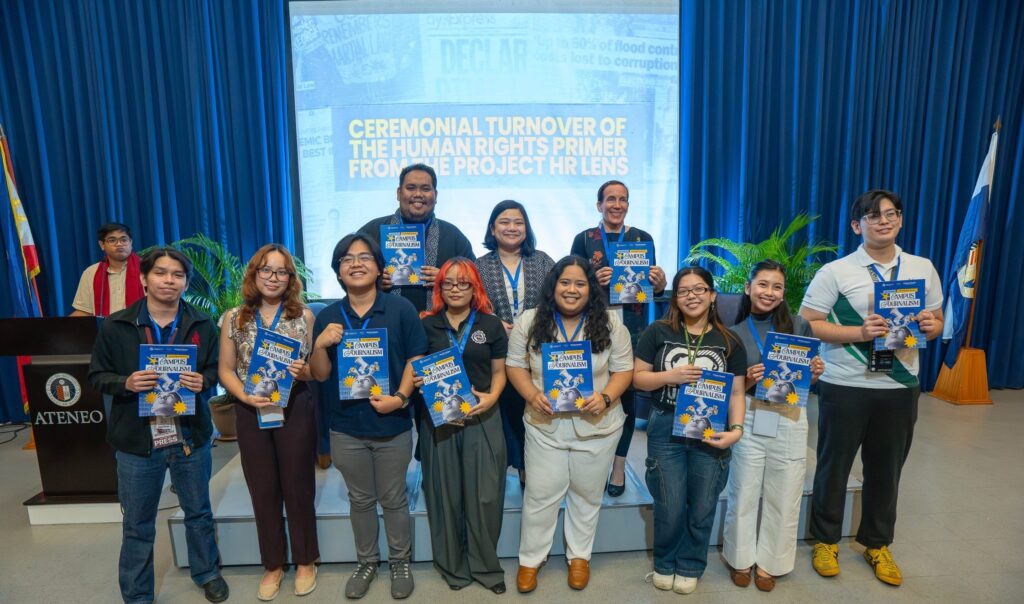
The groundwork for the lecture series was introduced during the Rights in Focus: Human Rights for Campus Journalists Summit 2025, which took place last December 6, 2025, at the Ateneo Professional Schools in Makati City.
Serving as a catalyst for the caravan, the summit gathered over a hundred campus journalists representing different student publications. The event established a collective baseline of solidarity and analytical rigor, proving that the challenges faced by individual student publications were part of a broader, systemic struggle for press freedom.
The event concluded with a gratitude toward the participating campus publications that helped co-create the space, such as The Benildean, The LaSallian, The Bedan, FEU Advocate, The GUIDON, Tinig ng Plaridel, Philippine Collegian, and The Varsitarian.
Mobilizing the university network
Building directly upon the momentum generated during the summit, the Rights in Focus caravan embedded itself within partner universities in the first half of 2026, transforming into a traveling lecture series. The caravan, which took place on different dates last April, tailored its curriculum to the needs and contexts of local student publications.
The caravan launched its campus tour at University of the Philippines Diliman, partnering with the Philippine Collegian. Given the long history of state surveillance, political activism, and structural pressures surrounding the state university, the modules here were intensely focused on security, physical protection, and state-level threats.
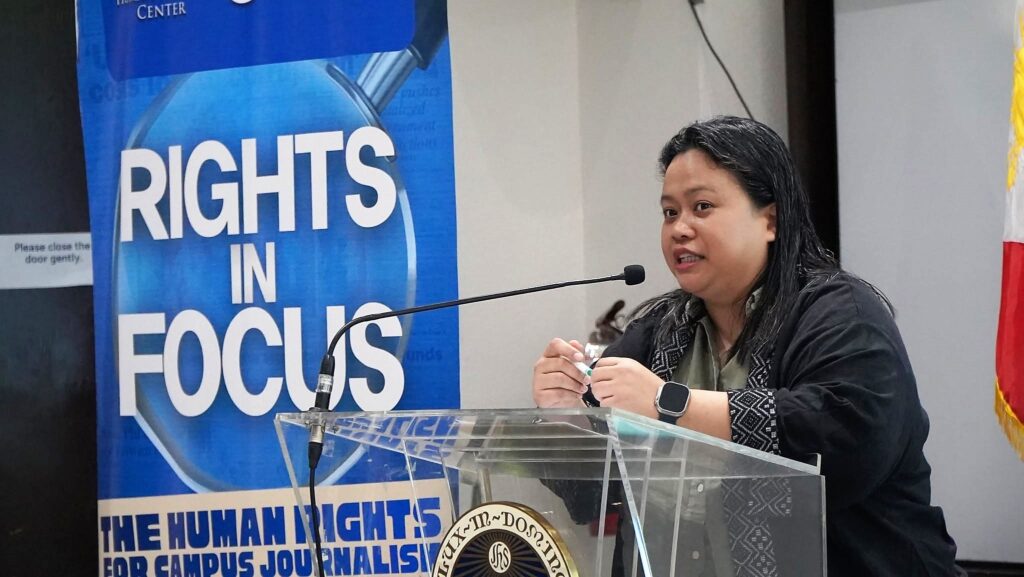
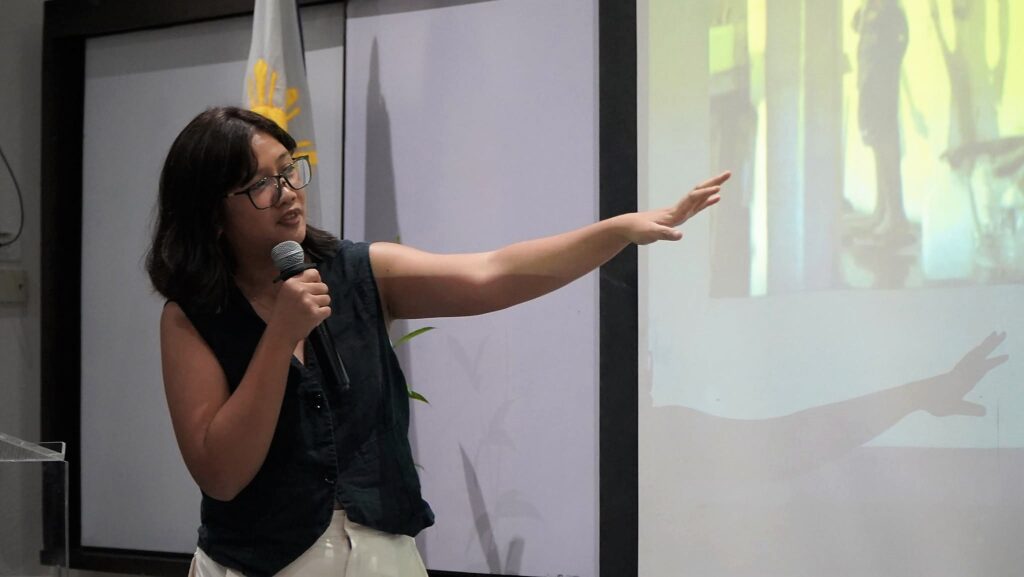
AHRC Program Director Atty. Maria Paula Villarin commenced the training with a highly critical lecture titled “Protection 101: Basics Against Red-Tagging and State-Level Threats.” Atty. Villarin walked the student journalists through the legal and constitutional remedies available to individuals who are targeted, red-tagged, or unlawfully arrested.
Complementing the legal defense module, Rowena Paraan, the Training Director of the Philippine Center for Investigative Journalism, led an operational session entitled “Safety Nets in Campus Journalism: Protecting the Press in the Age of Digital Attacks.” Paraan guided the participants through risk-assessment protocols, establishing safety measures for field assignments, conflict zones, and everyday newsroom coverage.
The caravan moved to Far Eastern University Manila, organized in coordination with the FEU Advocate. This leg re-centered the human element of reporting, focusing on how to transform standard news coverage into deeply human-centered narratives.
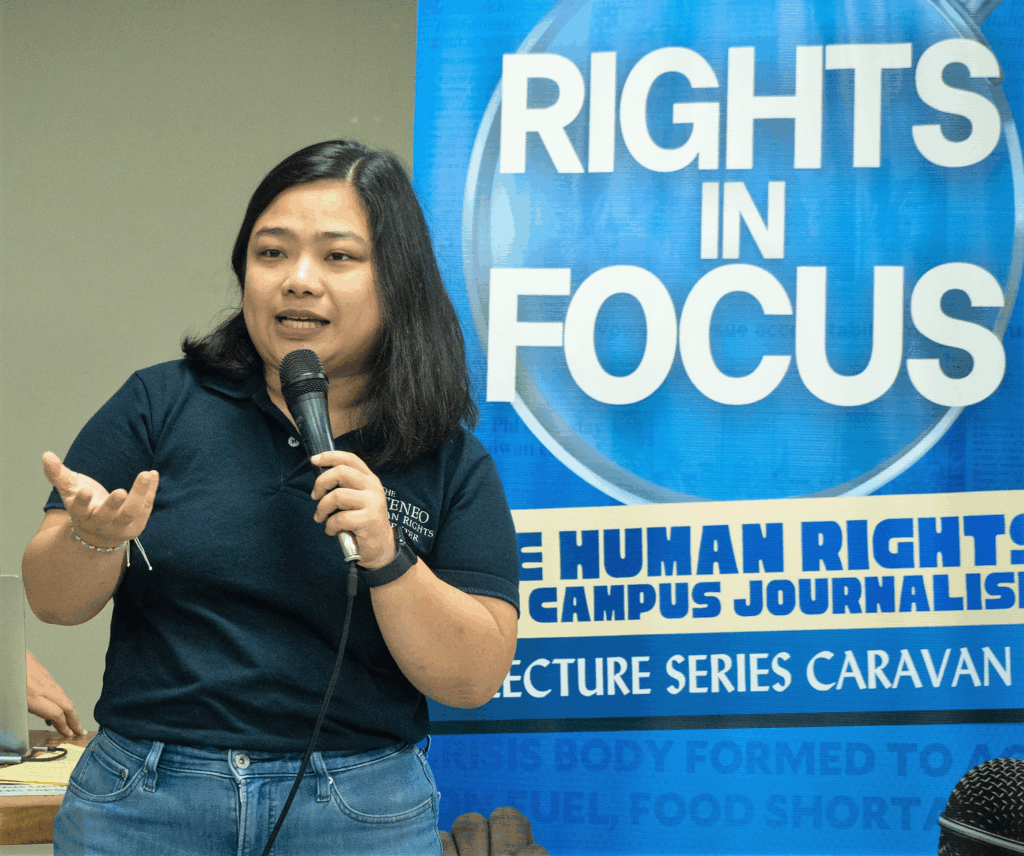
AHRC Executive Director Atty. Nicolene Arcaina placed the spotlight directly on the lived realities of ordinary Filipinos through her lecture, “Human Rights 101: Fundamentals of Human Rights Reporting.” Atty. Arcaina led the discussion where students shared when they first encountered the concept of human rights in their lives. By deconstructing these personal experiences, Arcaina challenged the students to break free from dry, clinical reporting styles and instead discover ways to make their everyday journalism more empathetic, accessible, and grounded in the communities they observe.
Following this, veteran human rights journalist Carlos Conde focused on “Rights-based and Rights-sensitive Story Gathering Practices.” Conde emphasized that campus press outlets must actively move away from merely reacting to daily campus news and instead dig deeper into systemic, thematic social issues.
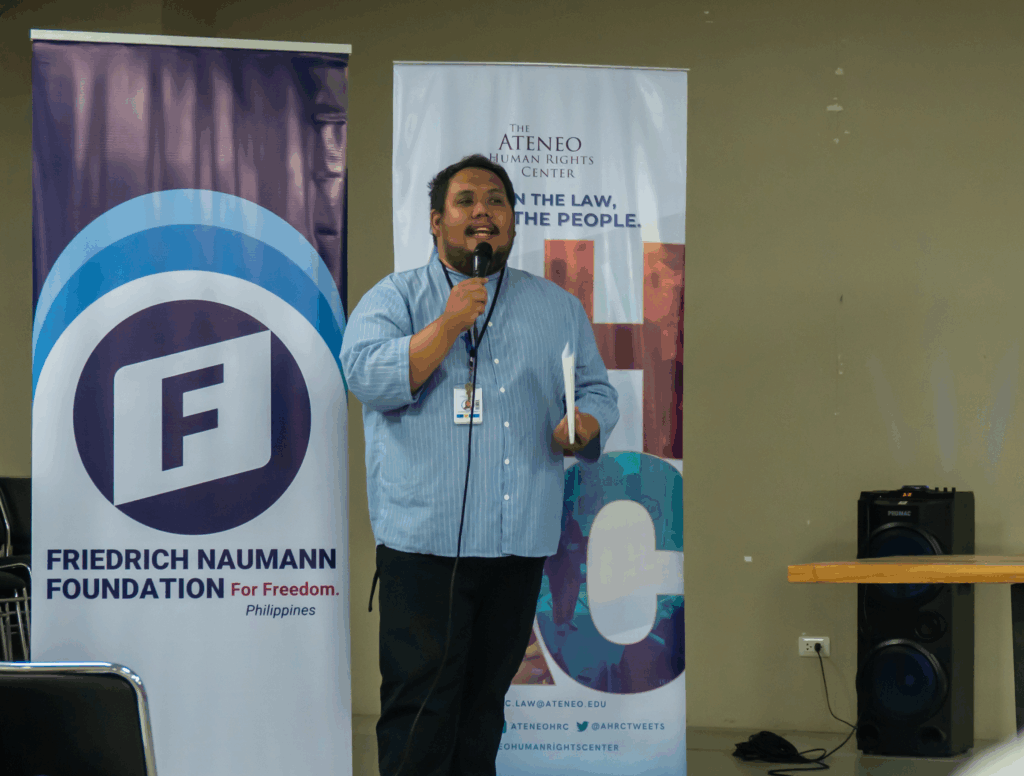
The third leg took place at De La Salle-College of Saint Benilde, co-organized by The Benildean, with the support of FNF Philippines. It focused on institutional autonomy, the historical evolution of press laws, and peer-to-peer publication management.
AHRC Program Director Atty. Paula Sophia Estrella presented an overview of student press freedom in her lecture, “Navigating the Campus Journalism Act: Mapping the Legal Boundaries of a Campus Publication.” Atty. Estrella compared the state of campus journalism before and after the passage of the Campus Journalism Act of 1991.
While the law was originally intended to protect student writers, Atty. Estrella highlighted its loopholes, like the lack of penalties for administrations that withhold publication funds or arbitrarily suspend critical editors. She delved into the struggles faced by student journalists and analyzed the proposed provisions under House Bill 1155 or Campus Press Freedom Bill, empowering students to advocate for their own legal protections.
To round this out with practical newsroom survival skills, Daniel Daiz, a former editor in chief of the Philippine Collegian, discussed “Campus Publication Management.” Daiz shared peer-to-peer operational insights on how to maintain a student publication’s financial independence, streamline operations under tight academic deadlines, and cultivate mental health and overall well-being within a high-stress student newsroom.
Global contexts and national accountability
Last June 4, the Rights in Focus caravan wrapped up its final leg and went back to the Ateneo Professional Schools. Supported fully by FNF Philippines and organized with the assistance of partner organizations The LaSallian of De La Salle University and The Perpetualite of University of Perpetual Help Manila, the talks encouraged student journalists to contextualize local reporting within broader national and global realities.
The morning session kicked off with a lecture by Prof. Wayne Winter Uyseco of the FEU Department of International Studies, focusing on Global Conflicts and Why It Matters to Journalism. Prof. Uyseco walked the audience through ongoing global conflicts, dissecting the role of journalism in shaping international narratives and outlining how geopolitical developments ripple back to impact domestic politics and local economies.
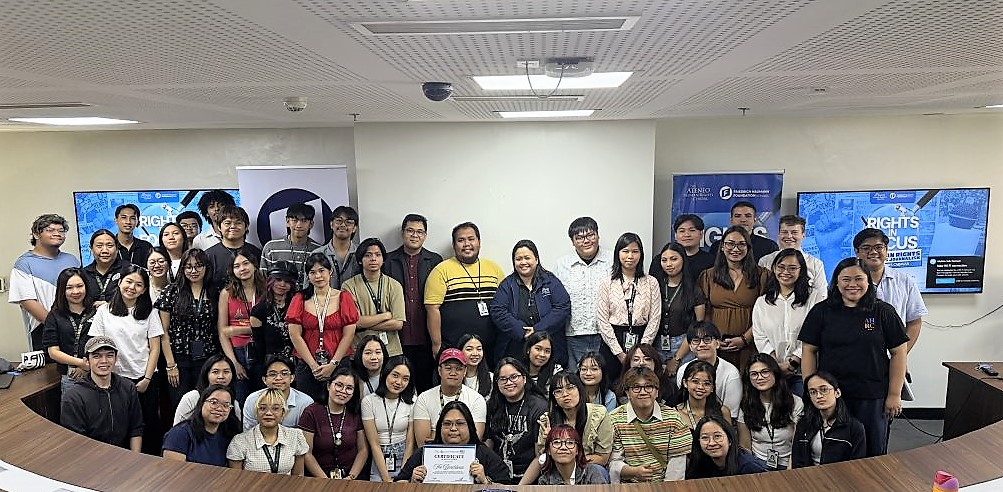
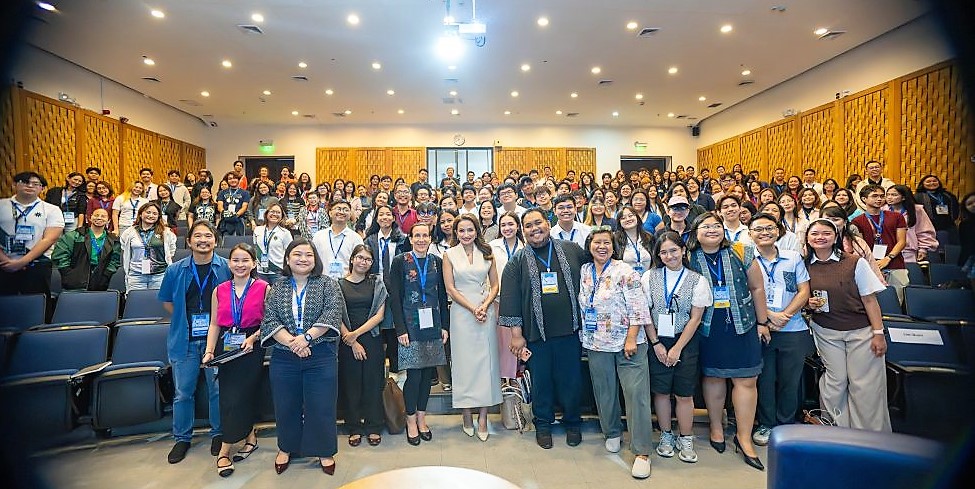
Building directly on this analysis, broadcast journalist Zen Hernandez of ABS-CBN News delivered a talk on A Practical Guide to Crisis and Conflict Reporting for Campus Journalists. Drawing from her experience covering complex crises, Hernandez emphasized that the key to effective conflict journalism lies in discovering the human connection. She shared how to find the human-interest angles that make global or structural developments immediate, relatable, and deeply relevant to ordinary Filipinos.
Shifting the focus back to pressing local issues, the afternoon session commenced with Kapisanan ng mga Brodkaster ng Pilipinas Deputy Executive Director Flordeliz Abanto speaking on Journalists as Watchdogs: Exposing Corruption and Fraud. Abanto gave student journalists an overview of the ethical standards, self-regulatory frameworks, and professional responsibilities that govern the press, urging them to maintain editorial integrity when auditing institutions and exposing systemic fraud.
Former Rappler senior investigative journalist Lian Buan, whose career has centered on covering high-profile legal battles, institutional impunity, and state-level scandals, tackled the Practical Guide on Investigating and Reporting Corruption and Accountability. Buan provided the participants with a step-by-step methodology for executing investigative reporting. She reminded them that exposing corruption requires patience, meticulous verification, and an unwavering commitment to holding the powers-that-be accountable to the public.
The legacy and the mandate to confront
The project culminated in the development of Information, Education, and Communication or IEC materials focused on human rights–based campus journalism. Rather than remaining abstract concepts, the learnings from the six-month caravan were synthesized into tangible, publicly accessible resources and operational manuals. Distributed directly to student newsrooms, these toolkits serve as lasting operational resources, ensuring that future generations of student writers have immediate access to legal defense frameworks, digital safety protocols, and ethical reporting guides.
As university press rooms across the Philippines continue to navigate resource cuts, administrative overreach, and coordinated online harassment, the professional mandate given to these young storytellers remains incredibly clear. The caravan proved that student journalists are an essential, foundational pillar of the country’s independent media ecosystem and dedicated defenders of human rights.
Atty. Arcaina summarized the spirit of the entire initiative as she issued a call to action, challenging student journalists to push back against institutional pressures that threaten their shared work as truth-tellers, advocates, and human rights defenders.
“In the face of red-tagging, censorship, and resource cuts for student publications, we speak and demand; in the face of impunity, we hold powers-that-be accountable; in the face of our own Government running away and tripping over its own greed and violence, we confront,” Atty. Arcaina stressed. — Seymour B. Sanchez

Started in 1927, the Philippines Graphic is the longest-running printed magazine of national circulation that provides relevant news and features and promotes Philippine literature.