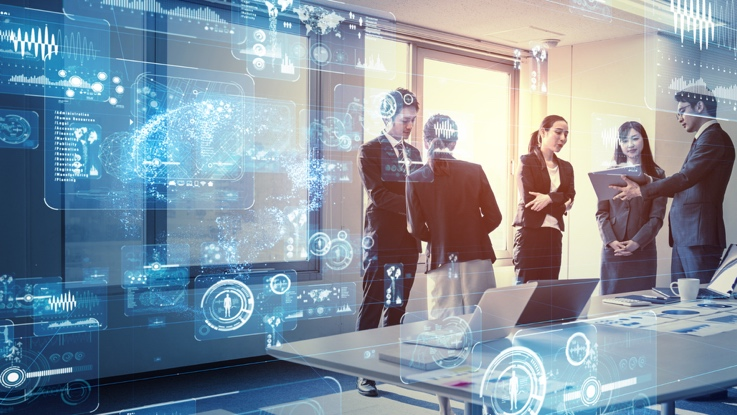
via GRAPHIC PLUS — The way organizations work has changed significantly. Hybrid work models, cloud platforms, and artificial intelligence tools have expanded how teams communicate, collaborate, and access information.
Employees now rely on messaging applications, shared digital workspaces, and SaaS platforms, often connecting from multiple locations and devices.
According to a 2025 IDC report commissioned by Fortinet, nearly four out of five enterprises operate in hybrid or AI-augmented environments. This global shift is reflected in the Philippines, where organizations are rapidly adopting digital tools to support more flexible ways of working.
However, this transformation also expands the risks organizations must manage. The modern workspace now spans email, browsers, collaboration platforms, and cloud applications, creating a broader and more complex attack surface. As work becomes more distributed, organizations must rethink traditional cybersecurity strategies and adopt approaches designed for this new environment.
A Growing Imperative to Secure the Modern Workspace
Cyberattacks are becoming more sophisticated as AI becomes part of the attacker’s toolkit. It enables cybercriminals to automate and scale highly convincing attacks, accelerating both their speed and impact.
Organizations in the Philippines are already experiencing this shift. According to a 2026 Forrester-Fortinet Report, 57% of organizations cite AI-driven threats as a top concern and a core driver of cyber risk.
AI is also lowering the barrier to entry. Tools can generate synthetic voices or deepfake videos to impersonate executives, while others create highly personalized phishing messages tailored to tone, language, and urgency.
These threats are no longer confined to email. Attackers are increasingly targeting collaboration platforms, browsers, and cloud applications, exploiting the same tools that enable modern work.
Human Factor Remains a Critical Risk
Technology alone does not define an organization’s security posture. People remain a critical factor.
The Fortinet Cybersecurity Skills Gap Report highlights that many organizations in the Philippines attribute cyber incidents to gaps in employee awareness. In distributed workplaces, employees frequently access and share information across multiple applications, devices, and platforms.
Many incidents stem from simple mistakes rather than malicious intent, such as uploading sensitive data to a generative AI tool or clicking on a malicious link.
Strengthening awareness and encouraging responsible use of digital tools therefore remains essential.
Taking a Unified Approach to Workspace Security
Work now spans multiple digital platforms, and security strategies must evolve accordingly. The traditional network perimeter has largely dissolved.
Protecting the modern workspace requires a unified approach that secures the channels employees use every day. Rather than relying on isolated controls, organizations need integrated visibility across environments.
AI is becoming a key enabler. Modern security systems can correlate signals across platforms, helping detect sophisticated threats earlier, whether phishing, account compromise, or malicious activity within collaboration tools.
This coordinated approach improves both detection speed and response, reducing the risk of threats spreading across the workspace.
Managing Insider Risk and Protecting Data
Protecting sensitive data remains central to workspace security. As organizations rely more on digital platforms, data is constantly created, shared, and accessed across environments.
While these workflows support productivity, they also introduce risk. Sensitive information may be shared across collaboration tools, uploaded externally, or accessed from unmanaged devices.
Traditional data loss prevention approaches were designed for more static environments. Today, data moves fluidly across SaaS platforms, shared drives, and AI-enabled tools. Effective protection now requires visibility into how data is used, understanding user behaviour and context to identify risks before they escalate.
Securing the Future of Work
As work continues to evolve, cybersecurity must evolve with it. Organizations must protect not only the technologies that enable work, but also the people who use them and the data that flows through them.
Strengthening awareness, improving visibility, and adopting a unified security approach will help Philippine organizations build resilient workplaces, where innovation and productivity can thrive without compromising security.
Started in 1927, the Philippines Graphic is the longest-running printed magazine of national circulation that provides relevant news and features and promotes Philippine literature.