
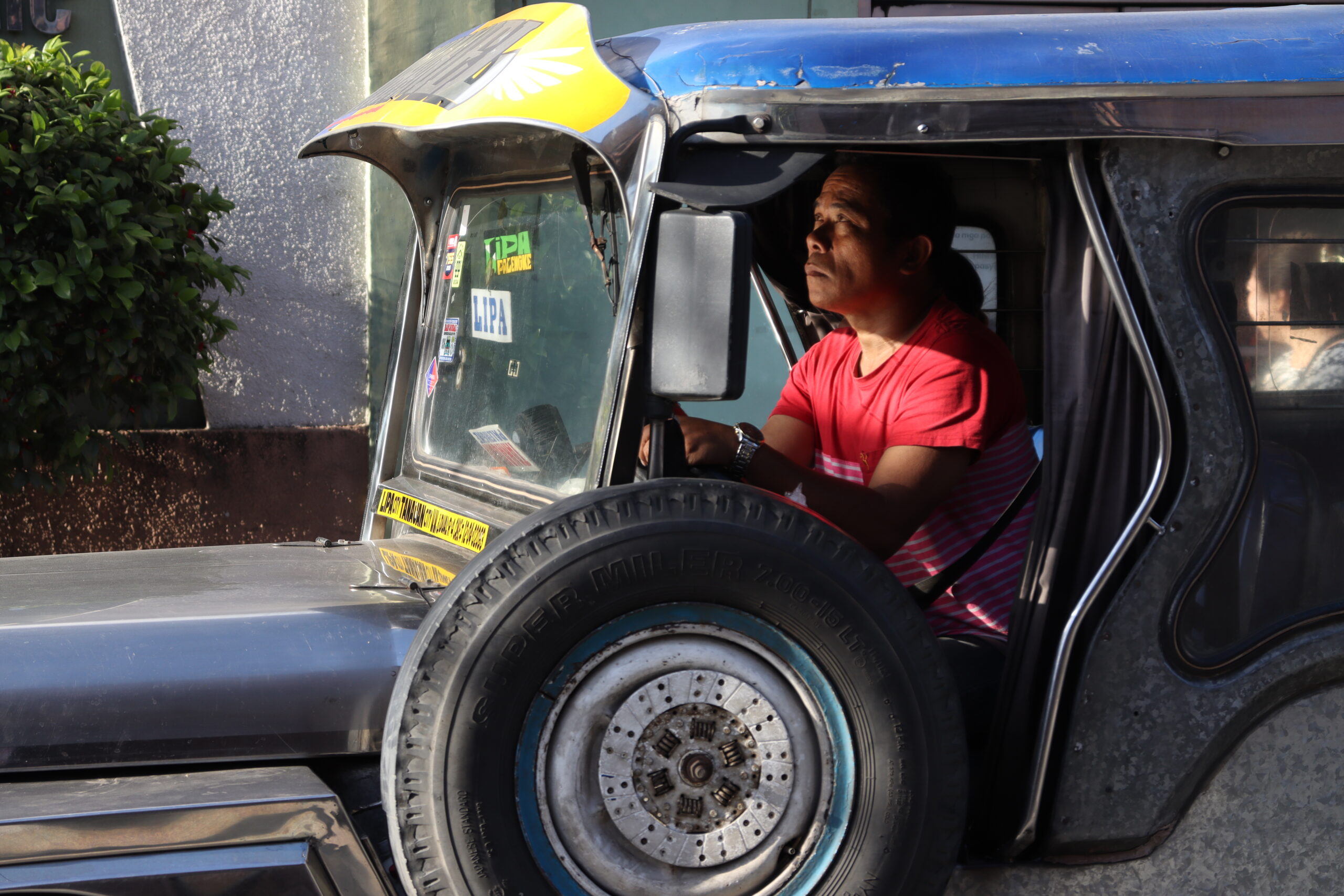
Before the third episode of the Philippines Graphic Literary Workshop (PGLW) concluded on April 18, we knew that we had one more thing that we can offer our bright young fellows: a starting platform for their creative endeavors. Here, we present one of their final outputs from the workshop. We also asked them to provide an artwork that they think best represents their stories. Read on.
Dark and bitter, only kapeng barako paired with sumang yakap can cut through the taste of waking and a growling stomach. It settles warm in Lucila’s throat, thick enough to feel like it is covering the worst times.
The coffee is always too hot. She likes it that way.
She drinks it twice; once every morning before sunrise while the city is still deciding whether to be alive and another every noon time, seated on the wooden bench beside the terminal.
Across from her, Mang Celing wipes the same glass he has been wiping for years. Slower now and less certain. Even the karinderya around him feels thinner than it used to.
“You’ll burn your tongue one of these days,” he tells her.
“After all these years,” she says without looking up, “it probably already is.”
The old man lets out a soft chuckle. And a small smile tugs at the corner of her mouth.
Around them, vendors arrange boiled peanuts into plastic bags. Tricycles cough awake. Stray dogs stretch beneath jeepneys. The air smells of wet pavement and pandesal and something faintly floral she can never name before six in the morning.
When she finished, she left a coin under the saucer and walked toward her jeepney.
A fallen king awaits at the far end of the terminal.
White paint, dulled by years. Windows reflecting a sky not fully awake. Inside, the seats are lined in tired blue fabric on both sides of a narrow aisle—spaces shaped by too many bodies that have long stopped asking for comfort.
Lucila climbs in anyway.
“Testing na laang are,” she mutters under her breath like a prayer even when her mind already knows.
With almost two decades on the road, last week has brought one of her worst. With only three hundred pesos to take home from a whole-day round trip, what has sustained their family needs throughout the years is about to crumble underground. Will her sacrifices ever be worth it?
Route 1. The First Position
Subli begins from the ground. Tiya Perla used to say this, that the earth is the first partner, that a dancer who does not feel the floor beneath her has not yet started dancing. The feet learn before the body does. The feet remember longest.
Lucila’s right foot rides the clutch the way it once found rhythm in gravel, not pressing or forcing. The jeepney shudders out of the terminal and her foot already knows the road’s uneven pulse the way it once knew the count before the gong.
Three passengers. The engine is warm, settling into itself.
She drives the way she once danced: from the bottom up, the body following what the feet have already decided.
Route 2. Half-Yielding
In subli, the knees are never fully straight and never fully bent. They hold the body in a sustained half-yielding, the long labor of staying in between. Aling Perla called it controlled surrender. Lucila spent years learning what that meant in her bones.
Her knees ache before rain now. They have for years. The jeepney’s seat sits too low and the vibration travels straight up through the joints without anything to soften it, not like the bamboo floor of the old plaza where her weight once dispersed in ripples.
A passenger hesitates at the door. One foot on the step, one still on the street, her body caught between boarding and not.
Lucila waits. Her knees hold the position without complaint. That, at least, they still know how to do.
Route 3. What the Long Road Does to a Line
She was praised most for her back. The way it stayed long even in the low positions, even in the bends that asked everything, her spine remained composed.
Eighteen years behind the wheel has given her a permanent rightward lean. She notices it only when she stands, one shoulder sitting lower than the other, straightening completely requiring a deliberate effort she did not used to need.
Near the overpass, the phase-out notice is pasted again on a concrete wall. She does not read it. She already has its shape memorized, the way you memorize something you wish you could forget.
She keeps her eyes on the road and sits as straight as the seat allows.
Route 4. Nobody Taught Her to Forget
The hands in subli are never decorative. They are speech, each position a word, each transition a grammar the audience reads without knowing they are reading. Aling Perla corrected her fingers the way others corrected posture. The hand finishes the thought the body began.
Lucila’s wrists click when she turns the wheel too sharply. Her knuckles have thickened from grip. The steering wheel has left a faint permanent callous across her palms exactly where the bamboo castanets once rested.
At a stoplight, schoolgirls cross in uniform. One holds her bag behind her, arms loose, moving with the careless grace of someone who has not yet learned to guard her body against the years.
The light turns green. Lucila drives through it without looking back.
Route 5. You Will Go Far
In the performance she remembers most clearly, she was sixteen. The hall was full. Aling Perla had touched her shoulder before she went on. You will go far.
She believed it. The body believes most things at sixteen.
Her left shoulder bears the old strain now, a tightness she works around without thinking, the way you stop thinking about a scar once it becomes a part of you. Yet long drives deepen it. She rolls the shoulder once at a stoplight and the joint answers with a quiet pop.
The road does not know the difference between leaving and returning. After eighteen years, neither does she.
Route 6. Breathe Into Here, Not Up Here
Breath in subli is not decoration but a structure. Aling Perla would press two fingers below the ribs and say: breathe into here, not up here. The chest rising was a beginner’s error. Breath was supposed to go low, to fill from the floor of the lungs and hold the body open from the inside.
Lucila exhales through the nose now at every intersection. Her body chose it somewhere along eighteen years, this small disciplined release at moments of stopping, a remnant of something she cannot name anymore.
She passes a jeepney parked at the roadside. The driver sits with both arms resting on the wheel, eyes fixed on the road ahead—— suspended in the particular stillness of a man who has run out of forward motion but cannot yet bring himself to turn around.
Lucila breathes low into her ribs and drives on.
Route 7. Last Move
The head in subli moves last. The body decides; the head agrees, slightly after, as if considering whether to follow and commit.
Her neck aches by the seventh route, a deep structural tiredness that lives between the base of her skull and the top of her shoulder. She turns her head left to check the mirror and holds it there a second longer than necessary while giving her muscles the stretch they have been waiting for since the first cup of coffee, since the engine first turned over in the dark.
Then she drives the last stretch to Mang Celing’s karinderya, where the light is always on. He wipes his glass and sets it down.
“You still running that old jeep?” he asks, watching her climb down from the jeepney the way he has for years.
“Still running,” she replies.
“Ay ika’y babalik pa?”
She does not reply: for now. The words sit between them already understood, the way all true things eventually settle at the end of a long day.
Route 8. The Body Keeps Its Record
What Aling Perla never said, what no one says, is that the body does not forget what it has done. Not the beautiful things, and not the cost of them. It keeps every performance, every fall on the concrete after rehearsal, every hour spent bending the knees into positions they were not originally meant to hold. The body is a more faithful record-keeper than memory.
Calamba arrives slightly less than expected, the way everything arrives now.
Lucila counts three hundred pesos on her thigh, coin by coin, as the last thing that still makes her feel like in control. The jeepney idles around her and she sits in the shape she has been sitting in for eighteen years: one shoulder lower, spine listing right, wrists resting on the wheel in the same place the buri hat once rested. The same body, keeping its record.
The terminal moves around her without pausing. A dog beneath another jeep. A vendor rebagging peanuts. The world doing what it does, unable to stop for any one person’s particular weight.
That is the most exhausting part. That it simply goes on.
Later that night she finds the lily of the valley on her backseat. A single stalk with an almost nonexistent smell. She holds it the way she once held her filipiniana.
Then she sets it on the dashboard where it will be dead by morning, but by then, she will not be there to throw it away.
Queen Haydee L. Maralit
Started in 1927, the Philippines Graphic is the longest-running printed magazine of national circulation that provides relevant news and features and promotes Philippine literature.