
Before the third episode of the Philippines Graphic Literary Workshop (PGLW) concluded on April 18, we knew that we had one more thing that we can offer our bright young fellows: a starting platform for their creative endeavors. Here, we present one of their final outputs from the workshop. We also asked them to provide an artwork that they think best represents their stories. Read on.
Scarlet-hued red persists in dripping down the old-maiden gloves.
That darn rugged pair was handed down to them by their grandmother after their affinity for concocting pigments was purposely exposed, intently presupposing the debacle ahead of them. Donned to their hands are the massacred artisan pair from a local brand called Plata, or is it Plato? Ploto? It is difficult to make out at this point, with the engraved stitching beyond any sort of repair. The off-white wool duo has never taken a much-needed leave of absence, or even sunlight for that matter. With the amount of nicks and bruises sustained, you would think those hands equipping them are under excruciating pressure and labor. A woodworker carving away a heavy piece of soft maple with a handheld saw and sander. Or perhaps a gardener attending to a lovely bed of chrysanthemums, roses, and lilies. That must be nice. Any of those sounds so so perfect. But no, those darn pair are meant for light, delicate work. They are meant for maneuvering a small wooden rod tipped with thin bristles.
“Remember your name.”
With every brushstroke, this is what’s ingrained within the lost mind of the acclaimed family’s sole successor. One time, the matriarch, with the assistance of her spouse, prepared a week-long exhibit in celebration of the very process of restoring the eighty-meter-long mural of Carlos “Botong” Francisco, the stunning Filipino Struggles Through History, nestled in the National Museum of Fine Arts. What a sight that was. Their child was there with them when each panel took a couple of months to polish. With sweat and tears, the two eventually wrapped up the project, in awe. The juvenile artist was still fresh out of third grade, and yet their eyes were already enamored by the magnificence—the greatness made possible by capable sets of hands. The matriarch, poised before the audio recorders, microphones, cameras, and eyes, gleefully pronounces their flair. This was the very moment the stature of their family held utter significance for the young visionary. “Remember your name.”
Crimson red gradually drips down.
No one to keep company with, their parents consistently away on much more significant projects, they cultivated the tendency to be overly engrossed in the splashed pigments laid on the canvas. Be it the three-eyed leopard they created with a vibrant burnt orange or the painting of a dirty child carelessly running across the riverside, pasted on the wall, they uttered to the figures, and the flat figures spoke back. Going to these moments of hushed afternoons, alone, they long for a world with only those figures.
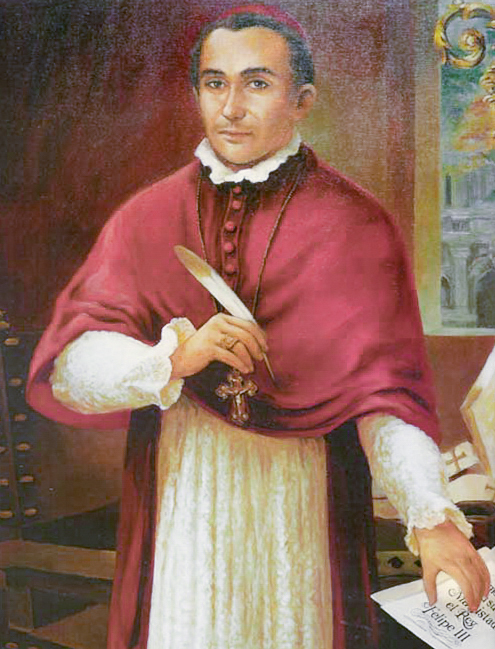
There, firmly stands Ojeda, still donning the wool gloves. They peek into every crevice of the grand hall, accentuated by the posed pillars and bourgeoise-esque decorative light fixtures that gave the entryway a sterile, yet extravagant atmosphere. This section of the gallery houses pieces of great spirituality, magnificent architecture of parishes, deadpan expressions of old men with white robes, and the like, some of which were once handled by their folks. A deep, heavy sigh releases. “Oh, thank the stars! No one else is here…” Their gaze, after much willpower and gutsy consideration, carefully moves downward—Archbishop Benavides lies motionless on the newly installed carpet floor.
Guardsman’s red slowly drips down.
Still shaken, they attempt to drag the beloved reverend, with each millimeter punching through with a reminder of a supposed sermon scheduled later this afternoon at The Santísimo Rosario Parish. In front of his joyful worshippers, young and mostly old, the Archbishop prepared a lengthy homily that could stretch until nightfall. But there he is, incapable of doing so anytime soon. Ojeda, looming over the body, stands still. A minute passes by, Ojeda looms over, standing, still. One more minute, Ojeda still stands, looming over. Breathless, almost surpassing the Archbishop’s current unmoving state.
The Venetian red steadily drips down.
Smears and smears of the fresh blood stain and splatter across the carpet, including the professional gear beside the body. The steamed vestments of the Archbishop are all ruined. The chasuble, the vestment typically worn over all the other garments during Liturgical services, is completely drenched. The white-linen alb, which should show innocence and purity of the wearer’s soul, is soaked. The pectoral cross over his chest, representing Christ’s sacrifice and victory over sin, is stained.
The worry eventually subsided, well, worsened. What would they make of Ojeda? It surely is a mere accident, a mistake, something that can still be salvaged. It is not their fault, surely not? Oh, poor Ojeda.
The rustic red haults to drip.
Now angry, stumbling all over the place, reckless, Ojeda glances back at the Archbishop’s lifeless body. “Maybe, I’ll just leave the body here?” This closely entangles their already-stricken head. Ojeda thinks of making a run for it—just hoping not a single soul pulls them back in, leaving the old world of pigments behind. But that is all, that is everything they ever know. Ojeda thinks of disposing of dear Father’s body. But what on earth do they know about properly getting rid of a bloody mess, more so, perfectly erasing every trace of this disastrous massacre. From the stained carpet to the vestments, it is just not plausible. Ojeda even thinks of framing someone else for the murder, anyone but Ojeda. Alas, there is no way to tinker out of this very scenario.
“Remember your name.”
“Ojeda.”
They fall to their knees, taken aback by the catastrophic event, seemly optionless. Oh, poor Ojeda—thinks of ending it all, but that wouldn’t be fair. In the moment, Ojeda makes a split decision. The bloody Archbishop still lies there, and yet, Ojeda paid no mind at all. A grin slowly takes shape. Ojeda removes her dried and stained gloves. The discarded pair slaps on the Archbishop’s face. It allows them to finally breathe and move. They make a run for it.
The oxidized red crusts over the rugged gloves.
That afternoon, they are nowhere to be seen. The exhibit coordinator, Mrs. Ojeda, enters the Religion Hall of the museum, immediately met with a bloody mess. The museum’s prized painting, the detailed, four-century-old portrait of Archbishop Miguel de Benavides, just lying there, deserted. Not a single trace of the artist is found aside from the aged gloves, along with every memory of the young perpetrator.
At the parish, viewers await the unraveling of the restored piece, which soon will be met with disappointment. Rushing to the altar, echoes of Mrs. Ojeda’s cries are witnessed by the crowd.
“Oh, Trining, where have you gone!?”
—Janssen Judd G. Romero
Started in 1927, the Philippines Graphic is the longest-running printed magazine of national circulation that provides relevant news and features and promotes Philippine literature.