
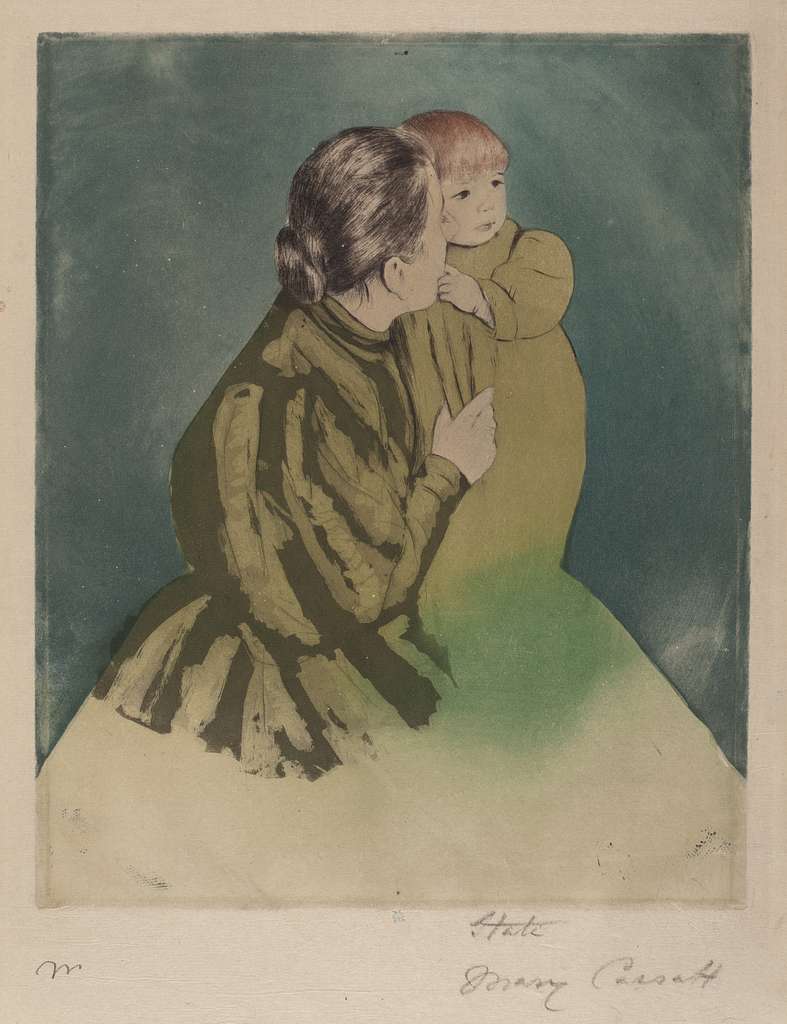
Before the third episode of the Philippines Graphic Literary Workshop (PGLW) concluded on April 18, we knew that we had one more thing that we can offer our bright young fellows: a starting platform for their creative endeavors. Here, we present one of their final outputs from the workshop. We also asked them to provide an artwork that they think best represents their stories. Read on.
Little Marie tugged at the fringes of her skirt as she peered through the glass. A beautiful dress sat on display, worn by a mannequin her size. She had been standing in front of the shop for what seemed like an hour, and yet it felt like minutes—simple, precious minutes that had washed the world away, and that lovely dress, the sole reason why.
However, the dress was hard to see. The glint of the display lights obscured its finer features, and the windowsill stood above Marie’s waist, so only her pouting lips could rise over the ledge—and even then, only if she lifted her chin. She had to stand on her toes.
Marie didn’t like standing on her toes.
The kids had a game once, and she had to stand on her toes, too. They were in the playground: the biting noonday sun hung high, and iridescent flies whizzed about the lone weeds scattered across the crusted earth below. The kids gathered behind a rusted playground climber, where the slide provided ample shade. Nemuel, Henson, Mickey, Tanya, and all the other kids of the barangay—including her—stood in a circle.
Nemuel was picking kids for a game of tígso.
“Me! Me!” Marie cried out among the many others who vied for Nemuel’s attention. She stood behind Mickey, who was a head shorter than her.
But Nemuel simply glossed over Marie, instead tapping Mickey on the chest, exposed by the loose sando that clung to his scrawny frame. It made a hollow thud as Nemuel’s knuckles knocked against it.
It made everyone laugh.
“Micks, you join Henson,” Nemuel said.
“But I don’t want to be with Henson! He’s a cheater—and a pig!” shrieked tiny Mickey.
“Shut up, twig! Nemuel, let’s be a team instead!” Henson yelled in turn, flushed and trembling. He was the biggest kid in the group, and he liked using his fists. He also liked restraining kids during tag until they promised not to tag him.
Everyone was afraid of Henson. But Marie didn’t mind.
“I can join Henson!” Marie quickly interjected, raising her hand with a smile and hopping on her toes. “Me! I can join him!”
But no one seemed to hear.
Nemuel held up a hand to Henson, as though saying, “Hold on,” then turned to Mickey.
“I don’t care, Micks.” he said, glaring, “Join him, or you’re out of the game.”
“But—”
“Please, Micks?” Tanya pleaded with her pretty eyes and perfect set of white teeth. Everyone liked Tanya—she was pretty.
Mickey conceded, and Henson agreed (because Nemuel wanted it and Tanya asked). Soon, the rest of the kids fell into their groups. And Marie—she was chosen last, even after she stood on her toes, hopping and yelling, “Me! Me!”
Nor was the game any better.
Marie had slipped past enemy lines, captured their base, and even announced it. Cheers were supposed to follow, and the game stopped at the moment of capture—but it went on.
Marie felt that she had to stand on her toes again.
And she did.
The dress drew closer; its features finer, as she finally got over the ledge with the help of her little fingers, which clung to a finely carved wooden frame. There wasn’t much strength in her little arms, nor in her delicate hands, so it hurt.
But it didn’t matter.
It didn’t matter if her feet grew tired from standing on tiptoes, or if her fingers strained from gripping the ledge, or even if her entire body shook as she held on desperately. The dress—that was the main thing.
The only thing, really.
She loved how it looked, and she loved the mannequin who wore it even more.
Her gleaming eyes trailed upward, from its hems frilled in white lace, to the small floral patterns—of dandelions—embroidered into the skirt fabric. And how clean the lines were that rode upward—creaseless, in even ridges, alighting just below a subtle cinch. The lines then smoothly joined into the shirt, where small, cream-colored buttons drew the eye to the fine cotton texture. The dress was yellow, a bright, beaming yellow; and the mannequin, as tall as her.
Marie held on, smiling, but trembled violently; before long, her arms finally gave out, and her legs buckled.
She fell back on the cold marble floor with a thud.
Silhouettes of legs shuffled past her like trees shifting in a dark forest, and murmurs cascaded around her. People threw her curious looks, and the security guard inside the store stuck out his head with a scowl. But Marie thought only of the dress in the display—its features, its color, and the mannequin that wore it.
She traced its shape in the air with her finger and resolved to see it again.
Marie got up and dusted off her smock dress, laughing. Then she stopped. The flats of her palms were darkened with soot as she patted herself down, and she frowned. Mama had given her the dress. She didn’t know where it came from, but it was dirty, and it already had holes when it had been given to her late one night.
“It’s okay, Marie,” her Mama had said. “I’ll fix it up.”
“But Mama!” Marie cried, “It has holes! And it’s too big for me!”
“I’ll fix it up. I’ll fix it up. Don’t worry, Marie,” her mother reassured her gently, and, reaching down, stroked her soft, auburn hair.
It was already late into the night, and Marie lay in the bed they shared—she couldn’t sleep. Her mind was occupied by the sound of torn fabric. It came from the sala, and she wondered what caused it. Marie tossed about in the loosened sheets; it was also hot, she thought, stiflingly hot! Not to mention the bed was rickety, and the bugs—my goodness, the bugs! They crawled out in droves from the foam matting and damp blankets, pricking her incessantly with their tiny, needle-like teeth.
She couldn’t sleep.
But what really kept her awake was Mama.
Marie often slept to her voice, humming lullabies so distant, yet so near. A caressing hand would move with the songs, covering the heat, the damp, the bugs in a sweet, melodious blanket. Marie would smile with eyes shut, feeling like the only child in the world, wholly cradled in her mama’s tender inflections.
But her Mama wasn’t in bed, still. Only her shadow appeared on the wall beside her, bending over, arms moving back and forth. Marie guessed her Mama was at the table in the adjacent room, fixing her dress under the dimming white lightbulb. Her Mama already had trouble seeing. She didn’t need to fix up the dress—Marie didn’t like it, anyway.
It had holes and it was too big. It also had a sickly hue to it—a drab yellow that made her sad. Marie thought of several more reasons to dislike the dress, much like those. But soon, it all reeled back and merged into a singular thought:
“I don’t like it,” Marie mumbled to herself. “I don’t…”
She mumbled it once, twice, then a third time, weakly, then drifted off into sleep. But the sound of torn fabric carried until the morning.
When Marie awoke, first light had just broken through the blue tarp curtains, illuminating the room with a ghostly glow. She heard her mother call out to her and followed her soft voice to the sala. Her Mama’s face peered out of her folded arms, yawning. She lifted her arms off the old wooden table and revealed her finished work: the dress had been patched up, and its holes filled by strange textiles that stood thickly against the surrounding material.
“Come, Marie,” her Mama pleaded tiredly, albeit with a sweet smile. “Come, put on the dress—that’s a good girl. There we go.”
Half-asleep, Marie slipped on the dress, and her mother clasped her hands together in excitement. “Ah! How pretty! My child’s so pretty! Come, come, turn around—that’s it. Oh, my—look at her!”
Marie didn’t feel very pretty, and the dress itched—especially the foreign fabric. But Mama was very happy, and she hugged her tight.
Marie smiled silently and looked down. She rubbed the hems of her dress between her fingers, then turned to her Mama. Her Mama was quivering, her face was gaunt, and there were dark rings under her eyes. Marie felt her Mama was more bones than flesh, and she shuddered at the thought of tracing her cheeks with her hands—then she’d discover her Mama really was all bones. But the bony woman smiled at her so warmly, waiting for a reaction.
“Ma—” Marie began, but stopped short as she noticed her Mama’s skirt was shorter than it had been. In fact, some parts were just as long as before—only the skirt looked uneven. It was torn up in places, the shape and pattern of which matched the patches on her new dress.
“Mama,” Marie said with a pout, “what happened to your skirt?”
Her Mama winced, rose from her seat, and quickly tucked her skirt behind her knees. She sat down just as quickly, concealing the tattered parts from Marie. Then she said nervously, “Marie, I hope you like your new dress,” and, pressing her hand gently, continued, “You look very pretty.”
Mama kissed her, and she tried to like her new dress since then, but she couldn’t help but like the one before her even more.
She imagined herself in it and thought herself very pretty. She closed her eyes and swept her hands over her hopelessly creased smock and imagined it was the waveless yellow plains of the dress on display. Next, Marie imagined herself with a perfect set of white teeth like Tanya’s. It’d be nice to look like Tanya. But it was no use—Marie’s teeth had holes, and she couldn’t do much with the whistling noise whenever she giggled.
She giggled, then it whistled; then she giggled some more.
But her Mama, she knew, would ask her to twirl for her. “So pretty!” she’d say. And she imagined Mama with a pretty yellow dress herself. It was brighter than hers—it had to be brighter.
Then Marie opened her eyes.
Mama gave her lullabies; Marie would get her a pretty dress. But the dress stood behind a glass barrier, and her toes could only stretch so far.
How were Mama and she to have dresses of their own, then?
“Good afternoon, sir,” a security guard said, followed by a distinct click as he twisted a brass lever. The intricate wooden door with its glass frame tinkled as it swung open. A man with his daughter entered the shop, and cold air wafted over Marie, carrying the smell of scented cloth and mahogany.
“The dress!” screamed Marie as she jumped up. Her eyes glinted like the coppery glow of the display.
“Marie! Marie!” cried a woman’s voice from behind. “Wait!”
No, but she couldn’t wait! Her attention was fastened to the door that led to the bright, yellow dress. It was wide open. And despite the incessant cries of the voice from behind, Marie had already gathered the fringes of her skirt and pulled it above her knees.
Then she took flight.
“Wait!” cried the voice again, strained and coughing.
Marie ran. Her excitement had given her wings. Her bare toes felt light as they pushed off the polished marble. She was flying, she thought, as the gap between her and the dress shortened.
Soon, she wouldn’t have to stretch her toes anymore.
It didn’t take long before she was in front of the door, and no longer before she went past it. It was wonderful! The ceiling was so high up, and the floor twinkled, and, around her, Marie found herself surrounded by dresses, dresses, and dresses—for her, for Mama, for everyone. Like a flower field of striking hues swaying before a rich brown canvas—it smelled just as good, too.
Then Marie saw it: that bright, beaming yellow standing on display.
However, before she could run to it, her Mama swept her up in her arms, all the while reprimanding her: “Marie! This child, really! Where’d you go? I was looking all over for you!”
“Mama!” Marie shrieked. “Mama! There’s the dress—for us! For us!”
When her Mama saw the yellow dress, her brows furrowed and she sighed. She was about to say more when the store manager intervened.
“Excuse me, ma’am,” he said.
“Oh—oh, yes, hello,” her Mama stammered.
“Yes, hello… ma’am, we’d just like to ask if you were planning to purchase anything in the store.”
Marie’s Mama set her down and held her hand. Marie felt her Mama’s bony hands rattling. It reminded her of Henson’s hands—his shook whenever he was angry. But Mama wasn’t angry. She was frozen in place and had a doe-eyed look that made Marie sad. Marie glanced at the manager, then at her mother.
She didn’t like the manager, but she wanted her Mama happy.
“The dress, Mama!” Marie screamed in delight.
But her mother threw her a pained look, one that darkened the rings beneath her eyes and sank her flesh deeper. Marie shrank back in silence—her Mama really was all bones!
“Marie—” her mother began, but the manager broke in.
“We’re terribly sorry, ma’am,” he said, sneering as he ran his eyes over her mother’s emaciated look and torn skirt, as well as Marie’s dirty smock.
“It’s just—everything in the store is quite delicate. Perhaps you may return… next time?”
The manager shaped his lips into a thin smile. Then, looking past the pair and tilting his head slightly, he signaled the guard to escort them out.
“Yes, we’re very sorry,” squeaked her mother, lowering her head; her face flushed. “We’ll go. We’ll go.”
The guard placed his hand behind Mama’s back and prodded them out the door. Marie, meanwhile, had been lifted by the waist. The dress grew smaller and smaller—and she didn’t understand why.
“Mama! The dress! The dress!” she cried, her arms reaching out in vain. Marie’s eyes stung; then tears shrouded the dress altogether. And she wailed—wailed as yellow was overtaken by a watery haze, wailed at the sound of creaking wood, wailed until there came the distinct click. And the door was shut.
Through the glass, she could only see a hazy outline of yellow being taken off the display, and the fuzzy shape of a man holding it up to a little girl. There followed what seemed to be laughter, and someone twirling.
The dress—Marie could no longer see it.
It had been an hour since the pair had walked away from the store. An hour, yet it felt like minutes—terrible, painful minutes that ran away from Marie—and they found themselves at an overpass above a busy highway, where cars and buses flitted below in an uncaring stream.
Marie had gone before her mother, head low and eyes fixed ahead, her tears leaving a trail behind her as she pressed on. Her mother struggled after her, fighting for breath, as a crowd drove their shoulders into her weak chest, making her stagger.
But still she ran after Marie, crying, “Marie! Marie! Wait!”
Marie walked and felt small: Nemuel was smart; Henson was big; Tanya was pretty; and Mickey was the smallest. But she felt smaller than Mickey.
Marie stormed ahead, only ahead, deeper and deeper into the forest of legs and dust, of strange faces that turned the other way. She walked until her bare feet blistered and the noise drowned her already silent cries.
Then she stopped.
She remembered the yellow dress and looked down at her dirty little smock. Marie creased the hems between her fingers, then gritted her teeth. She tugged at it, then tugged harder: it had holes. It was too big. It was dirty! Dirty! Dirty!
“No one wants you! No one!” she wailed, pulling at her dress until she lost strength and fell into a crouch.
The sound of shuffling feet surrounded her, and she listened to soles gritting against dust and concrete. None of them stood on their toes. She tried to, but couldn’t, and she cried.
“Marie…” she heard her Mama whisper from behind.
Marie turned to face her. Her Mama stood with eyes glinting and face flushed. There was still a warm smile on her lips, a bright, beaming smile.
“Mama…” she whimpered. “Mama!”
Marie tried to stand on her toes, but she didn’t have to. Her Mama had reached down and swept her up, enveloping her world in trembling arms. Every gap was filled with the slow, moving warmth of her Mama’s embrace. And Marie sobbed, her chest heaving along with her rising and falling shoulders. She sobbed, buried in her mother’s breast.
“Mama… why?” she muttered faintly. “Why doesn’t anyone want us?”
Her Mama pressed her lips over her head, and her frail hands clasped her cheeks. A dull brown haze swept over the pair as the crowd passed, and Marie tightened her embrace with a whimper. She trembled at the thought of disappearing. Her Mama pulled her closer with a sad smile. She thought of Marie, and thought of herself, wondering if she’d done her daughter any good. All she had were lullabies—the only good thing she could give.
With her voice quaking, Marie’s mama sang as she glanced around:
It was a world of eyes that darted here and there but never on them; crowds that moved in a rush, like currents that coursed over rocks buried in a riverbed, and they moved unfeeling, unseeing, through clouds of dust and smoke. It was a world that shuffled on and would continue to shuffle on, past the moth-eaten beggars, past the mangy strays, past the sick, the hungry, the small—past Marie and her, who sat beneath the drab yellow sky.
She tore herself away from the sight. The lullaby ended, yet the world remained. Her little Marie—she hoped to give her more, but she couldn’t.
She couldn’t…
“I love you, Marie…” she whimpered, her heart trembling.
“Mama loves you…”
Written by Robert Shaun G. Te
Started in 1927, the Philippines Graphic is the longest-running printed magazine of national circulation that provides relevant news and features and promotes Philippine literature.