
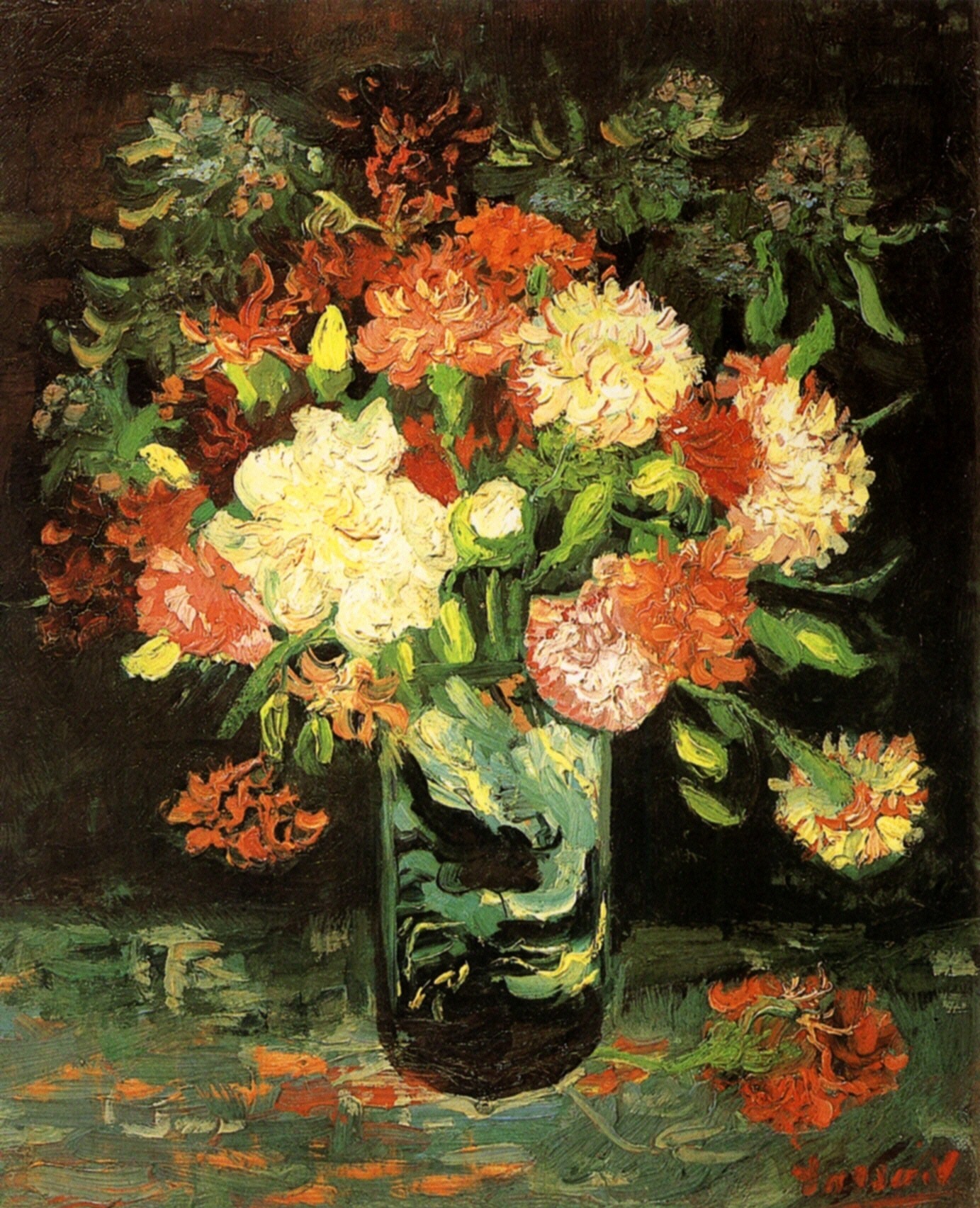
Before the third episode of the Philippines Graphic Literary Workshop (PGLW) concluded on April 18, we knew that we had one more thing that we can offer our bright young fellows: a starting platform for their creative endeavors. Here, we present one of their final outputs from the workshop. We also asked them to provide an artwork that they think best represents their stories. Read on.
He steps forward in front of the mirror and sees the bags forming around his eyes, sinking deeper into the crevices of his skin with each passing year. They look like shadows hiding away from what’s left of his youth. Strands of his long gray hair sway over his eyes, thin as cobwebs; his silver strands catching the faint light that filters through the window. He exhales and blows them upward, before smoothening them to the side with his wrinkled fingers.
You’ve grown old, he says to himself, though the words did not leave his mouth.
The man in the mirror does not answer. He never does.
White whiskers fan out across his cheeks, uneven and wild, dancing to the rhythm of the afternoon breeze slipping through the half-open window.
“Where did it all go wrong?” he murmurs.
The question settles in the room like floating dust orbs—visible yet unable to be pried. Outside, birds nest near the edge of his window, their songs spilling into the room with careless abundance. Once, the old man would have named each song, recognized their rhythms, and even whistled back. Now, the sound feels distant and foreign, like a language he used to speak fluently but can no longer understand. Perhaps his eardrums no longer function as they once did, no longer weaving each hum into a thousand beats of pleasure. Or was it the joy that abandoned him first, he could not tell?
He doesn’t want to be here.
If it were up to him, he would be somewhere else entirely. He imagines it with aching clarity: the city park just a few streets away, where trees cast wide, forgiving shadows and the wind carries a sweet scent of damp earth and grass. He would stroll along its winding paths, unhurried. He would bring a small bag of crumbs to feed the ducks gathered near the pond, watching them cluster and scatter in gentle chaos. He would sit on his favorite bench, the one slightly crooked from age, positioned just right so that the city skyline rises behind lush oak trees. From there, he would quietly laugh to himself from the memories of his youth.
Their youth.
He would open a bottle of apple cider and feel the condensation dampen his palm, take a long sip, and let the sweetness settle on his tongue. He would lean over the pond, watching his reflection ripple and distort, his beard wavering. And when no one is looking, he would wander into the garden. There, dozens of carnations grow in quiet defiance, their stems seemingly renewing every other week. He never understood how they managed it. He never asked. Some things are better left unexplained, he imagined. He would pluck a few—carefully, almost unapologetically—and carry them with him as he walked. One by one, he would place them at the feet of the park’s unassuming statues: a soldier, a poet, a nameless figure cast in bronze. Then finally, he would leave the last one where it mattered most.
That kind of freedom feels impossibly distant now, like a dream he once had but cannot fully recall. He was about to turn away from the mirror when a knock broke the silence. It is soft, almost hesitant. His eyes do not move. He keeps his gaze fixed on the reflection before him, as though turning away might turn into an act that he is not ready to accept.
“They’re ready for you,” comes Martha’s voice, soft and careful, entering the room along with the creak of the door. She is a woman of twenty, tall and slender built, her dark, curly hair swaying effortlessly from her shoulders—a living outline of a world he once built and believed would last. She stands before him, whole and undeniable, her marble-white skin as bright as the flowers he plucked from the garden park, yet he cannot find the courage to meet her eyes.
He blinks once. Then again. The man in the mirror blinks with him. For a brief second, he does not recognize the face staring back. The skin hangs too loosely. The eyes seem hollowed out, not with grief, but with the knowledge of absence. He looks less like a man and more like a corpse; something that has rotten.
He turns slightly, glancing toward the bedside table. A small vase sits there, empty. His chest tightens. He reaches for it, fingers brushing against the cool glass, searching for the familiar touch of a stem and the soft press of petals. But there is nothing.
“Where are the flowers?” he asks Martha.
There is a pause.
“They’re downstairs,” Martha replies with caution. “With the others.”
The others, the old man repeated in his head.
“You should come,” she adds, quieter now. “They’re waiting for you.”
The old man does not answer, other than his cold, defeated silence. Instead, he sets the vase back down with a careful precision, as if placing it incorrectly might disturb the fragile balance of everything around him. His gaze drifts once more to the mirror, lingering just long enough to confirm what he already knows: the man staring back will not help him.
So he turns away.
The window is still half-open.
He crosses the room slowly, each step creating a creak beneath his weight. When he reaches the sill, he climbs through the window, the birds scattering in a flurry of wings, startled from their nest. Feathers drift downward as he steadies himself outside, gripping the edge of the wall before lowering himself onto the ground below. He lands with a quiet thud, his legs never betraying him, and his breath catching briefly in his chest.
For a moment, he stands there, unsure. And then he begins to walk.
The streets are familiar, though they feel narrower now, as if time has pressed inward on them. He moves past shuttered windows and quiet alleyways, past people who do not notice him; or perhaps choose not to. The world continues in its steady rhythm, indifferent to his presence. When he reaches the park, something in him loosens. The gates stand open and inside the air feels lighter somehow. The trees sway gently, their leaves whispering to one another in a language older than himself. The pond reflects the sky in fractured pieces, disrupted by the movement of ducks quacking and gliding across its surface. They approach him as he nears, expectant.
“I’ve got nothing today,” he says to them softly, apologetic that he has nothing to offer.
They linger anyway.
He walks past his favorite bench without sitting. It remains where it has always been, patient and unchanged, still covered by the shade of a nearby overgrowth. The weathered wood sinking along the curvatures of a thousand waists. He lets his hand brush against its back as he presses, a fleeting acknowledgment.
The garden lies beyond.
The carnations are there, just as he remembered, all bustling in different colors, unblemished and impossibly alive. He steps among them, bending carefully as he begins to pick. One stem. Then another. And another. Each one placed gently in the crook of his stick-figured arm, gathered like something precious. When he has enough, he turns back. The statues stand scattered throughout the park, silent witnesses to passing time. He approaches the first one; an old general from a distant war. He places a red carnation at its base. Then a purple carnation to a dead poet. And then a pink one to a goddess, a yellow one to a founder. Each offering is made with different colors, without ceremony, without an audience. Until only one flower remains.
The old man holds it differently, careful that its white petals don’t fall along the turbulence of his steps. He walks to the far edge of the park, where fewer people wander, where the paths narrow and the trees grow closer together. There, half-hidden beneath the shade, is a small stone figure—an angel with wings unfurled, her slender arms lifted toward the heavens as if caught in an eternal gesture of longing.
He stops in front of it. For a long moment, he says nothing before slowly kneeling. The ground is cool beneath him. His old knees protest, but he does not rise. Finally, he places the final carnation at the base of the statue, adjusting it slightly until it sits just right.
His hands linger. “I couldn’t bring them,” he says, voice barely above a whisper. “They’re all downstairs. With you.”
The breeze shifts, rustling the leaves overhead.
“I didn’t want to see it like that,” he explains to the wind. “All those people. All those words.”
He exhales, a quiet, uneven sound.
“I thought… maybe if I came here first, it would feel the same.”
It doesn’t feel the same. But he stays anyway.
The park continues around him; the distant laughter, the soft splash of water, the murmur of the wind through branches. Life, moving forward without pause. Then, he closes his eyes. For a moment, just a moment, he imagines her beside him. Not as she was at the end, of course, but as she had always been here, laughing softly at their memories, brushing dirt from the bottle of her cool apple cider, holding a white carnation up to the light as if it contained something worth studying.
When he opens his eyes, he is alone again. But the flower remains.
And somehow, that is enough for now.
Written by Charlson Patulin
Started in 1927, the Philippines Graphic is the longest-running printed magazine of national circulation that provides relevant news and features and promotes Philippine literature.