

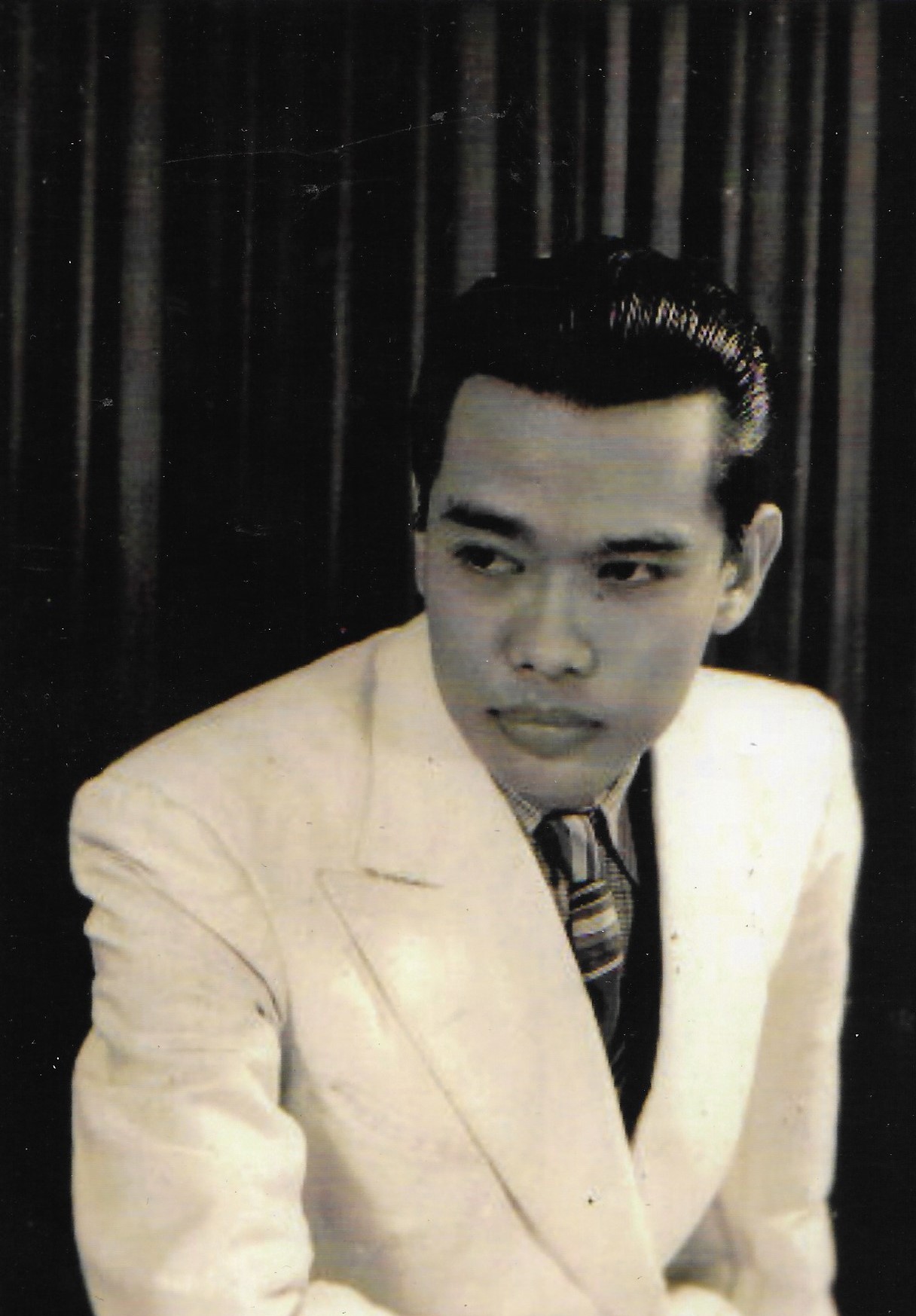
In the history of Philippine komiks and within this niche and cross section of visual art and literature, Tony Velasquez stands as an icon, an undisputed leader and visionary, yet the man behind the legend remains known to only a few.
To generations of Filipinos, he is best remembered for Kenkoy, whose popularity transcended the printed page to become a cultural icon, eventually eclipsing even him as its own visual creator. And to those who missed the era of komiks, most of us have yet to know much of Velasquez and so the urgency of bringing back into the public consciousness the life and prolific body of work of this artist and trailblazer can hardly be overstated.
Thanks to this new book, a means for this reacquaintance is finally possible.
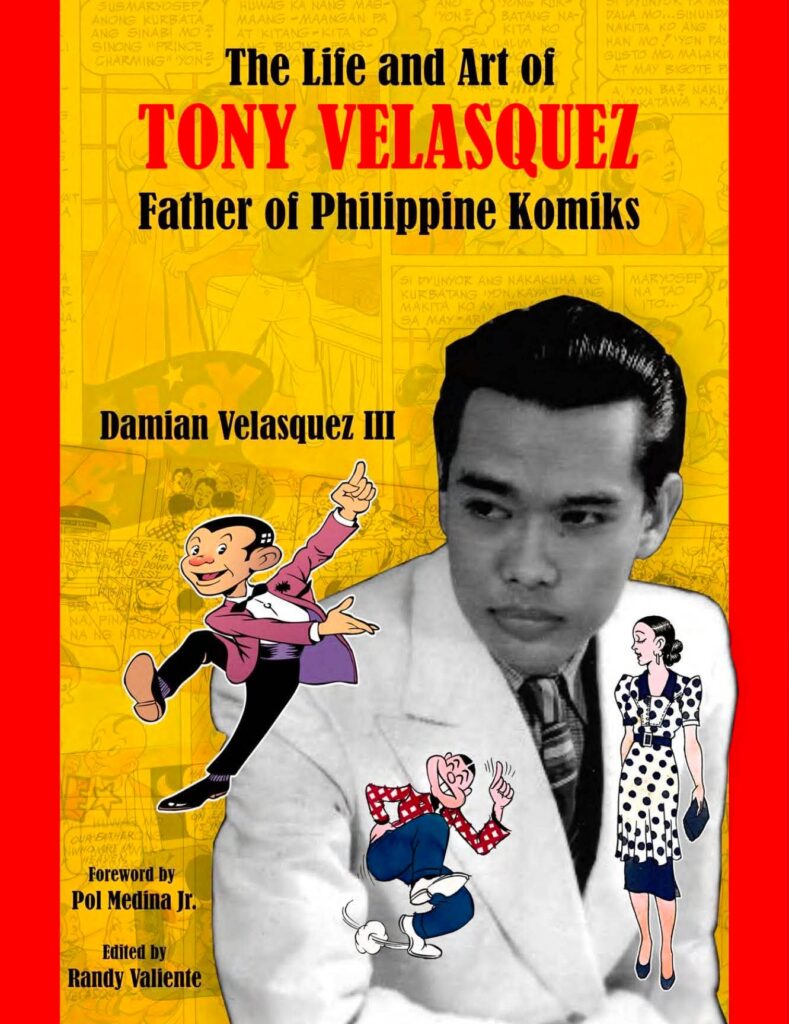
The Life and Art of Tony Velasquez: Father of Philippine Komiks, written by the artist’s grandnephew, Damian “Ian” Velasquez III is about to be launched. Written by a member of the family, the book is more than an objective account of the artist’s achievements; it also serves as a filial tribute to the man behind the legacy.
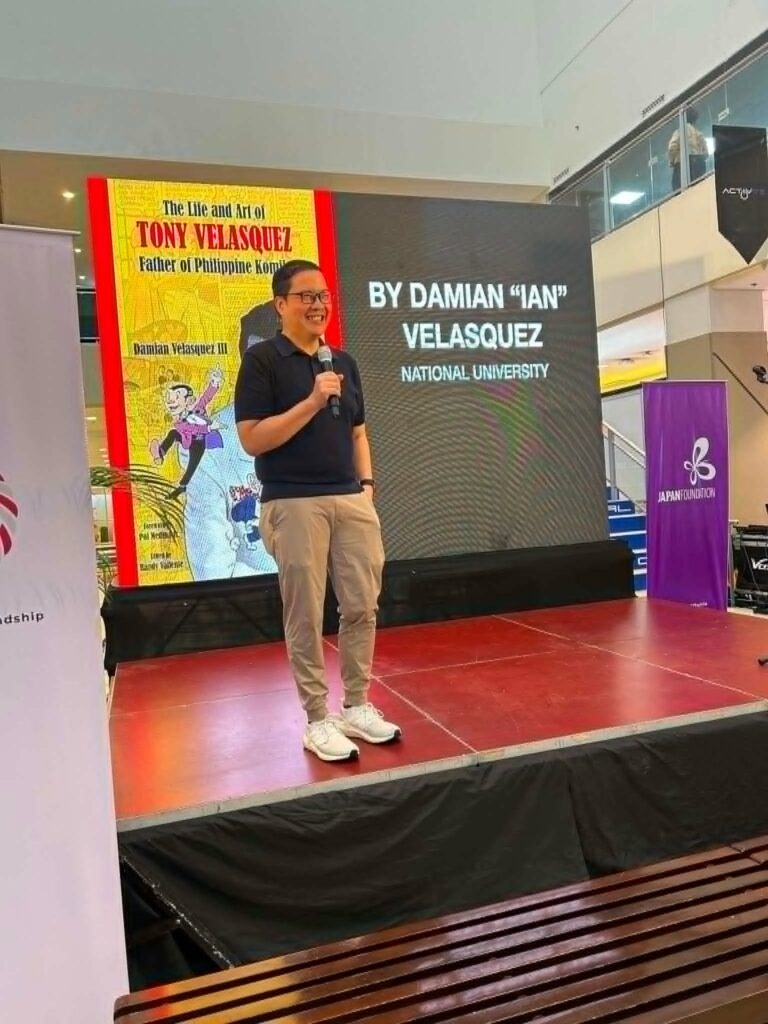
Apart from Ian Velasquez’s long-held desire to write about his “Pop Tony”—as the artist preferred to be called—the project actually began as a research proposal at National University, where the author is an academic by profession. What started as a scholarly undertaking, however, eventually grew into something far more significant: an important contribution to ongoing efforts to renew public appreciation of Tony Velasquez’s artistic legacy and to ensure the continued visibility, preservation, and study of his work.
Writing about someone’s life requires equal measures of affection and distance. In this case, the author is close enough to have access to family archives, stories, and memorabilia, yet far enough removed to approach Tony’s life with a degree of historical distance that can support a more balanced biography. It is no surprise that the biography contains a significant amount of granular and personal details, offering insights that only family members could have provided.
Ian Velasquez interviewed uncles and aunts who knew Tony that well. Although he had the opportunity to speak with Tony Velasquez on several occasions, many of the insights into the artist’s creative process and personal life came from his surviving children and other elder members of the family, who had known him better.
The book was originally slated for publication in 2024 to coincide with Kenkoy’s 95th anniversary but, like many ambitious projects, it encountered unforeseen challenges. According to the author, it took nearly two years of discussions, persuasion, and back-and-forth deliberations with the family’s senior members before the project was finally given the green light.
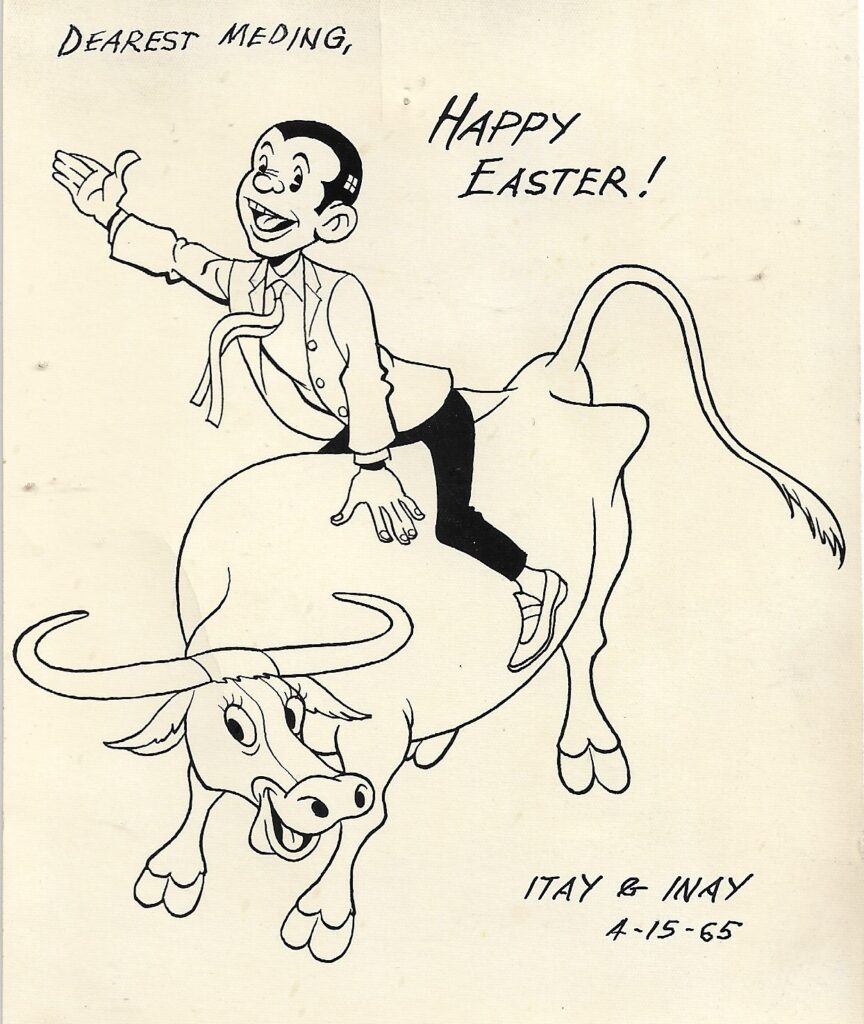
It is no surprise that the book gives special attention to Kenkoy, the most popular among the characters Tony Velasquez was able to develop and traces how the character transcended the printed page to become a fixture of Philippine popular culture. Kenkoy evolved into more than a comic strip icon, appearing in advertisements and films, and even inspiring a song, “Mr. Kenkoy,” by Mike Hanopol.
And yet the book contains many gems: historical references, including scholarly notes from John Lent, a foremost scholar of comics, cartooning, and international mass communication. Lent is an American academic whose research has been especially influential in documenting the history of comics in Asia, including the Philippines.
Cultural zeitgeist and the rise of komiks
The book is instructive in its historical details and is a window to look at the cultural landscape that produced Velasquez and his art. Velasquez belonged to a generation that witnessed the Philippines transform from an American colony to an independent republic. His career would mirror those changes, with comics serving as a chronicle of Filipino aspirations, anxieties, and humor.
The 1920s stood at the crossroads of colonial rule and a modernizing Philippines. It saw the emergence of illustrated magazines, the expansion of commercial art, advertising, and silent cinema, and the growth of urban culture shaped by department stores, cinemas, cafés, electric streetcars, dance halls, radio, and popular music. This rapidly changing cityscape and tangible cultural shifts became the perfect backdrop for Kenkoy’s sharp satire of modern Filipino life. At the same time, Philippine literature and the visual arts flourished as writers and artists explored urbanization, nationalism, and modern identity.
Working with writer Romualdo Ramos, Velasquez conceived a lanky, overdressed, English-mangling everyman named Kenkoy. On January 11, 1929, Mga Kabalbalan ni Kenkoy debuted in Liwayway. It was more than another comic feature. It marked the birth of the Philippine comic strip tradition.
Following Ramos’ death in 1932, Velasquez assumed writing duties in addition to illustrating the series, steering Kenkoy for decades and transforming it into one of the most recognizable and beloved cultural icons in the Philippines.
Kenkoy became an unlikely national icon. He was comic and clumsy, fashionable yet awkward, forever attempting to imitate modern trends while remaining unmistakably Filipino. Through laughter, Velasquez captured the country’s encounter with colonial modernity, urban life, and changing social values. Kenkoy’s popularity spread far beyond magazine pages, influencing language, fashion, theater, film, and eventually popular culture itself.
Kenkoy may have become the face that generations remembered, but Tony Velasquez was the hand that quietly drew the blueprint for Philippine komiks itself. His legacy lives not only in the pages he illustrated, but in every Filipino artist who discovered that a few lines of ink could capture the spirit of an entire nation.
Rather than resting on one successful creation, Velasquez continued expanding the possibilities of Filipino comics. In 1932, he introduced Ponyang Halobaybay, among the earliest recurring female comic-strip characters in the country, alongside memorable creations such as Talakitok and Talimusak. These works demonstrated that Philippine comics could sustain an expanding cast of distinctly local personalities.
Mentoring
But perhaps Velasquez’s greatest achievement was not the magazines themselves. It was the extraordinary community of artists they nurtured.
As editor, publisher, and mentor throughout the 1950s, Velasquez cultivated a remarkable generation of creators, among them Francisco Coching, Mars Ravelo, and Jose Zabala-Santos. Many would later become legends in their own right, carrying Philippine komiks into what is now remembered as its golden age.
Ensuing career and later trajectories
When Tony Velasquez died at the age of 86 in Cubao, near his publishing house, GASI, many would probably assume that his sunset years and last decades already read as a tranquil denouement. But this was not the case. His latter years were just simply interesting as his beginnings.
His influence soon extended beyond entertainment.
Years before his death, Velasquez remained a constant presence as publisher, editor, illustrator, and mentor. His influence reached every aspect of the industry, from editorial standards to artistic craftsmanship, from commercial publishing to talent development. Entire generations of Filipino cartoonists, illustrators, and storytellers emerged from the institutions he helped build.
To understand the gestalt of the artist’s career is to look at his very storied development and what his success meant to the industry where he flourished. He did not only introduce the Philippines to the comic strip but also revolutionized commercial illustration, established the country’s comic book publishing industry. He also mentored its greatest artists, and demonstrated that comics could entertain, educate, and reflect national identity all at once.
This is a reliable resource that situates its readers within the historical and cultural contexts of Velasquez’ creative career but also the rise and decline of Philippine komiks. It is richly interspersed with Tony Velasquez’s illustrations and photos making it an engaging and highly accessible read.
“This book marks a significant moment in the history of Philippine komiks. Despite being celebrated as the father of Philippine komiks, Velasquez has never before been the subject of a dedicated book. Almost a hundred years later—has his story finally been told in book form,” said Randy Valiente, the book’s editor.
The book is published by the National University and was launched during the Philippine International Comics Festival 2026 on July 10-12.
—Written by Philip Paraan

Started in 1927, the Philippines Graphic is the longest-running printed magazine of national circulation that provides relevant news and features and promotes Philippine literature.