

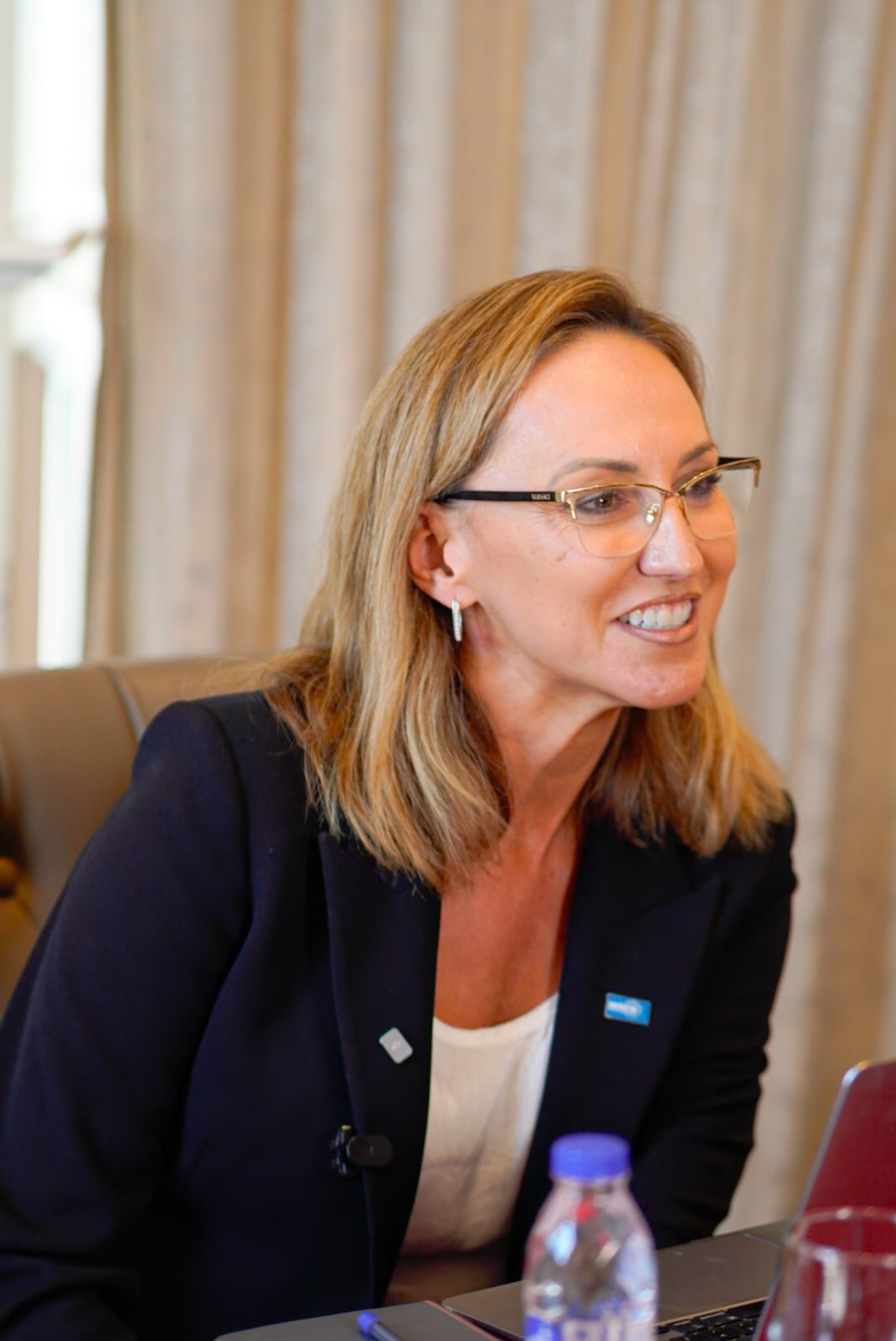
via GRAPHIC PLUS — A top official of the International Border Management and Technologies Association (IBMATA) and the Bureau of Immigration (BI) met on Tuesday to discuss efforts to strengthen border security and combat human trafficking.
Sharon Ayley, IBMATA Chief Executive Officer and Secretary, described her meeting with BI Commissioner Joel Anthony Viado as positive, saying their discussions focused on how border agencies across the world are adapting and evolving to threats and strengthening cooperation to address emerging security challenges.
“We discussed how border agencies across the world are adapting and evolving to threats,” she said.
Ayley commended the Philippines for its efforts to modernize its border systems and improve cooperation with international partners as part of its efforts to combat human trafficking, noting progress in the country’s use of technology and modernization initiatives.
“It was encouraging to see the Philippines’ strong focus on modernization and international cooperation as well as the emphasis on protecting vulnerable travelers,” she said.
“You have new e-gates at the airport. They have been proven to already have cut down on queues and to have increased security. They have definitely helped the bureau improve their security,” she said.
She lauded the government’s efforts, saying the country is on the right track in embracing available technologies to thwart any security threat and prevent human trafficking.
“I think you know the Philippines is on the right track embracing these technologies. This is definitely the way forward not just for the Philippines but globally,” Ayley said.
With human trafficking and other threats always evolving, Ayley said the country should invest in upgrading the training of front officers, strengthen the use of existing technology, and embrace other means to fight trafficking.
“Technology works best when it’s implemented by experienced and well-trained officers. So it’s really, really important that we’re investing in our people and we are training our people, and providing them with the tools that they need to do their job, to invest in their development,” she pointed out.
Ayley also underscored the importance of adding more e-gates and biometrics technology to more ports in the country to further strengthen border security and the campaign against human trafficking.
“Biometric technology can help us address whether you know an identity is valid and if a person is who they’re presenting to be,” she said.
Aside from this, she said the use of data sharing and data analysis can help identify unusual patterns of behavior and journey patterns as well as support more effective risk detection and targeting systems.
“I know that there are plans to continue to roll out more and more technology solutions to improve security,” she said, referring to BI.
As a leading non-profit organization, IBMATA brings together governments, industry stakeholders, and experts from around the world to share real-world experiences, address border challenges, and exchange best practices.
IBMATA has been actively working with global and regional partners, including the International Organization for Migration (IOM), to develop strategies and conduct workshops aimed at combating trafficking and strengthening border security systems.

Started in 1927, the Philippines Graphic is the longest-running printed magazine of national circulation that provides relevant news and features and promotes Philippine literature.

 and the Bureau of Immigration (BI) met on Tuesday to discuss efforts to strengthen border security and combat human trafficking.)