
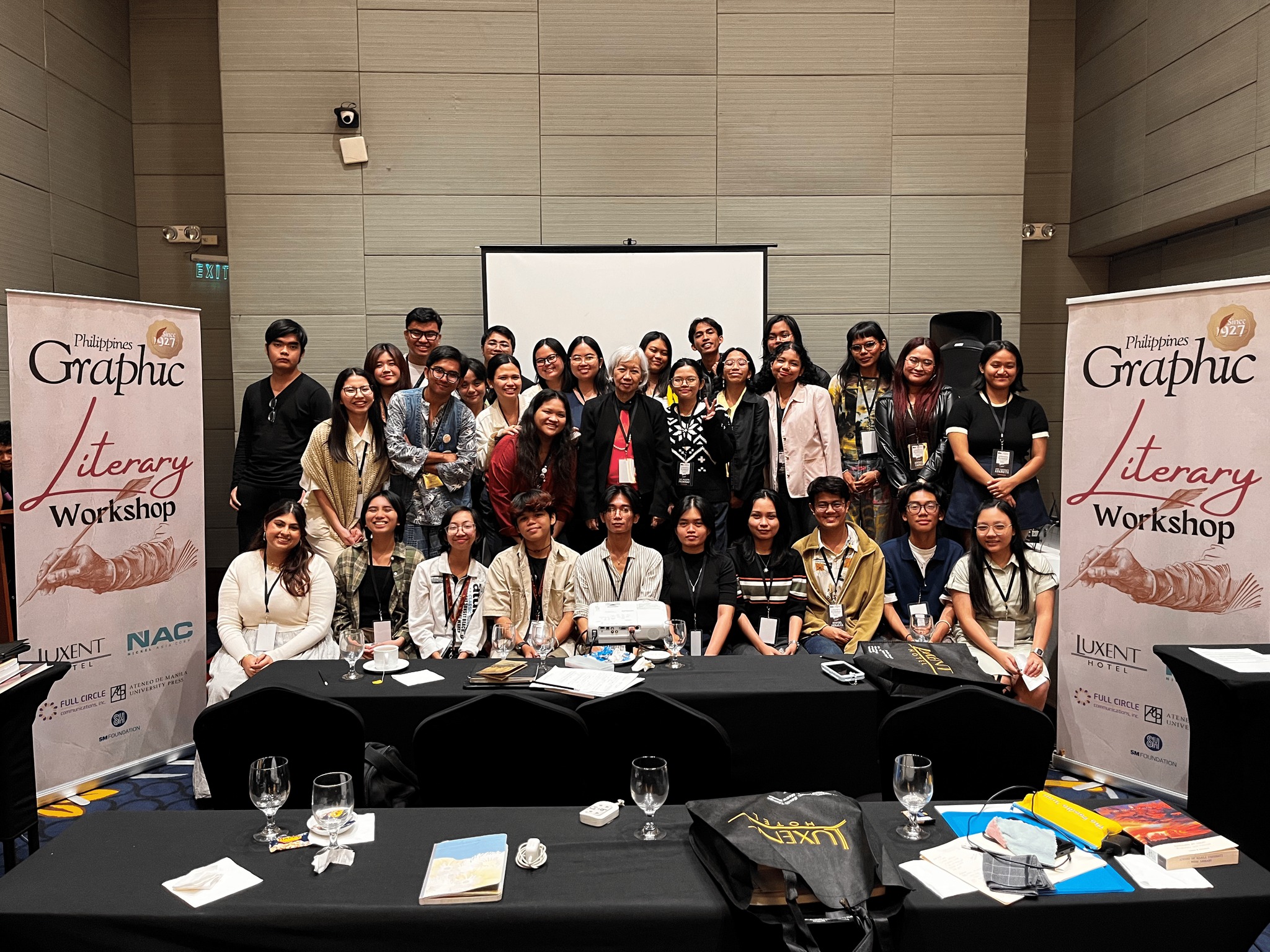
PGLW is a two-day event where aspiring young writers from all over the country partake in a writing workshop under the guidance of a seasoned writer
The idea was simple: make possible the first-ever onsite writing workshop in the history of the Philippines Graphic.
Granted that there are numerous writing workshops held in the Philippines such as the Silliman Workshop and the University of the Philippines’ Creative Writers Workshop. The number would further increase if those organized by indie organizations are taken into account.
During the pandemic, the Graphic organized a webinar with the late National Artist for Literature F. Sionil Jose. So the magazine wasn’t exactly starting from scratch.
The hurdle, henceforth, was to create one that honors the soul of the Graphic, and to accomplish the initiative’s main goal: extending a helping hand to the younger generation of writers.
The result was the “Philippines Graphic Literary Workshop” or the “PGLW,” of which the third episode concluded its first season on April 21 at the Luxent Hotel in Quezon City.
GRAPHIC’S FIRST WORKSHOP
For the uninitiated, the PGLW is a two-day event where aspiring young writers from all over the country partake in a writing workshop under the guidance of a seasoned writer.
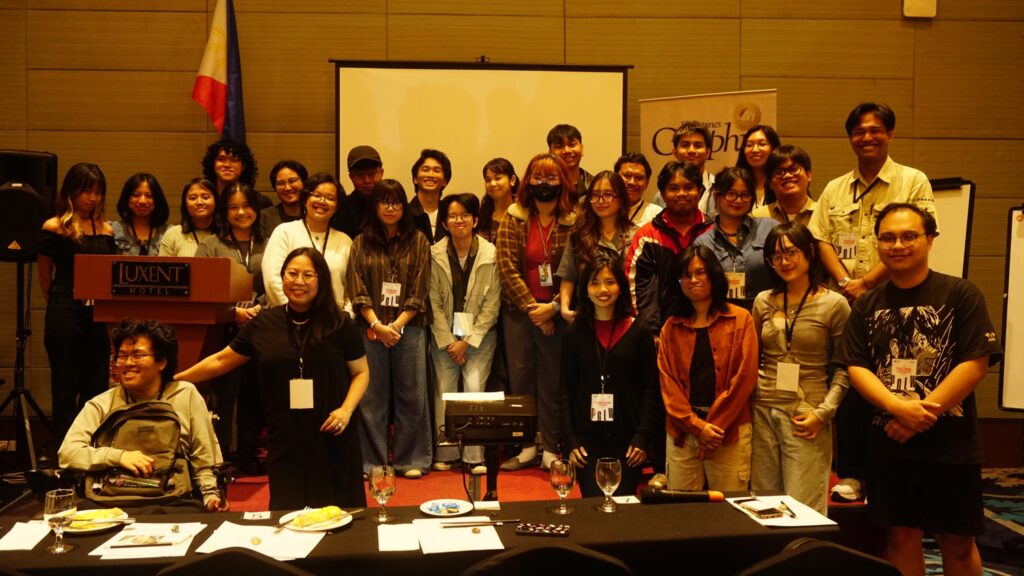
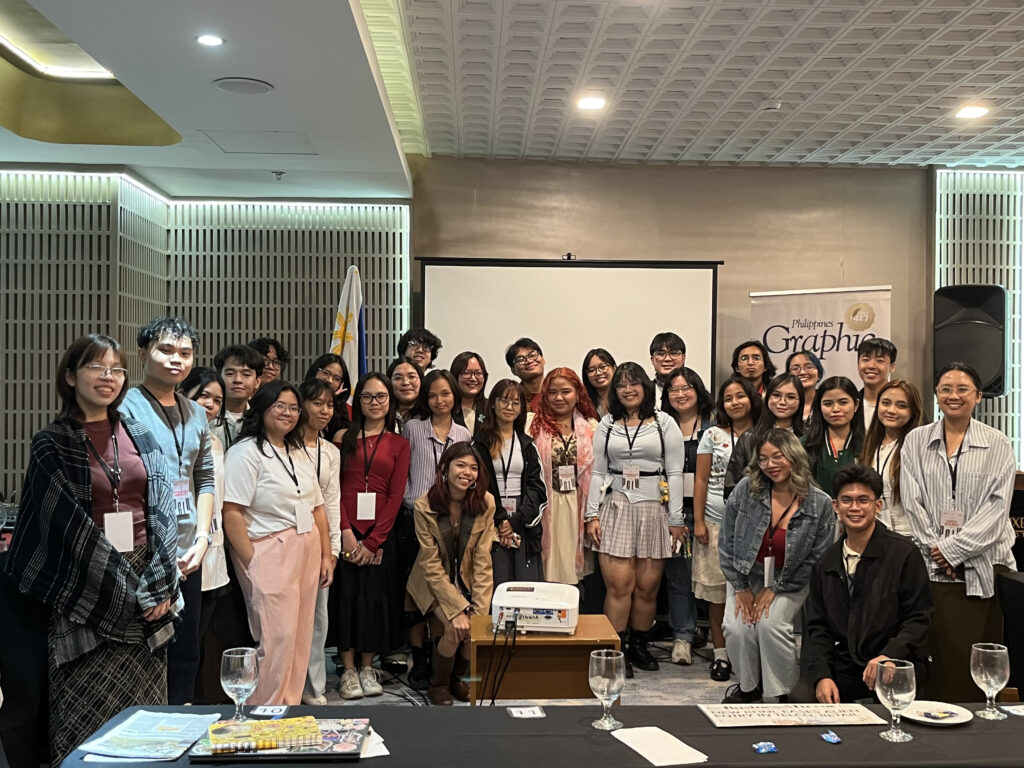
Each episode is dedicated to one form. Fellows of the first episode, held from February 27 to 28, received tutelage from veteran writer Susan S. Lara and learned the art of flash fiction.
For the second episode which occurred on March 20 to 21, it was the poets who ruled, as interdisciplinary artist and poet Nerisa Del Carmen Guevara facilitated the workshop.
The third installment turned to fiction writing, with “Isabela” author Kaisa Aquino at the helm.
From these three workshops came about 87 fellows—all of whom are college undergraduates.
WHY THE LIMITS?
In conversations with some of the fellows, many said that they are delighted about the fact that the PGLW was open to all college undergraduates from anywhere in the Philippines, and that it is completely free.
More than that, the accepted applicants got an opportunity to be workshopped by award-winning writers.
But when the Graphic was planning how to execute the learning sessions, it slowly became obvious that organizers had to institute some measure of limits.
Of course, in an idealistic world where time and resources are unlimited, we would wish to make the PGLW available to as many people as possible. The opportunity to learn writing from the masters themselves is something that should be open to anyone with a deep love for literature.
But then again, the world is not as cooperative as that, and the reality of running successful workshops have their own real sets of challenges that all overseers are confronted with.
Thus, it all boiled down to balancing everything, making sure that there are enough participants accepted, but not very many that the number becomes difficult to manage.
The stakes were high, as that was the first time that the magazine conducted something new. It was far better to plant one’s foot on the ground than to be whisked away by lofty aspirations and end up failing at everything.
NEXT SEASON
Organizers from the Graphic are still discussing the next season, but guarantee that there will be a next one.
The PGLW allows the almost-100-year-old magazine to help the young writers of our country in a way that is distinct from the platform provided by the Philippines Graphic Reader—our official literary magazine.
It would be a disservice to literary luminaries that have graced and supported the Graphic in its long history if we fail to pass the torch to the ones who are supposed to inherit it: the young storytellers of our country who carry inside them Filipino narratives that deserve to be heard.