

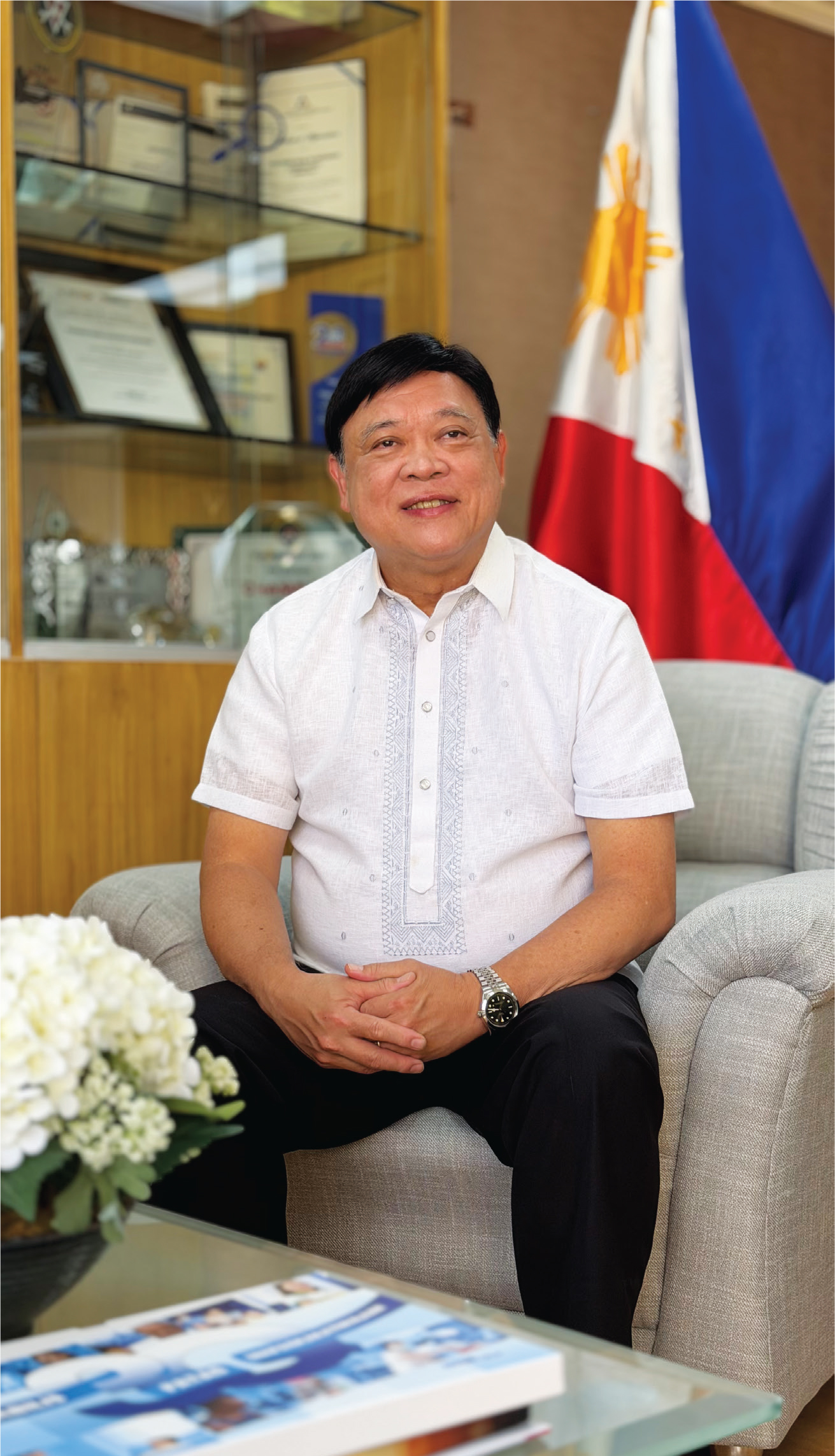
With YAKAP now in place, Dr. Mercado says his hope for the years ahead is not simply better coverage figures, but a deeper sense of peace of mind among Filipino families.
By 2026, he wants healthcare to feel less like a last-minute scramble and more like a system people can depend on—one that works quietly in the background, guiding them before disease, sickness, or illness becomes a crisis or health emergency.
PhilHealth, in this vision, should be something families can count on, not something they have to figure out under pressure. Navigating benefits, finding providers, and understanding entitlements should no longer happen at the worst possible moment.
“Under YAKAP, access to care should feel more organized and more predictable,” Dr. Mercado said. “People should know where to go first, who their provider is, and what services they are entitled to receive. Preventive care should be easier to access—not harder.”
That predictability is central to how PhilHealth imagines its role evolving under universal health care. Consultations, screenings, and medicines are not meant to sit at the margins of the system. They are intended to be the first line of engagement— tools that help manage conditions before they worsen, and safeguards that reduce the need for hospitalization later on.
As the institution looks ahead, clearer integration between preventive and curative services is expected to take shape. Universal health care remains the umbrella, with YAKAP emerging as one of its most tangible expressions on the preventive side.
“The goal is to reduce the burden on hospitals by addressing health needs earlier,” Dr. Mercado said, “while still ensuring that when hospitalization is necessary, families are protected from catastrophic costs.”
This balance—between early intervention and strong financial protection—defines the direction PhilHealth is charting. Preventivecare is not meant to replace curative services, but to complement them, easing pressure on hospitals while improving outcomes for patients.
At the same time, PhilHealth continues to work toward expanding zero-balance billing, particularly in public hospitals, and aligning incentives so that both public and private providers are encouraged to participate meaningfully in the system.
“What matters is not whether care is delivered in a public or private setting,” Dr. Mercado said, “but whether it is accessible, affordable, and of good quality.”
Ultimately, he added, the experience PhilHealth wants to create is one where Filipinos feel supported throughout their health journey—from staying well, to managing illness, to recovery—without the fear that a single health event could derail their lives financially.
A ‘GROUP HUG’ WITH FILIPINOS
If universality is the principle behind YAKAP, its implementation, Dr. Mercado said, has to be thoughtful. While PhilHealth would have wanted to enroll all Filipinos immediately, taking universality seriously also means building a system that is inclusive, sustainable, and responsive to real-world conditions. Enrollment, in this sense, cannot simply be automatic. It has to be meaningful. Instead of blanket enrollment, PhilHealth is moving toward more intentional, setting-based enrollment strategies.
“This means reaching out to people where they are,” Dr. Mercado explained, “through workplaces, communities, schools, and other organized settings, while ensuring proper validation and consent. Enrollment should be accurate and meaningful—not just a number on paper.”
The approach reflects a recognition that trust is built not only through benefits, but through how people are brought into the system. Accurate enrollment ensures continuity of care and strengthens the patient-provider relationship that sits at the heart of preventive health.
Sustainability, Dr. Mercado added, also depends on shared responsibility. PhilHealth can design benefits, set standards, and provide financing, but prevention cannot succeed through institutional effort alone. Individuals, families, employers, and providers all have a role to play.
In that sense, staying healthy is not solely the responsibility of the health system. It is a collective effort—one that depends on people showing up for care early, employers supporting preventive programs, and providers remaining engaged over time.
As YAKAP expands, PhilHealth is also mindful of integrating other priority programs, including mental health, tuberculosis, HIV, nutrition, and optical care. These are areas where early intervention can make a significant difference, both in health outcomes and in long-term costs.
“Early action in these areas changes trajectories,” Dr. Mercado said. “It improves quality of life and reduces the long-term burden on families and the health system.”
The roadmap for YAKAP’s full implementation extends beyond 2026 and toward 2028. For PhilHealth, the focus is not speed, but stability.
“We want to make sure that as YAKAP grows, it remains something people can trust,” the PhilHealth chief pointed out.
In this forward-looking vision, PhilHealth’s role is no longer confined to paying claims or responding to illness. It is evolving into a constant presence in the lives of Filipinos—one that supports health earlier, stays engaged longer, and offers reassurance when people need it most.
If universal health care is the promise, then YAKAP, Dr. Mercado believes, is part of how that promise becomes real: not in moments of crisis alone, but in the quieter, everyday decisions that keep families well.

Started in 1927, the Philippines Graphic is the longest-running printed magazine of national circulation that provides relevant news and features and promotes Philippine literature.