

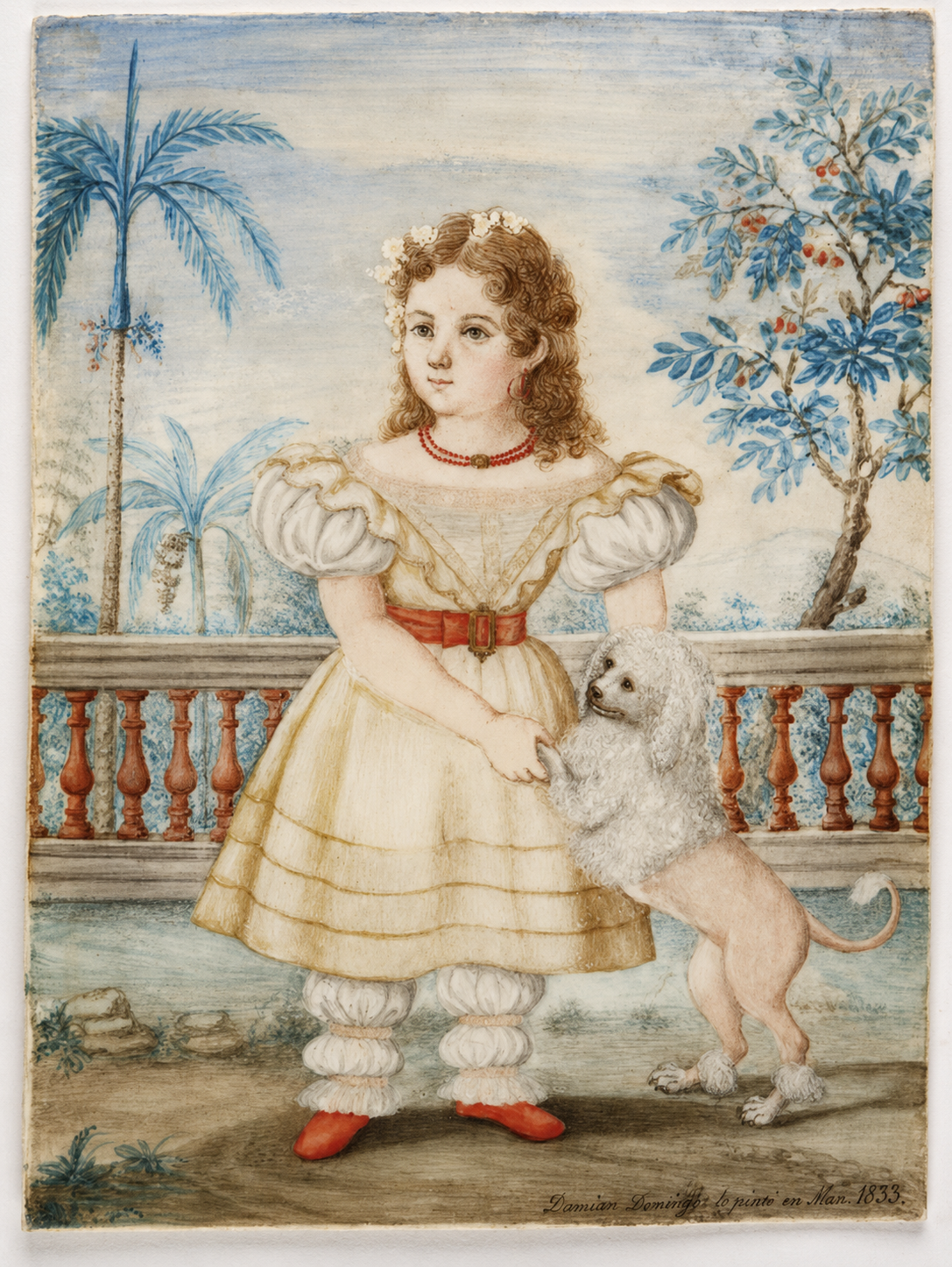
EXCLUSIVE: An important 1833 portrait by Damian Domingo, considered to be the father of Philippine painting, went unnoticed for centuries and has now been rediscovered.
The rediscovered painting Damián Domingo’s Girl with a Puppy (Niña con perrito, showing a miniature poodle) is an important addition to the study of early nineteenth-century Philippine portraiture.
The ivory miniature was already known by at least 2012, when it appeared in the Museo del Romanticismo’s records in Madrid on children’s portrait miniatures but its importance in Philippine art history went under everyone’s noses. In its nearly 200 years of existence, it appears to have received little or no sustained study.
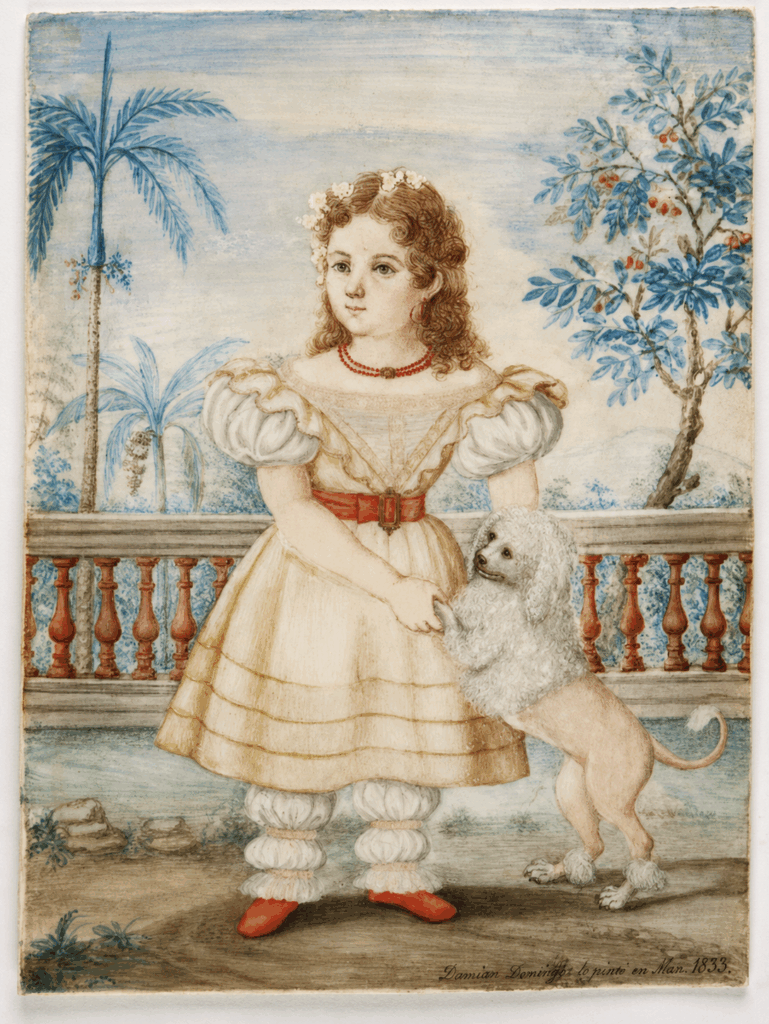
Rebeca Benito Lope’s 2024 catalogue entry describes the work as a rectangular miniature showing a young girl standing on a terrace before a garden landscape. She wears a light-colored short dress with puffed sleeves, a red belt, flowers in her curled hair, a double-strand coral necklace, and matching coral earrings. She holds a small poodle by its front legs.
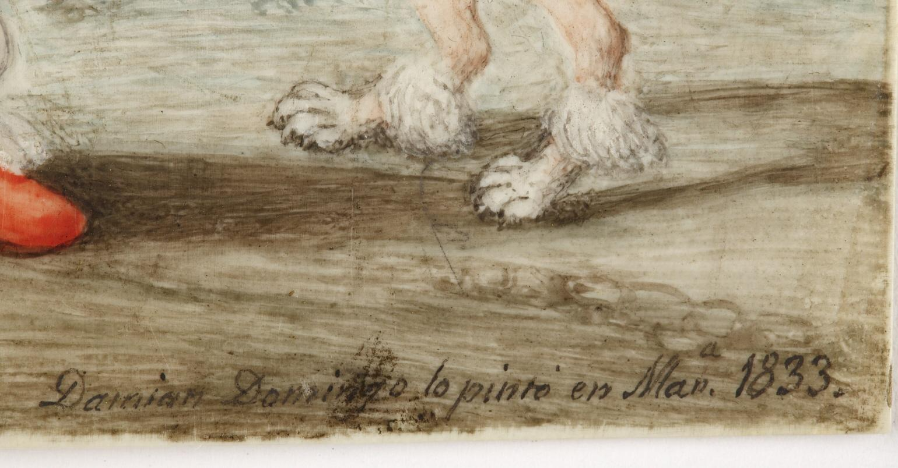
The miniature is signed and dated: “Damian Domingo lo pintó en Manª 1833” [Damián Domingo painted this in Manila in 1833]. It is painted in gouache on ivory and measures 14.40 × 10.08 cm, roughly the size of a small postcard. As early as 1894, the journalist Miguel Zaragoza hailed Domingo as the “Primer Profesor de Pintura Filipino” [First Filipino Professor of Painting]. This phrase was later mistranslated as “the First Filipino Painter.” The mistranslation is not entirely wrong, since Domingo used his prominence to help define a new status for the artist in the Philippines by explicitly identifying himself as a painter working in Manila.
Possible Identity of the Sitter
The sitter may be Gertrudis Enríquez Sequera (1824-1865), daughter of Francisco Enríquez Girón, a high-ranking Spanish official stationed in Manila and Gertrudis Sequera Carvajal. The shared first names of mother and daughter may be confusing. The mother after marriage is also addressed as Gertrudis Sequera de Enríquez. In this form, “de Enríquez” indicates that she was married to Francisco Enríquez Girón.
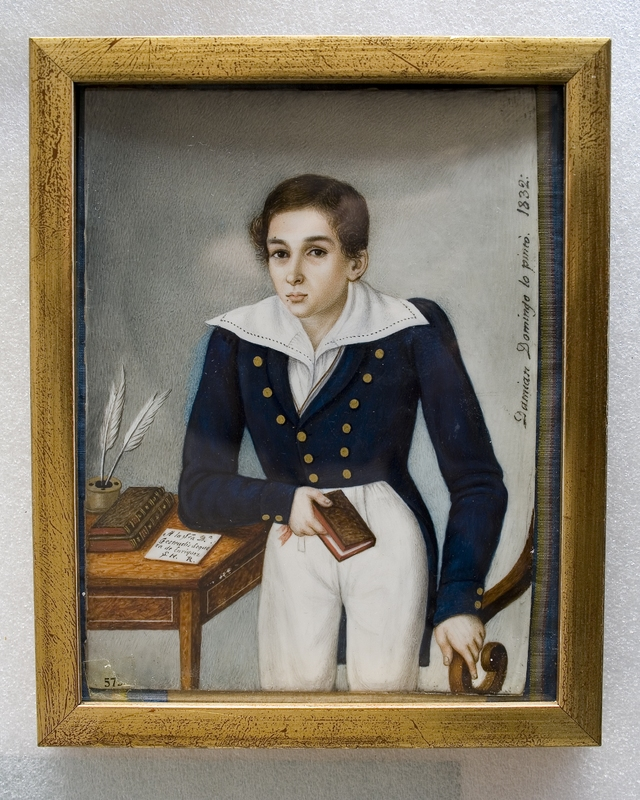
The hypothesis is strengthened by comparison with an earlier miniature by Domingo, Retrato de muchacho (Rafael Enríquez Sequera), dated 1832 and now in the Museo Nacional de Artes Decorativas. That portrait bears an inscription to “Dª Gertrudis Sequera de Enríquez,” referring to Rafael’s mother, Gertrudis Sequera Carvajal. The dedication appears to present the portrait of a son to his mother.
The comparison with Niña con perrito, painted one year later, is suggestive. Both works are small ivory miniatures of elite children. Both show delicate modeling, large eyes, and a composed frontal presence. Art historian Concha Diaz Pascual has traced the genealogy of Rafael Enríquez Sequera and concluded that he has three brothers and two sisters. This detail makes it possible that the unidentified girl in Niña con perrito came from the same family. While the resemblance may indicate kinship, it may also reflect Domingo’s manner as a miniaturist and the conventions of elite child portraiture in Manila in the 1830s.
If the young girl in Niña con perrito is indeed Gertrudis Enríquez Sequera, the painting would likely show her as a child in the early 1830s. Since Gertrudis was born in 1824, she would have been eight or nine years old in 1832-1833, which matches the features in the depiction of the sitter.
Gertrudis Enríquez Sequera later married Loftus Charles Otway, a British diplomat who served as Minister Plenipotentiary in Mexico. A photograph by Charles Clifford, taken in the British Cemetery in Madrid around 1862, shows Gertrudis before the tomb of Otway and can serve as a useful visual comparison. The image is a definite visual record of Gertrudis after her first husband’s death and before her second marriage to Antonio Agustín Hurtado de Mendoza Paredes, Conde del Valle de Orizaba, in Madrid on 27 May 1864. Gertrudis died in Mexico City on 6 July 1865, aged forty.
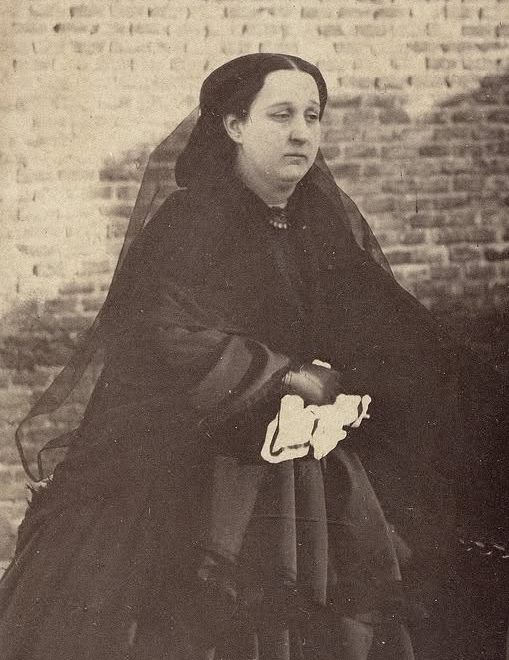
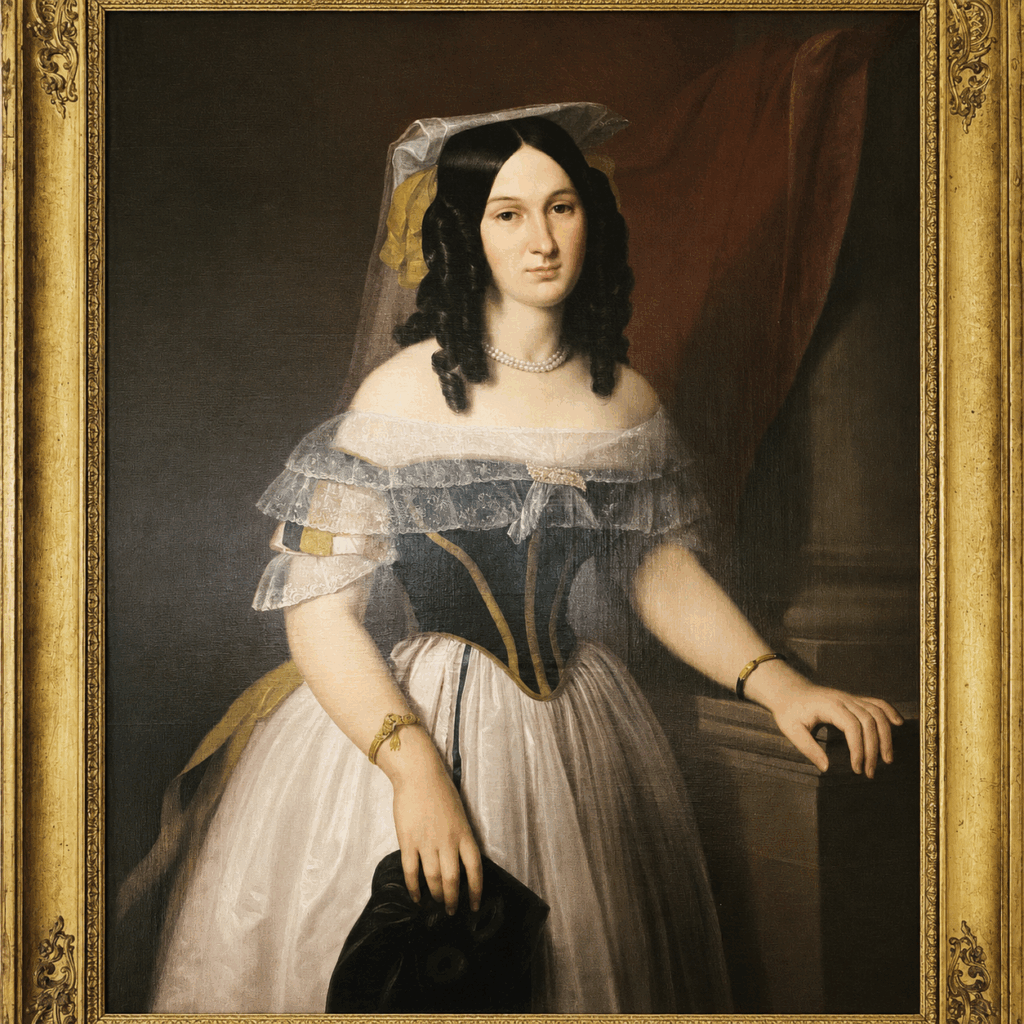
The identification remains provisional because the museum record does not yet provide a provenance connecting it to the Enríquez Sequera family. Unlike the Rafael Enriquez Sequerra portrait, the painting has no known inscription leading to the identity of the sitter. A cursory visual comparison however gives the proposal some support. The child in Domingo’s 1833 portrait, the adult painted portrait, and Charles Clifford’s photograph of Gertrudis before the tomb of Loftus Charles Otway share a long oval face, centrally parted dark hair, a narrow nose, and a small, restrained mouth. Evidence may also come from archival research, especially in the Francisco Enríquez Girón papers at Georgetown University which may yield references to the family’s children and any portraits made during that period.
Mise en scene
Behind the sitter and her dog, a balustrade separates the terrace from a garden with palms and fruit trees. Aside from the bunches of bananas on the lower left, the red fruits on the right side of the composition, nearer the balustrade, may point to a specific Manila garden setting. Cornell scientist Manuel Marcaida has suggested one likely identification: lubeg (Syzygium lineatum, also known as Syzygium cerasiforme), a native cherry-like tree known to have been cultivated in Manila and Cavite by the early nineteenth century. Another possibility is macopa (Syzygium samarangense), or wax apple, a familiar Philippine garden fruit whose red, bell-shaped form could account for the cluster of fruits in the painting.
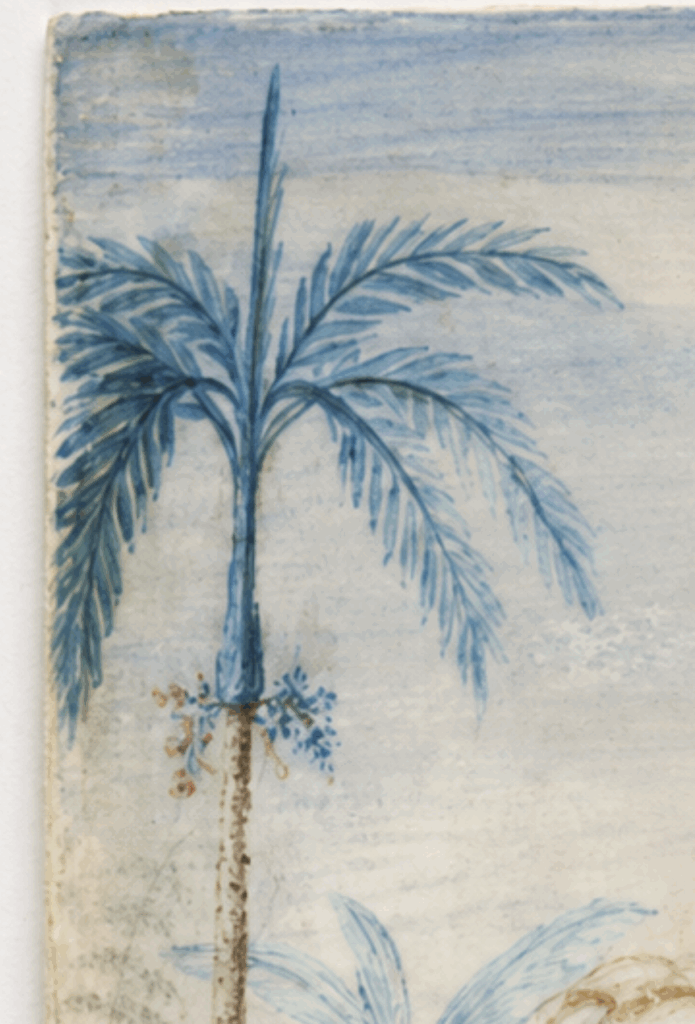
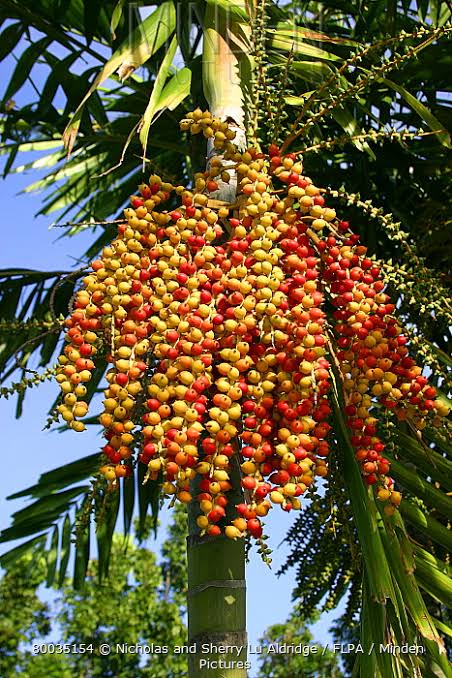
The tree on the upper left appears to be Areca catechu, the areca palm, whose nuts are used in the preparation of nga-nga. These botanical details strengthen the Manila provenance of the work. They also suggest that the portrait sitting might have occurred during the fruiting months of April to June.
Provenance
According to Rebeca Benito of the Museo Nacional del Romanticismo, the provenance of Damián Domingo’s Niña con perrito cannot presently be traced before the Spanish Civil War, which lasted from 1936 to 1939.
The miniature entered the former Museo Romántico in 1943 as part of a large group of miniatures deposited by the Servicio de Recuperación Artística, the state body responsible for managing cultural objects confiscated during the war by the Junta de Incautación y Protección del Tesoro Artístico.
Many of these works were later distributed to public museums when they could not be returned, or when their ownership was unknown. The Domingo miniature survives only as an ivory plate, without its original frame, label, or handwritten annotation. Its earlier history therefore remains unknown, apart from the likelihood that it was already in Spain, probably Madrid, before or during the Civil War.
What this Means for Philippine Art History
Born in Tondo around 1796, Damián Domingo became one of the most important painters in early nineteenth-century Manila and directed the first Academia de Dibujo y Pintura in the Philippines. He is often remembered for his tipos del país, his religious commissions, and his role in the formation of Philippine academic art.
Domingo’s confirmed body of work is small: four easel paintings, at least six ivory miniatures, and three full watercolor albums. Assuming the work is authentic, Niña con perrito invites several revisions to the history of Philippine art. The painting instantly enlarges the small surviving corpus of Damián Domingo’s work. It documents his activity in 1833, the year before his death, and may require us to revisit earlier assumptions about a long period of illness at the end of his life. It also reinforces his standing as a portraitist beyond the Tipos del País. The work brings Domingo into the history of sentimental Romantic portraiture, close to what was called Biedermeier in German-speaking Europe and translated in connected port cities around the world. It pushes the presence of Romantic sensibility in Philippine painting earlier than usually assumed.
The painting also gives rare early evidence of childhood as a subject in Philippine art. It may be the earliest known Philippine painting to give a dog such pictorial prominence, as historian Ian Alfonso has suggested.
The miniature provides a new benchmark for studying Domingo’s materials and techniques. Domingo and his students are known to have received commissions for botanical illustrations and architectural projects but definitive evidence of this practice are rare and none have turned up specifically from the 1830s. These specific technical details help explain why the painting looks different from the stiffer Tipos del País, which were designed to emphasize fashionable dress more than individual identity. Perhaps most importantly, Niña con perrito reminds us that the early Philippine art canon remains open to revision.
The art historian who alerted the public to its location and digitization, Geronimo Cristobal, though cautioned against calling it a discovery. “It was never lost and research is ongoing.”
Geronimo Cristóbal
Geronimo Cristóbal is a lecturer in Art History at Ateneo de Manila University, and a PhD candidate in the History of Art and Archaeology at Cornell University. He serves as an international correspondent for the Philippines Graphic. He can be reached at gc448@cornell.edu.