

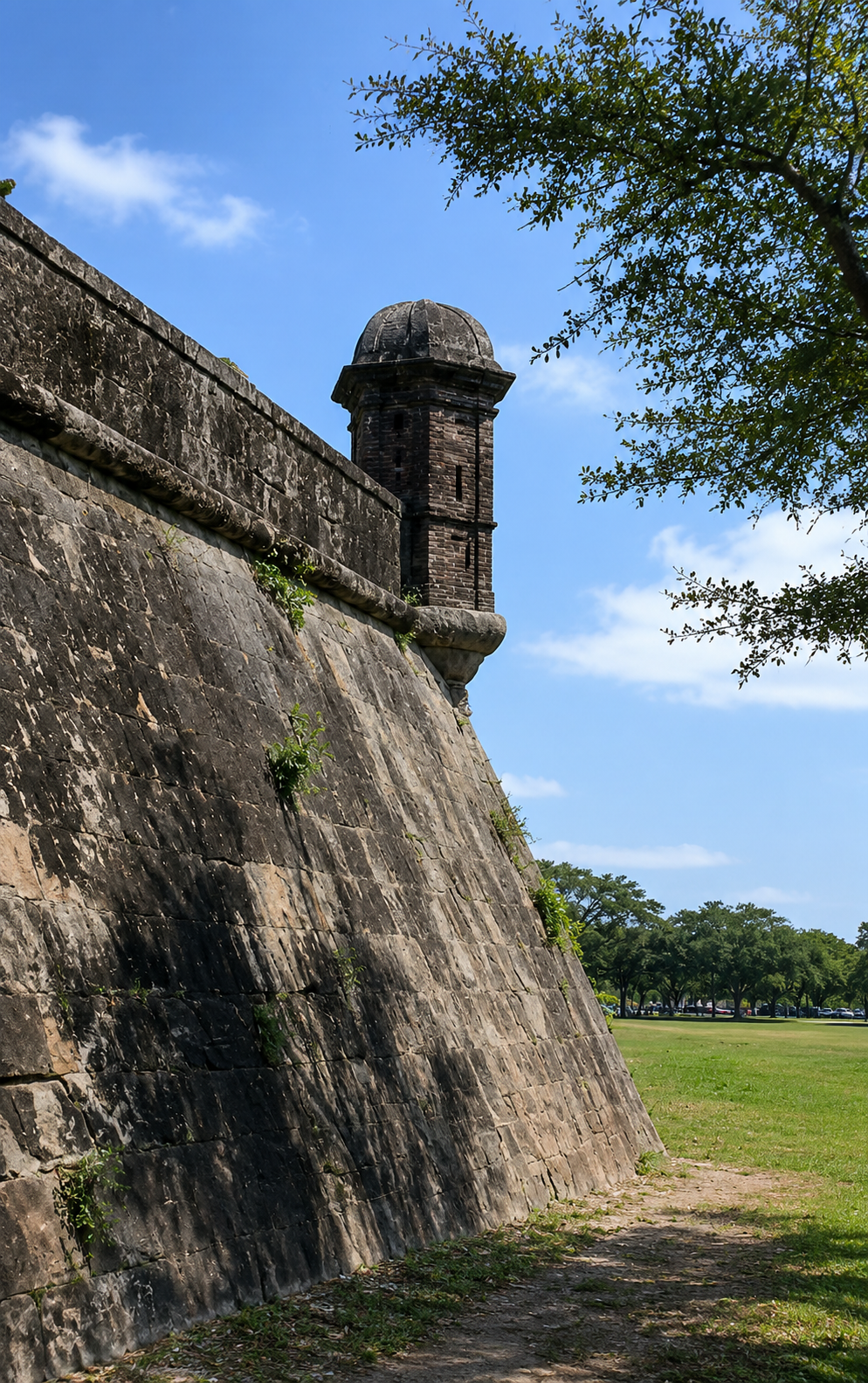
I may not have been born in Manila, but I can confidently say that I am a Manileño at heart. I have spent much of my adult life in the city and worked here for 9 years. It was also where I went to university, a place that introduced me to social awareness and nurtured my political interests then as a young Political Science student. Yet among Manila’s many districts and landmarks, nothing compares to Intramuros.
Intramuros has accumulated many names over the centuries: the Walled City, the Old City, and Ciudad Murada. In 1574, it was granted the grand title of the “Ever Noble and Loyal City.” Historian and urban scholar Xiao Chua has described it as the colonial nerve center of the archipelago, and for good reason. Far from being a phantom city or a preserved relic, Intramuros remains alive and pulsating. It is a place where old and new, memory and reinvention, permanence and change constantly overlap as you move through it and get lost in its grid.
As a student of the social sciences and a lifelong history enthusiast and heritage advocate, I have always been drawn to places where the past remains visible. That is why Intramuros occupies a special place in my imagination. It is not merely a historical site but a living archive of the country’s triumphs, tragedies, and transformations.
Since I worked there for many years, I can probably claim to have moved beyond the role of a casual tourist and has already evolved into something of a transient inhabitant. That realization humbled me. Every day, as a cultural worker who is involved in cultural heritage preservation, I found myself participating, however modestly, in a place that has witnessed some of the most consequential moments in Philippine history. I take great pride in being part of the efforts to preserve its legacy.
With my line of work, many people assume that I know Intramuros like the back of my hand. The truth is quite the opposite. There was a time when friends asked me to locate the nearest carinderia for lunch. Instead of taking the most direct route, I led us on an unintended wandering expedition through several streets before eventually finding our destination.
But Intramuros is a place best experienced on foot. Walking is not simply a practical way of moving through it; it is the means by which the district reveals itself. Whether one relies on maps, signposts, or intuition, every stroll becomes both a journey and a destination. Getting lost here can be surprisingly rewarding. There is a particular psychic life embedded in pedestrian experience, an immediate sense of connection to a place that cannot be replicated from behind a windshield.
Whether you are rushing to an appointment or taking a leisurely walk, Intramuros almost always rewards curiosity with something unexpected.
Approaching its walls, one still senses the monumental ambitions of its original builders. The fortifications appear massive and imposing, designed to project authority and control. Yet once inside, the city reveals a different character. Streets unfold into courtyards, churches, schools, government offices, eateries, dormitories, and homes. Order and disorder, heritage and everyday life, tourism and routine existence all collapse into one another. Intramuros remains both a historical district and a living neighborhood.
Few writers captured this duality better than Nick Joaquin. He wrote extensively and passionately about Intramuros, often evoking it as the soul of Old Manila and a repository of the Filipino’s colonial memory. His fiction and historical essays portray it as a city of beauty, mystery, contradiction, and
cultural hybridity. He famously wrote, “Intramuros was not just the heart of the city. It was the city. The rest was merely suburbia.” For Joaquin, the destruction of Intramuros during World War II represented a profound rupture in Filipino identity.
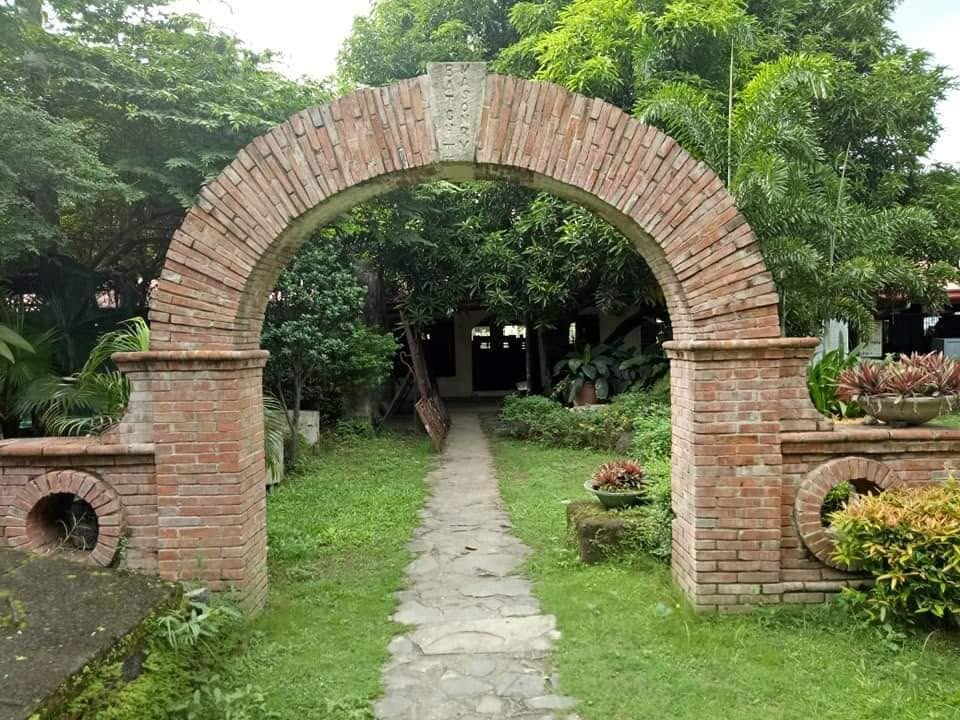
Only recently did I learn another connection between Joaquin and the place where I work. His celebrated play, A Portrait of the Artist as Filipino, premiered in 1955 at the Aurora Gardens in Intramuros, the very site now occupied by the Escuela Taller de Filipinas. Discovering that detail felt like stumbling upon one of the city’s many hidden footnotes, the kind of revelation that makes Intramuros endlessly fascinating.
Even Daniel Burnham, whose vision for Manila sought to transform the capital into a modern American city, recognized the value of Intramuros. Although he considered the district unsuitable as the centerpiece of Manila’s future development, he nevertheless admired its historical significance and aesthetic character.
While Casa Manila, Fort Santiago, and San Agustin Church draw most visitors, the district reveals its richest stories to those willing to wander beyond the usual route.
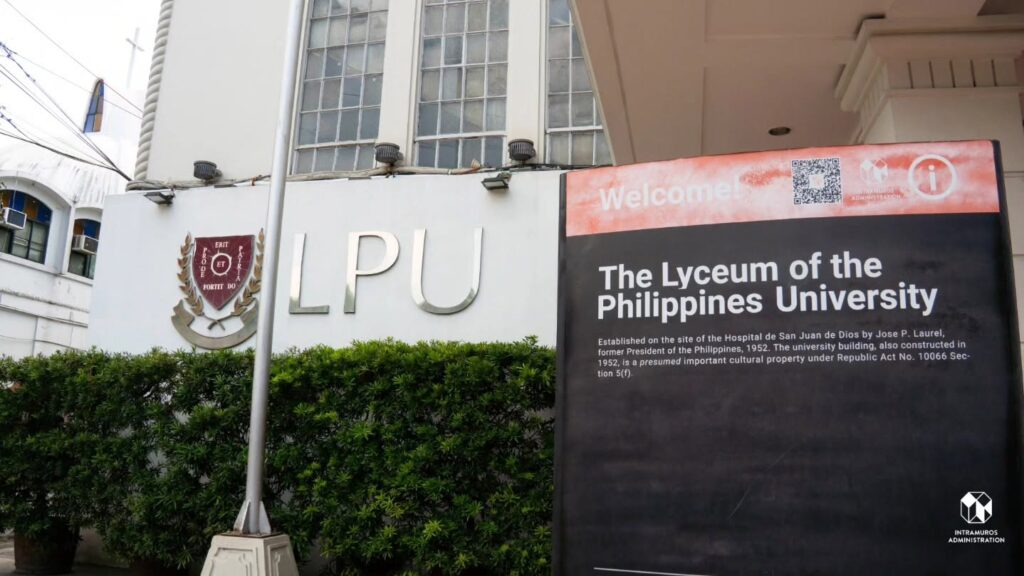
One of the most exciting and unusual ways to explore Intramuros is to follow historical markers installed across the district to identify sites of former buildings. These markers point to, among others, the original sites of Santa Isabel College; Assumption College San Lorenzo (now in Makati), once known as Asunción de Manila or the Superior Normal School for Women Teachers; and the present location of the Lyceum of the Philippines University, which once stood on the grounds of San Juan de Dios Hospital.
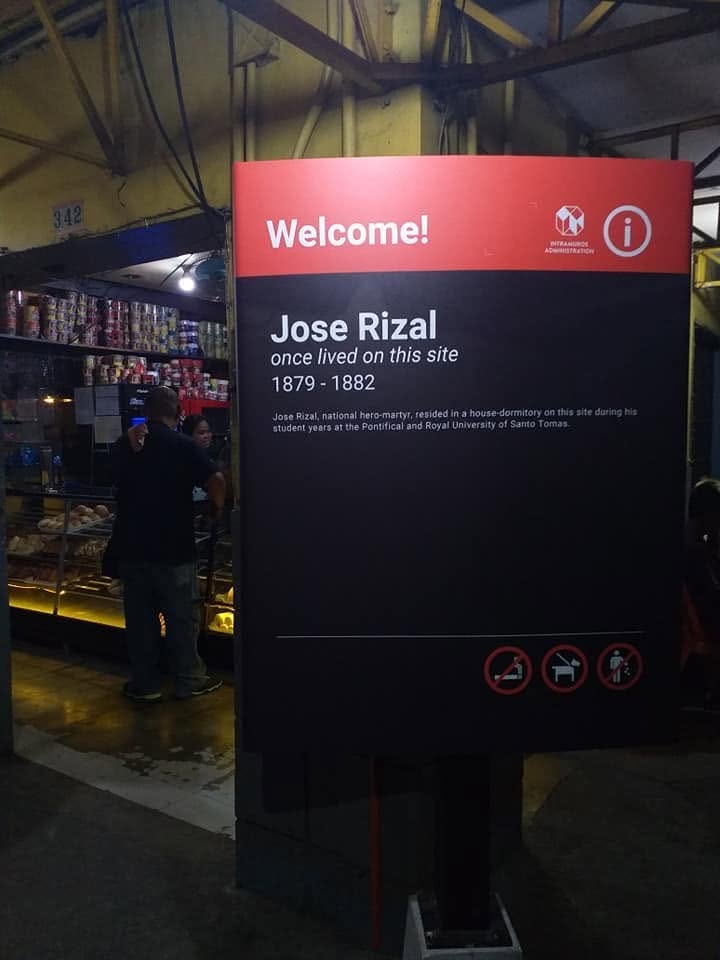
Just beside the hourly bells of Manila Cathedral stands Josa Breadhauz, a modest bakery and eatery where my former colleagues and I occasionally satisfy our cravings for spicy pancit canton. Situated near the corner of Postigo and Magallanes Streets, across from Plaza Santo Tomas, the site occupies ground once associated with the dormitory where José Rizal stayed while studying at the University of Santo Tomas when it was still inside the walled city.
But some did survive and are still there.
A short walk away is Colegio de Santa Rosa, the only surviving all-girls Catholic school within Intramuros. Founded in 1750 by Mother Paula de la Santísima Trinidad, it began as the Beaterio y Casa de Segunda Enseñanza and remains under the stewardship of the Augustinian Recollect Sisters. Today, it continues its educational mission while also operating a dormitory for women studying and working in the area.
Then there is the Araullo Building. Built in 1915 and designed by American architect George Corner Fenhagen, it later became associated with the National Bureau of Investigation. Alongside San Agustin Church and a handful of other structures, it is among the rare buildings that survived both the Battle of Manila and the devastation of World War II.
Intramuros also contains unexpected spaces for recreation and culture. One can bowl, play billiards, or enjoy table tennis at the Knights of Columbus. Meanwhile, Instituto Cervantes de Manila maintains a gallery and library at Casa Azul within Plaza San Luis, offering another layer to the district’s cultural landscape.
Yet Intramuros is more than its monuments, institutions, and attractions. It is a territory of viscerality, where the boundaries between public and private life constantly blur. Behind restored facades and carefully curated heritage sites are communities whose presence complicates simplistic narratives of conservation and tourism.
Also scattered throughout the district are pockets of informal settlements, communities that are frequently misunderstood and too often dismissed as visual intrusions upon a heritage landscape. For decades, proposals to beautify and redevelop Intramuros have often been accompanied by calls to remove these residents in the name of accessibility, order, and tourism. Such discussions reveal an enduring tension at the heart of heritage management: who gets to belong in historic spaces, and whose histories are deemed worthy of preservation?
While government tourism campaigns promote Intramuros as one of Manila’s principal gateway attractions, the district continues to evolve beyond its carefully curated image. New attractions emerge alongside old landmarks. Recent years have seen the opening of the Museo de Intramuros and the Centro de Turismo, both situated on the former site of the San Ignacio Church complex, once the center of Jesuit missionary activity in the Philippines.
At the moment, more cafés and shops continue to appear, particularly around Plaza San Luis. Cultural programming has expanded to include exhibitions, performances, and occasional film screenings. The Binondo-Intramuros Bridge Linear Park or the Pasig River Esplanade has become a popular destination, especially in the evenings when its dramatic lighting transforms the riverside into a gathering space. For those seeking a broader perspective, the rooftop bar of the Bayleaf Hotel offers sweeping views of Manila Bay, Binondo, City Hall, Malate, and the dense urban fabric stretching beyond the horizon.
In Invisible Cities, Italo Calvino observed that “the city does not tell its past, but contains it like the lines of a hand.” Though fictional, his meditation captures something essential about Intramuros. The district’s history is not confined to museums, plaques, or guided tours. It survives in street corners, forgotten buildings, everyday routines, and accidental discoveries.
Cities are often described through their monuments, streets, and skylines. Yet what keeps us returning to them are the memories, routines, and quiet discoveries that accumulate over time. Intramuros continues to change, as cities inevitably do, but it remains a place where history and everyday life constantly intersect.
This one section of Manila that rewards those who take the time to explore it on foot. —Philip Paraan
*The author previously worked at the Escuela Taller de Filipinas Foundation, a vocational training institution located in Intramuros, specializing in traditional building crafts, including masonry, carpentry, surface painting, and related trades and whose graduates have helped restore some of Manila’s heritage sites.

Started in 1927, the Philippines Graphic is the longest-running printed magazine of national circulation that provides relevant news and features and promotes Philippine literature.