

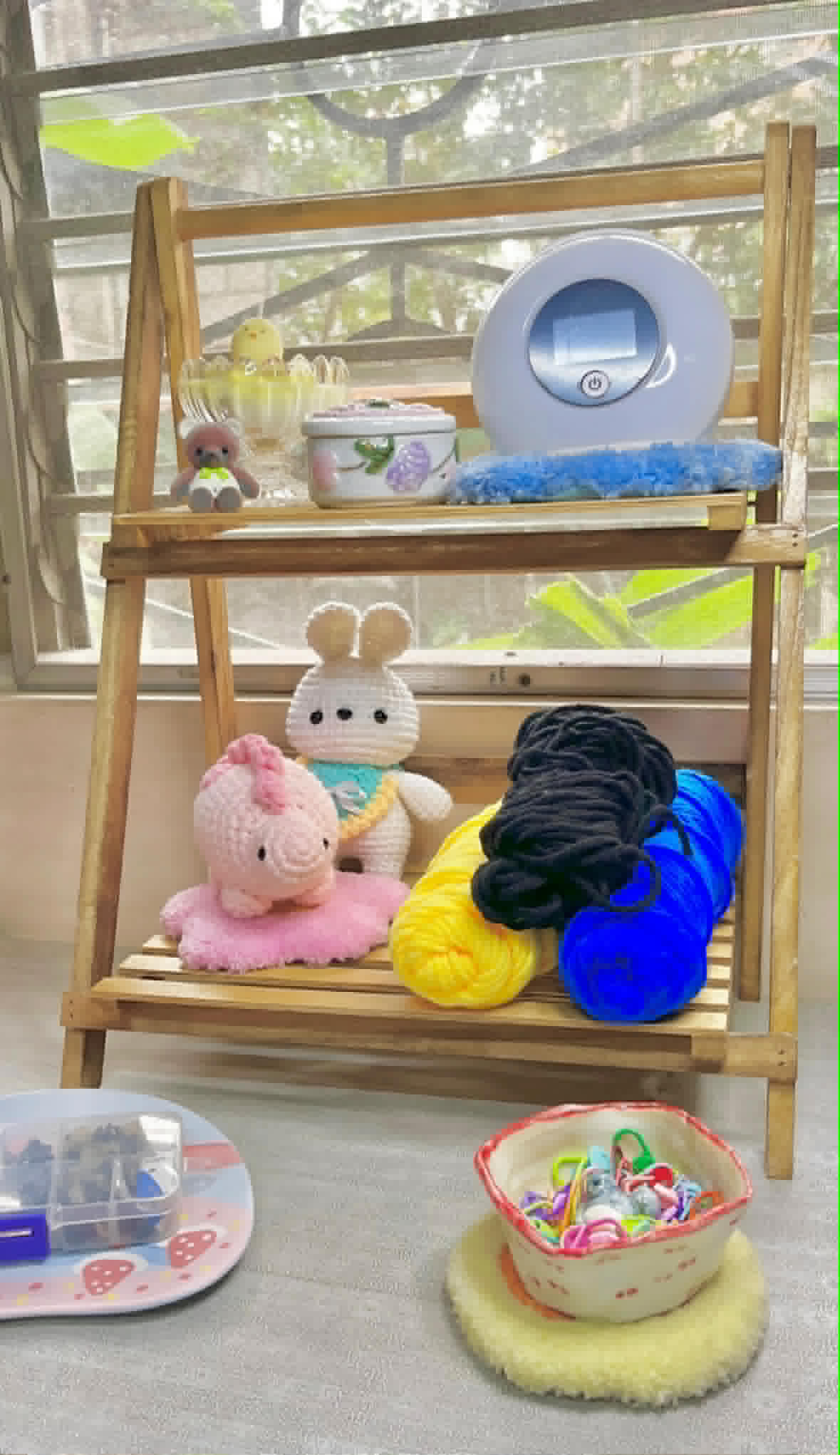
Loop, pull, wrap, another pull. The crochet hook moves with a rhythm both meditative and mechanical.
Crochet, popularly known in the Philippines as gantsilyo, is a traditional needlecraft that involves creating items by hand using a hook and yarn. For the thousands of Filipinos who have picked up this craft, this rhythm is that of a global movement.
While globally valued at approximately USD 9.48 billion in 2024—with projections to hit USD 17.85 billion by 2034—the local craft’s roots are far deeper than recent trends. In the Philippines, a country where e-commerce is expected to hit $15 billion in 2025, the humble gantsilyo is having a very loud moment.
To understand the Filipino crochet scene today, one must look back. The craft’s local roots were intertwined with the Spanish colonial era, later taking firm hold in the early 1900s when American public schools institutionalized home economics. For generations, young students were taught the basic stitches alongside embroidery and sewing.
“I learned when I was in Grade 3 or 4,” recalls Christine Chua, a 28-year-old licensed psychologist who now runs the side business Crochet Corner. “Once you learn the basics, it’s like riding a bike. You never really forget.”
Similarly, Agnes Lenon, a crochet artist and teacher of over a decade, traces her skills to elementary school home economics: “Nung elementary, meron kaming home economics. Andyan lahat ng crafts. Embroidery, crochet, sewing. [Back in elementary school, we had Home Economics. We did all kinds of crafts].”
Today, crochet sits at a crossroads: it is simultaneously a cherished tradition passed down through families and a booming side hustle. And this renewed relevance is reflected online; Google Trends data indicates that search interest for crochet has seen steady growth over the last two decades.
Casey Jane Bersabiboras, known by her 40,000 followers as Kuti-Kuti, witnessed this shift directly. She started her small business in 2021, not with yarn, but with resin crafts. Yet when she followed her curiosity to crochet flowers, her online identity transformed. “Mas nakilala ako sa pagko-crochet instead of being a resin artist [I became better known for crocheting rather than being a resin artist.],” she says, noting that the crochet community is far larger and more active in comparison.
The Quest for a Standardized Price
Still, the popularity of the Filipino crochet scene is a double-edged sword. Crochet cannot be automated. Every inch of yarn must pass through human fingers. As the market flooded, an oversaturated landscape bred a destructive competition to the lowest prices.
When a quick search on Facebook Marketplace shows hundreds of near-identical tulip bouquets, the most visible differentiating factor becomes the price. Jade, a student hobbyist who stepped back from selling, has observed this phenomenon herself. “Some want to sell faster, and that’s why other crocheters decide to underprice. Crocheting is labor— you sacrifice time used to rest, sleep, or eat.”
Because crochet is usually classified as a craft rather than fine art, it is often perceived as less valuable despite requiring significant skill and time. As Agnes Lenon discovered when she began creating crochet artwork on canvas, many people initially do not consider crochet capable of producing a true masterpiece. “Ang crochet, parang ang tingin kasi is craft [Crochet is often viewed as a craft] ,” she explains. “Usually, [craft] is mass produced. You can repeat it. Art is one piece lang talaga.”
So how does one price a handmade item that took hours—sometimes days—to create?
Christine Chua has developed a formalized system: “For amigurumis, I would price it 150 per inch. I used to price it 100 per inch, but given how things have progressed—also how much things just cost nowadays—150 per inch seems decent for both myself and clients.” Yet she admits she is still “losing out” compared to her main profession as a psychologist. “I know how much I could earn per hour with my other line of work, so it’s a bit disheartening.”
Agnes Lenon anchors her prices to the Philippine minimum wage. To this labor cost, she adds the cost of materials and a profit margin.
However, fellow crocheter Caryl Chan has noticed an interesting paradox in relation to the hourly wage: “What if you’re already a pro and you just took 30 minutes, compared to a beginner who took one hour to make a plushie? Does that make your labor count less?” She invests time in market research to find out what people are willing to pay, asserting that when customers pay high prices for her work, they pay for her years of experience and not the minutes it took to create the piece itself.
The absence of standardized pricing practices across the Philippine crochet community leaves individual sellers vulnerable. Buyers may balk at prices that seem high without understanding the labor involved. Christine Chua notes: “I try to justify the fair prices that I’m giving. But crochet is not for everyone talaga. Some people don’t value it as much. It’s sad, but that’s the reality.”
Trends that Remain Evergreen
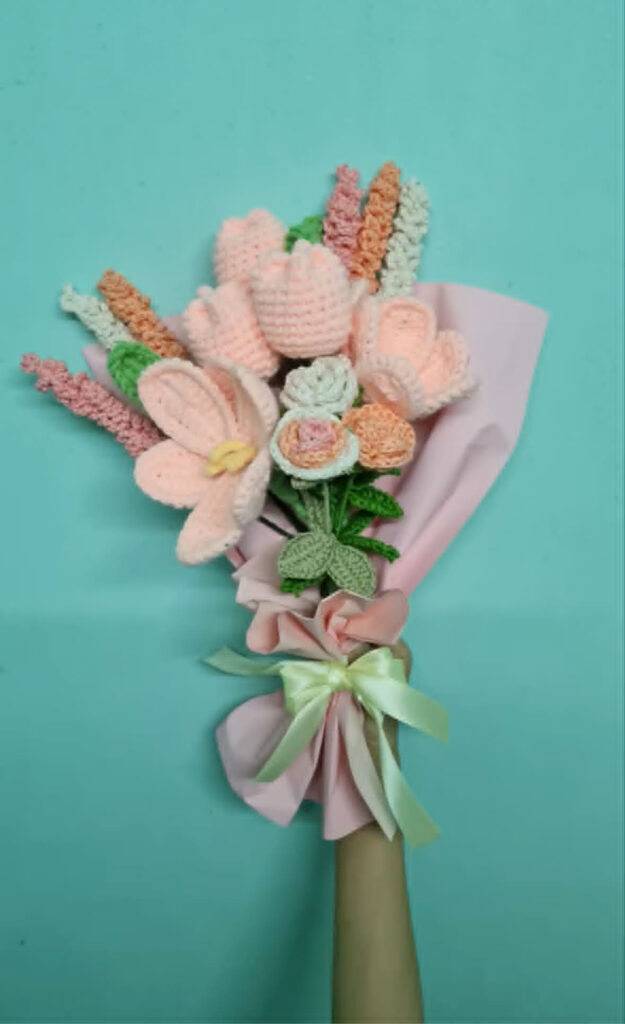
Among the most prominent trends in the local community is the rise of crochet flowers, which have captured the market as a permanent and eco-friendly alternative to fresh bouquets. For Kuti-Kuti, crochet flowers became her signature. “People appreciate the beauty of crochet because of its quality and the thought that it will never wilt,” she says. “Pwede mo siyang labhan, pwede mo siyang i-display anytime [You can wash it, you can display it any time].”
While Valentine’s Day provides an obvious peak, Kuti-Kuti notes that demand for crochet flowers remains strong year-round, with a roughly 50-50 split between seasonal and regular sales.
Beyond flowers, amigurumi —the Japanese art of crocheting small, stuffed yarn creatures— represents another major trend.
Christine Chua has found a unique niche with her “fidget frogs”—amigurumi toy frogs with movable arms and legs that customers can pull and squish. “This is something I haven’t seen anyone in the Philippines sell yet,” she says. “It’s one of the things that are unique. People enjoy playing with my crochet works—unlike others, not just amigurumi that you could just look at, mine you can play around with.”
In a similar vein, Caryl Chan’s bestsellers are custom plushies modeled after customers’ pets. “A lot of people ask me to make their dogs,” she says. Because she has made so many, she has developed patterns that reduce production time, allowing her to offer competitive pricing without devaluing her work.
However, Caryl also credits something else for the success she has seen: social media. Creating content about her crocheting process and products has expanded her reach, leading to multiple international orders.
It is no longer enough to crochet well; one must also film the process, edit the footage, post consistently, and engage with followers. For Caryl, this adds an entirely separate layer of labor. “Since social media is very common, you film everything for reels or TikTok. Sometimes that makes the process even longer because I have to set up my filming equipment to make my space look aesthetic.”
Kuti-Kuti has experienced similar growth. A single viral TikTok video featuring miniature crocheted flowers generated 500,000 likes and led to 280 sales of that product alone. She now monetizes not just her crochet products but also her content directly. “Malaking help rin siya sa akin. Kapag may mataas na views, kumikita siya[It’s a big help to me. When it gets a lot of views, it generates income].” Her content monetization on Facebook has reached five digits per month—enough to cover her bills.
But content creation comes at a cost. “Nagkoconsume siya ng ilang hours [It consumes some time],” Kuti-Kuti admits. “You have to think about what content to make, and then when you post, it has to be engaging so that it’s shareable.” She estimates that the time spent managing social media now rivals the time spent actually crocheting.
Social media is also where the effects of an oversaturated market are most visible. On Facebook, the trend of crafters no longer selling is increasingly visible through a surge in “quitting sales”, where crocheters sell their yarn stashes and unfinished projects. In destash posts in groups like Crochet Philippines, sellers cite a variety of stressors, from physical strain to crochet burnout caused by a lack of sales and profit.
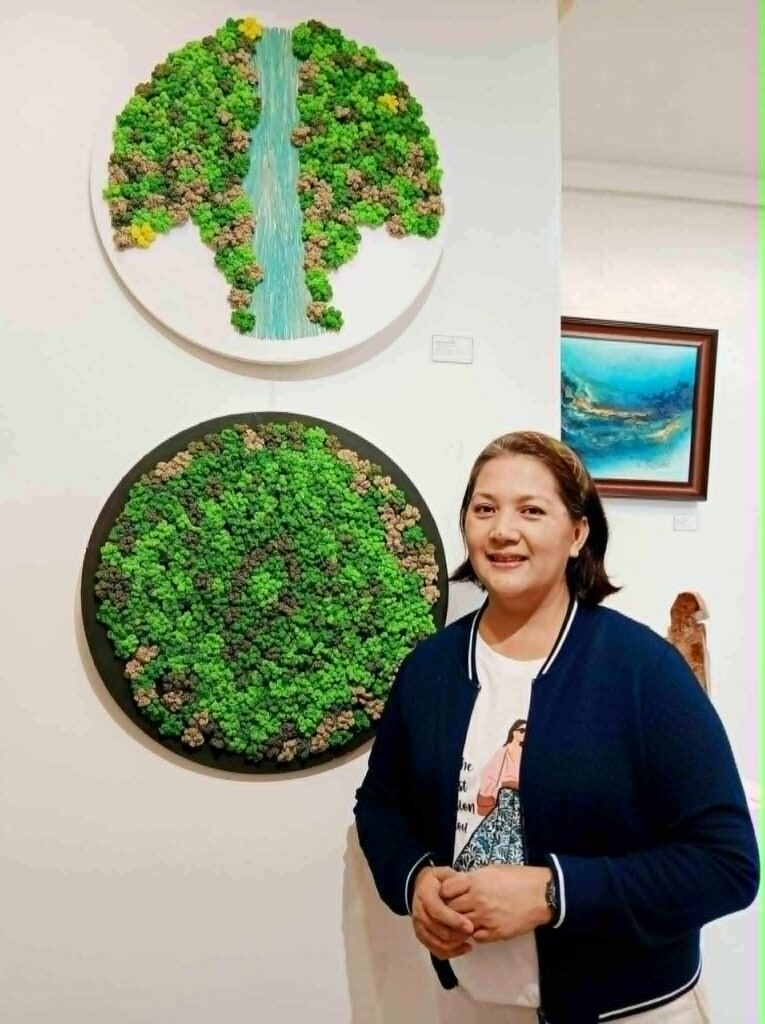
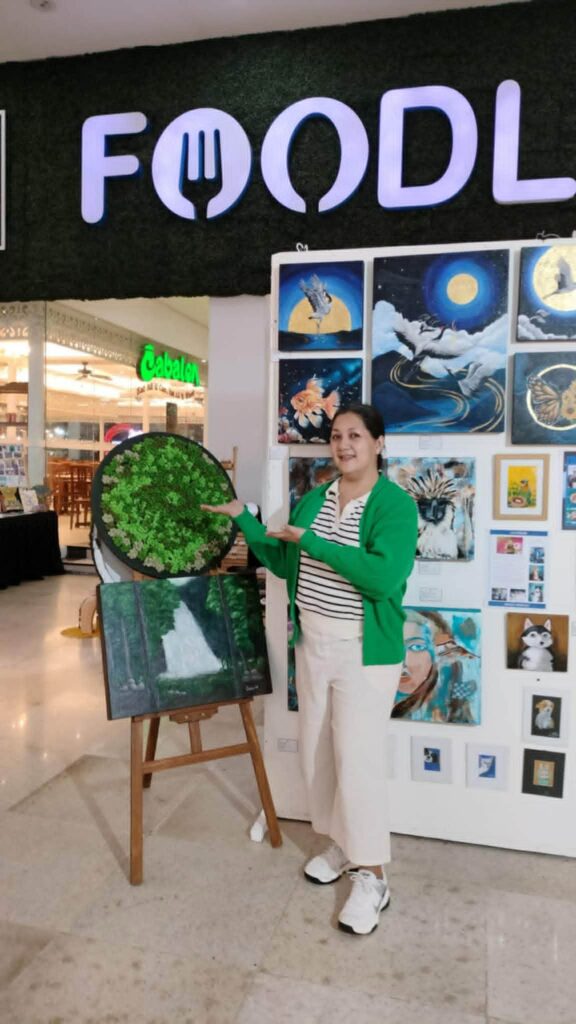
Agnes Lenon poses with her crocheted topography forests. Photos from Loops Crochet PH
Is the Hook a Hobby or a Career?
Behind the beautiful Instagram feeds and viral TikTok videos, there is a physical toll that rarely makes it into the content. Crocheting for hours—often in suboptimal positions—leads to real, sometimes debilitating pain.
Jade reports “back and neck pain” as a regular companion to her crochet work. She has plans to invest in a larger, more ergonomic desk to improve her posture. Agnes Lenon has experienced numbness in her hands from overwork. “May times na nagkaroon ako ng order na napakadami, and nag-numb talaga yan. As in, hindi ko siya maikilos [There were times when I had a huge volume of orders, and my hands went numb. To the point where I couldn’t move them at all].”
The question of whether crochet can serve as a genuine, long-term livelihood in the Philippines is one with no true answer.
Kuti-Kuti, who now works full-time as a crochet artist and social media manager for other pages, believes crochet can be sustainable. “Hindi mo kailangang lumabas; hindi mo kailangang mag-out [You don’t need to go out; you don’t need to sign in and out] .” Yet even she offers a caveat: she is still hoping to enter government work for the stability it provides.
Caryl Chan is more direct: “If you crochet only—working, making the plushies—it’s not sustainable talaga. The amount of work it takes and the money that you get out of it will not realistically feed you.”
Her observation is that successful full-time crochet entrepreneurs seldom rely solely on product sales. Instead, they diversify: selling yarn, materials, patterns, and even content creation. “The ones that I see that do crochet full-time don’t just do the crochet part. They also sell yarns, materials, and other fast-moving consumer goods. Patterns, yarns—and some people even become content creators online so that they get paid while filming themselves crocheting.”
Christine Chua echoes this pragmatism. She sees crochet as a “booming industry” in the Philippines but expresses concern about exploitation and sweatshops. For her, crochet remains a way to share her love of the craft, not a true source of income.
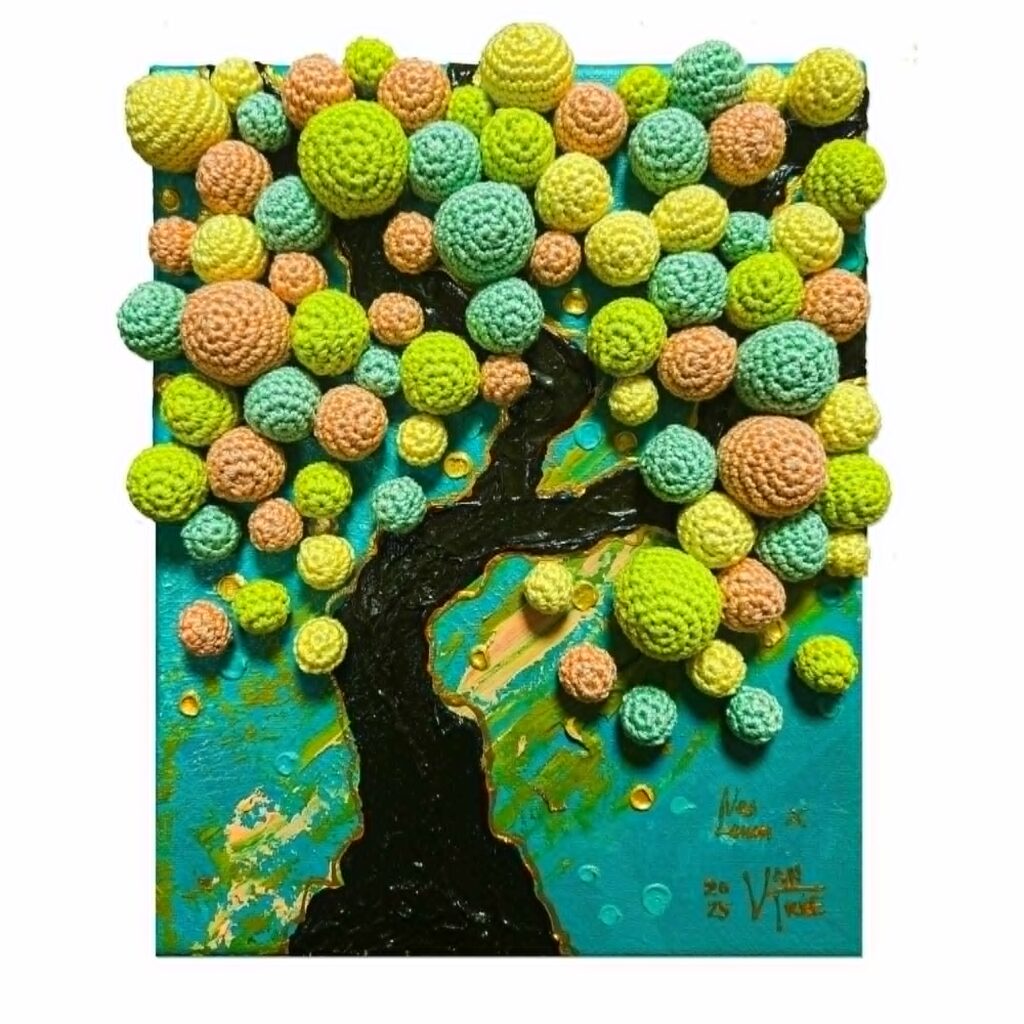
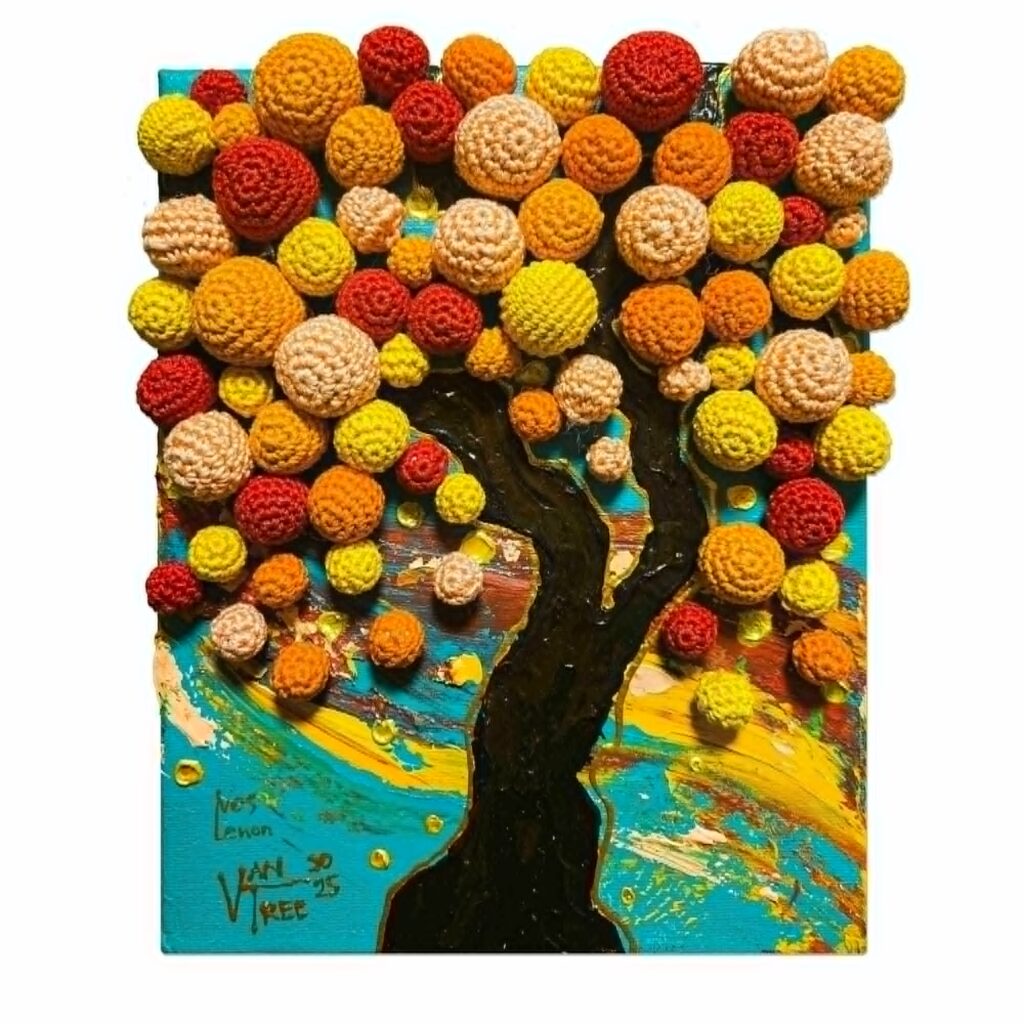
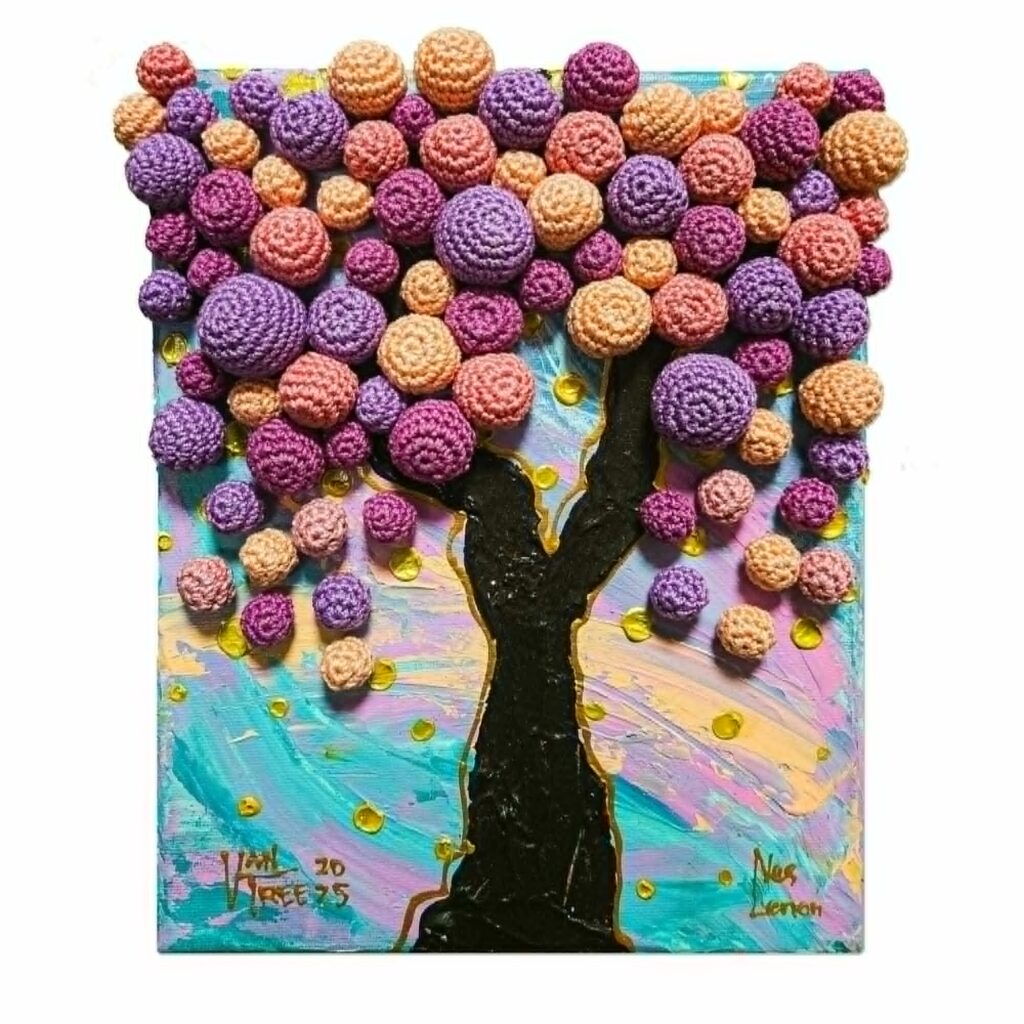
Perhaps the most hopeful—and unconventional—vision for crochet’s future in the Philippines comes from Agnes Lenon. She has years of experience crocheting, but only recently discovered a new passion: crochet as fine art.
It began when she was invited to join an art exhibit by a painter friend. Initially, she assumed her crochet work did not belong. But her friends encouraged her: why not try? It’s never too late. So she did.
Her first piece was a “topography forest”—crochet applied directly onto canvas, creating a textured, three-dimensional landscape. “Wala pa akong nakikitang gano’n,[I hadn’t seen anything like that yet.]“ she says. Since then, she has been experimenting with mixed media—combining crochet, embroidery, and painting in increasingly complex pieces.
Yet even this artistic breakthrough comes with practical challenges unique to the Philippines’ tropical climate. “Sa ibang bansa [In other countries], fiber is very welcome. But here, it’s humid, there’s dust. That’s a problem for maintenance,” Agnes explains. Buyers may hesitate to purchase a PHP 10,000 or PHP 20,000 crochet artwork if they are unsure how to preserve it. She is experimenting with different materials—nylon twine, synthetic fibers—to create works that are both beautiful and durable in local conditions.
What keeps her going, despite the challenges, is the excitement of discovery. “Parang nagta-treasure hunting. Ano yung makikita ko? [It feels like treasure hunting. What will I find?] It’s another level of excitement.”
In her private teaching sessions, which cater primarily to children from class A and B families, Agnes has also discovered a new market: teaching crochet as a structured long-term program that builds real foundations rather than one-off experiences. Her students come from families where schedules are packed with piano lessons, sports, and tutoring—and crochet has earned its place among them. “I’m always learning with them,” she realized. “Natututo sila sa akin, pero natututo din ako sa kanila. Compared to last year, ibang-iba na ang syllabus at style of teaching ko ngayon [They learn from me, but I learn from them, too. Compared to last year, my syllabus and teaching style are completely different].”
Yet for every crocheter who has created a niche for themselves, reality remains far more precarious. For many, the physical toll threatens to outweigh monetary gain and fulfillment.
The question of whether crochet can be a sustainable livelihood in the Philippines, then, depends entirely on how “crochet” is defined. If it means sitting with a hook and yarn, producing plushies for bazaars, just breaking even will be a challenge. If it means building a brand that includes content creation, pattern design, teaching, and product sales, it’s possible, but demanding in ways that extend far beyond the craft itself.
As global crochet numbers continue their ascent, the local scene will likely continue growing. But growth does not automatically translate to fair compensation. The absence of standardized pricing practices, the oversaturation of similar products, and the persistent perception of crochet as “just a craft” remain structural challenges that no viral video can solve.
Until there is a widespread move toward standardized pricing and a deeper public recognition of crochet as a legitimate art form, the industry will continue to risk burning out its most passionate creators. The thread, for now, holds. But as every crocheter knows, even the strongest yarn can only take so much tension before it snaps. —Zoe Davad

Zoe Davad is a writer whose research interests span from Homeric epics to Japanese alternative fashion. She is currently pursuing a bachelor’s degree in journalism from the University of the Philippines Diliman. Her work has been previously published in the Philippines Graphic, BusinessMirror, and Tinig ng Plaridel.