

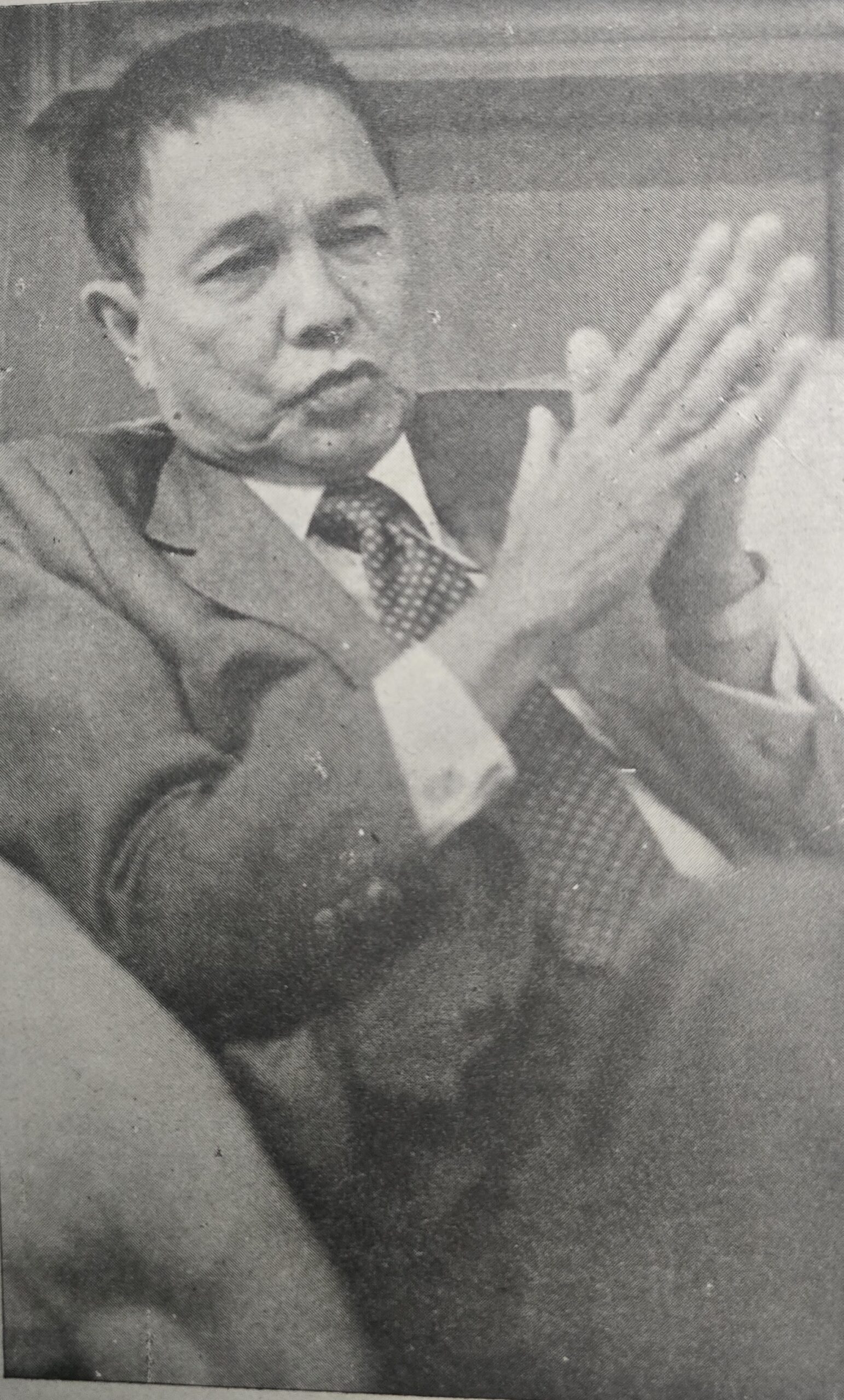
Foreign Affairs Secretary Raul S. Manglapus talks on the US military bases, the tensions in Fil-Am relations, and the coming Pacific century.
On May 19, 1973, the New York Times published an item by Raul S. Manglapus, then an exile in the United States, on “The ‘Mess’ in the Philippines.”
“The ideal answer to the Marcos blackmail,” Manglapus wrote, “is, of course, to withdraw the bases to the United States’ Pacific islands. Should that be militarily inadvisable or financially unbearable, then it is time to make de jure what is a de facto reality. Those bases are a regional, no longer a bilateral, arrangement. China and the members of the Southeast Asian nations want them. Let them sign it. Let the responsibility, if not the facilities themselves, be redistributed so that no single dictator can ever misuse them again in order to extort United States tax money and keep himself in power.”
This position Manglapus reiterated in another article, “The Role of US Policy,” in the November 1983 issue of the Manila Times-Balita (Chicago, Illinois) and several other times since.
Manglapus must have sung a different tune some 36 years ago when he was one of the Magsaysay boys. In the ‘50s, the Philippine government, wracked by the Huk rebellion, was crawling with little brown Americans, as the Filipino lackeys were called. To quell the insurgency, President Ramon Magsaysay, who already had experience as national defense secretary under the administration of Elpidio Quirino, signed Republic Act 1199, or the Agricultural Tenancy Act of 1954, and promised land to the farmers. Magsaysay the Amboy endeared himself to the masa and had, reports had it, many more dreams to realize for the poor; but he met his untimely death when his plane crashed into the jungle of the Zambales mountains.
In those days, the ordinary Filipino and the ordinary public official regarded the US bases as a boon to the Philippines, the bases were touted as our security blanket. They appeared to have nothing to do with agricultural unrest or economic underdevelopment or national sovereignty or human dignity. But now, even a Magsaysay boy like Manglapus—who spent 13 and a half years of exile throughout the dark period of martial rule, relentlessly dug up historical facts and underwent a lot of eye-opening experiences—has realized that talking about the bases is not just deciding whether to retain them on Philippine soil, but also rethinking our system of hospitality towards the US. Are Pinoys still doting serfs of Yankees, or should they not assert equality and independence?
Upheavals and changes have rocked the world in recent decades, and the matter of the US bases in this country has become less and less simple. The Philippines itself has opened more and more ties, both formal and informal, with foreign countries, including those that Uncle Sam frowns on or used to snub, such as Cuba, China, Vietnam, Nicaragua and Palestine. The intricate web of international relations passes through economic, historical, linguistic, racial, and other links. Any meeting with neighboring countries therefore is more than a cocktail party. It can be a constructive move in weaving a strong fabric of unity among nations for global peace.
As secretary of foreign affairs, Raul S. Manglapus must know whereof he speaks.
“We expect to open the formal discussion—or negotiation, as you wish—sometime in late August, which could lead to a treaty. The joint statement that we issued in the last exploratory talk included a discussion of the future of Philippine-American relation. We are to discuss not only the bases but also the whole relationship between the Philippines and the United States. The discussion will cover friendship, cooperation, and security, The process involves a ratification by the Senate, should we conclude a treaty. According to the Constitution, Congress may submit the treaty to a referendum.”
How prepare the people for an informed choice? “We will hold dialogues with various sectors of the population,” he explains. “The joint legislative and executive committee hearing led by University of the Philippines President Jose Abueva has been in contact with citizens’ groups of various sectors on the possible alternative uses of the bases. We also hold consultations in Malacañang with consultants and potential contractors. The Abueva committee is supposed to submit a report by early September.”
Whatever the forthcoming negotiation will center on, the retention or removal of the bases will top the list of priority items on the agenda. “We in this department have been thinking of a post-American bases regional security. The Americans claim that these bases have been protecting air and sea lanes used by Southeast and Northeast Asia. If this is true, the countries affected should speak up in favor of the bases.”
Manglapus recalls that during the summit meeting of the Association of Southeast Asian Nations (ASEAN) in December 1987, President Corazon C. Aquino remembered that they, the ASEAN countries, said the Philippines deserves credit for steps taken towards regional protection.
“Later,” says Manglapus, “Premier Lee Kuan Yew of Singapore openly advocated the continuation of the US bases. Shortly after that, he talked to the US about putting up facilities in Singapore, though on a limited scale. Then, a little later, the prime minister of Malaysia spoke in favor of the bases. Brunei officials, also. We were told privately that the Indonesian army is in favor of retaining the bases. Still, not enough people spoke up.”
There is, of course, often a difference in the opinion expressed by the governments and in the sentiments of the people governed. Even the military, especially if it is ultra-Right, may not necessarily agree in thinking with the executive or the legislative leadership. It is no surprise if, for example, the Indonesian army does not feel the same way as the civilian government.
In this age of complexity, mixed emotions, and unstoppable turning of events—from the Vatican to Eastern Europe of the tribal hinterlands—does security only mean military protection against foreign invasion or against communism? Communism, after all, was purportedly the reason why the bases have existed in the region for a long time. Good ole America succeeded once upon a time in casting a cloud of ignorance and spreading fear of communism until national and worldwide student and labor unrest exploded in the 1960s, and the Vietnam war became America’s nemesis. Many parts of the globe have since then grown up politically, and the world has never been the same again.
“Partly because of the developments in Eastern Europe and the other socialist countries, there’s a more varied thinking on security,” opines Manglapus. “It is not only the communist threat but also something else coming from other countries. Military security is needed against the threat to lines of commerce and communication. For instance, in shipping, there are three choke points: the straits of Malacca, the Sunda straits, and the straits near Indonesia. If these points are blocked, the entire commerce of the area will be paralyzed. So it’s not only fear of invasion but also fear of paralyzed commerce and communication.
“We have grown in the shadow of American power,” Manglapus elaborates. “We in the Department of Foreign Affairs feel it’s time to share responsibility. In Europe, they have the North Atlantic Treaty Organization (NATO), where the member countries share the responsibility of securing their area.”
The big question is: Is the Philippines capable of taking on its share of the responsibility? As it is, the military is divided, and the President even has to seek help from the US in battling coup attempts, as well as the danger of a communist takeover. This is an obvious problem that Manglapus hopes will be solved in time.
Meanwhile, studies and plans are being done on possible alternative uses of the sites in case the bases go. Clark Air Base in Angeles, Pampanga, and Subic Naval Base in Olongapo, Zambales, may—as was done in other places, such as the US itself, where bases were shut down—be transformed into locations for schools, factories, national parks for wild life preservation, tourist attractions.
Filipinos, as they say, are survivors. They can be at once fun-loving and hard-working. With the right incentives and government and nongovernmental support, the dismantling of the US military bases will not, as pro-bases proponents argue, plunge the nation into abject poverty and existential angst.
Manglapus personally toys with the idea of transferring the Ninoy Aquino International Airport (NAIA) to Clark Air Base. It may serve as the “new center for international aviation.” An industrial complex may be developed there because of its proximity to air and water ports, Manglapus says.
And the bars and strip joints? “They will obviously change. I foresee that the bar trade would probably be affected. However, the hotel and other restaurant businesses need not be adversely affected. The national government should help in the development of the area because the province of Pampanga cannot do it alone.”
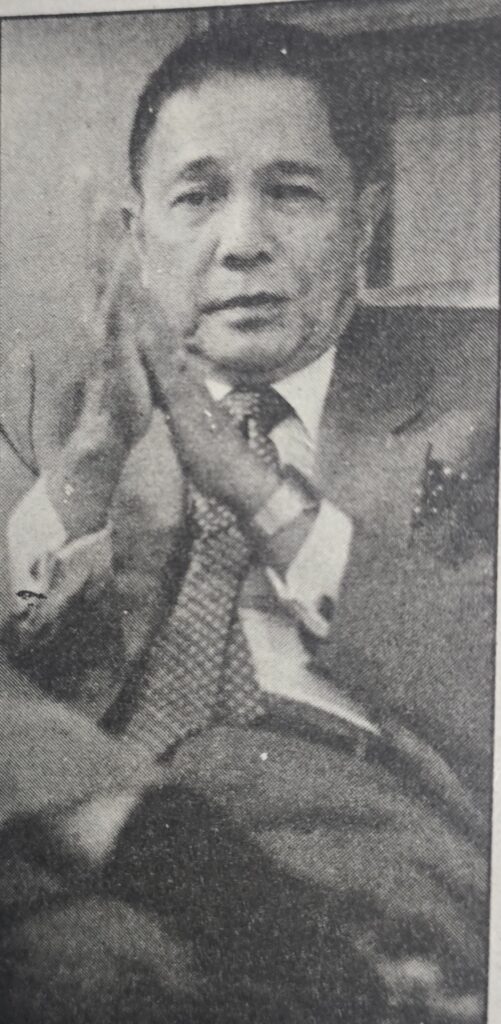
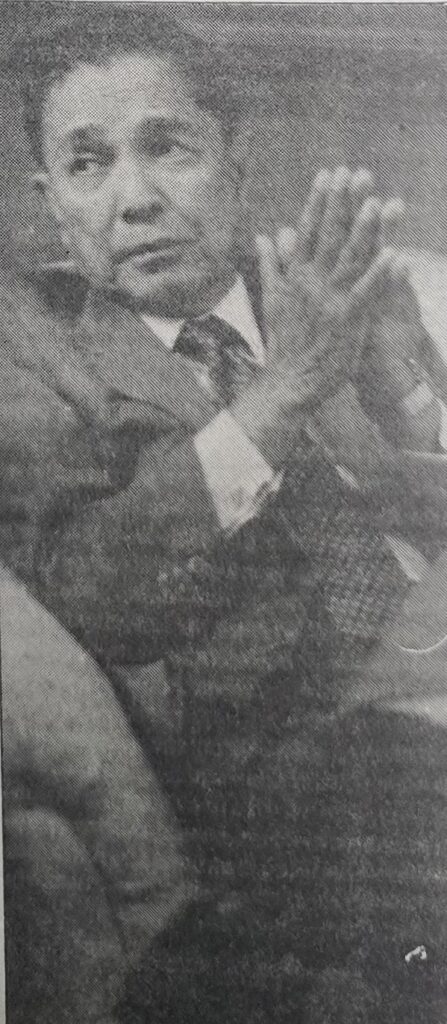
Being foreign affairs secretary seems at first glance too tough a job for somebody with the mien of Raul Sevilla Manglapus. Manglapus, who’s nearing the age of 71, looks calm, gracious, pleasant, mild. Even when he’s a good listener, he can turn on that charm, and one imagines how suave and playful he must have been in his youth. But one can also surmise that an innate intelligence, coupled with a tendency to be stubborn, characterizes the diplomat in Manglapus.
Born in Manila and schooled at the Ateneo de Manila University, the University of Santo Tomas, and Georgetown University, USA, Manglapus became a lawyer and an educator. He served as World War II correspondent, and received the Philippine Legion of Honor Award. In 1954 he was the youngest Filipino to serve as undersecretary of foreign affairs, and in 1957, the youngest secretary of foreign affairs. He garnered the most number of votes in the 1961 senatorial run. As senator he will be remembered for his Land Reform Code, the move for local autonomy and decentralization, and other legislative acts on social issues.
In 1972, he was invited by Maryknoll sisters to give a lecture in the US. Since he was to stay there for only 10 days, he left his wife here—a circumstance that he cites to dispel the persistent rumor that he had been tipped off about the impending declaration of martial law. On September 1972, at 1:30 a.m., there was an order for the arrest of Jose Diokno, Ninoy Aquino, and Raul Manglapus. Manglapus at that time was in Hong Kong, and his wife, Pacita LaO, was denied a permit to leave the country.
Manglapus frantically made phone calls so that his family could follow him. He stared at his ceiling for days, depressed and confused, not knowing what to do, dreading the possibility that he wouldn’t be able to see his family again.
Finally, when he was in the US, he received a call at three a.m., informing him that his wife and two sons, who had island-hopped in the Philippines and made a great escape, couldn’t leave the ship docked at some harbor in the US. What if they sent his wife back to the Philippines? Manglapus panicked again, for it was three in the morning. With a little string-pulling here and there among old friends and sympathetic journalists, Manglapus was soon reunited with wife Pacing and two of their children.
Thus began Manglapus’ life as exile. Once his family was safe, he published his first of a series of attacks on the Marcos regime. He formed the Movement for Free Philippines, traveled around the world to advance the cause of democracy in the Philippines, and was elected vice-president of the Christian Democrats International, based in Rome and and Brussels. He received several international awards, and also became senior associate of the Carnegie Endowment for International Peace in Washington, D.C.
In between lectures and articles, Manglapus wrote plays, poems, songs, and continued advocating Christian socialism. He is for the abolition of class war and for the united struggle for harmony and justice through peaceful means.
The lawyer, student, and diplomat in Manglapus extend to his creative pieces. Yankee Panky, for instance, a musical based on his research on the Philippines of 1888-1892, was written in place of a thesis. The play posits that the US bases have been here since 1898. It was first staged in Hawaii, and in 1897 Repertory Philippines presented it in Manila. In 1988, it reopened at the Cathedral of St. John the Divine in New York. The play, which pokes fun at Americans, is in English and is clearly meant for American audiences and perhaps Filipinos who still believe in so-called “special relations” and mutual defense. Manglapus wrote all the 20 songs, and the lead singer in the Repertory Philippines performance was Monique Wilson, now famous as Lea Salonga’s alternate in Miss Saigon, the London hit.
Another memorable experience of Manglapus in the US was when he was asked to write for the op-ed page of the New York Times and the Washington Post minutes after Ninoy was shot. Fax was not yet in vogue then, so he had to dictate his article over the phone, word for word, line by line, punctuation mark by tedious punctuation mark.
Earlier on that fateful day in August 1983, Manglapus received in Washington, his base of operations, a call from a friend in Hongkong, telling Manglapus of Ninoy’s murder. Manglapus was invited to appear in Nightline, hosted by Ted Koppel. There was no satellite to facilitate the television interview, so Manglapus and his wife were fetched in a Mercedes Benz from Caux, Montreaux, Switzerland, where he had a speaking engagement, to drive all the way to Frankfurt. In a small room at the airport of Frankfurt, Manglapus found out that the other guest on Nightline was Cory Aquino, who was in Boston. Manglapus could hear Cory’s voice, but he couldn’t see her. There he was in Frankfurt, while Cory was in Boston, and Sam Donaldson, the assistant of Ted Koppel, was conducting the interview from Washington.
“What is memorable,” reveals Manglapus, “is the way Cory responded to the questions of Donaldson. She answered with such calm, such equanimity and articulation. Of course, I had known how she was long before that, but this was the first time I heard her under such condition, which was just a few hours after Ninoy’s assassination. On the way back, I told my wife, ‘This woman is not going to be just a widow, she’s going to be a leader.’ My prophecy turned out to be correct.”
The fiery orations, delivered in the famous “Arneow” accent, and the inspired writings of Manglapus most probably stem from his faith in Christianity and social democracy. The making of a leader was glimpsed as early as his student days at the Ateneo. In December 1939, he delivered a speech in a national inter-university oratorical contest sponsored by the Civil Liberties Union of the Philippines. He impressed the CLU chairperson, Senator Lorenzo M. Tañada, as well as the guest of honor, President Manuel L. Quezon, and his oration entitled “Land of Bondage; Land of Free,” became a model speech. Quezon, after that, consulted Manglapus whenever Quezon drafted speeches, especially for young listeners.
That speech was published as the introduction to his book of the same title put out by Solidaridad Publishing House in 1967. The collection—of speeches, Senate interpellations, and a piece of verse entitled “Barrio Captain’s Odyssey”—mainly touches on land reform, decentralization, and Christian socialism.
Land reform, social justice, and foreign relations cannot succeed without an acumen for strategy and tactics. Hence, Manglapus, the soft-spoken but tough diplomat, tries to look beyond this decade or even this century. Foreseeing the future, however, does not mean forgetting the past.
It is no wonder that Manglapus has still another pet project—establishing an Ibero-Asia-Pacific association or center.
Spain has asked the different countries to celebrate the 500 years of the discovery of the Americas. The celebration, naturally, will play up not so much the brutal colonization of the so-called Indies by Sword and Cross but the opening up of new avenues for cultural and trade exchanges in the different continents of the world. Maps were redrawn, nations were formed, intermarriages took place, legally or illegally—mostly illegally—and so-called civilization marched around the globe. Whatever the ills—slavery, taxation—introduced by the conquistadores, the modern world we live in has its own mapping out and networking to do.
National commissions to plan 1992 events have been formed in Puerto Rico, Japan, the US, the Philippines, etc. The Americas, Manglapus relates, formed the Ibero-American Conference of Commissions, to which the Philippines has been invited as observer. Instead of only an Ibero-American conference, thought Manglapus, why not form an Ibero-Asia-Pacific Conference? In Western Pacific alone, there’s Micronesia, Marshall Islands, Saipan of the Mariana Islands, Guam, and others. “We are linked to these people by history, geography, race, and even religion. You know, the next century will be the Pacific century.
Manglapus has always batted for a stronger alliance with Asian-Pacific nations.
“Our primordial alliance is ASEAN. But within the ASEAN are former British colonies—Singapore, Malaysia, and Brunei. Did you know that Spain called Guam and the Mariana Islands the New Philippines? If Texas had not been annexed by the United States, it would have been called the New Philippines, too. But we should not allow history to repeat itself. These islands should not be used as tools, as pawns. They should be the major players. We have to unite with those people. If we develop our Hispanic family relation as well as the Spanish language, we will be a powerful group in the United Nations.”
Actually, it is not only history that links us to former colonies of Spain but also similar economic and political traits. In 1988 in Manila, in fact, a meeting of the “newly-restored democracies” occurred. Participants included Nicaragua, Brazil, Mexico, Argentina, the Philippines, and other non-Spanish-speaking nations. Most, however, are beholden and indebted to imperialist countries, their economies being strangled by multinationals. Brazil, Mexico, and Argentina, like the Philippines, have a huge foreign debt, so huge they, together with other Latin American governments, have banded together to find solution to their debt problems.
Three major activities are being prepared by the DFA in connection with Spain’s big bang in 1992, which may be looked at as some sort of cultural revival of Spanish influence on the world. In the Philippines, an Ibero-Asia-Pacific Conference at the ministerial level will take place. A conference of Asia-Pacific writers in Spanish will also be held. Two Filipino plays, moreover, will be presented in the original Spanish: Jose Rizal’s Junto al Pasig and Claro M. Recto’s Solo bajo las sombras.
Spanish, according to Manglapus, was never the official language of the people. “We did not have the immigration from Spain that the Latin American countries had. It was easier to go to Latin America from Spain than it was to go to the Philippines. Only priests and soldiers came to stay. So, if you’re mestiza or mestizo,” Manglapus laughs, “you must be a descendant of a Spanish solider or friar. It was the friars in the 16th century who translated the catechism into the local dialects. And the irony of history is that the Spanish army was composed mostly of Filipinos. Filipino soldiers killed Filipinos.”
Manglapus laments the Filipinos’ lack of interest in the Spanish language. When the Americans taught English in schools, they disapproved of Spanish. By depriving Filipinos of the knowledge of Spanish, Manglapus observes, we fail to study and understand the works of Rizal, Recto, and other heroes who wrote in Spanish.
“In the United Nations, Spanish is one of the few official languages. If we can develop a sufficient number of Filipinos who will speak Spanish and spread the works of Rizal and others, they will serve as a bridge to strengthen our relations with the Hispanic world.”
Manglapus also cites our national anthem. “Bayang Magiliw” was translated from the English translation of the Spanish original. In the Spanish version, the oppressors are “del Occidente,” they come from the West. The English version toned down the militant spirit for obvious reasons.
In his more relaxed moments, Raul S. Manglapus does not have to play politician or to risk being labeled a circus performer or to entertain presidential ambitions. He fondly recalls having appeared in school plays such as Cyrano de Bergerac and Shakespeare dramas. He even composed and sang “Lady of the Avenue,” dedicated to the Virgin of EDSA, and aired on television in time for June 12. It is a video with lyrics running across the screen and featuring the voice of no less than the secretary of foreign affairs.
Even in his less relaxed moments—meaning, at work—Manglapus can enjoy and be himself. The first week of July will see him in Budapest, Hungary, in an international meeting of Christian democrats. The occasion will be attended by heads of Eastern and Western European states. Can you imagine Raul Manglapus belligerent and tense among individuals of like mind and ideology, among activists who ceaselessly fantasize a brighter tomorrow? Though relations with the US might grow tenser day by day, there may yet be time, with Manglapus the entertainer around, for theater, dance, and jazz.
Written by Marra PL Lanot. Published by the Philippine Graphic on July 2, 1990.