

In August 2025, an 82-year-old man named Jose Takei boarded a flight from Manila to Osaka, carrying with him eight decades of an unanswered question.
Takei was born in Laguna near the end of World War II, the son of a Filipina mother and a Japanese engineer father who returned to his home country before his son ever drew a first breath.
Growing up, he was bullied for the blood he carried—for a father he had never met and could never quite forgive.
It took the help of the Philippine Nikkei-jin Legal Support Center, and a lifetime of searching, before he finally traced his lineage, met half-siblings he never knew existed, and stood, at last, before his father’s grave.
It was a small, intensely private reckoning. Yet set against the 80th anniversary of Japan’s wartime surrender, Takei’s search read like a compressed version of a much wider narrative: the story of how two nations spent seven decades learning to transform grief into partnership.
Reconciliation between countries rarely begins with treaties alone. Long before presidents exchanged state visits and defense officials signed landmark agreements, ordinary Filipinos and Japanese had already begun rebuilding trust—through families separated by war, scholars who revisited painful chapters of history, local communities that chose remembrance over resentment, and businesses that gradually reconnected two neighboring archipelagos. Those quiet acts of renewal laid the foundation for one of Asia’s most enduring bilateral relationships.
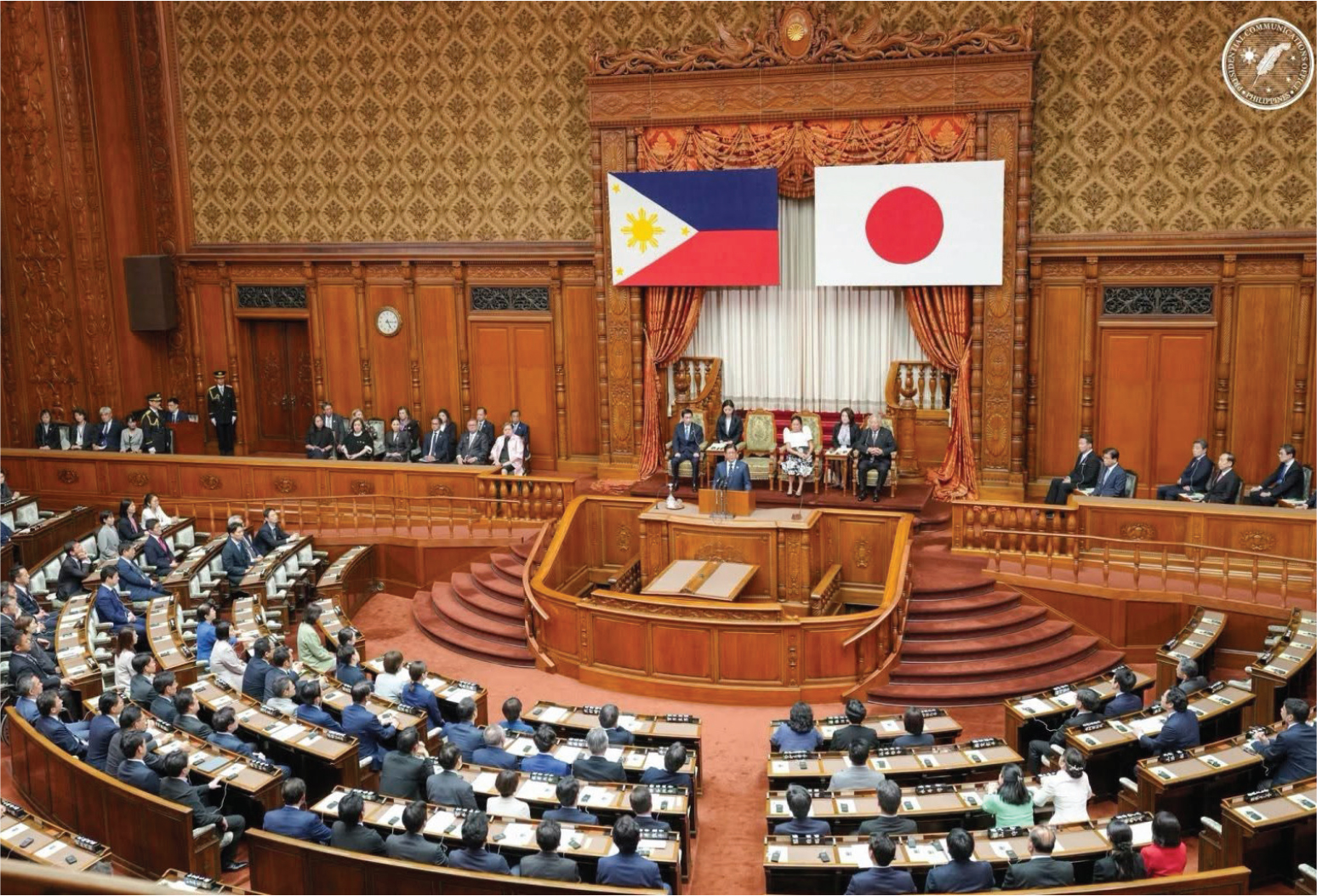
That larger story reached another milestone in May 2026, when President Ferdinand R. Marcos Jr. and Japanese Prime Minister Sanae Takaichi met in Tokyo and elevated bilateral relations to a “Comprehensive Strategic Partnership.”
The timing was deliberate. Just months before the 70th anniversary of the normalization of diplomatic ties, Manila and Tokyo formally acknowledged what had been taking shape for decades: a relationship that had grown far beyond trade and development assistance into one encompassing security, economics, technology and people-to-people exchanges.
Defense analysts now describe the relationship as approaching a “quasi-alliance:” an extraordinary characterization considering the history that preceded it.
Today, surveys show that a great number of Filipinos regard Japan as the country’s most trusted foreign partner—a figure almost unimaginable to the generation that endured the occupation of the Philippines during World War II.
How does a nation devastated by war come to regard its former occupier as one of its closest friends? The answer cannot be found in a single treaty, summit or diplomatic communiqué. Rather, it emerged gradually across centuries of commerce, decades of reconciliation, sustained economic cooperation and, more recently, a shared determination to preserve peace and stability in an increasingly uncertain Indo-Pacific.
TRADING BEFORE TENSIONS
Long before either country established modern diplomatic institutions, the Philippine and Japanese archipelagos were already linked by commerce.
Archaeological discoveries in Cebu have unearthed Japanese pottery dating back to the 1700s, while historical records indicate that Japanese merchants were already sailing to northern Luzon by the 15th century. Geography made such exchanges almost inevitable. Both countries looked to the sea as a highway connecting communities, markets and cultures.
By the early 20th century, those ties had deepened considerably.
Thousands of Japanese migrants settled in Davao, helping transform the region into one of the world’s leading abaca producers. The thriving Japanese community established schools, businesses and agricultural enterprises, making Davao one of Japan’s largest overseas settlements before World War II and one of Southeast Asia’s earliest experiments in Japanese private enterprise abroad.
Many Filipinos viewed Japan with admiration. Its stunning victory over Russia in 1905 resonated deeply across colonized Asia, including the Philippines, where nationalist leaders saw it as proof that an Asian nation could modernize rapidly and defeat a major Western power. For many Filipinos still under American colonial rule, Japan represented a powerful example that Asia need not remain subordinate to the West.
During the Commonwealth period, former president Manuel L. Quezon himself explored the possibility of closer engagement with Tokyo as part of a broader effort to strengthen the Philippines’ international position while pressing Washington toward eventual independence. Although those diplomatic calculations never fundamentally altered Manila’s alliance with the United States, they reflected how Japan had come to be viewed as an emerging regional power worthy of attention rather than suspicion.
That perception, however, would not survive the next decade. As Japan’s imperial ambitions expanded across Asia, its image in the Philippines changed dramatically. The late historian Lydia Yu-Jose devoted much of her scholarship to tracing this transformation, explaining how Japan’s “southward expansion” strategy gradually recast the Philippines from a neighboring society into a strategic objective.
The invasion of the Philippines in December 1941 fundamentally altered a relationship that had taken centuries to develop.
The occupation that followed between 1942 and 1945 left profound physical and emotional scars. Entire communities endured deprivation, forced displacement and violence. Once among Asia’s most beautiful cities, Manila emerged from the war devastated, while countless Filipino and Japanese families alike carried memories that would shape succeeding generations.
The destruction was so extensive that reconciliation appeared almost inconceivable.
Yet, history would take another course. Unlike some wartime relationships in Northeast Asia that remain burdened by unresolved historical disputes, the Philippines and Japan gradually embarked on a different path—one that neither ignored the past nor allowed it to permanently define the future. It would prove to be a long, uneven and sometimes pragmatic process, driven as much by economic necessity and human resilience as by diplomacy itself.
That journey began not with grand declarations, but with the difficult task of rebuilding a nation shattered by war.
PRICE OF RECONSTRUCTION
If there was one period that fundamentally reshaped postwar Philippine-Japan relations, it was the decades following the restoration of diplomatic ties in 1956.
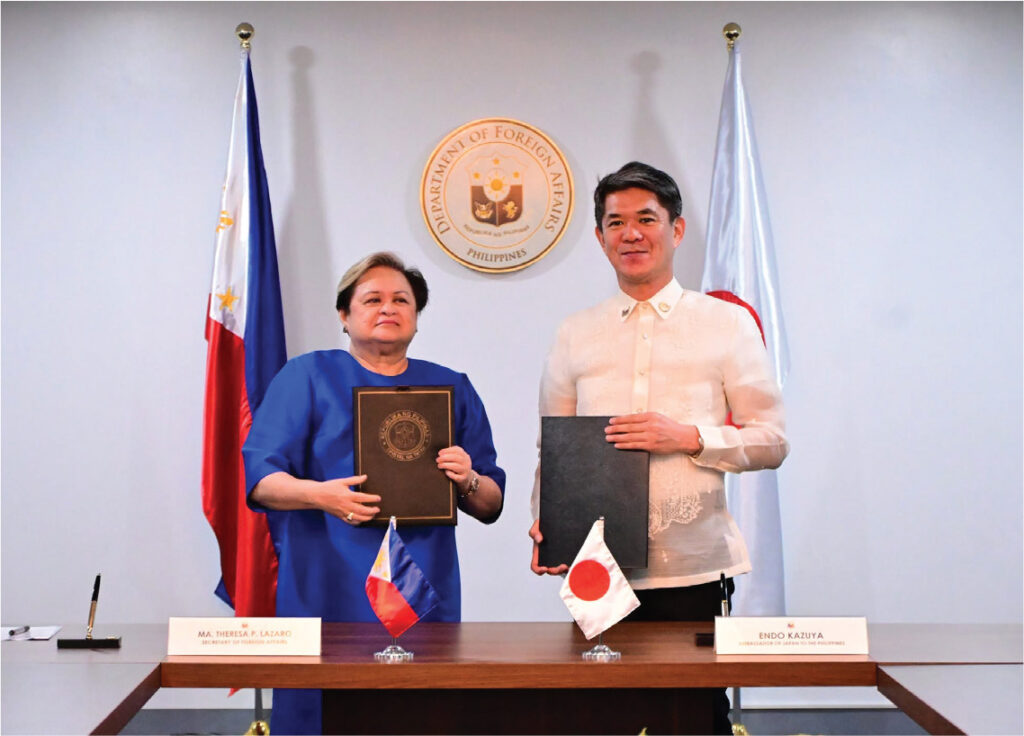
The San Francisco Peace Treaty of 1951 formally ended the state of war between Japan and the Allied powers, while the Reparations Agreement signed five years later reopened diplomatic relations between Manila and Tokyo. Those agreements restored official ties, but rebuilding confidence required something more enduring than signatures on paper:
It demanded years of sustained engagement, economic cooperation and a willingness by both societies to look beyond the bitterness of war.
For the Philippines, reconstruction remained an urgent national priority. Cities, roads, ports and industries destroyed during the conflict required enormous investment at a time when government resources were limited. For Japan, meanwhile, postwar reconstruction had evolved into one of the world’s most remarkable economic recoveries. By the late 1960s, its expanding industries were looking outward for markets, investment opportunities and reliable regional partners.
Those complementary needs gradually drew the two countries closer.
Former president Ferdinand E. Marcos Sr. recognized that Japanese capital and technology could accelerate Philippine development. Japan, in turn, saw its neighbor as an important economic partner strategically located at the crossroads of Southeast Asia.
The relationship became increasingly institutionalized during the Marcos administration. Infrastructure projects multiplied, Japanese investments expanded, and official development assistance (ODA) began financing projects that successive Philippine governments would continue to build upon for decades.
The ratification of the “Treaty of Amity, Commerce and Navigation” in 1973 further strengthened commercial relations, then spurred greater trade and investment between the two countries. By then, Japan had become one of the Philippines’ most important economic partners, helping reshape the country’s infrastructure and industrial landscape.
What had begun as postwar reconstruction was steadily evolving into a long-term economic partnership.
RECONCILIATION THROUGH COOPERATION
Reconciliation, however, was never solely the work of governments.
Treaties restored diplomatic relations, but they could not erase memories of war. Healing unfolded more quietly—in exchanges between universities, in sister-city partnerships, in business delegations, in cultural programs and in families whose histories straddled both countries.
The experiences of Japanese-Filipino descendants such as Jose Takei reflected this more personal dimension of reconciliation. For many members of the Nikkei-jin community, reconnecting with relatives in Japan became part of a broader effort to reclaim identities fractured by war. Their stories illustrate how reconciliation often takes place not in conference halls but within families, communities and individual lives.
Local governments also played an important role.
Memorials were built not only to honor those who perished but also to encourage remembrance without perpetuating hostility.
Academic exchanges enabled historians from both countries to examine difficult chapters of the past together, while tourism and educational programs introduced younger generations to a relationship no longer defined primarily by conflict.
A significant diplomatic milestone came in 1977 when former prime minister Takeo Fukuda visited Manila and articulated what became known as the “Fukuda Doctrine.”
Rejecting military expansion, Japan pledged to build “heart-to-heart” relations with Southeast Asia based on mutual trust and equal partnership.
For many Southeast Asian countries—including the Philippines—the doctrine marked an important shift in Japan’s regional identity. Tokyo increasingly presented itself not as a former imperial power but as a partner committed to economic development, regional stability and peaceful cooperation.
The message was reinforced by action. Throughout the 1980s and 1990s, Japanese investments expanded while development assistance supported highways, bridges, ports, flood-control systems, airports and energy projects that became part of everyday Philippine life. As generations of Filipinos encountered Japan less through memories of occupation than through visible symbols of development and cooperation, public attitudes gradually evolved.
Trust, it turned out, was rebuilt one project at a time, through continuous exchanges, and one generations after another.
BEYOND THE NUMBERS
Japan’s role as the Philippines’ largest source of ODA has often been described as an expression of postwar goodwill.
The reality, as scholars have long observed, is more nuanced. ODA has always advanced multiple objectives simultaneously. It has supported Philippine infrastructure and economic development while also strengthening Japan’s commercial presence abroad, creating opportunities for Japanese companies, technology providers and financial institutions.
Researcher Lila Ramos Shahani noted that amendments to the “Philippine Reparation Law,” including Republic Act No. 3079, facilitated direct contracting arrangements between Japanese firms and Philippine counterparts. Many projects were structured as what development specialists describe as “tied aid,” under which loans were linked to Japanese contractors, equipment or technical expertise.
Such arrangements were hardly unique to Japan. Similar practices characterized development assistance programs offered by several industrialized countries during the latter half of the 20th century.
For the Philippines, the arrangement presented both opportunities and trade-offs.
Japanese financing offered relatively low-interest, long-term loans that enabled the construction of key infrastructure at a scale that would otherwise have been difficult to achieve.
Roads, railways, bridges, flood-control systems, airports and other public works benefited millions of Filipinos and contributed to the country’s economic growth.
At the same time, Japanese firms frequently remained deeply involved throughout the life of these projects by providing engineering expertise, equipment and maintenance services. The result was a long-term economic partnership that generated benefits for both countries while reinforcing Japan’s role as one of the Philippines’ principal development partners.
By 2025, Japan accounted for roughly one-third of the Philippines’ total ODA loan portfolio, valued at approximately $13.65 billion.
The relationship expanded further with the signing of the “Philippines-Japan Economic Partnership Agreement” in 2006.
Although its implementation was not without challenges—including language requirements that initially slowed the deployment of Filipino nurses and caregivers to Japan—it nevertheless broadened cooperation in trade, investment and labor mobility.
More importantly, it reflected how far bilateral relations had evolved. What began as postwar reparations had matured into a multifaceted partnership encompassing commerce, technology, education, labor and human development.
FROM AID TO ALLIANCE
For much of the postwar period, the Philippines-Japan relationship was defined primarily by economics. Trade, investment and development assistance formed the pillars of bilateral cooperation, while security ties remained relatively modest under Japan’s postwar pacifist constitution.
That began to change in the 21st century. The Philippines’ strategic location encompasses some of the world’s busiest sea lanes, combined with an increasingly contested maritime environment in the West Philippine Sea and the broader East and South China Seas, brought Manila and Tokyo into closer strategic alignment. Both countries shared an interest in preserving freedom of navigation, respect for international law and a rules-based regional order.
Security cooperation evolved gradually. Japan began supporting the modernization of the Philippine Coast Guard through patrol vessels, surveillance equipment and maritime safety training. Humanitarian assistance and disaster response exercises expanded. Military-to-military exchanges became more frequent, while coast guard agencies deepened operational coordination in maritime domain awareness and search-and-rescue operations.
The relationship reached another milestone in 2015 when the two countries signed agreements facilitating the transfer of defense equipment and technology. Subsequent years saw expanding cooperation in cyber security, disaster resilience, intelligence exchanges and maritime capacity-building.
The momentum continued regardless of changes in political leadership in either country.
In July 2024, the Philippines and Japan signed the “Reciprocal Access Agreement,” establishing the legal framework that would allow their armed forces to train and conduct activities in each other’s territories. Widely regarded as Japan’s first such agreement in Asia, the pact reflected a level of strategic confidence unimaginable during the decades immediately following World War II.
The agreement complemented growing trilateral cooperation among the Philippines, Japan and the United States, whose leaders have emphasized coordination in maritime security, infrastructure development, economic resilience and emerging technologies.
These initiatives were not designed simply to respond to immediate regional tensions. Rather, they reflected a broader convergence of democratic values and shared interests that had been developing over many years.
That convergence found its clearest expression in May 2026, when Marcos Jr. and Prime Minister Sanae Takaichi elevated bilateral ties to a “Comprehensive Strategic Partnership.” The designation acknowledged that Philippine-Japan relations had outgrown the framework of donor and recipient.
Today, the two countries cooperate across an unusually broad spectrum: from infrastructure financing and digital transformation to clean energy, education, labor mobility, cultural exchange, disaster risk reduction and defense. Japan remains among the Philippines’ largest trading partners, one of its leading investors, and its biggest provider of official development assistance, while the Philippines has become an increasingly important partner in Japan’s vision for a free and open Indo-Pacific.
Perhaps even more remarkable than the breadth of cooperation is the level of public trust underpinning it.
A Pulse Asia survey conducted in June 2025 found that 82% of Filipinos expressed trust in Japan, making it the country’s most trusted foreign partner. The figure stands in striking contrast to the devastation of the 1940s and underscores how profoundly public perceptions have changed over the past seven decades.
Trust was eventually earned through consistency, mutual respect and decades of engagement that allows former adversaries to discover common purpose without erasing difficult memories.
THE JOURNEY CONTINUES
When Takei finally stood before his father’s grave in Osaka, there were no speeches, ceremonies or diplomatic communiqués. There was only a son, carrying questions that had endured for more than 80 years.
His journey could not undo the losses of war. It could not restore the years spent searching or erase the prejudice he experienced growing up as a Japanese-Filipino child in postwar Philippines. But it gave him something equally important: closure.
In many ways, the evolution of Philippine-Japan relations reflects that same quiet process. Neither country has forgotten the suffering of World War II. The occupation remains an integral part of Philippine history, while Japan continues to confront the legacy of one of the most turbulent chapters in its own past. Remembering those experiences remains essential, not only to honor those who lived through them but also to remind future generations of the devastating consequences of war.
Yet reconciliation does not require forgetting. Instead, it asks former adversaries to recognize history honestly while choosing to build something better together.
Over the past seven decades, that choice has transformed a relationship once defined by conflict into one sustained by cooperation. What began with reparations evolved into development assistance that expanded into economic partnership. Economic partnership matured into strategic cooperation. Today, the relationship encompasses everything from infrastructure and trade to education, disaster resilience, cultural exchange and regional security.
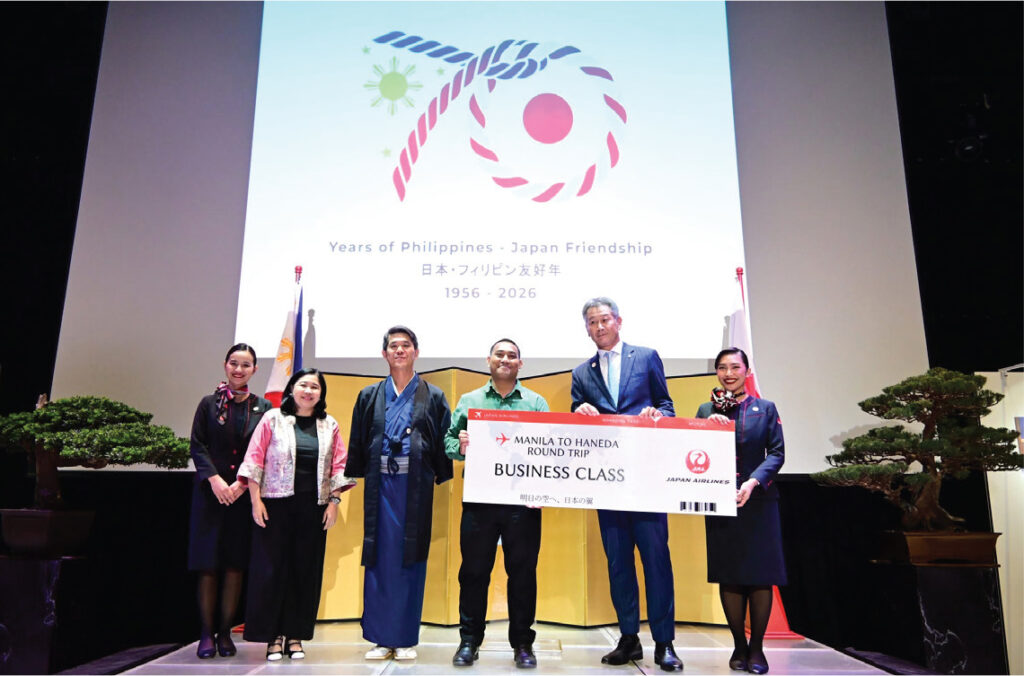
For both countries, reconciliation has been a continuing process of dialogue, investment, shared experiences and mutual confidence built patiently across generations. As the Philippines and Japan commemorate the 70th anniversary of normalized diplomatic relations, their story offers a reminderthat history does not always determine the future.
Sometimes, it provides the opportunity to reshape it.
For Jose Takei, that opportunity meant finally finding the father he never knew.
For the Philippines and Japan, it has meant discovering that the strongest partnerships are often forged not by forgetting the past, but by having the courage to move forward together.
This article appeared in the July 2026 issue of the Philippines Graphic.

Malou Talosig-Bartolome
Malou Talosig-Bartolome is a veteran journalist with over 25 years of experience in both print and broadcast industries, specializing in diplomatic reporting. She started as a police and defense reporter in 1994, then became the foreign affairs reporter for Today newspaper until 2002. As a diplomatic beat reporter, she was assigned to cover summits of the Association of Southeast Asian Nations (ASEAN), Asia Pacific Economic Conference (APEC), and Asean-Europe Meeting (Asem) in major capitals. She was also invited to interview heads of states and attend short fellowship journalism and diplomacy programs in the US, Europe, and Asia. She has spent 15 years in the broadcast industry as senior news editor of GMA Network Inc.