

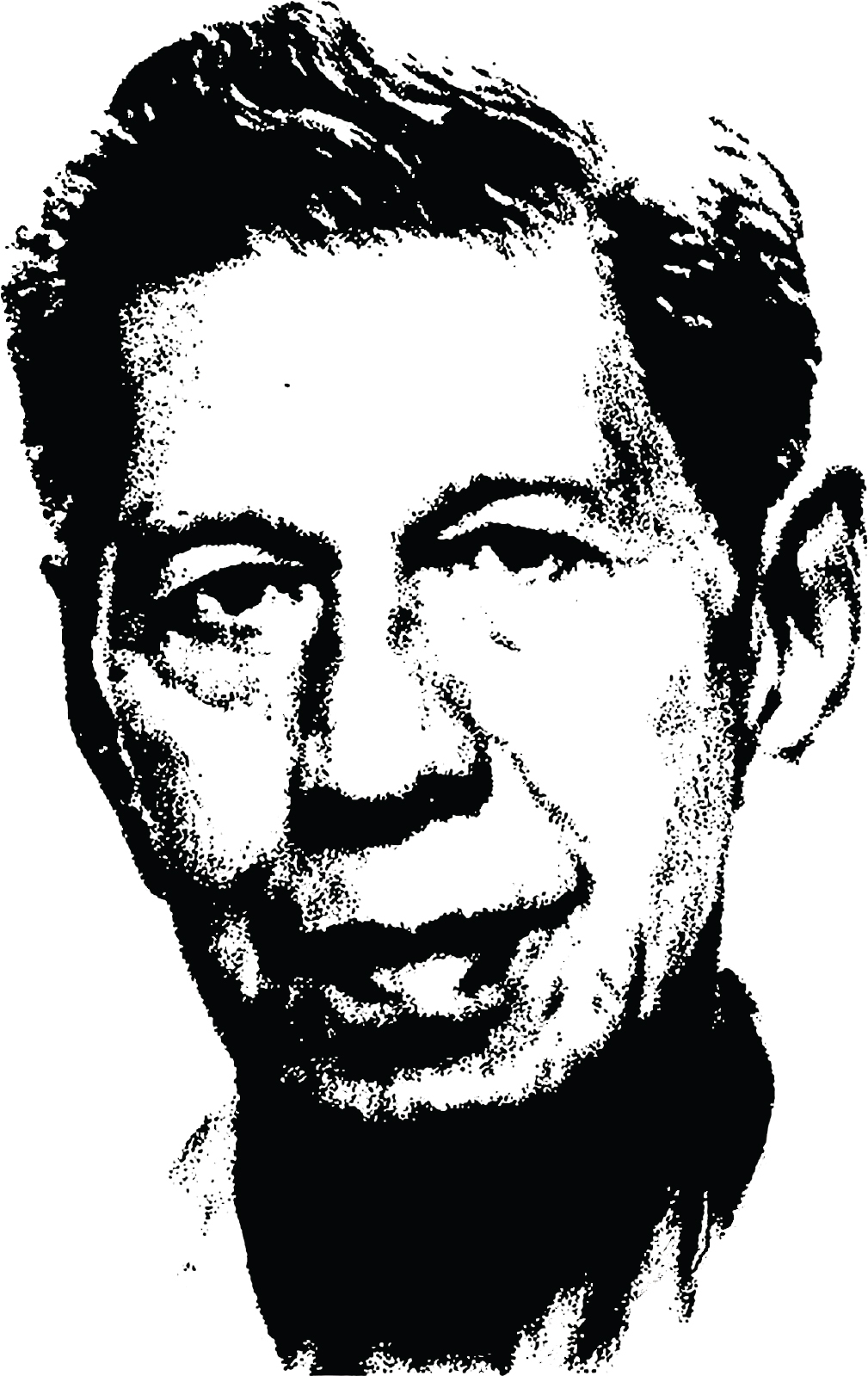
Europe, the seat of everything that was grand, powerful, and prosperous, was caught in the teeth of the First World War, the year Nicomedes Márquez Joaquín was born on May 4, 1917. It was half a world away from a boy who would emerge half a century later as one of the greatest literary minds in a poor and exploited country still caught in its own, long drawn-out war of independence in 1917.
It was probably a rare happenstance in human history that a colony had been bought by a former colony. They did not share the same masters. The Philippines was enslaved by Spain for 400 years and later purchased by the United States of America, a former colony of Spain’s arch nemesis, Britain.
And perhaps, out of this unique convolution of intertwining histories, the face of the emergent Philippines was both Spanish and American; a face shared by its upper classes and the local cognoscenti, including the young Joaquin.
CHARMED, UNTOUCHED
As history books would attest, on Jan. 11, 1917, the United States government in the Philippines organized the first all-Filipino Cabinet, some 15 years after American military might brought an end to the Filipino-American War (1899-1902). The U.S. saw the surrender of the Emilio Aguinaldo government, but not before the “benevolent assimilator” killed 20,000 Filipino soldiers and wounded thousands more, including Aguinaldo’s colonel-lawyer, Leocadio Joaquin.
Sometime in 1906, Leocadio Joaquin, then a widower, married Salomé Márquez, described in some accounts as “a pretty, well-read woman of her time who had studied in a teacher-training institute during the Spanish period. She was among the first to be trained by the Americans in English, a language she taught in a Manila public school before she left teaching after her marriage.”
Leocadio had a flourishing law practice in Manila and the Southern Tagalog provinces. Between him and his wife, they raised 10 children, with Nicomedes, nicknamed “Onching” as the fifth child.
For more than twenty years or until the death of Salomé’s lawyer-husband, the Joaquins led a charmed and prosperous life in their big house along Herran Street in Paco, Manila. Leocadio’s granddaughter, Charo Joaquin-Villegas, who is in the real estate business, described their ancestral home as probably one of the first mixed-use real estate in the city. “It was tindahan sa baba, tirahan sa taas [a store on the first floor; living quarters on the second floor]. It was an accessoria, the first in the area.”
Theirs was a life far different from the majority of rural and urban Filipinos who remained illiterate, poor, and bereft of social and economic opportunities in America-dominated Philippines during the 1920s and 1930s.
During those years, not even the radio—the latest invention from the U.S.A. at that time—that brought the lively, irresistible beat of the tango, rumba, samba, pasa doble, mambo, and cha-cha to the remotest barrio, could dispel the desperation of lowly-paid Filipino workers and landless peasants in their thousands. And in many a hill and plain, hunger sparked anger, and at times, revolt.
But like all the good and privileged families in Manila, the Joaquin household was untouched by the rumblings of political and economic restlessness and unrest in the country.
TWO WORLDS
Nicomedes Márquez Joaquín was a wide reader. Some accounts said that upon reaching the age of 10, “his father got him a borrower’s card at the National Library (then in the basement of the Legislative Building in Luneta).” It was also reported, “he liked to read American magazines such as the Saturday Evening Post, Cosmopolitan, and Harper’s Magazine.”
In 1934, at the age of 17, he found work as proofreader in the Sunday Tribune Magazine, which regularly featured news and events, as well as the poetry and short fiction of promising Filipino writers. It was around this time that Nicomedes, now referred to as Nick, began churning out poems and short stories that caught the attention of the literary greats of the period.
The following year, from May 2-3,1935, Manila was rocked by the Sakdalista uprising, a peasant rebellion in the vassal domain of Central Luzon, centered mostly in the provinces of Bulacan and Laguna.
The peasant revolts waxed and waned in the succeeding years, overtaken by another global upheaval: the Second World War (1942-1945).
A rain of bayonets, bombs, and artillery fire from the conquering Japanese Imperial Army brought home to Filipinos the macabre atrocities of the World War II.
The Japanese occupation of Manila on January 2, 1942 gutted for good the life of the Philippine Commonwealth and forced its President and Vice President to flee to the United States to set up a government-in-exile in May 1942.
In 1943, a year after the Japanese invasion of the Philippines, then 26-year-old Nick won a scholarship to a Dominican monastery for his essay, “La Naval de Manila,” an account of the fabled miracle of the Virgin of La Naval during the 17th century Dutch invasion of Manila.
Sponsored by the Dominican Order, Nick was awarded an honorary Associate in Arts (A.A.) degree by the University of Sto. Tomas. Shortly after, he left Manila and stayed for a year in at the St. Albert’s Convent in Hong Kong.
Nick returned to Manila in 1944, a year before the Second World War ended in 1945.
In February 1945, an estimated 120,000 Filipinos were killed after Manila was reduced to rubble in a final battle between the United States Armed Forces and the retreating Japanese Imperial Army.
After the dead had been buried, the City and its residents began to put their life in order. Four years later, in 1949, Nick won the first prize for the short story in the Philippines Free press fiction contest. His entry, “Guardia de Honor.”
An online précis of this right-after-the-war, short-story winner of Joaquin describes “Guardia de Honor” as a story that “deals with time travel that happened during the Guardia de Honor of the Virgin wherein ladies will march with others wearing their cherished jewelry. That day Natalia Godoy witnessed the present and the future co-existing. She and her descendant met and both were given a glimpse of the future and the consequences of their acts. However, with that revelation, she was also able to change the course of her life. Joaquin showed that although the present and future co-existed, it was unfolding and there was still a chance to change it.”
After the war, Nick again left Manila, traveling to the United States, Mexico, and Spain, later serving as a cultural representative of the Philippines to Taiwan, Cuba, and China.
NEVER IN FILIPINO
The man regarded as one of the best, if not the best poet, short story writer, novelist, essayist, and cultural chronicler in the country, never wrote in Filipino. He also did not read Philippine literature in Filipino, said Marra Lanot.
Nick was a master of the English language and also spoke perfect Spanish, beginning his letters to his mother with “Mi Querida Mama.” He was Marra’s ‘kapraktisan’ (person she practiced Spanish with) when she was learning the language at the Cultural de España (now the Instituto de Cervantes) in Manila.
During his time with Serafin Lanot and his family, there were occasions when he broke bread and conversed with the likes of Amado V. Hernandez, a poet and political writer who could be considered as the language opposite of Nick. Amado Hernandez never wrote in English. His novel and all his poems were highly political, describing the plight and fight of oppressed peasants and exploited workers in the country.
“Nick talked of politics but not lengthily. He is on the side of the oppressed. As a person, he was a very good person,” Marra said.
POLITICS LIVED
For all his literary greatness, some might dismiss the works of Nick Joaquin as elitist, concerned only with the foibles and contradictions of the rich.
Still, he wrote these stories so beautifully, that they transformed the English language itself to something more beautiful than it is.
There are more than enough stories that demonstrate Nick’s love for the poor and the oppressed.
Stories of his days as union president of the Free Press Union and how he took the side of the workers, to the point that it led to years of disaffection from the Locsins, the magazine’s owners who were his long-time friends. His niece Charo, said that Nick and the Locsins finally patched things up in the years before his uncle’s death.
Also often told is his demand that his friend and colleague Jose “Pete” Lacaba be released from prison before he would accept Malacañang’s awarding to him of the title of National Artist in 1976, four years after the declaration of Martial Law. All things taken, Nick lived his politics while writing great literature in English. One did not mean the other.
First published in the Philippines Graphic on Sept. 24, 2012