

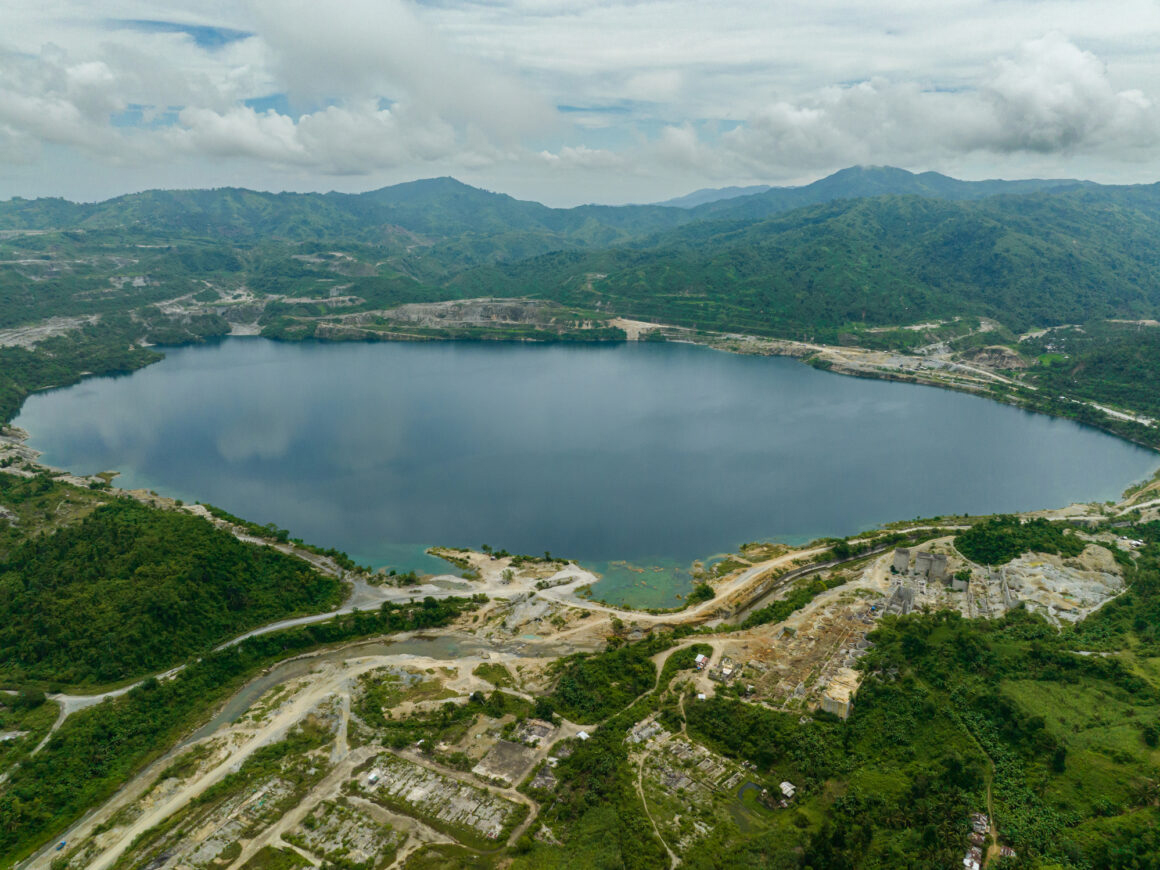
For decades, mining has occupied a complicated place in the national conversation, caught in a tug-of-war between the promise of economic growth and the cost of environmental degradation.
The debate is hardly surprising. The country sits atop some of the world’s richest deposits of nickel, copper and cobalt—minerals that have become indispensable to the next generation of technologies, powering electric vehicles, battery storage and renewable energy systems.
And as the world races to decarbonize its economies, mineral-rich nations like the Philippines are in a position of growing global importance.
Such an abundance, however, is a double-edged sword: On one side, the government and industry leaders are banking on the jobs it creates, the export revenues it generates, and the minerals it supplies to industries around the world.
For context: Just in the first half of 2025, the country’s metallic mineral production value rose by about 22% from a year earlier.
On the other hand, environmental advocates and activists continue to raise concerns over biodiversity loss, water security and the long-term impacts on indigenous and rural communities, particularly in ecologically sensitive areas such as those across Northern Luzon and Northeastern Mindanao.
Those competing realities have made the industry one of the country’s most polarizing sectors. But if the world needs more minerals, can it also demand better ways of extracting them?
WHY MINING MATTERS AGAIN
The growing focus of the government on mining stems from one thing: Critical minerals.
The Marcos administration has continuously signaled that it wants the Philippines to play a “larger role” in the global critical minerals supply chain, particularly as demand for nickel, copper, cobalt and other minerals used in clean energy technologies is increasing.
Former Environment secretary Raphael Lotilla even mentioned in November last year the government’s goal to double mining’s contribution to the country’s gross domestic product to 2% by 2028 by expanding downstream activities and maximizing the economic value of the country’s mineral wealth.
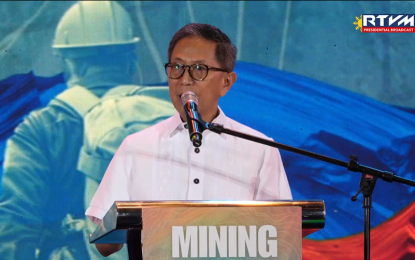
That direction has become evident across a series of policy initiatives, investment roadshows and international partnerships that place greater emphasis not only on extracting minerals, but also on processing them locally.
On June 2, the Department of Trade and Industry, through the Board of Investments (BOI), launched the “2026 Strategic Investment Priority Plan,” which identifies industries eligible for fiscal incentives. Among Tier II Strategic Industries is the processing of critical minerals, reflecting the government’s push to encourage more value-added activities instead of exporting raw ore.
While mineral exploration, mining, quarrying and mineral processing have long been recognized investment activities under the “Philippine Mining Act” or Republic Act (RA) 7942, recent policies have placed greater emphasis on downstream processing and refining to create more jobs, attract technology investments and increase the value of the country’s mineral resources before they are exported.
The government has also intensified investment promotion efforts overseas. Earlier this year, Philippine officials attended the annual Prospectors & Developers Association of Canada Convention—the world’s largest mining conference, to promote the country as an investment destination for responsible mining and mineral processing.
During the event, Trade Undersecretary and BOI Managing Head Ceferino Rodolfo said ongoing reforms—including improvements to the mining fiscal regime—streamlined permitting, stronger environmental safeguards and expanded market access through free trade agreements, are intended to attract long-term investments in the sector.
President Ferdinand R. Marcos Jr. has likewise identified critical minerals as a strategic resource for industries such as electric vehicles, batteries and other emerging technologies.
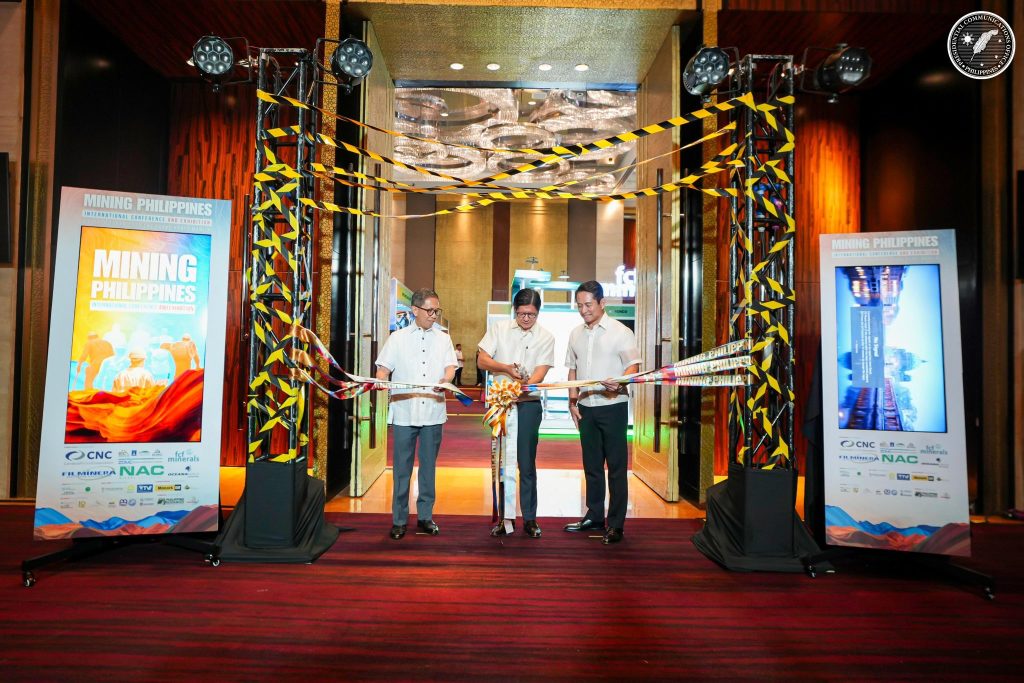
Speaking at the opening of “Mining Philippines 2025,” the chief executive said the country should become “a reliable source of critical minerals for a greener future,” while stressing that mining projects must comply with environmental laws and generate tangible benefits for host communities.
The same direction is reflected in broader industrial initiatives such as the controversial Pax Silica project, which seeks to strengthen semiconductor and artificial intelligence supply chains, while leveraging the country’s critical mineral resources.
VALUE BEYOND THE ORE
Beneath the policy announcements and investment pitches is a broader ambition: for the Philippines to move beyond being a supplier of raw minerals and become a producer of higher-value products that capture more economic benefits from its resources.
For years, the country has faced a familiar paradox. It is among the world’s most mineral-rich nations, yet much of the value generated from its resources has historically been realized after the minerals leave local shores for further processing elsewhere, primarily in China.
Changing that equation, however, requires more than attracting investments. It also depends on the systems in place to ensure that mining activities are carried out responsibly.
The Philippines has established a regulatory framework intended to balance mineral development with environmental protection and community safeguards. RA 7942 remains the primary law governing mineral exploration, development and utilization, while agencies such as the Mines and Geosciences Bureau oversee technical regulation, monitoring and implementation of mining policies.
Mining companies are also required to comply with environmental and social obligations throughout the life cycle of a project. These include securing an Environmental Compliance Certificate following an Environmental Impact Assessment, implementing an Environmental Protection and Enhancement Program during operations, preparing a Final Mine Rehabilitation and Decommissioning Plan for mine closure, and carrying out Social Development and Management Programs for host and neighboring communities.
At the same time, the government has been looking to expand mineral development in areas identified as having significant resource potential. In 2024, for instance, the DENR said they were exploring opportunities to increase mining activities in the Cordillera Administrative Region, Surigao and Davao to tap into deposits of critical minerals needed for emerging industries.
For the mining industry, the opportunity presented by rising global demand for critical minerals is not only about increasing production but also about proving that the Philippines can become a reliable supplier while meeting higher standards of responsible mining.
“The global shift to clean energy has made critical minerals more important than ever, and the Philippines has an opportunity to become a reliable and responsible supplier,” Chamber of Mines of the Philippines (COMP) chair Michael Toledo told the Philippines Graphic on July 20 in a message.
“But success is not just about increasing production,” Toledo added. “It is about attracting long-term investments, creating quality jobs, adding value to our mineral resources, and ensuring that mining contributes to inclusive national development.”
He said the country’s competitiveness will ultimately depend not only on the size of its mineral reserves but also on how these resources are developed.
“Responsible mining means producing the minerals the world needs while protecting the environment, respecting the rights of communities, and creating lasting economic and social benefits,” the COMP official said.
For the chamber, this means strengthening transparency, complying with regulations and continuously improving mining practices.
The group has adopted the “Towards Sustainable Mining (TSM)” framework: a global performance assessment system that evaluates mining operations in areas such as tailings management, biodiversity conservation, Indigenous peoples and community engagement, safety and health, as well as climate change.
TSM, however, remains a voluntary industry initiative and does not replace government regulation. Instead, it serves as an additional framework that companies may use to assess and improve their performance beyond existing legal requirements.
The chamber also supports the “Extractive Industries Transparency Initiative,” which promotes greater accountability in the extractive sector by encouraging the disclosure of information on mining firms, government revenues, payments, taxes, contracts, and permits.
“These initiatives promote accountability, transparency and independent verification,” Toledo said. “Responsible mining must be demonstrated, not simply declared.”
CAN MINING BE SUSTAINABLE?
From a scientific perspective, sustainable mining depends largely on how the resources are extracted, processed and managed throughout their life cycle.
Science Secretary Renato Solidum Jr. told the Graphic that mining will continue to be necessary as societies rely on metals and minerals for infrastructure, technology and the transition toward cleaner energy.
The challenge, Solidum said, is ensuring that mining operations reduce their environmental footprint while maximizing the value of the resources extracted.
“There can be sustainable mining as long as you also look into how mining operations would essentially minimize the effect on the environment and make sure that no waste can actually result from its operation,” the secretary said in an exclusive phone interview.
He acknowledged that mining, particularly open-pit operations, inevitably alters landscapes during extraction. Solidum, who is also a volcanology and seismology expert, however, said the environmental impact can be reduced through proper planning, improved technologies, and continuous rehabilitation.
For instance, instead of leaving rehabilitation until the end of a mine’s lifespan, the secretary said companies can adopt what he called “progressive rehabilitation,” or restoring mined-out sections while operations continue in other areas.
“So essentially you don’t really just dig and dig, and then you rehabilitate,” he explained. “You have rehabilitation ongoing as the other parts of the mine.”
Beyond extraction, Solidum pointed to processing as another critical stage where science and technology can help minimize environmental risks. Proper tailings management, according to him, is necessary to prevent waste materials from contaminating agricultural lands, rivers, and coastal areas. He also emphasized the need for technologies that reduce the chemical impact of mineral processing.
The Department of Science and Technology (DOST) has been supporting research focused on improving mineral recovery and exploring alternatives to traditional mining methods. Among these efforts are studies on recovering critical minerals from mine tailings and electronic waste, including discarded electric motors and computers.
The agency also has a mining industry roadmap, which aims to enhance the value of the country’s metallic resources and advance mineral processing technologies through research, digital governance initiatives, and safety tools such as 3-D modeling, augmented reality and virtual reality.
In 2025, four projects were implemented under the roadmap, with two completed on schedule and two expected to be finished in 2026 and 2027, while proposals received during the year did not meet the funding threshold.
Moreover, Solidum said researchers are also exploring the use of alternative solvents, including those developed from fish waste, to extract valuable minerals from mining residues while reducing environmental pollution.
“We’re combining circularity and sustainability,” he said, noting that these approaches aim to recover more resources while reducing waste. Other research initiatives are also looking into plant species that can help stabilize and rehabilitate mined-out areas, supporting the restoration of ecosystems after mining activities.
However, geologist Mark Sumaden said the term “sustainable mining” itself requires careful consideration.
“Just like any other extractive industry, I would say that mining is inherently not sustainable,” Sumaden told the Graphic in a message. “You are removing a finite resource from the earth, and that always comes with some environmental cost.”
For him, the more realistic goal is “responsible mining”—an approach he said that recognizes the need for minerals while actively reducing environmental and social impacts.
“Mining can be 100% responsible,” he said, pointing to measures such as proper tailings management, progressive rehabilitation, and meaningful consultation with host communities.
He added that science plays a role even before extraction begins by helping identify and characterize mineral resources, allowing companies to develop more efficient and less damaging methods of extraction.
REALITY OF ADAPTING
The push for sustainable mining is not limited to policies and commitments on paper.
Across the industry, mining companies have begun adopting systems designed to manage some of the environmental risks associated with extraction.
According to the COMP, 19 member companies were implementing TSM as of 2024, making the Philippines the only country in Asia at that time participating in the initiative.
Among the companies that have highlighted their tailings management practices are Philex Mining Corporation, which operates Tailings Storage Facility 3 at its Padcal mine in Benguet; and OceanaGold Philippines Inc., which has received high ratings under TSM’s tailings management protocol.
Tailings storage is among the most critical concerns in mining because waste materials generated after mineral processing must be contained over long periods. Engineering systems, monitoring and management protocols can reduce the likelihood of failures, but they do not eliminate the environmental risks associated with storing mining waste.
Beyond waste management, mining companies are also required to undertake progressive rehabilitation, which means restoring mined areas while operations are still ongoing rather than waiting until the mine closes.
Scientific research has also explored ways to improve rehabilitation efforts.
The National Research Council of the Philippines, for instance, developed the “Greening Mined-out Areas in the Philippines” program in June last year, which tested bioremediation approaches in a former mine tailings area in Mogpog, Marinduque. The project used microbial technology to help improve degraded soils and support the recovery of vegetation.
However, rehabilitation has its limits. Restoring vegetation and stabilizing damaged land does not immediately recreate the original ecosystem, especially in areas where mining has significantly altered landscapes and habitats.
Biodiversity protection is another area where mining companies have introduced additional safeguards. Environmental assessments, conservation programs and rehabilitation initiatives are incorporated into compliance requirements, while biodiversity conservation management is also among the areas assessed under the TSM framework.
These measures can help reduce the impact of mining activities, but they cannot completely remove the ecological disturbance caused by extracting resources from the ground.
Water management remains another major challenge. Mining firms operate water treatment facilities, monitor water quality and implement recycling systems to reduce risks from wastewater discharge. Under TSM, water stewardship is also one of the performance areas assessed among participating companies.
Still, treatment systems are designed to manage pollution risks and not erase them entirely. Mining activities continue to interact with surrounding watersheds, making monitoring, maintenance, and enforcement critical throughout the life of a mine.
Some companies have also begun integrating renewable energy into their operations, including solar power systems, as part of efforts to reduce dependence on conventional energy sources and lower emissions.
CONFRONTING THE DIFFICULT QUESTION
Even with stronger regulations and advances in mining technology, some challenges remain difficult to solve because they involve not only engineering limits, but also the complexity of the Philippines’ natural environment.
Sumaden said that the biggest challenge facing the future of mining is not simply finding better extraction methods: “I believe the real challenge is gaining public trust.”
The challenge, he said, is rooted in the country’s unique conditions. The Philippines is rich in mineral resources but is also one of the world’s biodiversity hotspots, with many mineral deposits located near forests, watersheds and communities that depend on these ecosystems.
According to Sumaden, mining operations must be designed around these realities, particularly the country’s exposure to earthquakes and typhoons. This is especially important in managing mine waste, including tailings, which can remain a long-term concern even after mining activities end.
“We need stricter engineering measures matched to the conditions we live in,” he said, adding that mine design, operations, and tailings storage must account for environmental risks to prevent future failures.
Beyond technical safeguards, Sumaden said responsible mining must also address the concerns of communities directly affected by mining activities. “Moreover,” he added, “we need to ensure that the people—especially the host communities—actually feel the benefits: jobs, well-developed local infrastructure and proper revenue sharing.”
Scientists continue to grapple with broader questions surrounding mining impacts, including whether rehabilitated mine sites can fully recover their original ecological functions, how to protect watersheds from long-term risks and how multiple mining operations within the same landscape affect ecosystems.
These challenges are made more complex by climate change, which is altering rainfall patterns and increasing risks from extreme weather events.
For the geologist, sustainable mining will require more than improved technology. It will depend on combining scientific expertise with stronger environmental safeguards and meaningful engagement with communities. For him, “if all these things are visible, public trust tends to follow.”
LOOKING AHEAD
Experts said the industry’s future will likely depend less on whether the country has enough mineral resources, and more on whether it can develop them in a way that meets both economic needs and environmental expectations.
For DOST, science and innovation will play a central role in shaping that future. Solidum Jr. said the focus should be on developing technologies that can make mining operations and rehabilitation efforts more efficient and less harmful.
“We need to be employing science, technology and innovation in mining operations and rehabilitation of mined-out areas,” Solidum pointed out.
This, he said, includes improving mineral processing methods, reducing the environmental risks associated with chemicals used during extraction and developing technologies that allow more resources to be recovered from existing waste materials.
Solidum said the science and technology department continues to support research and development initiatives focused on minerals processing, resource recovery and rehabilitation technologies, with the goal of making scientific solutions more accessible to the mining sector and government agencies involved in regulation.
However, he noted that discussions around sustainable mining also depend on the time frame being considered. Some environmental impacts and solutions may require years or even decades to fully assess.
For Sumaden, the next phase of mining should involve more than adopting new equipment or technologies.
Environmental and social considerations, he said, must be integrated into mining decisions from the beginning, rather than treated as requirements added after a project has already been designed.
“We need improved technology to find and access deposits with smaller, low-carbon footprints, as well as stronger integration of environmental and social protection into the design phase,” the geologist pointed out.
Mining, he added, warrants collaboration among different fields, including geology, engineering, environmental science, economics and social sciences, because resource extraction affects not only the ground where minerals are found but also the communities and ecosystems surrounding them.
Meanwhile, for the COMP, changing public perceptions about mining will depend on demonstrating responsible practices over time.
Toledo acknowledged that many Filipinos continue to view mining and environmental protection as conflicting goals. But he said this perception can change through consistent action and greater accountability.
“Trust has to be earned through consistent action,” Toledo said. “Over time, openness, accountability and good performance are what will change perceptions—not words alone.”
Whether the Philippines succeeds in becoming a global supplier of critical minerals may ultimately depend not only on the richness of its deposits, but on whether it can convince Filipinos that economic development and environmental stewardship can advance together. —Aubrey Ogerio