
The country’s best writers and cultural institutions paid homage this year to the 100th anniversary of the late National Artist Nick Joaquin.
Ironically, had Joaquin been around, he might never have allowed the tributes and accolades given in his honor. Or maybe, he would, but at great discomfort.
Said writer Jose ‘Pete’ Lacaba, “Sinasabi sa amin ni Nick pag dumadalaw kami sa mga burol ‘ayaw ko ng mga tribute-tribute. Ibalot niyo na lang ako sa banig, itapon niyo ako sa Pasig River.’ Pero tinatanggap din naman niya pag binigyan siya ng award [Nick would tell us whenever we were in a wake, ‘I don’t like tributes. Just wrap me in a mat and throw me in the Pasig River. But he still would accept every time he is given an award].”
“If it were up to Nick,” said Lacaba’s writer-wife Marra PL. Lanot, “ipamimigay niya lahat ng awards niya [He’d give away all his awards].
He wouldn’t collect or display them.
He won’t talk about it, like ‘I won this or I won that.’ No way. He never talks about his awards. Never talks about his writings. He won’t brag or anything.”
For almost 40 years, Lacaba and Lanot had been very close friends and colleagues of the man described as “the most distinguished Filipino writer in English writing.”
The couple and their only son Kris had a warm and intimate, almost familial relationship with Joaquin—a kinship born out of love for the written word; a friendship unique to those whose lives have intermeshed in shared joys and heartaches over the years.
Lacaba first met Joaquin when he was 19 and had worked with him through three publications: the pre- Martial Law Philippines Free Press and the Asia-Philippines Leader, where Joaquin served as Literary Editor and Editor-in-Chief, respectively; and, in the 90s, the Philippines Graphic, with Joaquin as EIC until his death in 2004.
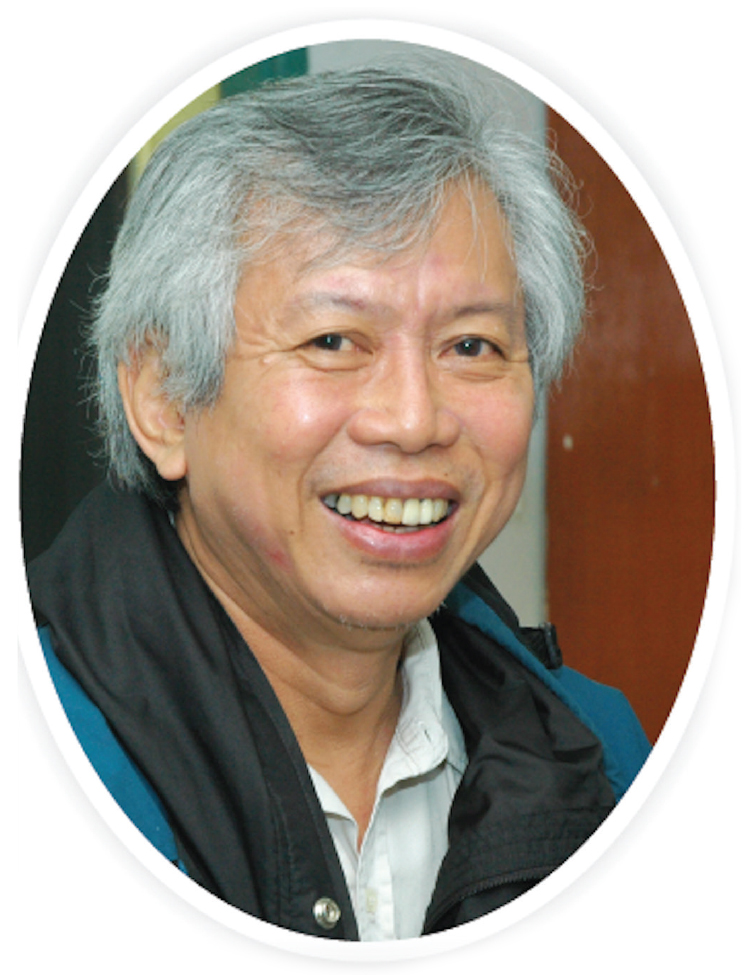
Lanot’s father, journalist-astrologer Serafin Lanot, first discovered the literary talent of Joaquin upon reading and publishing the latter’s earliest submitted poem back in the 1930s.
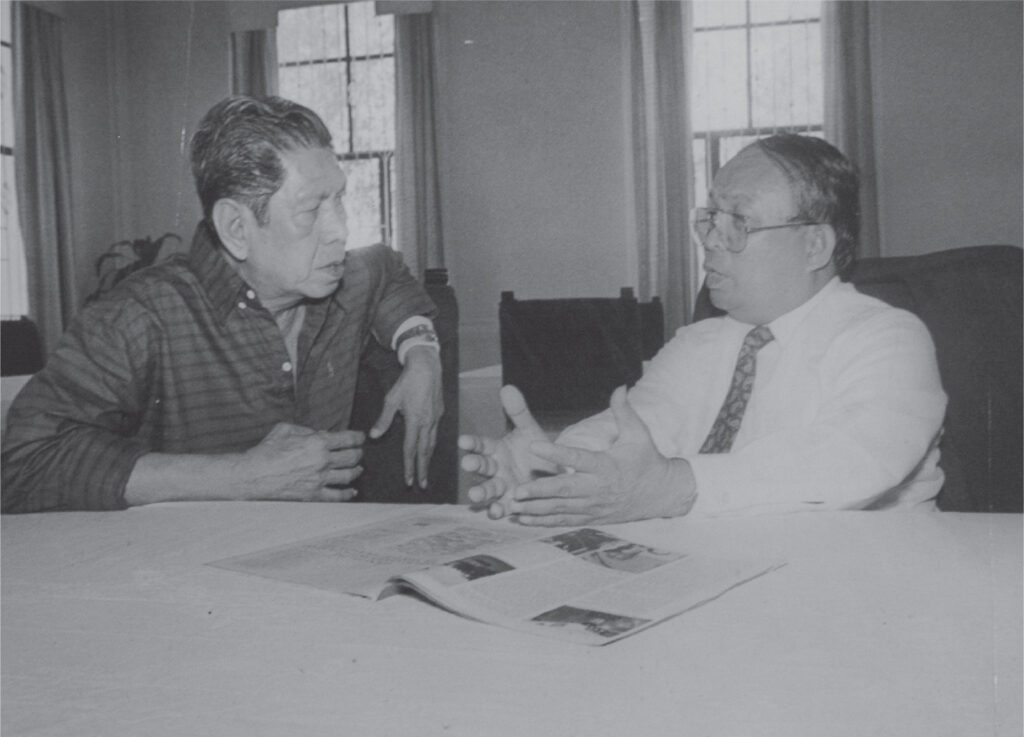
Joaquin was reunited with the elder Lanot after reading and accepting Marra Lanot’s poem for publication in the Free Press in the mid-1960s. It was a meeting that renewed a friendship and cemented Joaquin’s ties with the Lanots and the Lacabas.
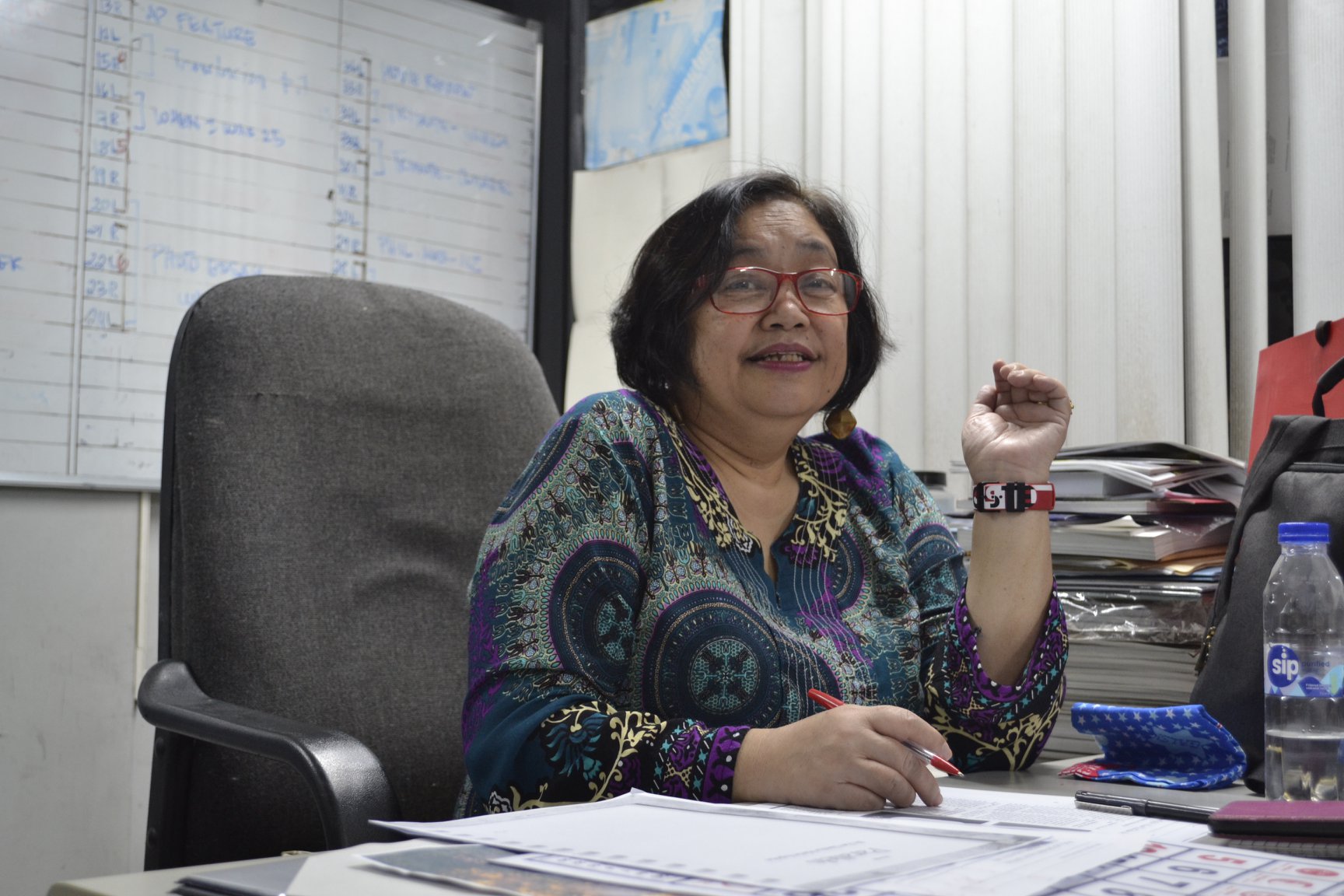
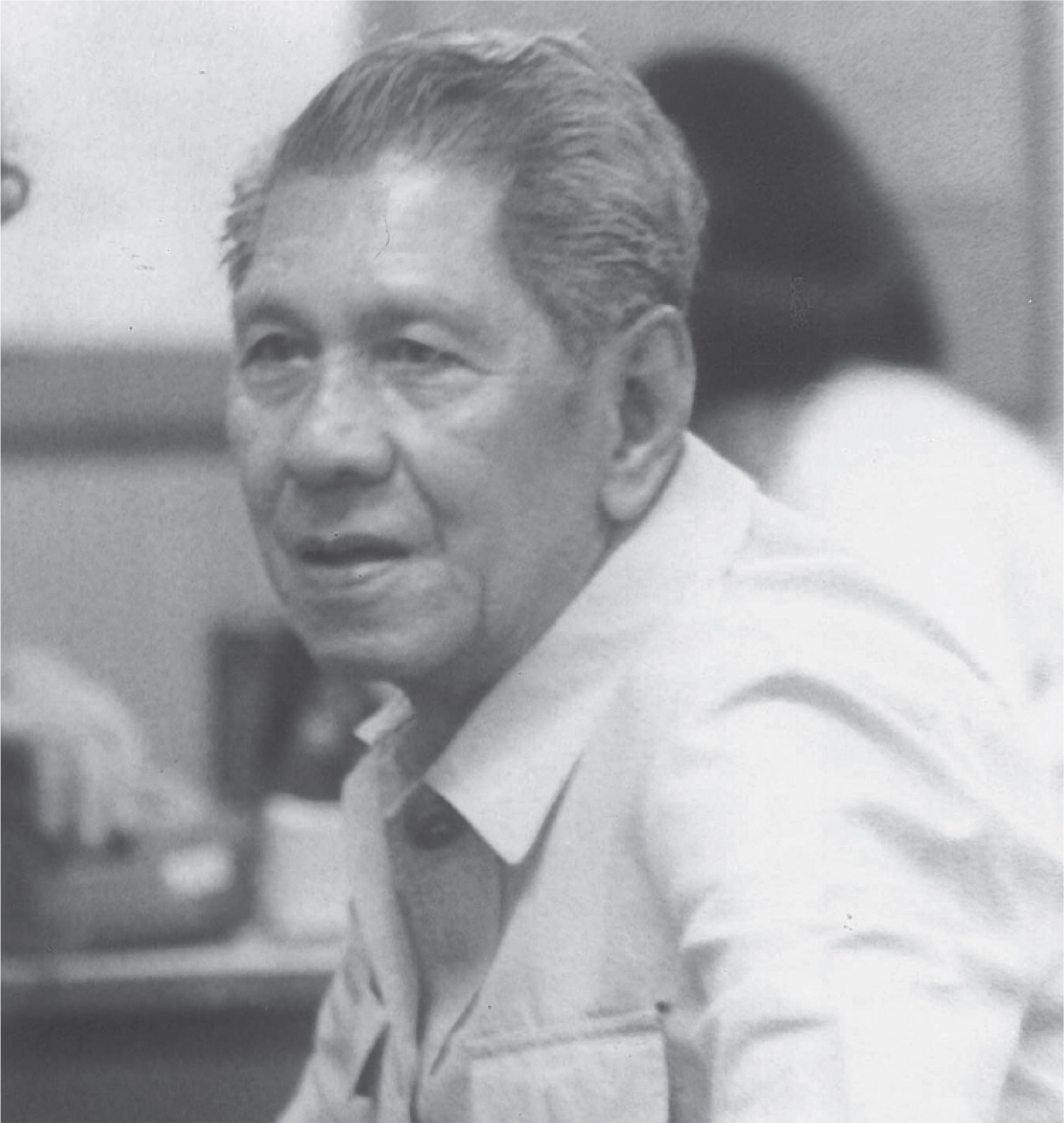
For this special issue, Philippines Graphic interviewed Pete Lacaba and Marra Lanot who shared their memories of Nick Joaquin, also known by his sobriquet Quijano de Manila. Here are excerpts of the interview:
PHILIPPINES GRAPHIC (PG) TO PETE LACABA: WHAT WAS YOUR IMPRESSION UPON FIRST MEETING NICK JOAQUIN?
PETE LACABA: Impression? Wala [None], there was this noisy guy (laughs). He was already Nick Joaquin. Back in college, we were reading him and even when I was in high school. I was already reading Quijano de Manila in Free Press. I was a fan. At that time, I was reading Quijano de Manila, Kerima Polotan, Wilfrido Nolledo. The journalists that I liked were the ones who had background in literature, in fiction. This was before ‘literary journalism’ became a term.
PG: WHAT WAS THE TRAIT YOU MOST LIKED ABOUT NICK JOAQUIN, OUTSIDE OF HIS WRITING?
LACABA: He could get along well with a lot of people. Yung mga [The] workers sa [in] Free Press, yung mga [the] typesetters, compositors, pinapainom niya lahat iyon pagkatapos niya magsulat [he’d treat them all to free drinks after he finished writing], after office hours. Siya sumasagot. Kami rin pag sinama niya kami (staff writers), walang gastos. Libre kami lahat [He’d pay for everything. We staff writers also get free drinks when he invites us. We don’t spend anything]. And he could get along with all of them. When Nick was with the workers, he would talk to them, ask them if they got his corrections in. They would tell stories. He’d say, “O ang tatay mo, proofreader namin dito. [Oh, you’re father is our proofreader].” But mostly, he would ask questions. So, parang nag-iinterbyu rin siya pag yung mga workers kasama namin. Alam niya yung mga buhay nila [It was like he was interviewing the workers whenever they were with him. He knows their lives].
PG: HOW WAS IT WORKING WITH NICK JOAQUIN?
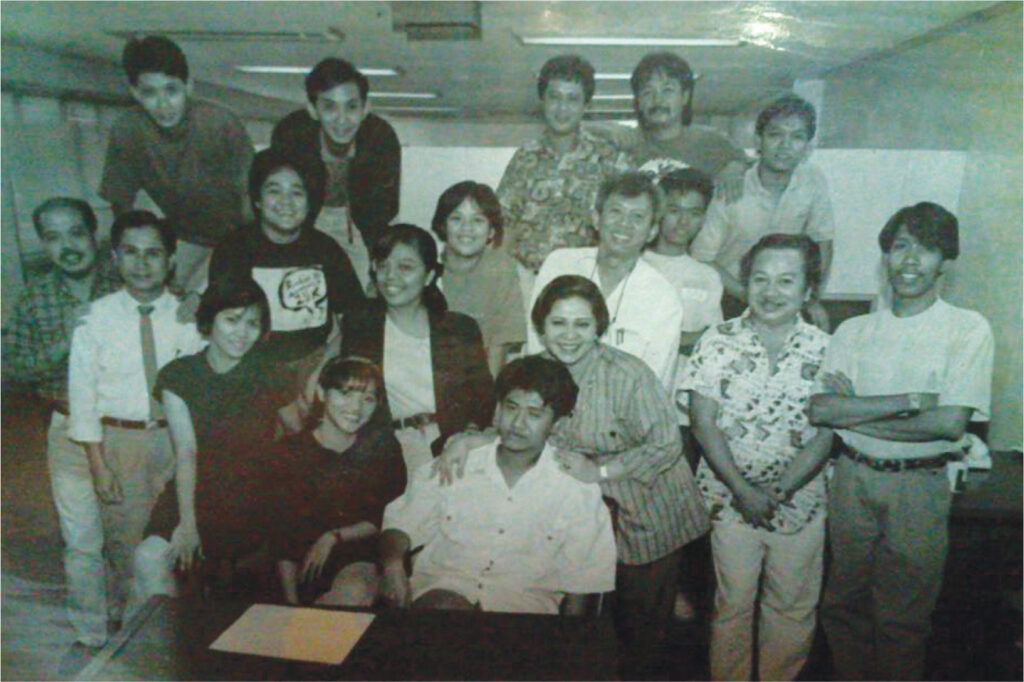
LACABA: Dumadating siya ng hapon. Sa umaga [He’d arrive in the afternoon, In the morning], upon waking up, he’d start writing. And he drank beer while writing. Longhand siya magsulat sa papel [He wrote long hand on paper]. After writing, he’d take a siesta [nap]. Then he would go to Free Press and arrive at 1:30 p.m.
He would go to the office, type on the typewriter, and bring the typewritten work to the typesetter. Tapos, lalabas kami, inuman na hanggang alas dose na yun. Lasing kami, maingay, pero hindi ko pa siya nakitang sumuka sa kalasingan [Then, we would go out, drink until 12 midnight. We were all drunk and noisy, but I have never seen him throw up from drunkenness].
Nick was not my boss. He was literary editor. But that time, I was submitting poems to him. One of the poems I sent was “Ballade at 20.” I turned 20 na kasi [already]. This was in ‘66. Nick accepted it and published it, with a poem of his. Sinagot niya yung poem ko [In answer to my poem, he came up] with a “Ballade of Old Age.” At tinawag niya yung both poems that he published together, with a head na “Balladetasan.” It was very flattering.
PG: DID YOU EVER ENGAGE IN DEBATES?
LACABA: I don’t remember us debating. Well, a little later, once, we debated on Rizal and Aguinaldo. He’d say, “Read my article.” But he did not demand that you agree with him.
PG: DID YOU TALK ABOUT POLITICS, ART, OR LITERATURE?
LACABA: Occasionally, kami-kami. Actually, hindi masyadong nag-uusap. Pag nagustuhan niya yung sinulat mo. [We sometimes did. But we didn’t talk much about (politics, art, or literature). When he liked what you wrote], he’d comment on it. I don’t remember him na nagbibigay ng [giving] lessons. He’d comment on something we had written. Sometimes he would suggest, you should read this. At that time, pag may binanggit siya [when he mentions something], I had read it already because I started college as a major in Humanities and then I shifted to major in English. Pasiklaban kami minsan [Sometimes, we’d have a competition] on how many poems you can remember. Halimbawa, sisimulan niya ng [For example, he’d start with a] poem ni [of] John Keats, magre-recite tapos dudugtungan o itutuloy mo yung tula. Sasabihin niya [he’d recite and you’d have to continue the poem. He’d say]: “My heart aches, and a drowsy numbness pains My sense/ as though of hemlock I had drunk…” Itutuloy ko naman [I’d continue]: “Or emptied some dull opiate to the drains/One minute past, and Lethe-wards had sunk… (from Ode to a Nightingale by John Keats)/ Ayun, pasiklaban lang [That’s it, we’d show-off our mastery of the poem]. In the same way, na “You don’t know that song.” Tapos kami ni Tess [and then Tess and I], we would continue that song. Mahilig siyang mangganun [He liked doing that].
PG: WHAT WERE THE SONGS THAT NICK JOAQUIN LIKED?
LACABA: I remember the first time I met him sa [in the] Free Press canteen, he would sing. And kami ni (fiction writer) Tess Dafon, we were familiar with old songs. I like old songs and we would sing along with him and he would say, “How do you know this song? You are too young to know this song. How come you know this song?” He would ask, “Do you know Frank Sinatra?” Tapos kakantahin namin. Kami ni Tess, marami kaming alam na lumang kanta [Then, Tess and I would sing the song. We knew a lot of old songs]. Frank Sinatra, Cole Porter. Natatandaan ko, noong hinatid niya ako sa [I remember, when he dropped me off at] Pateros, he would sing to the tune of “Chicago, Chicago, a hell of a town,” he’d sing, “Pateros, Pateros, a hell of a town.”
PG TO MARRA LANOT: HOW CLOSE WAS NICK TO YOUR FATHER, SERAFIN LANOT?
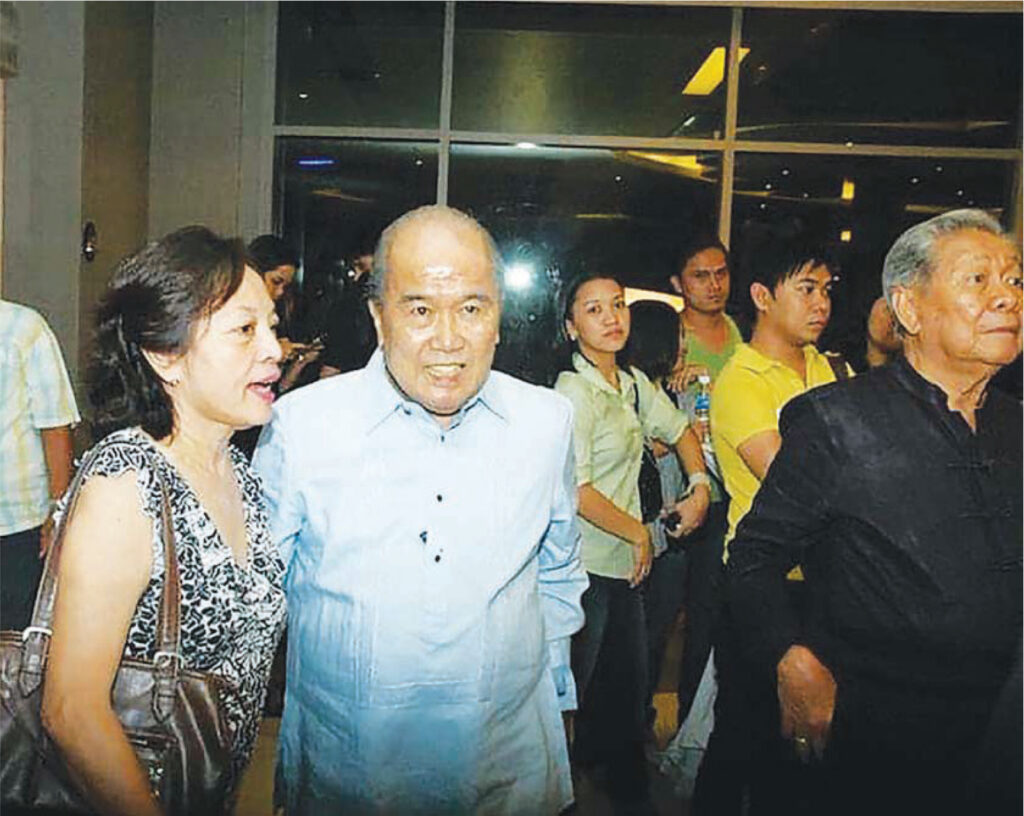
MARRA LANOT: They were very, very close. Close sila kasi si Papa ang unang nag-publish ng [They were close because it was my father who ng first published] the poem of Nick. Ang Papa ko [My father] was a journalist and poet-essayist. He was then the Literary Editor of the Tribune. So, doon una siya na-publish [That was where he first got published].
Nabasa lang niya ang tula, sabi ng Papa ko, “Galing nito ha.” Actually, hindi ko alam yun. Nalaman ko lang noong nag-submit ako ng poem sa Free Press and noong malaman niya ang Papa ko, hinatid ako sa bahay. Gusto niya makita ulit si Papa. Noon sila nagkwentuhan kung ano ang nangyari noon. Noon ko lang nalaman na kilala pala ni Papa ko si Nick. Tapos, madalas na siya dito. Hindi pa ako kasal noon [My father read his poem and he found it good. Actually, I didn’t know that they were friends. I only learned about it when I submitted a poem to Free Press and he learned about my father. He took me home. He wanted to meet my father again. They talked and reminisced. That was the time I learned that Nick was a good friend of Papa. I was not married yet.]
WHAT DID NICK SAY ABOUT YOUNG WRITERS?
LANOT: He was very supportive. Pupurihin niya yung gusto nya. Hindi naman siya kasing taray ni [He would praise those that he likes. He is not as caustic as] Franz Arcellana who will frankly tell if a writer has talent or not.
PG: DO YOU THINK NICK JOAQUIN WOULD GET HIMSELF INVOLVED IN SOCIAL MEDIA?
LANOT: Well, for one thing, I don’t think he’d join, kasi noong uso na yung computers or electric typewriter man lang, andun pa rin siya sa [even when the computers and electric typewriters became in vogue, he still preferred] writing by hand. He never used the electric typewriter, never used the computer. With social media, I think, hindi rin siya sasali. Kasi parang sa social media di ba payabangan? E, out siya doon [I don’t think he’d join social media because he wasn’t into bragging]. Parang [It’s like], he won’t fit kasi what would he say? He never talks about his writing. Basta para sa kanya [As far as he is concerned], “Oh, do you love my writing, Dahling?” Tapos masaya na siya noon [He’d be happy with that]. If he’s complemented, he’d change the topic. He’s uneasy with praise and this is not a put on. Sasabihin nya, “Lintak ka, manong magtigil-tigil ka nga diyan, Kulasa [He’d say, hey, stop saying that].”
PG: WHAT WERE SOME OF THE MISCONCEPTIONS THAT PEOPLE HAD OF NICK JOAQUIN?
LACABA: Hindi naman siya kumekendeng maglakad. Maingay siya pero hindi kumekendeng. Diretso siya maglakad. Iyong characterization ni Raymond Bagatsing (in the play, Dahling Nick), hindi siya ganun [He didn’t sashay when he walked. He was loud but he didn’t sashay. He walked straight, not like the characterization done by Raymond Bagatsing].
LANOT: He is not confrontational. Meron sigurong umaaway sa kanya, pero hindi niya pinapansin [There maybe people who quarrel with him but he ignores them]
LACABA: Hindi siya (Graphic owner) nakikialam sa politics ng magazine. Wala akong naaalala. Pag tapos na kami [The owner of Graphic does not get involved in the politics of the magazine. I don’t remember any instance. When we close the magazine], we would go upstairs, in the office of Amba (Ambassador Antonio L. Cabangon Chua) tapos mag-iinmuman na kami [then we will drink].
PG: WHAT ABOUT THE RUMOR THAT NICK JOAQUIN DEMANDED FOR YOUR RELEASE FROM DETENTION BEFORE HE ACCEPTED THE NATIONAL ARTIST AWARD?
LACABA: That was 1976 already. At that time, ang kwento ni Nick sa akin, gagawin niya sanang kundisyon yun sa [Nick told me that he wanted to make my release as a condition to accepting] the National Artist Award. Ang advice sa kanya ni [He was advised by] Chitang (Carmen Guerrero Nakpil) to accept the award first at saka kausapin [and then talk to] Marcos because Marcos will be there.
First published in the Philippines Graphic on June 26, 2017.