
What if the diwata were not simply the mystical figures often depicted in contemporary imagination, but a way of reconnecting with an older understanding of the Filipino relationship with nature?
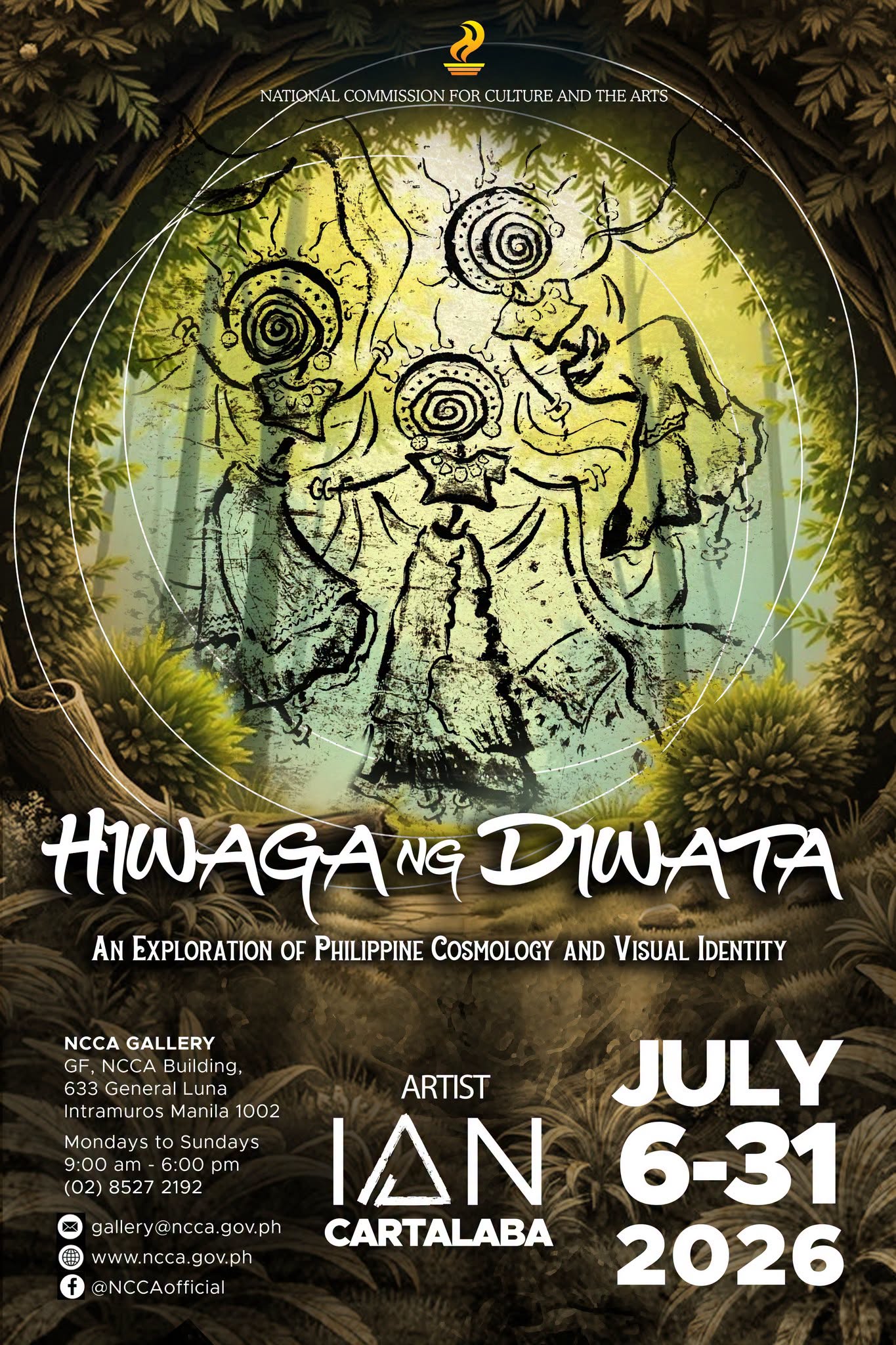
This question takes center stage at “Hiwaga ng Diwata,” a solo exhibition by artist Ian Cartalaba currently on view at the National Commission for Culture and the Arts (NCCA) Gallery. Opened on July 9, the exhibition invites audiences into an otherworldly realm where Philippine folklore, indigenous references, and contemporary artistic expression converge.
Featured artist Ian Cartalaba utilizes traditional materials and motifs to decolonize the concept of the Filipino diwata. Through his work, Cartalaba seeks to reclaim the figure’s authentic narrative, reconnecting it directly to its rich indigenous roots.
Known online as an “Art-chaeologist,” the creator behind Hiwaga ng Diwata presents an unconventional gallery exhibition of abstract paintings. Looking closely through careful perspective, the hidden form of the diwata gradually emerges.
Inspired by Angono Petroglyphs where human and animal figures are engraved onto different rock formations, Cartalaba converged the plethora of diwata images with native Filipino traditions.
During the pre-colonial era, the native Filipinos already have a steadfast belief in animistic practices wherein they commonly worship animals, plants, rocks, and different natural entities, believing that they possess spiritual essence. Diwata is one of the ubiquitous guardians of nature where Cartalaba used to materialize his imagination to a tangible art on canvas.
Majority of his art pieces include different images of diwata, but looking closely, it entails a vivid visualization of how these spirits are supposed to be reimagined. Also included in the artist’s inspiration is the faded notion of how Spanish colonization has set aside the animistic nature of earlier Filipinos, thus the gallery holds a deep admiration of how the audience should view it from the perspective that traces back to its original identity. Rather than presenting a single definition of the diwata, “Hiwaga ng Diwata” leaves room for discovery. The figures are deliberately embedded within the works, requiring the audience to pause, look closely, and allow forms to emerge.
In this way, the exhibition becomes more than a collection of paintings. It is an invitation to look inward and backward—to reconsider stories, symbols, and ways of seeing that have endured, transformed, and continued to find meaning in the Filipino imagination.
Started in 1927, the Philippines Graphic is the longest-running printed magazine of national circulation that provides relevant news and features and promotes Philippine literature.